

Property damage in the Texas Hill Country can turn into a complicated insurance claim quickly. Hail can strike a roof in minutes, a severe thunderstorm can push wind-driven rain through the building envelope, and heavy rainfall can create drainage and water-intrusion problems around properties built on Dripping Springs’ rolling terrain. If the insurance company’s estimate leaves out damage or the claim payment does not seem to match the actual repair scope, a Public Adjuster in Dripping Springs, TX can represent your interests throughout the claim.
As a Texas public adjuster, TX Public Adjusting helps homeowners, commercial property owners, landlords, and business operators document and present property insurance claims. We work for policyholders—not insurance companies—and review the damage, policy, estimates, photographs, repair requirements, and carrier scope to identify issues that may be affecting the claim.
TX Public Adjusting operates through Rise Public Adjusting LLC, Texas License #3356839.
Need help with a Dripping Springs property claim? Request a Free Claim Review. There are no upfront fees.
Dripping Springs sits in Hays County on the edge of the Texas Hill Country, where rapid development has added new residential neighborhoods and commercial properties alongside ranches, historic buildings, and larger acreage homes. The city had an estimated 7,405 residents in 2024, with continued population growth projected beyond that figure. That mix of newer construction and older Hill Country properties creates a wide range of insurance claim situations after severe weather.
Why Property Owners Hire a Public Adjuster in Dripping Springs
An insurance carrier assigns an adjuster to investigate a claim on behalf of the insurance company. Understanding what a public adjuster does helps explain the difference: a public adjuster represents the policyholder rather than the insurance carrier.
That distinction matters when a claim involves extensive roof damage, multiple rooms of interior water damage, commercial interruption, disputed repair methods, or an estimate that appears incomplete.
Property owners in Dripping Springs may hire TX Public Adjusting when:
- The insurance estimate appears too low for the repairs required.
- Roof or exterior storm damage was missed during the first inspection.
- Interior water damage is more extensive than the carrier’s scope reflects.
- A claim was partially denied or coverage is being questioned.
- Depreciation or repair-cost calculations are difficult to understand.
- The property owner does not have time to manage repeated inspections and insurer communication.
- A commercial loss involves several buildings, roofing systems, contents, equipment, or tenant spaces.
- Supplemental damage needs to be properly documented and submitted.
Our team has experience reviewing thousands of residential and commercial claims and understands how small scope omissions can add up across roofing, siding, gutters, windows, interiors, mechanical components, and other damaged property.
Property Damage Risks in Dripping Springs and Hays County
Dripping Springs faces a different risk profile than a Gulf Coast city. Hurricanes are not the primary concern here. Central Texas thunderstorms, hail, intense rainfall, wildfire conditions, drought, wind, and occasional winter weather are more relevant to local property owners.
Hays County’s hazard planning identifies a broad range of risks that include flooding, hail, wildfire, drought, extreme heat, windstorms, tornadoes, lightning, and severe winter storms. County emergency-planning materials have also ranked flooding and wildfire among the area’s major hazards.
Hail and Severe Thunderstorms
Hail is one of the most important property claim risks in Central Texas. Large hail can damage asphalt shingles, metal roofing, vents, flashing, gutters, downspouts, exterior finishes, windows, HVAC components, and vehicles.
Hays County’s hazard data shows that hail has caused substantial property damage historically, making it particularly relevant for owners of residential and commercial roofs.
A hail claim can become disputed when the carrier identifies only isolated damage while contractors or other inspections reveal a broader pattern across multiple roof slopes or building components.
Flash Flooding and Water Intrusion
The limestone hills, creeks, low-water crossings, and fast runoff associated with the Hill Country make heavy-rain events a serious concern. Hays County maintains dedicated flood and water-crossing resources because flooding can develop rapidly in the region.
Not every water loss is a flood insurance claim. Wind-driven rain entering through storm-damaged roofing, water entering around damaged windows, plumbing failures, burst pipes, and other covered causes may fall under a property policy depending on its terms.
Determining the actual cause of water intrusion is therefore critical.
Wildfire and Fire Damage
Drought, dry vegetation, wooded acreage, and Hill Country terrain can create wildfire exposure around western Hays County. Wildfire is specifically identified in Hays County’s hazard planning.
Fire claims can involve much more than visibly burned materials. Smoke residue, odor, soot, heat damage, contents contamination, electrical systems, insulation, HVAC systems, and temporary living expenses can all become part of a significant residential or commercial claim.
Wind and Winter Storm Damage
Strong thunderstorm winds can loosen roofing materials, damage trees, affect fences and exterior structures, and create openings that allow rain into a home or business.
Central Texas properties can also experience freezing temperatures and winter storms. Frozen or failed plumbing can produce large interior water losses involving drywall, flooring, cabinetry, insulation, electrical components, and personal property.
Common Insurance Claims in Dripping Springs
Hail Damage Claims
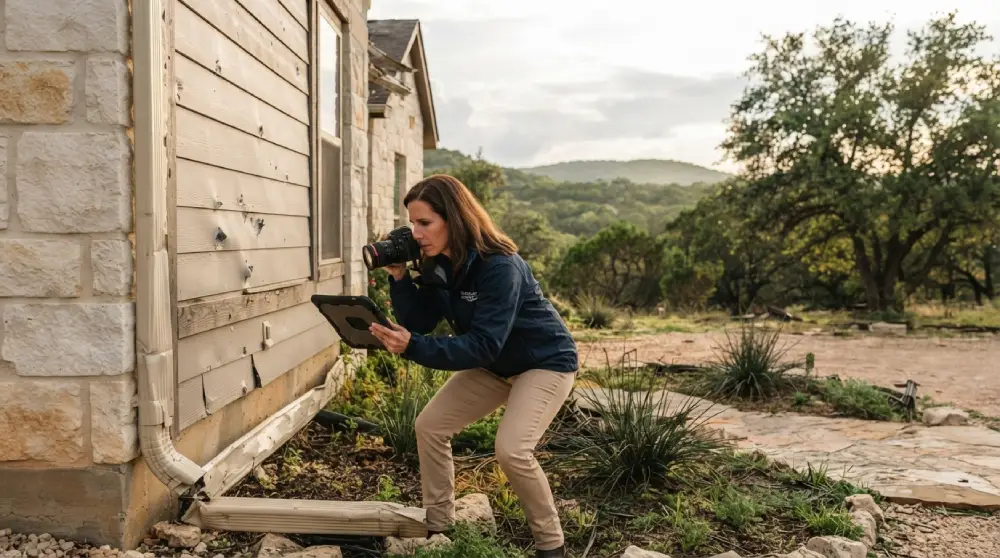
A hailstorm does not need to break through a roof to cause an insurance loss. Property owners dealing with a hail damage roof insurance claim may discover bruised shingles, fractured materials, damaged metal components, or other storm-related conditions that are not obvious from the ground.
TX Public Adjusting evaluates the complete damage pattern rather than focusing on a single roof component. That can include roofing, gutters, flashing, vents, siding, fencing, windows, HVAC equipment, detached structures, and related interior damage.
Water Damage Claims
Water losses can spread far beyond the first visible stain.
Moisture can travel behind drywall, beneath flooring, inside insulation, around cabinetry, and into adjoining rooms. A water damage public adjuster can review whether the insurance estimate accounts for the documented extent of the loss rather than only the most visible surface damage.
We review photographs, moisture-related documentation, mitigation records, damaged materials, and the carrier’s estimate to determine whether the documented scope matches the loss.
Fire and Smoke Damage Claims
Fire claims often require extensive documentation, and a fire insurance adjuster representing the policyholder can help evaluate structural damage, smoke and soot contamination, contents, and other documented portions of the loss.
A property near Mercer Street, a rural acreage home outside the core, or a commercial operation along US 290 may have very different building materials and contents, but the same principle applies: all covered damage needs to be identified and supported.
The claim may involve:
- Structural repairs
- Smoke and soot contamination
- Contents damage
- Electrical systems
- HVAC contamination
- Debris removal
- Temporary housing or additional living expenses
- Commercial interruption issues
Storm Damage Claims
Central Texas storms can create several types of loss at once. A single severe thunderstorm may produce hail, wind damage, broken tree limbs, roof openings, exterior damage, and subsequent interior water intrusion.
When multiple causes and damaged components overlap, proper documentation becomes especially important.
Roof Damage Claims
Roof claims are among the property claims where differences in scope can create significant disagreements. A public adjuster for roof claims can compare the insurance company’s estimate with the documented damage, measurements, roofing components, and repair requirements.
The carrier may approve repairs to a limited section while the property owner or contractor believes the damage extends across additional slopes or roofing components. Questions may also involve flashing, vents, gutters, underlayment, code-required work, matching, or related interior water damage.
A public adjuster can review the estimate against the documented physical damage and applicable policy provisions.
Commercial Property Claims
Dripping Springs has grown well beyond its original small-town footprint. The area now includes restaurants, retail properties, offices, breweries and distilleries, event venues, lodging properties, multifamily developments, warehouses, and other commercial facilities.
A commercial public adjuster can help property owners document losses involving multiple building systems, tenant spaces, roofing, exterior finishes, inventory, equipment, signage, interiors, and other covered property. Roofing, exterior finishes, tenant improvements, inventory, equipment, signage, interiors, and business-related expenses may all need to be evaluated.
Properties around the US 290 corridor can also have very different roofing and construction systems than Hill Country homes on larger lots. Our commercial claim work accounts for those differences.
Commercial or residential claim underpaid? Contact TX Public Adjusting for a Free Claim Review before accepting an estimate you believe is incomplete.
Why Dripping Springs Insurance Claims Become Underpaid
An underpaid claim does not always result from one dramatic mistake. More often, multiple small omissions reduce the overall scope.
Missed Damage
Storm damage can exist on several elevations, roof slopes, detached structures, exterior components, or interior rooms. If the initial inspection is rushed or limited, portions of the loss may never reach the estimate.
Scope Omissions
An estimate might include the primary damaged item but omit work required to complete the repair correctly.
For example, a roof estimate may address shingles but leave questions about flashing, vents, gutters, accessories, or interior damage caused by the same storm.
Depreciation Issues
Insurance estimates may include depreciation based on the condition and age of property components.
Policyholders often have questions about recoverable depreciation, actual cash value, replacement cost, and what documentation must be submitted after repairs.
Low Repair Estimates
Carrier pricing and contractor pricing do not always align.
We review quantities, measurements, repair procedures, damaged materials, and estimate line items to determine whether the carrier’s scope reflects the documented loss.
Documentation Problems
Insurance claims are evidence-driven.
Photographs, estimates, inventories, invoices, mitigation records, measurements, inspection findings, and written communications can all influence how clearly a loss is presented. Weak or incomplete documentation can make a legitimate claim harder to evaluate.
Local Claim Considerations Around Dripping Springs
Dripping Springs is not a uniform suburban market. Property characteristics change considerably from one part of the area to another.
Communities such as Belterra, Headwaters, Highpointe, Sunset Canyon, Arrowhead Ranch, and North Hays include everything from newer master-planned housing to custom Hill Country homes and larger lots. North Hays and Belterra are among recognized residential areas serving the Dripping Springs market.
Older structures and properties closer to the historic city core may have different roofing, siding, drainage, and construction details than newer homes west and east of town.
Local reference points such as the Mercer Street Historic District, Founders Memorial Park, Dr. Pound Historical Farmstead, and Dripping Springs Ranch Park help define the community’s blend of historic Hill Country character and rapid modern growth. The City of Dripping Springs documents several historic sites within the community in its historical materials.
Those differences matter during a property claim because repair methods, materials, roof geometry, site access, drainage conditions, and replacement requirements can vary significantly from one property to another.
Our Public Adjusting Process
1. Claim Review
We begin by reviewing the insurance claim, carrier correspondence, policy information, estimates, photographs, and any contractor or mitigation documents already available.
If the claim has already been paid, we can compare the carrier’s scope with the documented damage. If the claim is still open, we can identify areas requiring additional investigation.
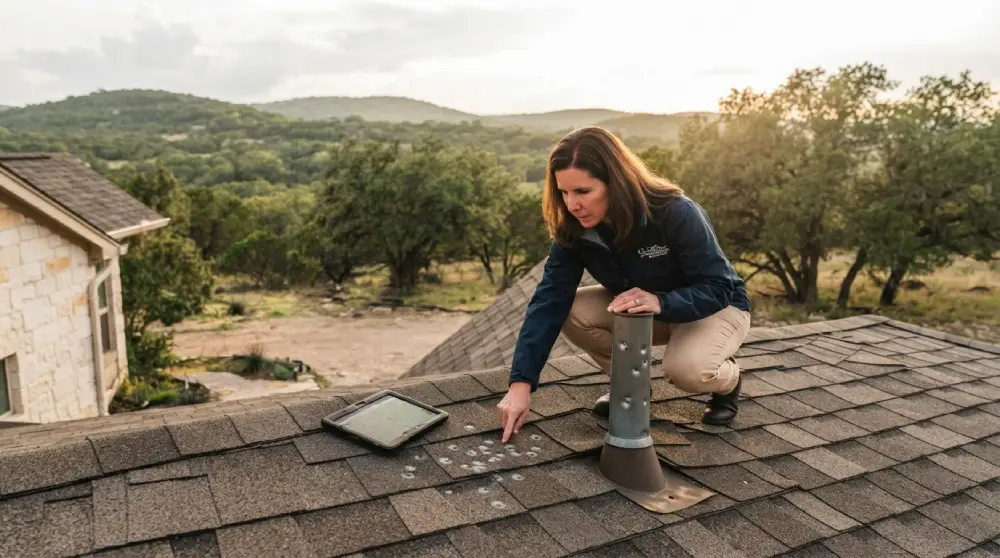
2. Property Inspection
The next step is a detailed inspection of the reported loss.
For storm claims, that may include roofing, exterior elevations, gutters, windows, detached structures, interior rooms, and other affected components. Commercial properties may require additional documentation depending on their size and construction.
3. Damage Documentation
We organize evidence needed to present the claim clearly.
Depending on the situation, this may involve photographs, measurements, damaged-item documentation, repair estimates, inventories, invoices, reports, and supporting records.
4. Claim Presentation and Negotiation
TX Public Adjusting communicates and negotiates with the insurance carrier regarding documented differences in scope, quantities, pricing, and covered damage.
Our role is to advocate for the policyholder’s claim—not protect the insurance company’s financial interests.
5. Settlement and Claim Resolution
We continue working through outstanding claim issues and documentation until the adjustment process reaches its conclusion.
Every claim depends on its facts, policy terms, coverage, documented damage, and insurer evaluation. We do not promise a particular settlement amount.
Why Choose TX Public Adjusting
Licensed Texas Representation
TX Public Adjusting operates through Rise Public Adjusting LLC, Texas License #3356839.
We focus on Texas property insurance claims and understand the damage patterns Texas property owners commonly experience from hail, wind, water, fire, and severe storms.
We Represent Policyholders
Insurance company adjusters work for or on behalf of the insurance carrier.
Public adjusters represent policyholders.
That means our job is to document and advocate for your property claim rather than control the insurance company’s claim costs.
Residential and Commercial Experience
Our team has reviewed thousands of claims involving homes, commercial buildings, multifamily properties, retail spaces, roofs, contents, water losses, fires, hailstorms, and other property damage.
Detailed Scope Reviews
We do not simply look at the bottom-line payment.
We review how the carrier arrived at that number: measurements, quantities, repair items, damage areas, depreciation, and omitted components.
No Upfront Fees
You can request a Free Claim Review to discuss your situation and determine whether public adjusting assistance makes sense for your property claim.
Areas We Serve Near Dripping Springs
TX Public Adjusting serves property owners throughout Dripping Springs and surrounding Central Texas communities, including:
- Driftwood
- Henly
- Belterra
- Bear Creek
- Wimberley
- Bee Cave
- Lakeway
- Southwest Austin
- Buda
- Kyle
- Johnson City and nearby Hill Country communities
We assist both residential and commercial policyholders across Texas.
Frequently Asked Questions About Public Adjusters in Dripping Springs
What does a public adjuster in Dripping Springs do?
A public adjuster represents the property owner during an insurance claim. TX Public Adjusting can inspect the damage, review policy and claim documents, prepare supporting documentation, evaluate the carrier’s scope, and communicate with the insurer regarding disputed or missing items.
Unlike the insurance company’s adjuster, our responsibility is to the policyholder.
When should I hire a public adjuster after a Dripping Springs hailstorm?
You can hire a public adjuster at several stages of a hail claim. Some property owners contact us soon after filing, while others call after receiving an estimate that appears too low or after discovering additional damage. If your claim has already progressed, our guide explains when it is too late to hire a public adjuster and what factors can affect your options.
The earlier documentation is organized, the easier it can be to preserve evidence and identify scope issues. A claim can sometimes still be reviewed after an initial payment has been issued.
Can you review an insurance claim that has already been paid?
Yes. An initial insurance payment does not necessarily mean every documented issue has been resolved.
We can review the carrier estimate, photographs, repair information, and policy documents to determine whether there are apparent omissions or differences that deserve further evaluation.
What types of storm claims are common around Dripping Springs?
Hail, severe thunderstorms, high winds, heavy rainfall, water intrusion, lightning, and occasional winter storm losses are relevant concerns in Hays County. Flooding and wildfire are also significant regional hazards identified in county planning documents.
The exact coverage for any event depends on the policy and cause of loss.
Can a public adjuster help with roof damage?
Yes. Roof claims are a major part of public adjusting work in Texas.
We can review hail impacts, wind damage, roof accessories, exterior damage, interior leaks related to the storm, measurements, carrier pricing, and differences between the insurance estimate and the documented repair scope.
Do you handle commercial claims in Dripping Springs?
Yes. We work with owners of commercial and income-producing properties, including retail properties, restaurants, offices, multifamily buildings, warehouses, event-related properties, hospitality facilities, and other commercial structures.
Commercial claims can require more extensive documentation because roofing, interiors, inventory, equipment, tenant spaces, and operational issues may overlap.
Can you help if my water damage claim is underpaid?
Yes. We review water damage claims involving covered plumbing losses, storm-created openings, interior damage, mitigation issues, and other covered causes.
A major part of the review is determining whether the carrier’s estimate includes all affected materials and areas—not simply the most visible damage.
What if my insurance company says the roof only needs repairs?
Repair-versus-replacement disputes depend on the documented damage, the roofing system, policy language, repairability, matching considerations, and other claim-specific facts.
A public adjuster can inspect the property and evaluate whether the carrier’s proposed scope aligns with the actual documented condition of the roof.
How much does a public adjuster cost in Dripping Springs?
Public adjusting fees are generally established through a written agreement and must comply with applicable Texas requirements.
TX Public Adjusting offers a Free Claim Review and does not charge an upfront fee simply to discuss the property loss and determine whether our services may help.
Is TX Public Adjusting licensed in Texas?
Yes. TX Public Adjusting operates through Rise Public Adjusting LLC, Texas License #3356839.
We represent Texas policyholders with residential and commercial property insurance claims and work independently from insurance carriers.
Get a Free Dripping Springs Insurance Claim Review
If your Dripping Springs home, business, rental property, or commercial building has suffered hail, wind, roof, water, fire, or storm damage, you do not have to rely solely on the insurance company’s estimate.
TX Public Adjusting can review the claim, inspect the damage, identify possible scope omissions, organize supporting documentation, and represent your interests during the adjustment process.
Free Claim Review. No upfront fees. Residential and commercial claims.
Contact TX Public Adjusting today to request a free review of your Dripping Springs property insurance claim.
Rise Public Adjusting LLC
Texas License #3356839