Serving homeowners and commercial property owners across Texas.
Call a Professional NOW!
Licensed Texas Public Adjuster

Public Adjuster Taylor, TX

Roof

Hail, wind, leaks, matching disputes

Water

Burst pipes, mitigation, interior loss

Fire

Smoke, contents, structure, ALE

Storm

Hurricane, tornado, wind-driven rain

Free Texas Claim Review

Tell us what happened. We will help you understand whether the carrier’s estimate, denial, delay, or payment deserves a second look.

Fast response during business hours. No obligation.
Licensed Public Adjuster
Roof Claims
Hail Claims
Fire Claims
Storm Claims
Commercial Claims
Table of Contents

Property damage in Taylor can turn into a complicated insurance dispute faster than many owners expect. A spring hailstorm can damage shingles, metal roofing, gutters, windows, fencing, and exterior equipment across the same property. A severe thunderstorm can push rain through a compromised roof and cause hidden moisture damage inside walls or ceilings. When the insurance company’s estimate leaves out part of the loss, a licensed public adjuster in Taylor, TX can help document the damage and present the claim from the policyholder’s side.

TX Public Adjusting represents residential and commercial policyholders throughout Texas. We review insurance policies, inspect damaged property, prepare detailed claim documentation, identify missing scope items, and negotiate with the insurance carrier. Our firm operates as Rise Public Adjusting LLC under Texas License #3356839.

Property owners in Taylor can request a free claim review with no upfront fees. We can evaluate a new claim, an underpaid claim, or a claim that has stalled because the carrier and property owner disagree about the extent or cause of the damage.

Why Property Owners Hire a Public Adjuster in Taylor

Taylor is changing quickly, but its property base is diverse. The city includes older homes near Downtown Taylor, established residential streets around Murphy Park and Bull Branch Park, newer subdivisions such as Avery Glen, Castlewood, Summerfield, North Park, and the Grove at Bull Creek, plus agricultural, retail, industrial, multifamily, and commercial properties throughout eastern Williamson County.

That variety matters during an insurance claim.

An older home may have multiple roof layers, aging decking, plaster interiors, custom trim, or electrical systems that require additional investigation after a storm. A newer property may involve manufacturer requirements, matching issues, code-related repairs, or damage to modern exterior systems. A commercial loss may require documentation for roofing, mechanical equipment, inventory, tenant improvements, business personal property, and interrupted operations.

The insurance company assigns an adjuster to protect its financial interests and evaluate the claim under the policy. A public adjuster works for the policyholder. Property owners who are unfamiliar with what a public adjuster does should understand that this representation can include inspecting damage, preparing estimates, documenting the loss, and negotiating disputed claim issues. 

Taylor property owners commonly hire TX Public Adjusting when:

  • The carrier’s estimate appears too low
  • Roof damage was classified as cosmetic or repairable
  • Interior water damage was omitted from the scope
  • The insurer disputed the cause or date of loss
  • A claim was delayed or repeatedly reassigned
  • Depreciation was applied incorrectly
  • The carrier paid for isolated repairs instead of a complete restoration
  • Commercial equipment or contents were undervalued
  • The owner does not have time to manage inspections, estimates, calls, and paperwork
  • A denied or underpaid claim needs a second review

A public adjuster cannot change the policy or guarantee a particular result. We can, however, make sure the loss is thoroughly investigated, documented, estimated, and presented with the detail a serious property claim requires.

Concerned that your Taylor insurance claim is missing damage? Contact TX Public Adjusting for a free claim review.

Taylor Storm Risks and Property-Damage Concerns

Taylor sits in eastern Williamson County, where warm Gulf moisture, strong frontal systems, and Central Texas spring weather can produce severe thunderstorms with little warning. The City of Taylor specifically identifies tornadoes, hail, flooding, and other severe-storm hazards in its emergency-preparedness guidance.

Hailstorms

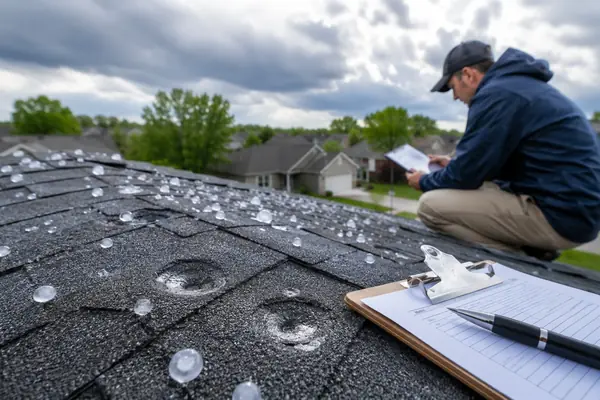
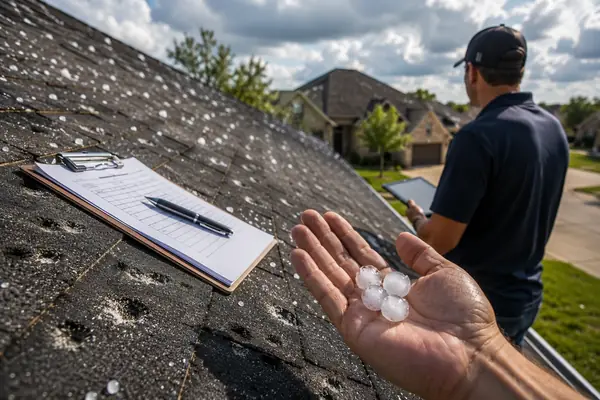
Hail is one of the most common reasons Taylor property owners file a hail damage insurance claim involving the roof, exterior elevations, gutters, windows, fencing, or outdoor equipment. Even when a roof is not leaking immediately, hail can fracture asphalt shingles, loosen granules, dent metal panels, damage vents, crack skylights, and compromise soft-metal components.

Hail damage is not always obvious from the ground. A roof may look generally intact while individual components show functional impact. Carriers may also dispute whether marks are caused by hail, normal wear, mechanical damage, installation defects, or an earlier storm.

A strong hail claim should document:

  • The condition of each roof slope
  • Shingle bruising, fractures, tears, and granule displacement
  • Dents to vents, flashing, gutters, downspouts, and metal panels
  • Damage to window screens, fencing, siding, and exterior finishes
  • Date-of-loss weather information
  • Interior staining or water intrusion
  • Repairability and material availability
  • Matching and uniform appearance concerns
  • Applicable code-related work

High Wind and Tornado Activity

Straight-line winds can lift shingles, separate roofing seams, damage ridge caps, pull flashing away from walls, topple trees, and drive debris into a building envelope. Rotating storms can create more concentrated damage to roofs, framing, detached structures, fences, signs, and commercial equipment.

Wind claims are frequently disputed because the most visible damage may be limited to a small section of the roof. The real question is not only how many shingles are missing. It is whether the remaining materials can be repaired properly without causing further damage or leaving the property with an incomplete restoration.

Heavy Rain and Water Intrusion

Taylor’s lower-lying areas, drainage channels, creeks, streets, and properties near Bull Branch or other drainage features may face water accumulation during intense rainfall. Water may also enter through storm-damaged roofing, windows, doors, wall penetrations, or flashing.

A property claim involving water requires careful cause analysis. Standard property policies often treat rain entering through storm-created openings differently from surface flooding or rising water. The wording of the policy, the physical evidence, and the documented path of water entry can materially affect the claim.

Winter Freeze Damage

Central Texas freeze events can produce burst supply lines, damaged plumbing fixtures, frozen exterior pipes, ceiling collapses, and water damage that spreads through insulation, drywall, flooring, cabinets, and electrical components.

Freeze claims can become underpaid when the carrier focuses on the broken pipe but does not fully account for demolition, drying, access, rebuilding, finish matching, and related damage in adjoining rooms.

Fire, Smoke, and Electrical Losses

Taylor’s mix of historic buildings, older homes, workshops, agricultural structures, restaurants, and newer developments creates a broad range of fire-loss exposures. A fire claim may include far more than visibly burned materials.

Smoke residue can travel through HVAC systems and settle in rooms far from the point of origin. Heat can damage wiring, appliances, finishes, windows, roofing, and structural components. Water used during suppression can create a separate category of damage requiring drying and remediation.

Common Insurance Claims in Taylor

Common Insurance Claims in Taylor

Hail Damage Claims

Hail claims can involve roofing, siding, gutters, windows, screens, fences, patios, solar components, outdoor equipment, vehicles, and commercial rooftop systems. TX Public Adjusting evaluates the complete exterior and interior loss rather than limiting the review to the most obvious roof impacts.

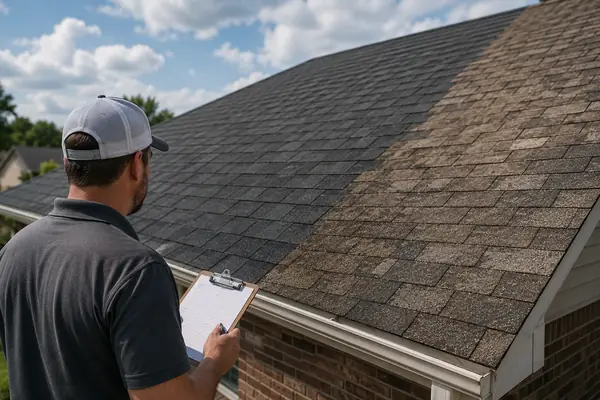
We also examine whether the insurer’s proposed repair is technically feasible. A small allowance for spot repairs may not be sufficient when shingles are brittle, discontinued, mechanically bonded, or unable to be manipulated without causing additional damage.

Water Damage Claims

Water damage can spread beyond the visible stain. Moisture may remain behind drywall, under flooring, inside insulation, beneath cabinets, or around electrical systems. Property owners who are dealing with an insurance adjuster after water damage should preserve photographs, drying records, plumbing reports, damaged materials, and invoices related to emergency mitigation. 

A properly prepared water-damage claim may require:

  • Moisture mapping
  • Drying records
  • Plumbing reports
  • Photographs and video
  • Demolition documentation
  • Flooring and cabinet evaluations
  • Personal-property inventories
  • Mold or microbial assessments when applicable
  • Repair estimates for all affected rooms

TX Public Adjusting helps organize the evidence and determine whether the carrier’s estimate reflects the full repair process.

Fire and Smoke Damage Claims

A fire damage insurance claim is often among the most detailed property losses. The building, contents, cleaning needs, temporary relocation, debris removal, code requirements, and business interruption may all need separate documentation. 

Smoke damage can affect porous surfaces, textiles, electronics, ductwork, insulation, and personal belongings. Simply cleaning visible soot from one area may not restore the property to its pre-loss condition.

Storm and Wind Damage Claims

Thunderstorms near Taylor can produce overlapping damage from wind, hail, falling limbs, rain, and flying debris. When several causes are present, the claim documentation should clearly explain what happened and connect each damaged item to the reported event.

Our inspection process looks beyond missing shingles. We evaluate roof accessories, exterior elevations, detached structures, interior moisture, mechanical equipment, and other affected components.

Roof Damage Claims

Hiring a public adjuster for a roof claim may help when Taylor property owners and insurance carriers disagree over the cause, extent, repairability, or value of roof damage. 

Common disputes include:

  • Repair versus replacement
  • Old damage versus recent storm damage
  • Cosmetic versus functional damage
  • Mechanical damage allegations
  • Insufficient hail test squares
  • Missing underlayment or flashing
  • Incomplete steep or high-roof charges
  • Omitted gutters, vents, drip edge, or accessories
  • Incorrect roof measurements
  • Unsupported depreciation
  • Failure to include code-required work

TX Public Adjusting prepares a detailed scope based on observed conditions, available documentation, policy terms, and the work reasonably required to restore the property.

Commercial Property Claims

Taylor’s continued growth has increased the number and variety of commercial properties in and around the city. A commercial public adjuster can assist policyholders with losses involving retail buildings, restaurants, warehouses, offices, multifamily properties, industrial facilities, churches, agricultural buildings, and mixed-use properties. 

Commercial claims may include:

  • Low-slope and metal roofing systems
  • HVAC and rooftop equipment
  • Electrical and mechanical systems
  • Inventory and business personal property
  • Tenant improvements
  • Signage and exterior lighting
  • Water mitigation
  • Code upgrades
  • Loss of rents
  • Business-income losses
  • Extra expenses incurred to continue operations

Commercial policies contain conditions, sublimits, endorsements, deductibles, and reporting requirements that should be reviewed early. Waiting too long to organize the claim can make it harder to document the loss accurately.

Why Taylor Insurance Claims Become Underpaid

An underpaid claim does not always begin with an outright denial. It often begins with a short inspection, a narrow repair estimate, or missing documentation that causes the insurer to overlook part of the damage. Reviewing common property insurance claim mistakes can also help owners avoid discarding evidence, accepting an incomplete scope too quickly, or failing to document additional damage. 

Missed Damage

Some damage is difficult to see during a brief inspection. Moisture behind walls, damage beneath roofing materials, smoke contamination, displaced flashing, or affected commercial equipment may require additional testing or specialized evaluation.

Scope Omissions

A carrier may agree that damage occurred while leaving necessary work out of the estimate.

Frequently omitted items include:

  • Roof accessories
  • Underlayment
  • Flashing
  • Gutters and downspouts
  • Detaching and resetting equipment
  • Interior protection
  • Debris removal
  • Labor minimums
  • Texture and paint blending
  • Cabinet or flooring continuity
  • Code-related work
  • Contractor overhead and profit when justified

Low or Incomplete Estimates

Insurance estimates may use the wrong measurements, incomplete quantities, inaccurate material descriptions, or pricing that does not reflect the actual restoration scope.

Even small omissions can become significant when repeated across multiple rooms, roof slopes, buildings, or commercial units.

Depreciation Problems

Depreciation may be recoverable or nonrecoverable depending on the policy and the damaged property. Disputes can arise when depreciation is applied to labor, applied at an unsupported rate, or withheld without a clear explanation of how it can be recovered.

Documentation Gaps

Photos alone may not establish the full value of a claim. Larger losses often require estimates, reports, inventories, invoices, measurements, timelines, and written explanations connecting the damage to the covered event.

Repairability and Matching Disputes

The carrier may pay to replace a few shingles, one cabinet face, part of a floor, or a limited section of siding. That allowance may not create a reasonable repair when the original material is unavailable, faded, brittle, mechanically incompatible, or visually inconsistent with the surrounding property.

Our Public Adjusting Process

1. Free Claim Review

We begin by learning what happened, when the damage occurred, what the insurance company has done, and what concerns the property owner has about the claim.

We may review:

  • The insurance policy
  • Carrier correspondence
  • Payment letters
  • Estimates
  • Inspection reports
  • Photographs
  • Contractor proposals
  • Repair invoices
  • Denial or reservation-of-rights letters

This initial review helps determine whether the claim appears to warrant further investigation.

2. Property Inspection

When we accept a Taylor claim, we inspect the property and document the visible damage. The inspection may include roofing, exterior elevations, interior rooms, detached structures, contents, equipment, and commercial systems depending on the loss.

Additional professionals may be appropriate when the claim involves engineering, plumbing, roofing, environmental issues, fire causation, building code, or specialized equipment.

3. Claim Documentation

We organize the evidence and prepare a detailed claim package. The documentation may include photographs, measurements, diagrams, estimates, inventories, reports, invoices, weather information, and a written explanation of the loss.

Our goal is to present a clear, supportable scope—not a vague demand.

4. Estimate and Scope Comparison

We compare our findings with the insurance company’s estimate to identify omissions, quantity differences, pricing issues, and disputed damage.

This step frequently reveals that the carrier included the main repair but omitted related work needed to complete it.

5. Carrier Communication and Negotiation

TX Public Adjusting communicates with the insurer, responds to claim questions, coordinates inspections, presents supporting documentation, and negotiates disputed scope and value issues.

The carrier retains the right to evaluate coverage under the policy. Our role is to advocate for the policyholder and support the claim with detailed evidence.

6. Claim Resolution

When the claim is resolved, we review the settlement documents and explain the outcome. Some claims are resolved through direct negotiation. Others may require appraisal, legal review, engineering, or another dispute-resolution option depending on the policy and circumstances.

A Mid-Claim Review Can Still Make a Difference

You do not always have to hire a public adjuster on the first day of the claim. However, property owners should understand when it is too late to hire a public adjuster because policy deadlines, completed repairs, lost evidence, or a closed claim can affect the available options. 

Many Taylor property owners contact us after:

  • Receiving the first estimate
  • Discovering additional damage
  • Being told the roof can be patched
  • Receiving a partial denial
  • Waiting weeks for a response
  • Learning that repair costs exceed the carrier’s allowance
  • Receiving a final-payment letter they do not understand

The best time to request help is before critical policy deadlines expire and before damaged materials are discarded without documentation.

Have an open or underpaid Taylor property claim? Request a free review from TX Public Adjusting before accepting the carrier’s estimate as final.

Why Choose TX Public Adjusting

Licensed Texas Representation

TX Public Adjusting operates as Rise Public Adjusting LLC under Texas License #3356839. Our work is focused on Texas property claims and the conditions Texas property owners regularly face.

We Represent Policyholders

Insurance-company adjusters work for the carrier. Independent adjusters are also hired by the carrier. Understanding the difference between a public adjuster vs. independent adjuster helps clarify why a public adjuster represents the insured property owner rather than the insurance company. 

That distinction affects how the claim is reviewed, documented, and negotiated.

Residential and Commercial Experience

Our experience includes residential and commercial losses involving hail, wind, water, fire, smoke, roofing, contents, and large property-damage claims.

We have reviewed thousands of claims and understand how small scope differences can create major settlement gaps.

Detailed Documentation

A strong claim is built with evidence. We focus on photographs, measurements, estimates, reports, policy review, repair requirements, inventories, and written support.

No Upfront Fees

Taylor property owners can request a free claim review. There are no upfront fees for our public-adjusting representation. Compensation terms are explained in the written agreement before work begins.

Local Understanding, Statewide Resources

Taylor has a distinct mix of historic properties, established neighborhoods, new residential construction, agricultural land, and expanding commercial development. Our approach accounts for the actual building, materials, occupancy, and type of loss rather than forcing every claim into the same template.

Areas We Serve Near Taylor

Areas We Serve Near Taylor

TX Public Adjusting assists policyholders in Taylor and surrounding Williamson County and Central Texas communities, including:

  • Hutto
  • Round Rock
  • Georgetown
  • Granger
  • Thrall
  • Coupland
  • Pflugerville
  • Manor
  • Elgin
  • Bartlett
  • Rockdale
  • North Austin
  • Eastern Williamson County
  • Northern Travis County
  • Western Milam County

Within Taylor, we assist property owners near Downtown Taylor, Murphy Park, Bull Branch Park, Heritage Square, the Moody Museum, North Park, Summerfield, Avery Glen, Castlewood, the Grove at Bull Creek, Mallard Park, Doak, and surrounding residential and commercial corridors.

Frequently Asked Questions

What does a public adjuster in Taylor do?

A public adjuster represents the policyholder during a property insurance claim. The adjuster reviews the policy, inspects the damage, prepares documentation, develops a repair scope, communicates with the insurer, and negotiates disputed claim issues.

TX Public Adjusting works for Taylor homeowners, business owners, landlords, property managers, and other insured property owners—not the insurance company.

How much does a public adjuster cost in Texas?

Public adjusters are commonly paid through a contingency fee based on the claim recovery, subject to Texas law and the written agreement. The exact fee can depend on the claim and the services required.

TX Public Adjusting offers a free initial claim review and charges no upfront fees. All compensation terms are disclosed before representation begins.

Can I hire a public adjuster after the insurance company has already inspected my Taylor property?

Yes. Many policyholders hire a public adjuster after the carrier’s inspection, especially when the estimate is too low, damage was missed, or the insurer has proposed repairs that do not appear practical.

The claim should be reviewed before policy deadlines expire, repairs erase evidence, or the owner signs documents that may affect available options.

Can a public adjuster help with a denied claim?

A public adjuster can review a denial, inspect the property, evaluate the carrier’s stated reasons, and identify whether additional factual documentation may support reconsideration.

Some denials involve legal or coverage questions that require an attorney. When appropriate, we may recommend that the property owner obtain legal advice.

What should I do after hail damages my Taylor roof?

Protect the property from further damage when it is safe to do so, photograph visible conditions, save damaged materials, keep invoices, and report the loss according to the policy.

Avoid agreeing to a limited roof repair until repairability, matching, related exterior damage, and interior water intrusion have been evaluated.

Does homeowners insurance cover flood damage in Taylor?

Standard homeowners policies generally treat rising surface water differently from rain that enters through a storm-created opening. Flood coverage is usually provided through a separate flood policy.

Because water claims depend heavily on the source and path of the water, the property should be inspected and the policy language reviewed before assumptions are made about coverage.

Can TX Public Adjusting help with commercial claims in Taylor?

Yes. We assist with commercial claims involving roofing, water, fire, hail, wind, equipment, inventory, tenant improvements, multifamily properties, and business-related losses.

Commercial claims often require more extensive documentation than residential losses because several buildings, tenants, systems, income streams, or property categories may be involved.

What if the insurance payment is lower than the contractor’s estimate?

A difference between estimates does not automatically mean either side is correct. The estimates should be compared line by line to identify differences in measurements, materials, labor, repair methods, code requirements, and omitted work.

TX Public Adjusting can review both estimates and determine whether additional documentation should be submitted to support a supplement.

How long does a Taylor property claim take?

The timeline depends on the type of damage, size of the loss, carrier responsiveness, documentation required, disputed issues, and whether specialists are involved. Texas property owners may also want to review how long an insurance adjuster has to contact you after a claim is reported. 

A straightforward roof claim may move faster than a major fire, commercial water loss, or multi-building storm claim. Detailed documentation early in the process can reduce unnecessary delays.

Is it too late to hire a public adjuster after receiving a payment?

Not necessarily. A prior payment may be an initial or undisputed payment rather than the final amount available under the policy.

We can review the estimate, payment letter, policy, deadlines, and remaining damage to determine whether the claim may still be supplemented or reopened. Property owners should request that review promptly.

Free Taylor Insurance Claim Review

Your insurance carrier has professionals evaluating the claim on its behalf. You have the right to seek experienced representation of your own.

TX Public Adjusting helps Taylor property owners document hail, wind, roof, water, fire, smoke, freeze, and commercial property claims. We review the carrier’s estimate, identify overlooked damage, prepare supporting documentation, and negotiate from the policyholder’s side.

Contact TX Public Adjusting today to request a free review of your Taylor residential or commercial property claim. 

  • Licensed Texas Public Adjuster
  • Rise Public Adjusting LLC
  • Texas License #3356839
  • Residential and Commercial Claims
  • No Upfront Fees
  • Serving Taylor and communities across Texas

Learn More About Public Adjusting Services