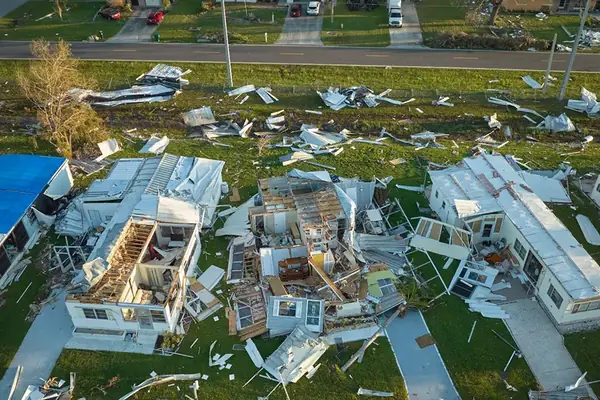
A windstorm claim in Texas depends on three things before anyone looks at the damage: which insurer covers wind on your property (TWIA or a private carrier), how your wind deductible is calculated, and how the carrier separates wind damage from flood damage. Get those right and the rest of the claim is documentation. Get them wrong and a legitimate claim can be paid at a fraction of its value or denied outright.
TWIA or your private carrier
In many coastal counties, private homeowners policies exclude wind and hail, and wind coverage comes from the Texas Windstorm Insurance Association (TWIA). Your homeowners policy then covers fire, theft and non-wind water, TWIA covers wind, and a separate flood policy covers rising water. Inland, a single private policy usually covers wind and hail along with everything else.
TWIA policy
- Covers wind and hail in designated coastal areas
- Claims must be filed within one year of the date of damage
- Its own claim process and dispute procedures, set by statute
Private carrier
- Wind and hail usually included unless excluded by endorsement
- Reporting deadline set by the policy, not a single statute
- Chapter 542 prompt-payment deadlines apply
Texas law: A TWIA claim must be filed within one year after the date of damage. The commissioner may extend that by up to 180 days for good cause. TWIA generally has 60 days to accept or deny coverage after it receives the claim and requested information (Tex. Ins. Code §2210.573). See the statute at statutes.capitol.texas.gov.
For private policies, many Texas homeowners forms also set a one-year or similar deadline to report wind and hail damage, but the wording varies. Check the "Duties after loss" and "Suit against us" conditions in your own policy.
to file a TWIA claim after the date of damage
for TWIA to accept or deny after receiving what it needs
written notice before filing suit on a weather claim
Named-storm and percentage deductibles
Wind and hail deductibles in Texas are often a percentage of dwelling coverage, commonly 1% to 2%, especially near the coast and in hail-prone areas. Some policies carry a separate named-storm or hurricane deductible. A 2% deductible on a home insured for $400,000 is $8,000, not the $1,000 flat deductible printed elsewhere on the declarations page.
Read the deductible section carefully. It tells you which deductible applies to which peril, and whether it applies per occurrence. When a storm causes both wind damage and a separate covered loss, how the deductible is applied can change the payment.
Free toolClaim settlement calculatorSee what your claim should pay after depreciation and your deductible, and what you net with or without a public adjuster.Wind versus flood: the causation fight
Standard homeowners and TWIA policies exclude flood. When a hurricane brings wind and storm surge or rising water, the carrier's adjuster or engineer will often attribute as much of the damage as possible to flood. The disputes we see most:
- A water line on interior walls used to deny everything below it, including damage that came through the roof
- Roof and wall damage called "pre-existing" because the storm also flooded the property
- Structural damage attributed to surge or wave action rather than wind
The answer is evidence of direction. Ceiling stains and wet insulation point to water from above. Missing shingles, lifted decking, and broken windows on the windward side point to wind. We photograph damage from the top down, take moisture readings on ceilings and upper walls, and capture interiors with a Matterport 3D scan before demolition so the pattern stays on record.
Flood damage itself needs an NFIP or private flood policy. If you have one, we keep the wind and flood claims consistent so neither carrier can point at the other.
Wind-driven rain and storm-created openings
Rain that enters through an opening the storm created, such as a missing section of roof, a broken window or a torn soffit, is generally treated as part of the wind loss. Rain that blows in through an existing gap, like a window left open or a worn seal, often isn't. Policy wording on wind-driven rain varies, so we read yours. Documenting the opening itself, with photos of the damaged roof or wall section next to the interior water damage, is what ties the two together.
Tarping and mitigation
Your policy requires reasonable steps to prevent further damage. After a storm, that means tarping the roof, boarding windows, and drying out wet interiors. These costs are usually reimbursable as part of the claim.
- Photograph first. Before tarping, photograph the roof and openings from the ground and, if it is safe, from a ladder or drone.
- Tarp and board. Use a contractor or do it yourself. Keep receipts for materials and labor and note the hours.
- Start drying. Call a mitigation company for wet interiors and ask for daily moisture logs.
- Report the claim. Notify the right carrier, TWIA or private, and keep the claim number with your receipts.
Carriers sometimes reduce tarping invoices as excessive, especially after a major storm when prices rise. Photos of the tarp installed, the roof area covered and the time it took support the bill.
Hurricanes, tornadoes and straight-line wind
Hurricane Ike in 2008 hit Galveston and Houston with surge and wind together, and many of the wind-versus-flood disputes still cited today trace to Ike claims. Hurricane Harvey in 2017 made landfall near Rockport and then flooded Houston and the Coastal Bend for days, which put flood exclusions at the center of thousands of claims. Hurricane Beryl in July 2024 caused widespread wind damage and power outages in the Houston area, much of it to roofs, fences and trees.
Inland claims follow different patterns. Tornadoes and straight-line wind from severe thunderstorms damage roofs, siding, fences and outbuildings across North and Central Texas, often alongside hail. The causation question there is usually wind versus wear and tear rather than wind versus flood. Our roof and hail claims page covers that side.
What we document on a wind claim
- Roof-level or drone photos of every slope, missing and creased shingles, lifted decking and damaged flashing
- Siding, soffit, fascia, windows, fences, carports and outbuildings
- Interior water damage with moisture readings and a Matterport 3D scan
- Storm data for your address and date of loss
- Tarping, board-up and mitigation invoices with supporting photos
- A complete Xactimate estimate covering the building and related damage
Our guide to property damage after a hurricane walks through what to inspect after the storm passes.
Frequently asked questions
How long do I have to file a TWIA claim?
A TWIA claim must be filed within one year after the date of damage. The commissioner may extend that by up to 180 days for good cause (Tex. Ins. Code §2210.573).
What is a percentage wind deductible?
It is a deductible calculated as a percentage of your dwelling coverage, often 1% to 2% in Texas. On a home insured for $300,000, a 2% deductible is $6,000.
Does homeowners insurance cover hurricane flooding?
No. Standard homeowners and TWIA policies exclude flood. Rising water needs an NFIP or private flood policy. Wind damage and rain entering through storm-created openings are covered separately under the wind policy.
Will insurance pay for tarping my roof after a storm?
Reasonable emergency repairs to prevent further damage, like tarping and boarding up, are usually reimbursed as part of the claim. Keep receipts and photograph the work.
Can a public adjuster help with a TWIA claim?
Yes. A licensed Texas public adjuster can represent you on a TWIA claim, documenting the wind damage and handling communication with TWIA within its statutory timelines.

Joseph inspects, documents and negotiates residential and commercial property claims across Texas, working only for policyholders.