A public adjuster for a roof claim does three things the carrier's adjuster has no reason to do for you: inspects every slope and every soft metal, writes an estimate that includes the whole roof system rather than just the shingles, and argues the repair-or-replace question using your policy's own wording. If your roof claim was approved for a few shingles, paid at a fraction of a roofer's bid, or denied as wear and tear, that is the work we take on.
Why roof claims come back low
Roof inspections are short. A field adjuster may have several roofs scheduled that day, and the decision often rests on a handful of test squares and a quick look at the gutters. A few patterns cause most of the underpayments we see:
- Too few hits counted. Hail bruising on asphalt shingles is easy to miss on a weathered roof and in flat afternoon light.
- Slopes skipped. A carrier may find damage on the west and north slopes and approve only those, even when the other slopes took hits too.
- Repair instead of replace. Damage is treated as isolated and priced as a repair, without asking whether the repair is possible.
- Incomplete estimate. The shingles are priced and the parts that make a roof a roof are left off.
What a carrier's roof estimate usually leaves out
Compare your carrier's estimate line by line against this list. Each item is a separate line in Xactimate, and each one gets dropped regularly.
- Ridge cap shingles, priced as their own line rather than cut from field shingles
- Starter strip at eaves and rakes
- Drip edge
- Roof vents, turtle vents, turbines, ridge vent and pipe jacks
- Step, counter, chimney and valley flashing
- Soft metals: dented gutters, downspouts, A/C fins, window wraps and fascia metal
- Code items such as ice and water shield in valleys or underlayment upgrades required by your local building code
- Removal of additional shingle layers when the roof has more than one
- Steep charges for pitches that need extra safety equipment, and high-roof charges for two-story roofs
- Overhead and profit (O&P) when the job needs a general contractor to coordinate several trades
- Waste factor, permit costs, and detach-and-reset of satellite dishes or solar panels
Not every item applies to every roof. But when an estimate shows only "remove and replace shingles" and a single line for felt, the gap between that number and a real bid is usually explained by this list.
Test squares and hit counts
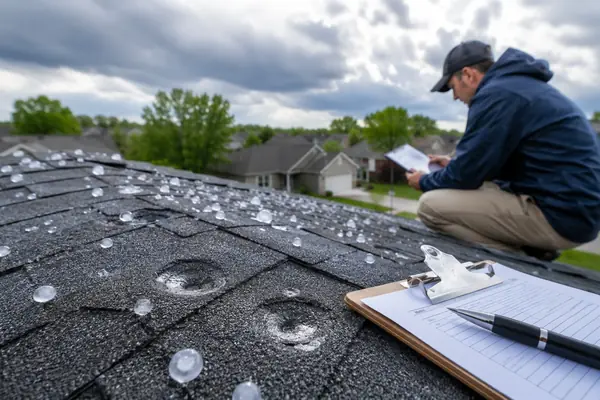
Most carriers assess a shingle roof by marking a test square, typically 10 feet by 10 feet, on each slope and counting the hail hits inside it. Many use an internal threshold: below a certain number of functional hits per square, the slope is called repairable or undamaged. That threshold comes from carrier guidelines, not from your policy, so we look at how the square was chosen. A square drawn on the least exposed part of a slope tells you little about the rest of it.
We mark our own hits with chalk, photograph each square at roof level so the bruises are visible, and record which slopes faced the storm. We also pull storm data for your address and date of loss so the carrier can't say hail never reached you.
Free toolStorm report lookupFind NOAA hail and wind reports for a date and place to pin down your date of loss.Cosmetic exclusions and ACV roof endorsements
Two endorsements change a roof claim more than anything an adjuster finds on the roof. Read your declarations page and endorsements before you argue about the damage itself.
Cosmetic damage exclusion
- Common on metal roofs, and sometimes on other roof types
- Excludes dents that don't affect the roof's ability to shed water
- The fight becomes functional versus cosmetic: cracked coatings, punctures, seam and fastener damage
ACV roof schedule or endorsement
- Pays actual cash value for the roof instead of replacement cost
- Depreciation is based on roof age and is not recoverable
- The fight is often over the depreciation percentage and the roof age the carrier used
For more detail, see our guide to cosmetic versus functional hail damage.
Repair or replace, and matching
Even where damage is limited to part of the roof, a repair may not be possible. Discontinued shingles, brittle shingles that crack when you lift them to fasten a new one, and color differences on older roofs all bear on whether a repair restores the roof. We test and photograph brittleness and check product availability when it matters.
Texas has no statute that forces an insurer to replace undamaged materials so everything matches. Whether matching is owed depends on the policy wording, such as "like kind and quality" or "reasonable uniform appearance", and on the facts. Our article on matching and roof replacement in Texas goes deeper.
How we document a roof claim
- Policy review. We read the declarations, wind and hail deductible, and any cosmetic or ACV roof endorsements before we inspect, so we know which argument matters.
- Roof-level and drone photos. Every slope, every test square, chalked hits, soft metals and collateral damage to fences, siding and screens.
- Measurements. Squares, pitch, layers, eaves, rakes, ridges and valleys, so quantities in the estimate can be checked.
- Interior documentation. If the roof leaked, we scan affected rooms with Matterport and check ceilings and attic with a moisture meter.
- Xactimate estimate. A full line-item estimate of the roof system and related damage, submitted with photos and a summary of differences from the carrier's estimate.
Re-inspections
When we submit a supplement or dispute a finding, carriers often send an adjuster or engineer back out. We attend those re-inspections. Being on the roof with the carrier's representative lets us point out specific hits and slopes instead of arguing over photos afterward. If the parties still disagree about the amount of loss, the policy's appraisal clause may be the next step. See how appraisal works for hail claims.
Watch the deadline: many private Texas homeowners policies set a deadline, often one year, to report wind and hail damage. Check the "Duties after loss" and "Suit against us" conditions in your own policy rather than relying on a general rule.
Tip: Texas law bars a roofer or other contractor from acting as your public adjuster on a property they are repairing or may repair (§4102.163). We never do repairs on claims we adjust, so our estimate is not tied to a sale.
Frequently asked questions
Is it worth hiring a public adjuster for a roof claim?
It usually is when the carrier approved only part of the roof, left major components off the estimate, or denied the claim as wear and tear or cosmetic. For a small, fairly paid claim, the fee may not be worth it, and we will tell you so in the free review.
How many hail hits does insurance need to replace a roof?
There is no number in Texas law. Many carriers use an internal threshold of hits per 10-by-10-foot test square, which varies by company and roof type. The policy, the condition of the roof, and whether a repair is possible matter just as much.
Can a roofer handle my insurance claim?
No. Under Tex. Ins. Code §4102.163, a contractor may not act as a public adjuster or advertise to adjust claims on property they are repairing or may repair. A roofer can provide a bid and point out damage, but negotiation of the claim is for you or a licensed public adjuster.
What does ACV roof coverage mean?
An actual cash value roof endorsement pays the depreciated value of the roof rather than the cost to replace it, and that depreciation is not paid back later. Check your declarations page and endorsements to see whether your policy has one.
What if my metal roof only has dents?
If your policy has a cosmetic damage exclusion, dents that do not affect the roof's ability to keep water out may not be covered. We look for functional damage such as punctures, cracked coatings, and damaged seams or fasteners.

Joseph inspects, documents and negotiates residential and commercial property claims across Texas, working only for policyholders.