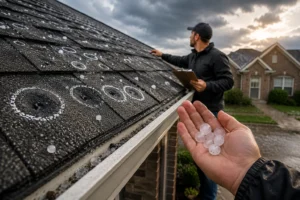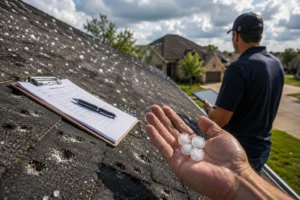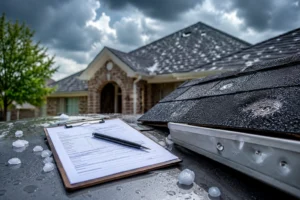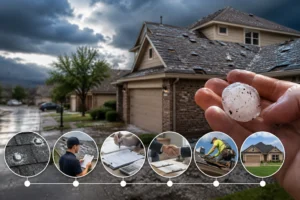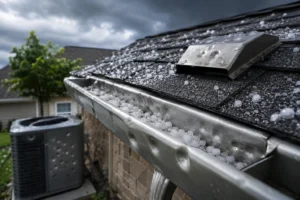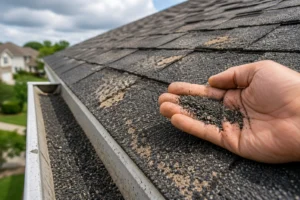

Hailstorms create problems fast. One moment the roof looks perfectly fine. Minutes later, shingles are bruised, gutters are dented, leaks begin appearing, and homeowners suddenly find themselves trying to understand how insurance companies evaluate hail damage before filing a claim. That process is much more detailed than most people expect. Insurance carriers do not simply look at a roof and approve a replacement automatically. They investigate storm reports, inspect roofing materials closely, document impact patterns, analyze roof age, and compare everything against policy language before making coverage decisions. That is where many claims become complicated. Understanding how insurance companies evaluate hail damage helps homeowners avoid costly mistakes, improve documentation, and strengthen their position during roofing claim negotiations.
Understanding What Actually Counts as Hail Damage
Not every mark on a roof qualifies as covered damage. That surprises homeowners constantly. Insurance companies generally separate hail damage into two categories:
| Type of Damage | Meaning |
|---|---|
| Cosmetic Damage | Visible marks that do not affect roof performance |
| Functional Damage | Damage that impacts waterproofing or roof integrity |
Functional damage usually matters much more during claim evaluations. For example, a metal roof may have visible dents but still perform normally. In that situation, the insurance company may classify the issue as cosmetic only. On the other hand, fractured shingles, cracked tiles, or exposed underlayment can create leak risks that often justify repairs or replacement. Different roofing systems also react differently during storms.
Asphalt Shingle Roofs
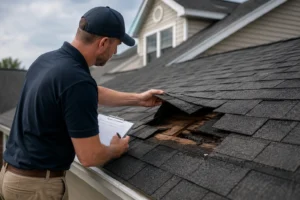
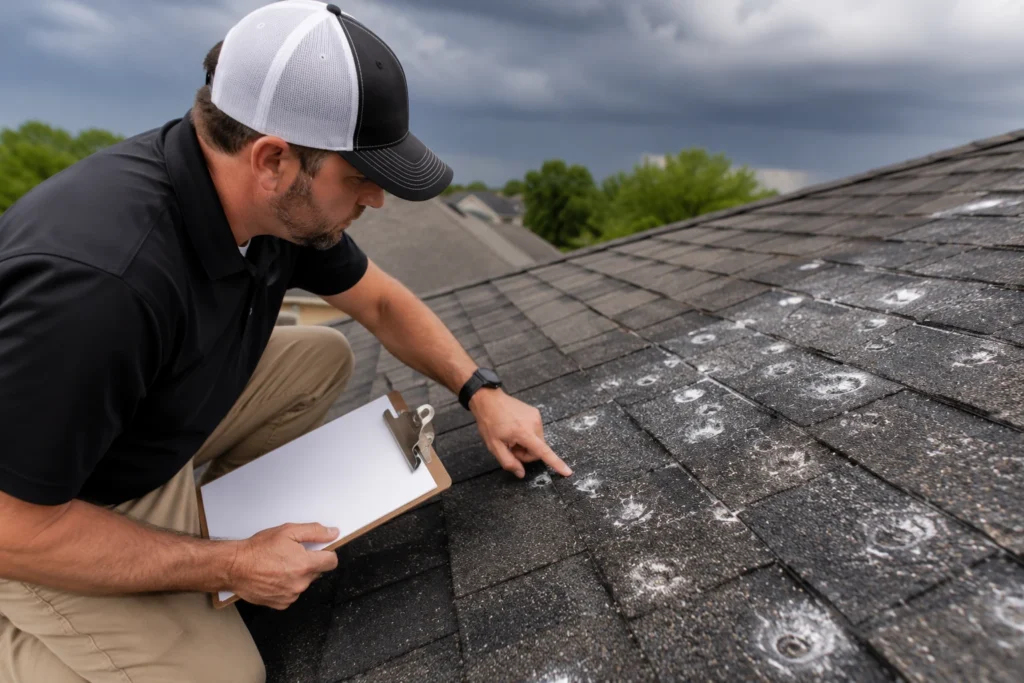
Adjusters commonly inspect asphalt shingles for:
- Circular bruising
- Granule displacement
- Fractures
- Soft impact spots
- Exposed fiberglass matting
Metal Roofing Systems
Metal roofs are usually evaluated for:
- Dent severity
- Protective coating damage
- Panel deformation
- Seam separation
- Fastener stress
Tile Roofing Systems
Tile roofs create unique inspection challenges because some damage may remain hidden initially. Inspectors often search for:
- Cracked tiles
- Broken corners
- Displaced sections
- Underlayment exposure
- Hidden fractures
Roofing material type heavily influences how insurance companies evaluate hail damage because every material absorbs impacts differently and ages differently over time.
The Insurance Claim Process Begins Immediately
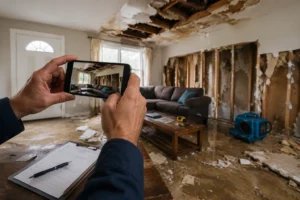
Most homeowners believe the claim process starts when the adjuster arrives. Not true. The process really begins immediately after the storm. Documentation should start as soon as conditions become safe. Helpful evidence often includes:
- Photos of visible roof damage
- Videos after the storm
- Interior water stains
- Weather reports
- Contractor inspection notes
- Temporary repair invoices
Strong organization helps tremendously later. Especially if disputes develop. Homeowners who delay reporting damage sometimes create additional problems because insurance carriers may question whether the roof damage actually resulted from the reported storm event. Timing matters. A lot.
What Happens During the Initial Roof Inspection
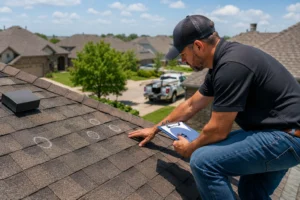
The first inspection plays a huge role in how insurance companies evaluate hail damage. Adjusters typically inspect far more than just shingles. Common inspection areas include:
- Roof slopes
- Gutters
- Downspouts
- Flashing
- Roof vents
- Window screens
- Siding
- HVAC units
- Soft metals
Soft metals often become extremely important because hail impacts appear there very clearly. The roof itself may show subtle damage. The gutters may tell the entire story. Adjusters also commonly photograph each roof slope and document impact density carefully. Many create roof diagrams showing where damage appears concentrated. The process is usually methodical because insurance companies need measurable evidence supporting repair or replacement decisions.
Why Test Squares Matter So Much
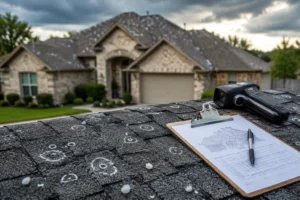
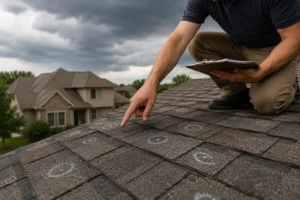
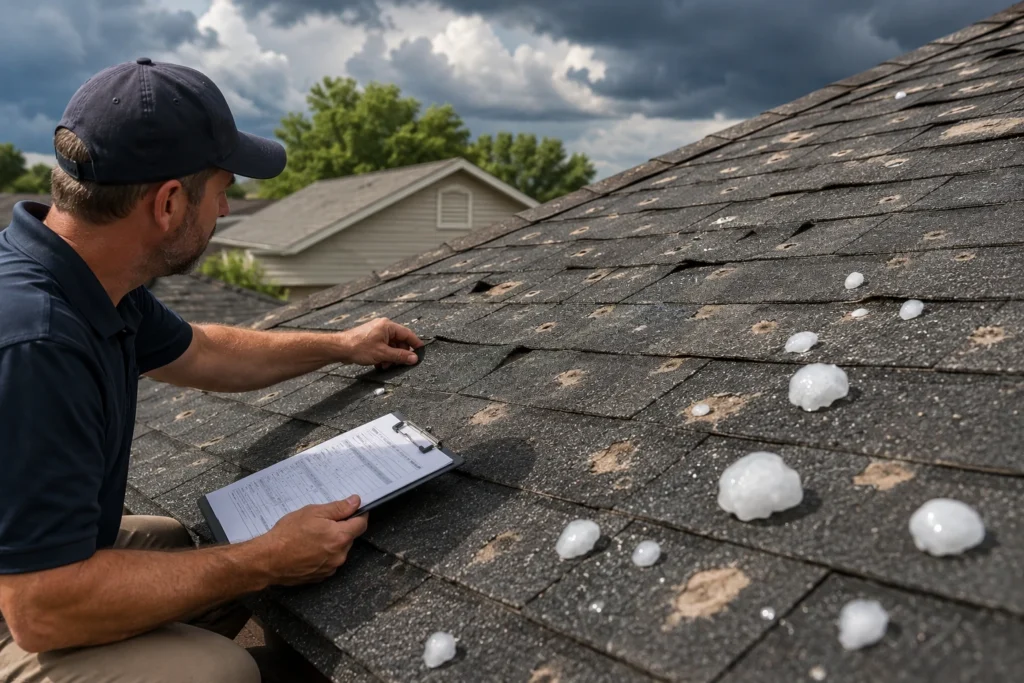
One of the most important parts of roof evaluations involves something called test squares. A test square is generally a 10-foot by 10-foot section of roofing material used to count qualifying hail impacts. Adjusters count the number of impacts within those areas to determine whether damage reaches replacement thresholds. Example:
| Roof Area | Impact Count | Possible Outcome |
|---|---|---|
| Front slope | Minimal impacts | Spot repairs |
| Rear slope | Moderate impacts | Partial replacement |
| Multiple slopes heavily damaged | Extensive impacts | Full replacement consideration |
This system creates measurable inspection standards instead of relying entirely on visual opinions. Still, disagreements happen constantly. Contractors may identify more hail impacts than carrier adjusters. Insurance representatives may argue certain marks resulted from foot traffic, heat blistering, or aging rather than hail itself. That is why documentation becomes so valuable.
Distinguishing Hail Damage From Normal Roof Aging
Insurance policies generally cover sudden storm-related damage. They do not cover long-term deterioration. That distinction creates countless disputes during roofing claims. Experienced inspectors often analyze whether roof conditions resulted from:
- Thermal cracking
- Heat blistering
- Mechanical damage
- Foot traffic
- Manufacturing defects
- Long-term aging
For example, scattered granule loss alone may not automatically indicate hail damage. However, circular bruising combined with collateral impacts on vents and gutters may support storm-related damage much more strongly. Some inspections become surprisingly technical. Certain roofing evaluations almost resemble a study in Tribology, especially when inspectors analyze how impacts affect protective coatings and surface wear patterns over time. Understanding causation remains one of the biggest parts of how insurance companies evaluate hail damage during modern claim investigations.
Technology Has Changed Roof Inspections
Roof inspections look very different today than they did years ago. Technology now plays a major role. Many insurance carriers use:
- Drone inspections
- Satellite roof measurements
- AI-assisted estimating systems
- Moisture scanning tools
- Digital storm verification software
Drones are especially useful on steep roofs because they allow adjusters to capture detailed imagery safely. Satellite technology also speeds up estimating calculations significantly. Some insurance companies even compare historical aerial imagery to determine whether roof damage existed before the reported storm occurred. That surprises many homeowners. But data verification has become a major part of modern claims handling.
Why Weather Reports Matter During Hail Claims
Insurance companies rarely rely only on visible roof damage. Storm verification matters enormously. Adjusters and carriers often compare inspection findings against meteorological data such as:
- NOAA weather reports
- Radar records
- Hail size maps
- Local storm tracking
- Forensic weather databases
If weather reports show only very small hail in the area, carriers may challenge large roof replacement requests aggressively. On the other hand, verified severe hail activity can strengthen claims significantly. Roofing materials may also react differently depending on structural Anisotropy, where material properties vary depending on impact direction and composition. Scientific and environmental factors increasingly influence how insurance companies evaluate hail damage during complex roof inspections.
Understanding Xactimate and Roofing Estimates
After inspections conclude, estimating begins. Most insurance carriers use software called Xactimate. Xactimate helps generate detailed repair estimates using local pricing databases and standardized line items. A roofing estimate may include:
| Estimate Component | Purpose |
|---|---|
| Tear-off labor | Removing damaged roofing |
| Material replacement | Installing new roofing materials |
| Flashing replacement | Updating metal flashing |
| Disposal fees | Debris removal |
| Ventilation upgrades | Correcting airflow deficiencies |
| Drip edge installation | Meeting building code requirements |
Large roofing estimates often contain hundreds of line items. And omissions happen regularly. That is why roofing estimates frequently become negotiation points during hail claims.
Why Supplemental Claims Are So Common
Supplements are additional requests for payment beyond the original estimate. They happen constantly during hail claims. Why? Because hidden problems often appear after repairs begin. Contractors may uncover:
- Rotten decking
- Additional underlayment damage
- Missing flashing
- Improper ventilation
- Building code compliance issues
When that happens, contractors submit revised documentation requesting additional payment. Strong supplements usually include:
- Photos
- Building code references
- Contractor documentation
- Manufacturer specifications
- Inspection reports
The stronger the evidence, the smoother the supplement process usually becomes.
Actual Cash Value vs Replacement Cost Value
Policy structure affects payouts enormously. Two homeowners with nearly identical hail damage may receive completely different claim payments depending on policy language. The two most common valuation methods include:
| Valuation Type | Meaning |
|---|---|
| Actual Cash Value (ACV) | Depreciated value after age and wear |
| Replacement Cost Value (RCV) | Full replacement cost minus deductible |
Older roofs often experience heavy depreciation under ACV policies. That can reduce payouts dramatically. Many homeowners do not realize this until they receive the estimate. Understanding valuation methods helps explain why insurance companies evaluate hail damage differently depending on roof age, condition, and policy terms.
Why Some Hail Claims Get Denied
Not every hail claim gets approved. Some denials frustrate homeowners tremendously. Common denial reasons include:
Insufficient Evidence
- Weak documentation often creates major problems. Especially when claims are reported months after the storm.
Cosmetic Damage Exclusions
- Some policies specifically exclude cosmetic damage on metal roofs. That detail matters enormously.
Wear and Tear Findings
- If adjusters believe roof deterioration existed before the storm, coverage disputes may arise quickly.
Conflicting Inspection Results
- Contractors and insurance adjusters sometimes disagree sharply regarding impact severity and repair scope. That is extremely common.
When Engineers Become Involved
Some claims escalate into highly technical disputes. Especially large-loss claims. In those situations, engineering firms may inspect the property independently. Engineering inspections often focus on:
- Fracture patterns
- Impact characteristics
- Roof aging
- Material performance
- Structural behavior
- Storm consistency
Engineering reports can heavily influence final claim outcomes. Sometimes they support the homeowner. Sometimes they support the insurance company. Either way, they often become central to how insurance companies evaluate hail damage during disputed claims.
The Role of Public Adjusters During Hail Claims
Public adjusters represent policyholders. Not insurance companies. That distinction matters. Public adjusters often assist homeowners by:
- Reviewing estimates
- Documenting overlooked damage
- Organizing claim evidence
- Negotiating repair values
- Managing communication
Homeowners commonly seek additional assistance during:
- Large roofing losses
- Underpaid claims
- Partial denials
- Complex commercial roof claims
- Ongoing disputes
Roof claims can become technical very quickly. Experienced guidance sometimes helps simplify the process substantially.
Common Homeowner Mistakes During Hail Claims
Some mistakes weaken claims unnecessarily. Fast.
- Waiting Too Long to Report Damage
- Delayed reporting can create serious causation disputes.
- Throwing Away Damaged Materials
- Preserving evidence matters during disagreements.
- Accepting the First Estimate Too Quickly
- Some estimates overlook important repair items.
- Ignoring Policy Language
- Coverage details matter far more than most homeowners realize.
Failing to Track Communication
Save everything. Emails. Photos. Inspection dates. Estimate revisions. Contractor reports. Organization becomes incredibly valuable later.
How Homeowners Can Strengthen a Hail Damage Claim
The strongest claims are usually the best organized claims. Helpful strategies include:
- Photographing visible damage immediately
- Scheduling professional roof inspections early
- Saving weather reports
- Keeping repair invoices
- Tracking communication carefully
- Requesting written explanations from carriers
- Understanding deductibles and exclusions
Preparation changes outcomes repeatedly during hail claims.
What Happens After the Evaluation
Eventually, the insurance company reaches a decision. That may involve:
- Full approval
- Partial approval
- Denial
- Reinspection requests
- Additional engineering review
Approved claims often involve initial payments followed by supplemental payments later as repairs continue. If disagreements continue, homeowners may pursue:
- Reinspections
- Appraisal
- Mediation
- Legal review
Every claim differs depending on policy language and damage complexity.
Final Thoughts
Understanding how insurance companies evaluate hail damage gives homeowners a major advantage before disputes begin. Because roofing claims involve much more than damaged shingles. They involve documentation. Storm verification. Inspection methods. Policy interpretation. Engineering analysis. Estimating software. And communication. The homeowners who stay organized, document carefully, understand their policies, and communicate clearly usually place themselves in far stronger positions during claim negotiations. Hailstorms are stressful. There is no way around that. But knowledge reduces confusion dramatically. And when homeowners truly understand how insurance companies evaluate hail damage, the entire process becomes much easier to navigate from beginning to final settlement.
FAQs
Adjusters compare impact patterns, weather reports, roof condition, and surrounding collateral damage to determine whether the damage likely came from a recent storm.
That depends on the policy. Some policies exclude cosmetic damage entirely, especially for metal roofing systems.
A test square is a measured roof section, usually 10×10 feet, where adjusters count hail impacts to evaluate repair or replacement eligibility.
Soft metals like gutters and vents often show hail dents more clearly than shingles, helping confirm storm activity and impact severity.
Yes. Insurance companies may deny claims if they believe the roof damage resulted primarily from aging, wear and tear, or maintenance issues rather than hail.
Xactimate is estimating software commonly used by insurance companies to calculate repair costs using local labor and material pricing data.
Yes. An independent roof inspection can help identify damage early and provide additional documentation before the insurance inspection occurs.
Contractors often discover hidden damage such as rotten decking, flashing problems, or code-related issues after removing roofing materials.
Absolutely. Insurance companies frequently use weather records, hail maps, and radar data to verify whether severe hail actually occurred near the property.
Homeowners often consider hiring a public adjuster during large losses, disputed claims, partial denials, or situations involving complicated roofing damage.