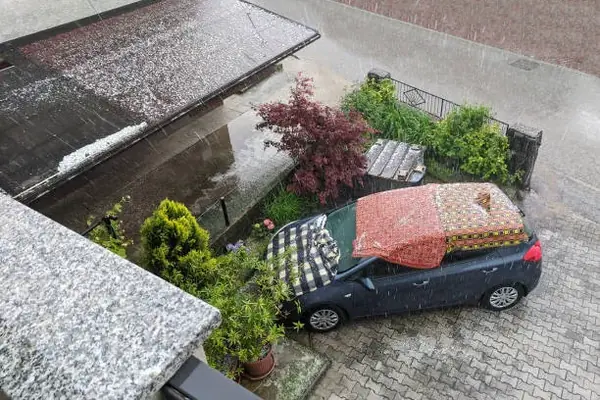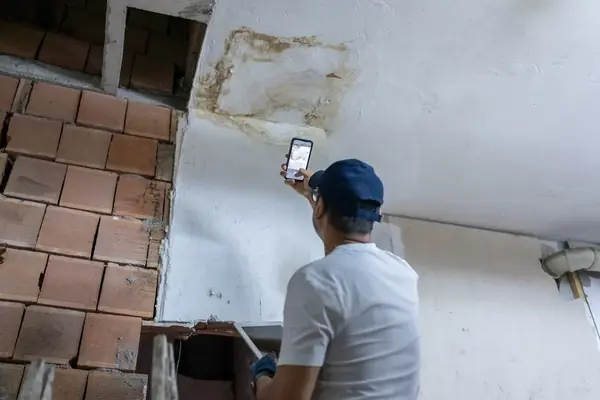
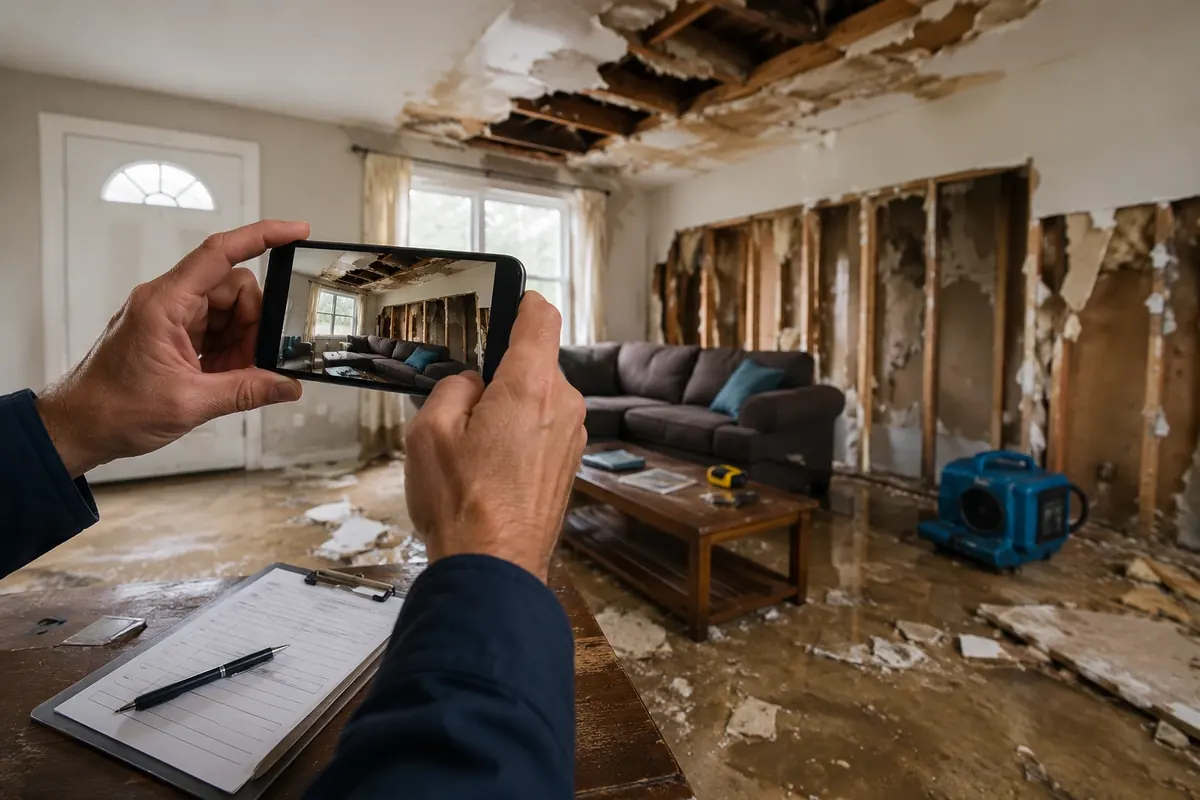
Good claim documentation answers four questions before the adjuster asks them: what was damaged, how badly, when it happened, and what it costs to fix. If your photos, notes and receipts answer those clearly, the claim moves faster and there is less to argue about. If they don't, the carrier fills the gaps with assumptions, and those rarely favor you.
The method below works for hail, wind, water, fire and freeze losses. Start it as soon as the property is safe to enter, and keep it going until the claim is paid.
First: safety, then stop the damage
Don't go into a building with a sagging ceiling, a gas smell, standing water near outlets, or fire damage that hasn't been cleared. Don't climb a wet or damaged roof. Photos from the ground with a zoom lens, or from a drone, are enough to start.
Your policy requires you to protect the property from further damage, so tarp the roof, board the window, or shut off the water. Before you do, take a quick set of photos of the damage as it is. Keep every receipt for materials and emergency services; reasonable mitigation costs are part of the claim.
The photo and video method
Most claim photos fail for one reason: a close-up of a dent or a stain with no way to tell where it is. Shoot in three distances, in this order.
- Wide. Each side of the house from the street, each room from the doorway, each roof slope as a whole. These show location and scale.
- Medium. The damaged area with something recognizable in the frame: the window it's next to, the corner of the room, the vent on that slope.
- Close. The damage itself, with a ruler, tape measure or coin for scale. For hail, chalk-circle the hits on soft metals and shingles before you photograph them.
- Photograph soft metals for hail: gutters, downspouts, vents, A/C condenser fins, window screens, mailbox and fence caps.
- Shoot ceiling stains and wet walls straight on, then from an angle that shows texture or sagging.
- Take the same shot again a few days later if a stain is spreading.
- Keep the original files. Don't edit, crop or filter them, and don't rely on copies sent by text, which can strip the date and location data.
- Record a slow video walkthrough of every affected area, and narrate it: the room, what you see, and when you first noticed it.
We add roof-level and drone photos, moisture-meter readings, and a Matterport 3D scan of interior losses, which lets an adjuster walk the rooms long after repairs start. You don't need those to start; a phone used methodically does most of the work.
Prove when the damage happened
For storm claims, the carrier will want to tie the damage to a specific date. Weak date evidence is a common reason for disputes over old damage and pre-existing wear.
- Storm reports. NOAA keeps reports of hail size and wind by date and location. Our storm report lookup finds them for your address and date.
- Your own photos. Pictures of hailstones in the yard, with a ruler for size, or of downed limbs, taken that day. If you saved hailstones in the freezer, photograph them against a ruler.
- Pre-loss photos. Real estate listing photos, a home inspection report, or older family photos that show the roof, siding or rooms in good condition.
- Corroboration. Notes on neighbors who filed claims for the same storm, or roofers working on the street.
For freeze and water losses, the date matters too: note when the pipe burst or the leak started, and when the water was shut off.
Keep a damage diary
A diary is a running, dated record of everything that happens on the claim. It takes five minutes a day and it settles disputes about who said what. Record:
- The date and time you discovered the damage and what you saw.
- Every call, email and visit: who, their role, the claim number, and what was said or promised.
- Every inspection: who came, how long they stayed, and whether they went on the roof or into the attic.
- Changes in the damage: new stains, spreading mold, a leak during the next rain.
- Out-of-pocket spending, with a note of where the receipt is filed.
After a phone call with the adjuster, send a short email summarizing it ("To confirm our call today…"). That turns a conversation into a record.
Mitigation records
If a water mitigation or board-up company works on the property, their paperwork becomes part of your claim. Ask them for:
- Moisture readings and drying logs for each day they were on site.
- Photos taken before they removed drywall, flooring or insulation.
- An itemized invoice listing equipment, days and materials removed.
Before anything is thrown away, photograph it, and keep small samples of removed carpet, pad or flooring where practical. Once the dumpster is hauled, the adjuster can't see what was in it.
Free toolClaim documentation checklistAn interactive, printable checklist for hail, water, fire and wind claims. Progress saves in your browser.List your damaged contents
On most homeowners policies, you have to prove what personal property you lost and what it was worth. That burden is on you, and for a large water or fire loss it can be the biggest job in the claim. Work room by room and record each item's description, brand and model, quantity, age, where you bought it, and the price to replace it today.
The contents inventory builder organizes the list by room and exports it as a spreadsheet you can send to the adjuster. For proof of ownership, look through credit card statements, online order histories, manuals, warranty cards and photos where the item appears in the background. Photograph damaged items before you discard them, including labels and serial numbers.
Receipts and living expenses
If you can't live in the home, your policy's loss of use coverage may pay additional living expenses: the extra cost of a hotel or rental, meals beyond what you normally spend, extra mileage, laundry and pet boarding. Keep every receipt, and keep a simple log of what your normal costs were, because the carrier pays the increase, not the total. Keep separate records for mitigation costs, emergency repairs and temporary housing.
Organize the claim file
A well-organized file makes it easy to send exactly what an adjuster requests, and to prove when you sent it. One folder on your computer or cloud drive, with subfolders like these, is enough:
| Folder | What goes in it |
|---|---|
| 01 Policy | Full policy, declarations page, endorsements, renewal notices |
| 02 Correspondence | Emails, letters, the claim acknowledgment, your diary |
| 03 Photos and video | Original files, in subfolders by area and date |
| 04 Storm and pre-loss | Storm reports, pre-loss photos, inspection reports |
| 05 Estimates | Carrier estimates, contractor bids, your counter-estimate |
| 06 Mitigation | Drying logs, invoices, removal photos |
| 07 Contents | The inventory spreadsheet and proof of ownership |
| 08 Expenses | Receipts for repairs, supplies and living expenses |
| 09 Payments | Copies of every check and payment letter |
Name files so they sort by date (for example, "2026-05-12 north slope hail hits.jpg"). Keep all communication with the carrier in writing where you can.
Texas law: After notice of a claim, the insurer must acknowledge it, begin its investigation and request the items it needs within 15 days (Tex. Ins. Code §542.055). It then has 15 business days after receiving everything requested to accept or reject the claim (§542.056). A complete, organized file starts that second clock sooner.
Common documentation mistakes
- Throwing out damaged materials or belongings before they are photographed and the carrier has had a chance to see them.
- Only photographing the worst damage, which lets the carrier treat the rest as undamaged.
- Relying on phone calls with no written follow-up.
- Letting the contents list wait until the end. It takes longer than anything else.
- Sending originals. Send copies and keep the originals in your file.
For roof-specific signs of hail on each type of roof, see how to identify hail damage by roof type. And for the bigger picture of what trips up claims, read common property insurance claim mistakes.
Frequently asked questions
What photos should I take for a home insurance claim?
Take wide shots of each side of the house and each room, medium shots that show where the damage is, and close-ups with a ruler or coin for scale. Keep the original files with their date and location data.
Should I video my house for an insurance claim?
Yes. A slow, narrated walkthrough of every affected area adds context photos can't, such as active leaks and how rooms connect. Use it alongside photos, not instead of them.
Can I throw away damaged items before the adjuster comes?
Photograph them first, including labels and serial numbers, and add them to your contents list. For wet materials that must go to prevent mold, keep small samples where practical and tell the adjuster before the bulk of it is discarded.
How do I prove the date of hail damage?
Use NOAA storm reports for your address and date, your own photos from the day of the storm, and pre-loss photos showing the property in good condition. Our storm report lookup helps with the first.
What if I don't have receipts for damaged belongings?
Use other proof of ownership: credit card statements, online order histories, manuals, warranty cards, and photos where the item appears. List the item with its brand, model and age even when a receipt is missing.

Joseph inspects, documents and negotiates residential and commercial property claims across Texas, working only for policyholders.