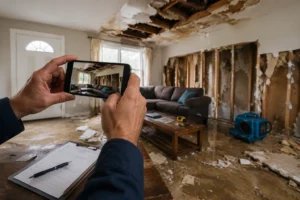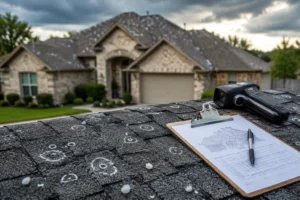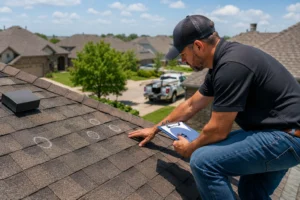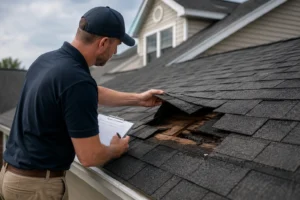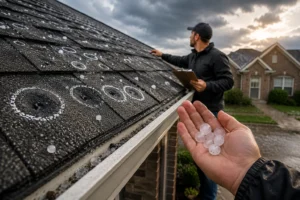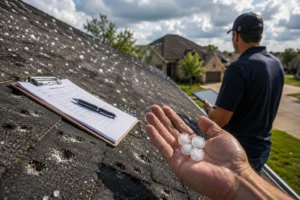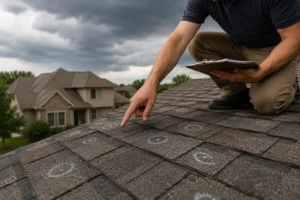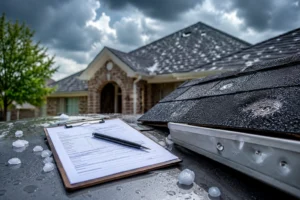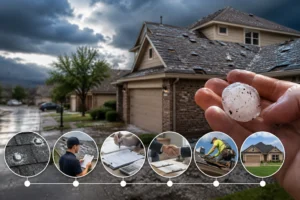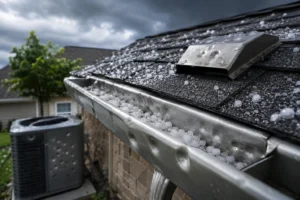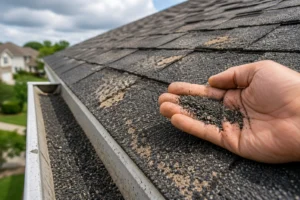

Hail damage is not always obvious. A roof may appear fine from the ground while gutters, vents, and flashing quietly show signs of major storm impact. That is why soft metal hail damage insurance claims often become critical during roofing inspections and insurance disputes. Small dents can reveal a lot. They help confirm storm direction, hail size, and possible roof damage. In many Texas hail claims, soft metal evidence becomes one of the strongest tools homeowners have when negotiating with insurance carriers. Understanding how these claims work can help homeowners protect their property, strengthen documentation, and avoid expensive mistakes later.
What Is Soft Metal Hail Damage?
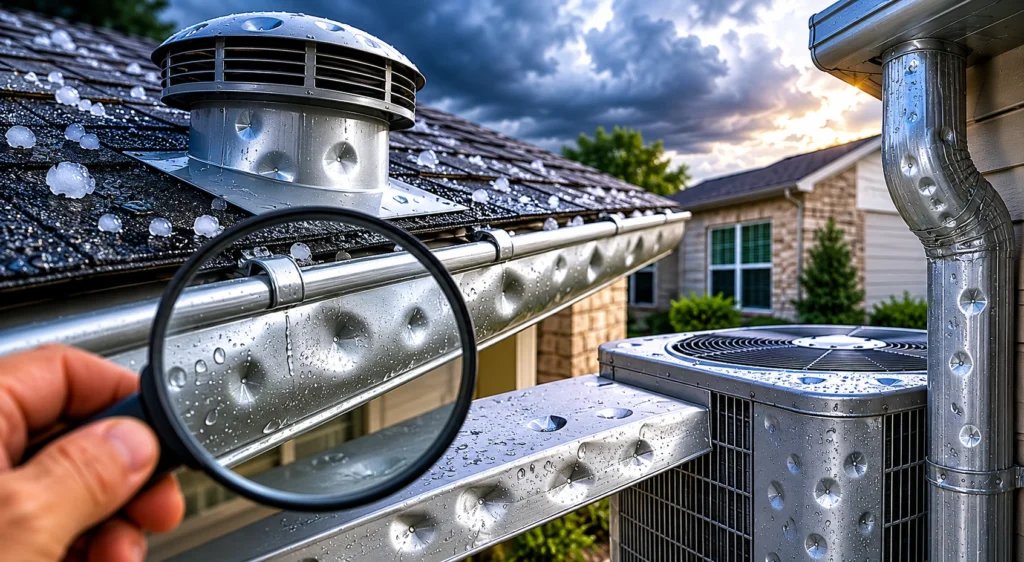
Soft metal hail damage refers to dents or impact marks left by hailstones on softer exterior metal components around a property. These surfaces dent more easily than harder materials like brick, wood, or concrete. Common soft metal surfaces include:
- Gutters
- Downspouts
- Roof vents
- Flashing
- Ridge caps
- Window wraps
- HVAC condenser fins
- Metal fences
- Mailboxes
Insurance adjusters often inspect these areas first because hail impacts remain visible much longer on softer materials. That visible evidence matters during soft metal hail damage insurance claims.
Why Insurance Adjusters Focus on Soft Metal Damage
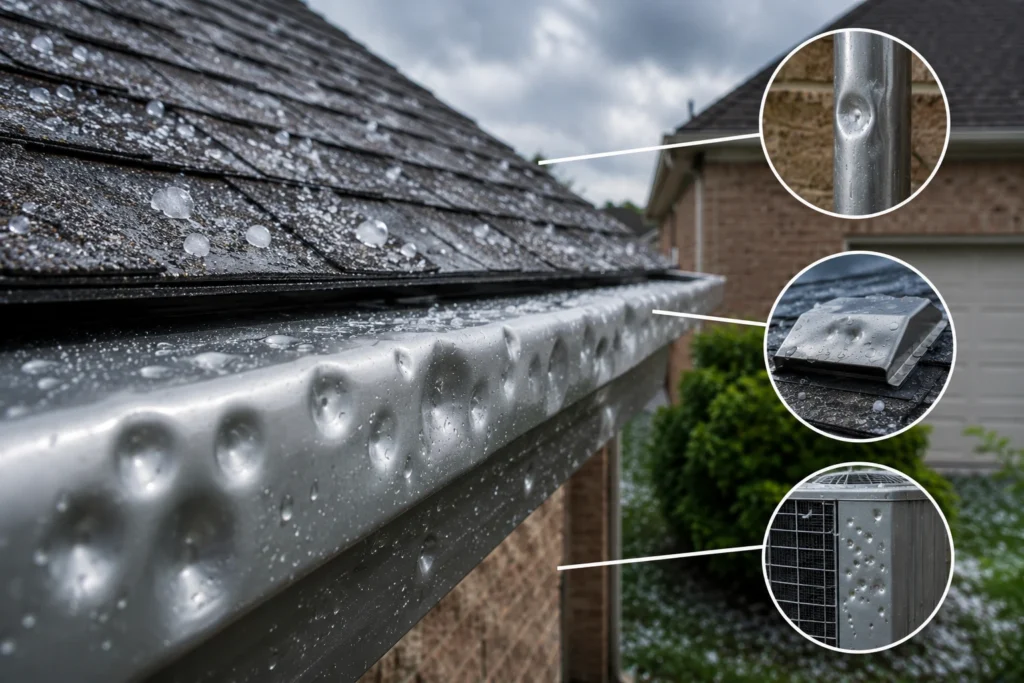
Soft metal damage helps insurance companies confirm storm activity. It also supports larger roof damage evaluations. A roof may show subtle bruising that is difficult to identify immediately, but dented gutters and vents often provide clearer proof that hail actually struck the property.
Soft Metal Damage Supports Roof Claims
Insurance companies frequently compare roof conditions with surrounding collateral damage. Consistent impact patterns strengthen the claim. Inspectors look for:
- Dented gutters
- Impact marks on vents
- Damaged flashing
- Window frame dents
- HVAC damage
- Directional strike patterns
When multiple exterior components show fresh impacts, the claim becomes more credible.
Cosmetic vs Functional Damage
This is one of the biggest debates in soft metal hail damage insurance claims. Insurance carriers sometimes classify dents as cosmetic rather than functional. That distinction can dramatically affect coverage.
| Damage Type | Description | Possible Coverage Outcome |
|---|---|---|
| Cosmetic Damage | Visible dents without affecting operation | May be limited or denied |
| Functional Damage | Damage affecting performance or water protection | More likely covered |
For example, a dented gutter that still drains properly may be labeled cosmetic. However, hail-damaged flashing that allows water intrusion could qualify as functional damage. Policy language matters here.
Common Areas Where Hail Damage Appears
Not every part of a property reacts to hail equally. Some surfaces reveal impacts almost immediately.
Gutters and Downspouts
These areas commonly display:
- Circular dents
- Chipped paint
- Distorted edges
- Fresh metal exposure
- Granule buildup beneath gutters
Fresh impacts often appear brighter where oxidation has been disrupted.
Roof Vents and Flashing
Roof vents frequently become key inspection points because they sit directly on the roofing system. Watch for:
- Small dimples
- Creased edges
- Impact fractures
- Distorted seams
These components play an important role in soft metal hail damage insurance claims because they help support roof impact findings.
Window Screens and Frames
Window screens often reveal hail direction. Bent mesh or dented aluminum frames help inspectors determine storm angle and impact intensity.
HVAC Systems
HVAC condenser fins dent easily during hailstorms. Insurance adjusters commonly photograph them as supporting evidence during inspections. Homeowners should avoid touching electrical equipment during evaluations. Safety always comes first.
How Hail Size Changes Damage Severity
The size of hailstones heavily influences damage severity. Small hail may create light cosmetic dents, while larger hailstones can damage roofing systems, metal components, and siding simultaneously.
| Hail Size | Typical Damage Potential |
|---|---|
| Pea-sized | Minimal visible damage |
| Quarter-sized | Moderate dents and bruising |
| Golf ball-sized | Significant exterior damage |
| Baseball-sized | Severe structural impacts |
Wind speed also changes impact patterns. Wind-driven hail can heavily damage one side of the property while leaving another side with minimal impacts. That uneven exposure often becomes important during inspections.
Older Soft Metals Dent More Easily
Age affects metal surfaces over time. Older gutters and flashing may dent faster because of:
- Oxidation
- Sun exposure
- Corrosion
- Temperature fluctuations
- Material fatigue
Some surface wear patterns are also associated with Tribology effects that develop over long-term environmental exposure. Insurance companies sometimes argue that dents came from aging rather than recent hail impacts. This is one reason strong documentation matters so much during soft metal hail damage insurance claims.
How Insurance Companies Investigate Hail Claims
Most hail inspections follow a structured process. Insurance carriers want evidence that connects storm activity directly to the property damage being claimed.
Initial Property Inspection
Adjusters usually inspect:
- Roof slopes
- Gutters
- Downspouts
- Flashing
- Roof vents
- Window trim
- HVAC equipment
They photograph everything carefully. Consistency across multiple surfaces helps strengthen the claim.
Weather Verification Technology
Insurance companies also rely on weather tracking systems to verify:
- Storm dates
- Hail size
- Wind direction
- Storm duration
- Property exposure
If the reported storm data does not match the visible damage, the claim may face additional scrutiny.
Engineering Reports During Disputed Claims
Large claims sometimes involve engineering inspections. Engineers may evaluate whether damage resulted from:
- Hail impacts
- Foot traffic
- Installation problems
- Aging materials
- Mechanical damage
Disputes become common when roofing systems show borderline or subtle impacts. This is where soft metal hail damage insurance claims often become highly technical.
Common Reasons Hail Claims Get Denied
Not every hail claim receives approval. Many denials come down to avoidable mistakes.
Insufficient Supporting Damage
A few isolated dents may not support a full roof replacement claim. Insurance companies usually look for consistent collateral evidence throughout the property.
Wear and Tear Arguments
Carriers frequently argue that dents resulted from:
- Aging gutters
- Oxidation
- Previous storm exposure
- Maintenance equipment
- Normal deterioration
Without strong documentation, homeowners may struggle to challenge those conclusions.
Delayed Reporting
Time weakens claims. The longer homeowners wait, the harder it becomes to prove the damage came from a specific storm event. Additional weather exposure can also erase important evidence.
Poor Documentation
Missing photos and incomplete inspections hurt claims constantly. Strong claims usually include:
- Clear photographs
- Inspection reports
- Weather records
- Contractor notes
- Timeline documentation
How to Document Soft Metal Hail Damage Properly
Documentation can dramatically improve claim outcomes. Seriously. One organized homeowner often has a stronger claim than someone relying entirely on memory months later.
Take Wide and Close-Up Photos
Wide photos establish location. Close-up images capture detail. Focus on:
- Gutters
- Roof vents
- Flashing
- Downspouts
- HVAC systems
- Window trim
Natural daylight often makes dents easier to identify.
Save Weather Information
Preserve storm records immediately after the event. Helpful records include:
- Weather alerts
- Radar screenshots
- Local hail reports
- Inspection dates
- Contractor observations
The stronger the timeline becomes, the stronger the claim usually appears.
Use a Damage Checklist
A simple checklist prevents missed inspection areas.
| Inspection Area | Damage Present |
|---|---|
| Gutters | Yes/No |
| Roof vents | Yes/No |
| Flashing | Yes/No |
| HVAC fins | Yes/No |
| Window trim | Yes/No |
| Siding | Yes/No |
Avoid Permanent Repairs Too Early
This mistake happens constantly after hailstorms. Homeowners panic and replace damaged components before the insurance inspection occurs. That can create serious problems. Temporary mitigation is fine when necessary, but permanent repairs before documentation may weaken the claim significantly. Insurance companies may later argue they cannot verify the original damage.
The Role of Public Adjusters in Soft Metal Hail Damage Insurance Claims
Some claims become disputed quickly. Especially when:
- Roof replacement costs are high
- Damage appears borderline
- Estimates feel incomplete
- Supplemental damages emerge later
Public adjusters work for policyholders rather than insurance companies. Their role often includes documenting damage, organizing evidence, and negotiating claim scope.
How Public Adjusters Help
Public adjusters may assist with:
- Independent inspections
- Claim documentation
- Supplemental claims
- Scope negotiations
- Repair estimate reviews
- Policy interpretation
They often rely heavily on collateral evidence during soft metal hail damage insurance claims because exterior metal impacts help support broader roofing damage arguments.
Supplemental Claims and Hidden Damage
Some damage appears only after repairs begin. This is common with hail losses. Supplemental claims may include:
- Flashing replacement
- Decking repairs
- Ventilation corrections
- Underlayment damage
- Code-required upgrades
Older metal roof systems may also contain protective finishes created through Anodizing which can react differently after repeated hail exposure. Supplemental negotiations are extremely common in Texas hail claims.
Soft Metal Damage Across Different Roof Types
Different roofing systems respond differently to hail.
Asphalt Shingle Roofs
Soft metal damage often supports findings involving:
- Granule loss
- Bruising
- Creased shingles
- Exposed fiberglass matting
Collateral metal evidence helps validate the severity of roof impacts.
Metal Roofing Systems
Metal roofs create more cosmetic-versus-functional disputes. Some dents affect appearance only. Others damage seams, coatings, or panel performance.
Tile and Slate Roofs
Tile roofs may hide subtle fractures after storms. That makes surrounding soft metal evidence even more important during inspections.
What Homeowners Should Do After a Hailstorm
Fast action matters. The first few days after a storm often determine how strong the claim becomes later.
Immediate Steps After the Storm
Homeowners should:
- Inspect the property safely
- Photograph visible damage
- Save weather records
- Schedule a professional inspection
- Avoid premature repairs
Simple steps. Big impact.
Schedule a Professional Inspection Quickly
Some damage remains invisible from the ground. Professional inspections may involve:
- Roofing contractors
- Public adjusters
- Engineers
- Restoration specialists
Multiple evaluations can provide valuable insight before major claim decisions are made.
Keep Claim Communication Organized
Disorganized paperwork creates unnecessary problems during insurance disputes. Save everything. That includes:
- Emails
- Claim numbers
- Estimates
- Inspection reports
- Voicemails
- Photographs
- Adjuster notes
An organized file becomes extremely valuable during negotiations.
Mistakes Homeowners Should Avoid
Small errors can weaken otherwise strong claims.
Assuming Small Dents Are Minor
Tiny vent dents may indicate much larger roofing problems above. Never assume visible collateral damage tells the entire story.
Accepting the First Estimate Too Quickly
Initial estimates sometimes miss:
- Flashing replacement
- Ventilation corrections
- Additional roof slopes
- Code upgrades
- Hidden structural damage
Carefully review the entire scope before approving repairs.
Delaying the Inspection
Time erases evidence. Sun exposure, oxidation, debris accumulation, and additional storms can complicate inspections later.
Long-Term Risks of Ignoring Soft Metal Damage
Some homeowners ignore dents because the roof still appears functional. That can become expensive later.
Water Intrusion Problems
Damaged flashing and compromised seals may eventually allow moisture intrusion into the home. Small vulnerabilities often grow slowly before becoming major repairs.
Future Insurance Problems
Undocumented hail damage may later be labeled pre-existing during future claims. That creates difficult coverage disputes.
Reduced Property Value
Visible hail damage can affect property appearance and buyer confidence during home inspections. Dented gutters and flashing raise immediate concerns about overall roof condition.
Final Thoughts
Soft metal damage is far more important than many homeowners realize. The dents found on gutters, vents, flashing, and exterior metal components often become some of the strongest evidence during roofing inspections and insurance negotiations. That is why soft metal hail damage insurance claims deserve careful attention from the very beginning of the claim process. Strong documentation, fast inspections, organized communication, and professional evaluations can significantly improve claim outcomes. Homeowners who understand how collateral metal damage supports roofing claims often place themselves in a much stronger position when disputes arise. And in Texas, where hailstorms regularly create expensive roofing losses, preparation can make all the difference.
FAQs
Soft metal hail damage refers to dents or impact marks on exterior metal surfaces like gutters, flashing, roof vents, and downspouts caused by hailstorms.
Yes. Insurance adjusters often use dents on soft metals as supporting evidence that hail impacted the roofing system.
It depends on the policy. Some insurance carriers limit or exclude purely cosmetic hail damage coverage.
You should report hail damage as soon as possible after the storm to preserve evidence and avoid deadline issues.
Common signs include circular dents, chipped paint, bent flashing, damaged gutters, and dented roof vents.
Yes. Insurance companies may argue that older gutters were already worn or damaged before the storm occurred.
No. Permanent repairs before documentation may weaken the insurance claim because adjusters cannot verify the original damage.
They can. Dented condenser fins and metal cover often help support storm severity during inspections.
Disputes often involve questions about cosmetic damage, wear and tear, previous damage, or insufficient evidence.
A public adjuster may help if the claim is denied, underpaid, or disputed, especially on large roofing losses.