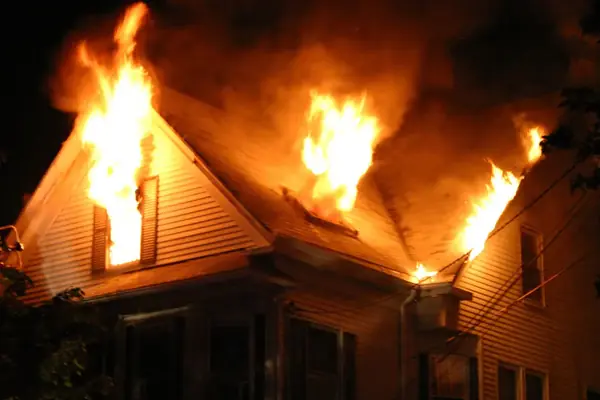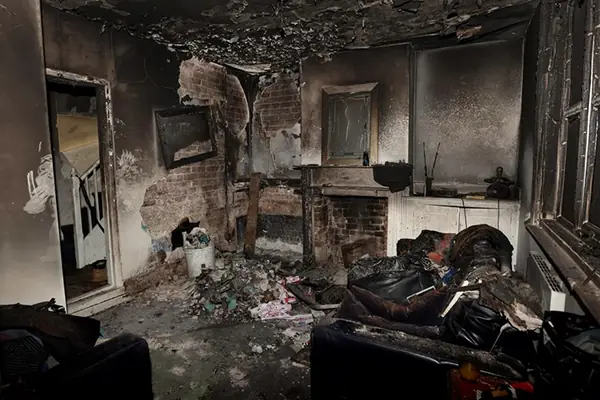
A fire insurance claim covers the structure, your personal property, your extra living costs while displaced, and the cleanup of smoke and soot that reached rooms the fire never touched. Carriers usually price the burned area well and the rest poorly. The work on a fire claim is mostly about the rest: smoke in the ductwork, contents in unburned rooms, debris removal, code upgrades, and depreciation on everything you owned.
The parts of a fire claim
| Part of the claim | What it pays for | Where it usually goes wrong |
|---|---|---|
| Dwelling or building | Repairing or rebuilding the structure | Smoke-affected areas scoped as "clean and paint" when materials need replacement |
| Personal property (contents) | Furniture, clothing, electronics, kitchen items, tools | Incomplete inventories and heavy depreciation |
| Loss of use (ALE) | Extra cost of living elsewhere | Ends before the rebuild does, or receipts are missing |
| Debris removal and code upgrades | Hauling burned material; meeting current building code | Left off the estimate or not claimed at all |
The first week after a fire
What you do before the carrier's adjuster arrives shapes the rest of the claim. The property is evidence, and once it is cleared out, it is hard to prove what was there.
- Get the fire department report. Ask the responding department how to request the incident report. Carriers want it, and it records the origin and cause.
- Secure the property. Board-up, fencing and roof tarps prevent theft and weather damage. Keep receipts, since these costs are usually reimbursed.
- Don't throw things out yet. Photograph damaged contents in place and ask the carrier before discarding anything. Food and hazardous items are an exception, but photograph them first.
- Start an expense log. Hotel, meals, clothing and mileage from the first night onward, with receipts.
- Be careful with early agreements. Read anything a board-up, cleaning or contents company asks you to sign, especially direction-to-pay or assignment forms.
Structure: what a fire estimate needs
The burned rooms are rarely in dispute. The fight is over adjacent rooms, the attic, and the framing. Heat can damage wiring, windows and roof decking well beyond visible charring, and fire suppression adds water damage. We inspect the attic and wall cavities where they are opened, photograph char depth in framing, and capture the house with a Matterport 3D scan before demolition so the original layout and finishes are on record.
Our Xactimate estimate includes the items carrier estimates tend to compress: sealing smoke-damaged framing before rebuild, replacing insulation that absorbed odor, electrical inspection, window and door replacement where heat warped frames, and full-room painting rather than patch areas.
Smoke, soot and the HVAC system
Smoke travels through the return air system to every room on the duct run. Soot settles in ducts, on the coil, and in the air handler, and the odor comes back every time the system runs. A clean of the visible surfaces doesn't address that.
- Duct cleaning or replacement, depending on the duct material. Flex duct that absorbed smoke is often replaced rather than cleaned.
- Air handler and coil cleaning or replacement
- Thermal fogging or ozone or hydroxyl treatment for odor
- Sealing surfaces with an odor-blocking primer before painting
- Cleaning or replacing insulation in the attic over smoke-affected rooms
Cleaning versus replacement
Carriers prefer cleaning because it is cheaper. Sometimes cleaning works. Often it doesn't, especially on porous materials.
Often cleanable
- Hard, non-porous surfaces such as glass, sealed tile and metal
- Light, dry soot on painted walls that can be cleaned and resealed
- Some washable textiles, if odor testing confirms the result
Often needs replacement
- Carpet, pad and upholstery holding odor
- Unsealed wood, cabinets with smoke inside the boxes
- Electronics exposed to acidic soot, and food, cosmetics and medicines
When the carrier approves cleaning, ask what happens if the odor remains. We push for a test-clean result or a written commitment to replace if cleaning fails.
Contents: the inventory is your job
Most policies put the burden on you to list every damaged item, usually with a description, quantity, age and replacement cost. In a whole-house fire that can mean thousands of items, and anything left off the list is never paid. It is the most time-consuming part of a fire claim and the one most people underestimate.
Go room by room, then drawer by drawer and closet by closet. Use phone photos, online order histories, bank and credit card statements, and memory. We help organize the list and check that depreciation is applied reasonably.
Free toolContents inventory builderBuild a room-by-room list of damaged belongings with ages and prices, then export it as a spreadsheet.On a replacement cost policy, the carrier usually pays actual cash value first, then releases the withheld depreciation when you replace the item and submit proof. Read the replacement deadline in your policy and keep receipts. Carriers often depreciate items like furniture and appliances at rates that don't match how long they actually last, and that is worth challenging line by line.
Living expenses while you are displaced
Loss of use coverage, often called ALE (additional living expenses), pays the increase in your costs while the home can't be lived in: rent or hotel, furniture rental, extra mileage, pet boarding, and meals above your normal spend. Fire rebuilds are long, and ALE limits and time limits can run out before the house is finished. Keep a running log with receipts, and raise any approaching limit early.
Debris removal and code upgrades
Hauling away burned material, ash and contaminated contents is costly, and many policies treat debris removal as additional coverage with its own limit or as part of the dwelling limit. Read your policy and claim it explicitly. Our guide to house fire debris removal costs explains how this is usually priced.
Rebuilding after a large fire often triggers current building code requirements: electrical, smoke detectors, insulation, egress windows. Ordinance or law coverage, if your policy has it, pays for those upgrades up to its limit. Without it, code items may not be covered. Check your declarations page for an ordinance or law limit.
Total losses and the 72-hour rule
Texas law: Public adjuster fees are capped at 10% of the settlement. If your insurer pays, or commits in writing to pay, policy limits on a total fire loss within 72 hours after the claim is reported, a public adjuster may not take a percentage fee on that payment, only reasonable compensation for time spent (Tex. Ins. Code §4102.104).
That rule exists to protect you, and we follow it. On a total loss, the open questions are usually contents, ALE, debris removal and code coverage, not the dwelling limit. For a broader look at policy coverage, see our article on fire damage insurance in Texas.
Frequently asked questions
Does homeowners insurance cover smoke damage from a fire?
Smoke damage from a covered fire is generally part of the fire claim, including cleaning or replacing affected materials, HVAC cleaning and odor treatment. Disputes usually center on whether cleaning is enough or materials must be replaced.
How detailed does my fire contents list need to be?
Most carriers want each item with a description, quantity, approximate age and replacement cost. Our contents inventory builder organizes this room by room and exports to CSV.
Will a public adjuster charge a fee if my house is a total loss?
If the insurer pays or commits in writing to pay policy limits on a total fire loss within 72 hours after the claim is reported, Texas law does not allow a percentage fee on that payment. Otherwise the fee is capped at 10% of the settlement.
Does insurance pay for debris removal after a fire?
Most homeowners policies include some coverage for debris removal, sometimes as an additional amount and sometimes within the dwelling limit. Check your policy language and make sure the estimate includes it.
How do I get depreciation back on contents?
On a replacement cost policy, you usually replace the item, submit proof of purchase, and the carrier releases the withheld depreciation. Check your policy for any deadline to replace.

Joseph inspects, documents and negotiates residential and commercial property claims across Texas, working only for policyholders.