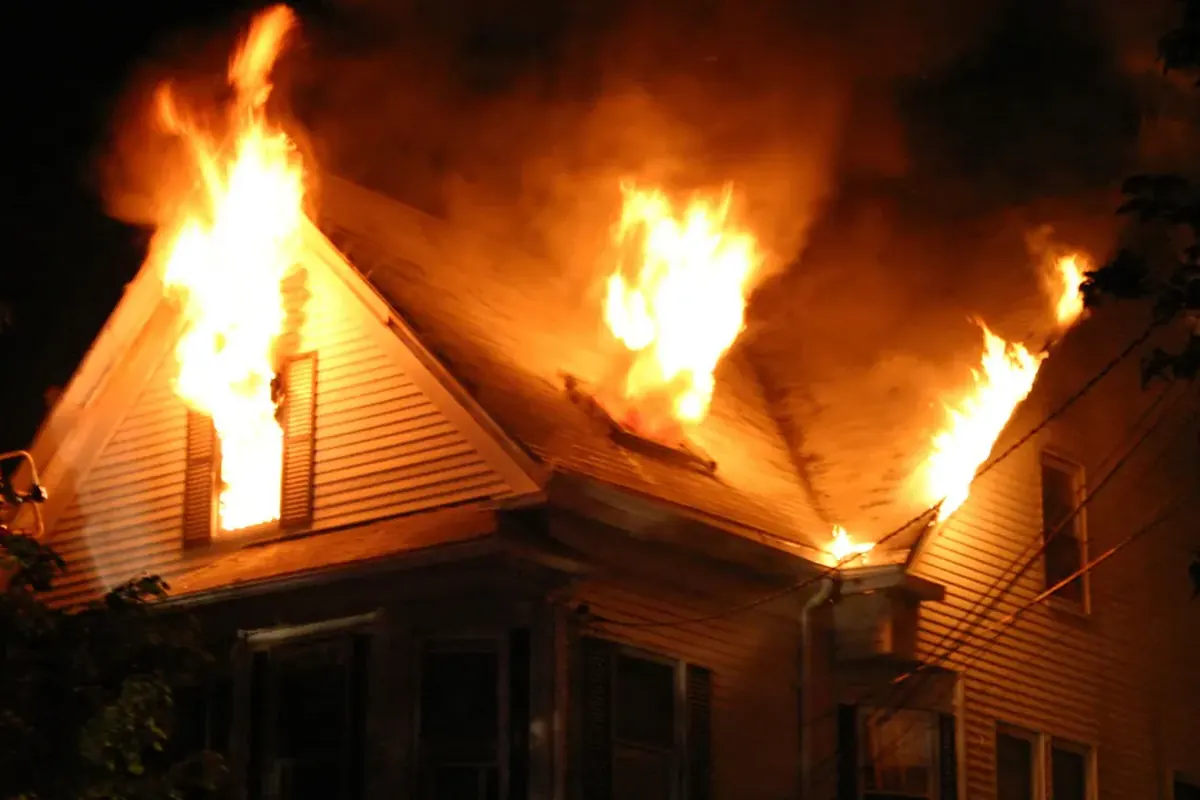
A standard Texas homeowners policy covers fire. After a covered fire, it typically pays to repair or rebuild the house, repair other structures, replace or clean your belongings, cover extra living costs while you're displaced, and remove debris. Code upgrades are covered only if your policy includes ordinance or law coverage. Coverage is rarely the fight on a fire claim. The fight is over scope: how far the smoke went, what can be cleaned versus replaced, and what your contents were worth.
What a homeowners policy covers after a fire
| Coverage | What it pays for | What to watch |
|---|---|---|
| Dwelling | Repairing or rebuilding the house and attached structures | Whether the limit is enough to rebuild at today's costs; replacement cost vs. actual cash value |
| Other structures | Detached garages, sheds, fences, barns | A separate, smaller limit, often a percentage of the dwelling limit |
| Personal property (contents) | Furniture, clothing, electronics, appliances and other belongings, including cleaning of salvageable items | Sub-limits on jewelry, firearms, collectibles and cash; ACV until items are replaced on many policies |
| Loss of use / additional living expenses | The increase in living costs while the home is unlivable: rent or hotel, extra meals, mileage, laundry | Time and dollar limits; the carrier pays the increase over your normal costs |
| Debris removal | Demolition and hauling of destroyed property | Whether it sits inside the dwelling limit or adds an extra amount |
| Ordinance or law | Code upgrades required when you repair or rebuild, and demolition of undamaged parts the city requires | Not on every policy; often a percentage of the dwelling limit |
Your declarations page shows the limits. The policy form and endorsements show the rules. Get the full, current policy from your carrier in writing; you'll refer to it throughout the claim. For more on the cost and coverage of clearing a burned house, see house fire debris removal cost.
Smoke damage in rooms the fire never reached
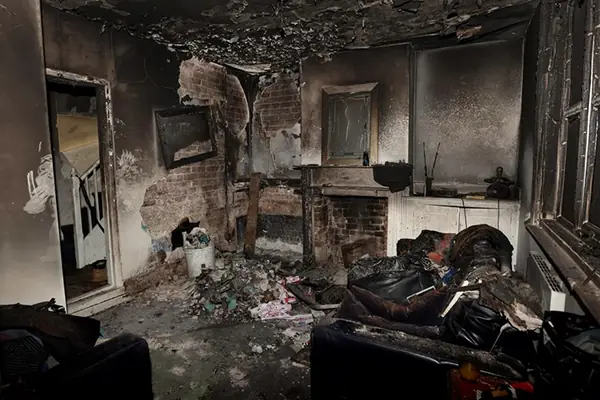
Smoke and soot travel through the whole house: through open doors, the attic, wall cavities and especially the HVAC system. A fire confined to the kitchen can leave residue and odor in every bedroom. This is where fire claims are most often underpaid, because the carrier's first estimate may include the burned room in detail and only "clean walls" elsewhere.
What the scope should consider in unburned areas:
- Cleaning and sealing of walls and ceilings, and repainting where cleaning doesn't remove staining or odor.
- HVAC cleaning, and replacement of duct sections or components that can't be cleaned.
- Attic insulation that has absorbed smoke.
- Carpet, pad, window coverings and other porous materials that hold odor.
- Electronics and appliances exposed to corrosive soot.
- Contents cleaning, which often means a pack-out: a restoration company boxes, inventories and cleans belongings off-site.
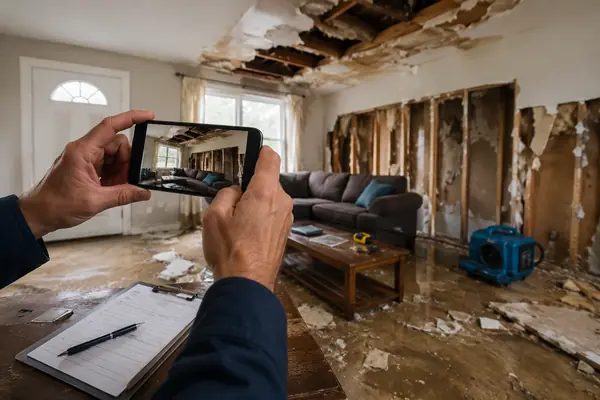
Document smoke spread room by room. Photograph soot on light switch plates, inside cabinets, on window sills and around HVAC vents. A white cloth wiped across a surface and photographed next to the spot it came from is simple, persuasive evidence. When a scope is disputed, a professional who can test for residue and recommend a cleaning protocol helps.
The contents inventory is on you
On most policies, you have to list what was damaged or destroyed and support its value. After a serious fire, that can mean thousands of items, and it is usually the largest single task in the claim. Carriers rarely do it for you.
- Go room by room. Start with what you can see in photos and video, then work from memory, closet by closet and drawer by drawer.
- Record the details. Description, brand and model, quantity, age, and the cost to replace it today with a similar item.
- Gather proof. Credit card statements, online order histories, photos where items appear in the background, manuals and warranty cards.
- Separate cleanable from destroyed. Items a restoration company can clean are scoped for cleaning; the rest are replacement items.
- Submit in batches. You don't have to finish the whole list before sending the first rooms.
The contents inventory builder lays the list out by room and exports a spreadsheet you can send the adjuster. On a replacement-cost contents policy, the first payment is often actual cash value, with the withheld depreciation paid as you replace items and send receipts. Check your policy for any deadline to replace.
Additional living expenses
If the fire makes the house unlivable, loss of use coverage pays the additional cost of living elsewhere, not your whole budget. If you normally spend a set amount on groceries and now eat every meal out, the carrier pays the difference. Keep every receipt, and keep a record of your normal monthly costs so the comparison is easy. Ask the adjuster early how long they expect to pay and what housing they will approve, and get it in writing. Rebuilds take time, and ALE disputes tend to come months in, when the carrier starts asking why the work isn't finished.
Who the adjusters work for
You'll likely deal with more than one adjuster. A staff adjuster is employed by your insurer. An independent adjuster is hired by your insurer to handle claims for it. Both work for the insurance company. A public adjuster is licensed by TDI and hired by you, and is the only one whose contract must say "We represent the insured only." Read more in public adjuster vs. independent adjuster.
The total fire loss fee rule
Texas law protects homeowners from paying a percentage fee when they don't need help.
Texas law: If the insurer pays, or commits in writing to pay, the policy limits on a total fire loss within 72 hours of the claim being reported, a public adjuster may not charge a percentage fee on that payment, only reasonable compensation for time spent (Tex. Ins. Code §4102.104(b)). In all other cases, a public adjuster's total fee may not exceed 10% of the settlement.
In practice, if your house is a total loss and the carrier quickly offers your full limits, you may not need us for the dwelling. Contents, living expenses and other structures are where the work usually remains.
The fire claim timeline
for the insurer to acknowledge, begin investigating and request what it needs
to accept or reject after receiving everything requested
to accept or reject instead, if arson is suspected
to pay after notifying you the claim is accepted
- Report the claim and protect the property. Board up openings, secure the site, and keep receipts. Get the fire department report number.
- Inspection and cause and origin. The carrier may send an investigator to confirm how the fire started before scoping repairs. Don't demolish until the scene is released.
- Documentation and estimates. Photos, video, a contents inventory, and a line-item estimate of the structure. We use Xactimate and Matterport 3D scans so the scope is clear and the rooms are preserved.
- Payments. Usually an advance for living expenses, then ACV on the structure and contents, then withheld depreciation as work is completed.
- Disputes. If scope or pricing is disputed, negotiation, a re-inspection, and appraisal if needed.
These deadlines come from Chapter 542 of the Texas Insurance Code (§542.055 to §542.057). If the carrier needs more time, it must explain why and then decide within 45 days. The Texas claim deadline calculator works out the dates for your claim.
When to get help
Many small fire claims settle fine without outside help. A public adjuster earns the fee on large losses, smoke damage the carrier won't scope beyond the burned room, big contents claims, and disputes over rebuild versus repair. Learn more about our fire and smoke damage claim service, or ask for a free claim review.
Frequently asked questions
Does homeowners insurance cover fire damage in Texas?
Yes. Standard Texas homeowners policies cover fire, including the dwelling, other structures, personal property, additional living expenses and debris removal. Exclusions such as intentional acts and policy conditions still apply, so read your policy.
Does insurance pay for smoke damage in rooms that didn't burn?
Smoke and soot damage from a covered fire is generally part of the claim, wherever it occurs. The disputes are usually about whether a room can be cleaned or needs replacement, so document soot and odor room by room.
Do I have to list every item lost in a house fire?
On most policies, yes. You need to list damaged and destroyed items with a description, age and replacement cost. Our contents inventory builder organizes the list by room.
How long does an insurance company have to pay a fire claim in Texas?
After receiving everything it requested, the insurer has 15 business days to accept or reject (30 days if arson is suspected), and 5 business days after accepting to pay. Catastrophe declarations can extend these deadlines.
Can a public adjuster charge a fee on a total fire loss?
Not a percentage fee if the insurer pays or commits in writing to pay policy limits within 72 hours of the claim being reported. Otherwise, Texas caps the fee at 10% of the settlement.
What are additional living expenses after a fire?
The extra cost of living somewhere else while your home is unlivable, such as rent, hotel bills and extra meals. The insurer pays the increase over your normal costs, so keep receipts and a record of your usual spending.

Joseph inspects, documents and negotiates residential and commercial property claims across Texas, working only for policyholders.