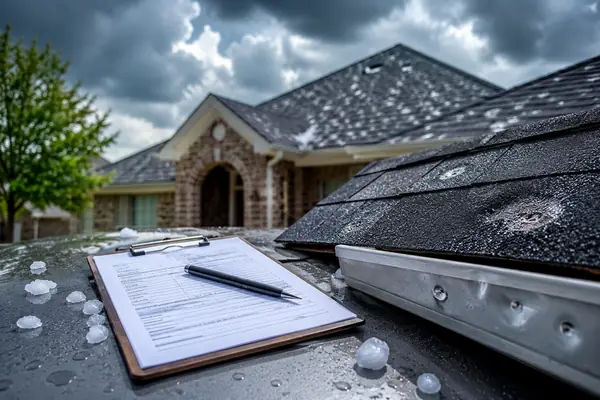
If your property claim was denied, stalled or paid too little, the first step is to get the carrier's reasoning in writing and compare it with the actual damage and your policy. Many denials rest on a short inspection and a single phrase like "wear and tear". Many underpayments rest on an estimate that left items out. Both can often be reopened with better evidence. Some disputes, though, belong with a lawyer, and we will tell you when yours does.
Read the denial letter closely
A denial or partial denial letter should name the reason and the policy provision it relies on. Before you respond, pull out these details:
- The exact reason given, in the carrier's words
- The policy section, exclusion or endorsement quoted, and whether that wording actually appears in your policy
- The date of inspection and who inspected: staff adjuster, independent adjuster or engineer
- Whether the denial covers the whole claim or only parts of it
- Any deadline the letter gives you to respond or provide information
Then request the carrier's file: the adjuster's report, the photos taken at inspection, any engineer's report, and the estimate. You are entitled to understand the basis for the decision, and those photos often show damage the report doesn't mention.
Common denial reasons and how they are answered
| Reason on the letter | What it usually means | What answers it |
|---|---|---|
| Wear and tear, deterioration | The damage is called age-related, not storm-related | Close-up photos of fresh fractures, granule loss at impact points, consistent damage on storm-facing sides |
| Pre-existing damage | The damage happened before the policy period or storm date | Storm data for your date of loss, prior inspection or purchase photos, the age of exposed materials |
| Late notice | The claim was reported after the policy deadline or late enough to hurt the investigation | The date you discovered the damage, the policy's actual reporting condition, evidence the delay changed nothing |
| Cosmetic damage only | A cosmetic exclusion applies, usually to a metal roof | Evidence of functional damage: punctures, cracked coatings, seam and fastener damage |
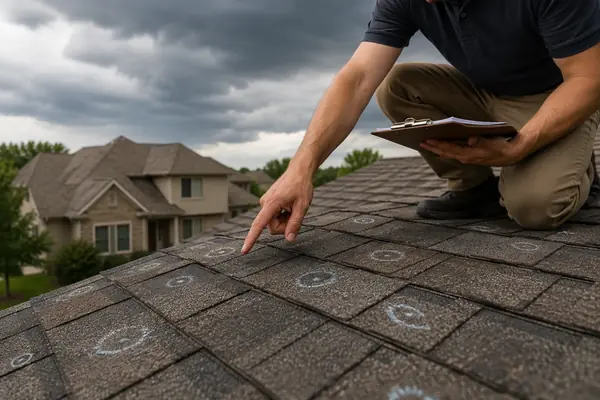
| Not enough hits per test square | The carrier's hit count fell below its internal threshold | Your own chalked and photographed test squares on every slope |
| Excluded cause | Flood, long-term seepage, settling, mold or another exclusion | Evidence of a covered cause, such as a storm-created opening or a sudden pipe failure |
Hail denials have their own patterns. See what to do about a denied hail claim and what to do about an underpaid hail claim.
Know the carrier's deadlines
Texas Insurance Code Chapter 542 sets deadlines for most property claims. If a carrier misses them, it can owe penalty interest and attorney's fees.
to acknowledge the claim, begin investigating and request items
to accept or reject after receiving all requested items
to pay after notifying you it accepts the claim
If the carrier needs more time to decide, it must tell you why and then decide within 45 days of that notice. After a weather catastrophe declared by the commissioner, these deadlines are extended by 15 days. Surplus lines carriers have longer windows. Late payment can carry penalty interest under §542.060.
Free toolTexas claim deadline calculatorTurn your claim dates into the insurer's Chapter 542 deadlines to acknowledge, decide and pay.When the claim is delayed rather than denied
A claim that sits for weeks with no decision is its own problem. Delays usually come from one of three places: the carrier is waiting on something it asked you for, it is waiting on its own engineer or field adjuster, or the file has been reassigned and nobody owns it. Each one has a different fix.
- Find out what is outstanding. Ask in writing for a list of every item the carrier still needs. The 15-business-day clock to accept or reject runs from when it receives all of them, so a vague request helps no one.
- Keep a dated log. Record every call, email and letter, the name of the person you dealt with and what was promised.
- Put requests in writing. Email creates a record of when information was sent and received, which matters if the deadlines become an issue later.
Our article on how long an adjuster has to contact you explains the early deadlines in more detail.
How we reopen an underpaid or denied claim
- Review the file. Policy, denial or payment letter, the carrier's estimate and photos, and anything you have documented.
- Inspect and document. Roof-level or drone photos, Matterport 3D scans, moisture readings where water is involved, and storm data for the date of loss.
- Write a full estimate. An Xactimate estimate that shows each line the carrier left out or underpriced.
- Request reconsideration or re-inspection. We submit the estimate and evidence and attend any re-inspection with the carrier's adjuster or engineer.
- Supplement. When hidden damage turns up during repairs, we document it and file a supplement. See how supplements work.
- Appraisal, if the policy allows it. When the carrier agrees there is covered damage but the two sides disagree on the amount, appraisal may resolve it.
Appraisal: useful, but only for amount disputes
Most Texas property policies include an appraisal clause. Each side picks an appraiser, and the two appraisers pick an umpire. Under most appraisal clauses, an agreement signed by any two of the three sets the amount of loss. Appraisal settles how much the damage is worth. It doesn't decide whether something is covered. If the carrier says the damage isn't covered at all, appraisal usually isn't the right tool. Read more about appraisal for hail claims.
When you need an attorney instead
A public adjuster is not a lawyer. We can't give legal advice, file a lawsuit or represent you in court. We prepare and negotiate claims. Some disputes need legal action, and the earlier that is recognized, the better.
Usually a public adjuster's work
- The carrier accepts coverage but underpaid
- Items missing from the estimate
- A hit-count or repair-versus-replace dispute
- Supplements during repairs
- Appraisal on the amount of loss
Usually an attorney's work
- A coverage denial that turns on policy interpretation
- Accusations of fraud or misrepresentation
- A request for an examination under oath
- A suit deadline in the policy that is close
- Claims of bad faith or prompt-payment violations
Texas law: Before filing suit on a weather-related property claim, the policyholder must give the insurer written notice at least 61 days in advance, stating the specific amount owed (Tex. Ins. Code §542A.003). An attorney handles that notice and the lawsuit.
When a claim needs a lawyer, we say so, and we work with your attorney by providing our estimate, photos and documentation.
Frequently asked questions
Can a denied insurance claim be reopened in Texas?
Often, yes. Carriers reconsider claims when presented with new evidence, such as a detailed estimate, better photos, or a re-inspection that shows missed damage. Check your policy for any deadline that limits how long you have.
How long does an insurance company have to pay a claim in Texas?
Under Chapter 542, the insurer generally has 15 business days to accept or reject after receiving everything it requested, and 5 business days to pay after accepting. Use our deadline calculator to see your dates.
Should I hire a public adjuster or a lawyer for a denied claim?
If the dispute is about how much the damage is worth, a public adjuster is usually the right start. If it is about policy interpretation, fraud allegations or a lawsuit, you need an attorney. A public adjuster cannot give legal advice.
Can I get a copy of the insurance adjuster's report and photos?
Ask the carrier in writing for the adjuster's report, inspection photos, any engineer's report and its estimate. Those documents show what the decision was based on.
What is the 61-day notice in Texas?
For weather-related property claims, Tex. Ins. Code §542A.003 requires written notice to the insurer at least 61 days before filing suit, stating the amount owed. It is a step in the lawsuit process, usually handled by an attorney.

Joseph inspects, documents and negotiates residential and commercial property claims across Texas, working only for policyholders.