

Property damage in Vidor can escalate quickly. A Gulf Coast storm can lift shingles, drive rain behind siding, damage fencing, and allow water into ceilings before the full extent of the loss is visible. When an insurance estimate leaves out part of that damage, a licensed public adjuster in Vidor can help document the property, review the policy, prepare a detailed claim scope, and negotiate from the policyholder’s side.
TX Public Adjusting represents residential and commercial property owners—not insurance companies. Our firm, Rise Public Adjusting LLC, provides insurance claim assistance in Vidor and throughout Texas under Texas License #3356839.
Vidor sits in northwestern Orange County near the Neches River, Interstate 10, Highway 105, Rose City, and Pine Forest. Its location makes the community convenient to Beaumont and the industrial areas of Southeast Texas, but it also exposes local homes and businesses to hurricanes, tropical rainfall, drainage problems, high winds, lightning, and occasional severe thunderstorms. Orange County’s current mitigation planning specifically addresses tropical events and flooding, while Vidor officials continue to emphasize hurricane preparation and drainage improvements.
Concerned that your Vidor property claim was denied, delayed, or underpaid? Contact TX Public Adjusting for a free claim review. There are no upfront fees.
Why Property Owners Hire a Public Adjuster in Vidor
An insurance claim is more than a set of photographs and a contractor’s repair proposal. The outcome can depend on how the cause of loss is documented, which building components are included, how repair methods are described, and whether the carrier’s estimate reflects the actual work required to restore the property.
The insurance company’s adjuster works within the carrier’s claim process. A public adjuster works for the policyholder. This guide comparing a public adjuster vs. independent adjuster explains who each professional represents and why that difference matters during a property claim. That distinction becomes especially important when a Vidor claim involves widespread storm damage, several affected rooms, commercial inventory, code-related work, or disagreement over the amount of damage.
Property owners often contact a public insurance adjuster in Vidor when:
- The carrier’s estimate is lower than contractor estimates.
- Roof damage was called wear, deterioration, or maintenance.
- Interior water damage was included, but the exterior opening was missed.
- Only a small repair was approved when broader replacement may be required.
- Depreciation was applied incorrectly or not clearly explained.
- A commercial claim includes business personal property or operational losses.
- The claim has become difficult to manage alongside work and family obligations.
- New damage is discovered after the first inspection.
- The insurer requests extensive documentation that the owner is unsure how to prepare.
- A claim has been denied or closed before all damage was addressed.
A public adjuster cannot create coverage that the policy does not provide. The role is to identify covered damage, organize supporting evidence, calculate the loss, and advocate for the amount owed under the policy.
Property Damage Risks Specific to Vidor
Vidor’s claim environment is shaped by its Southeast Texas location. The city is part of Orange County, near the Neches River and the Beaumont metropolitan area. Vidor describes itself as the “Crossroads to Southeast Texas,” with Interstate 10 and Highway 105 serving as major local routes. The city’s development also includes residential properties, small businesses, and residents connected to the petrochemical and industrial economies of Orange and Jefferson counties.
Hurricanes and Tropical Wind
Tropical systems can produce several separate forms of damage during one event. Our guide to property damage after a hurricane explains how wind, rain, debris, roof openings, and interior damage can overlap within the same insurance loss. A Vidor property may have roof uplift, missing shingles, damaged flashing, broken windows, fallen limbs, water intrusion, electrical damage, and damaged outdoor equipment from the same storm.
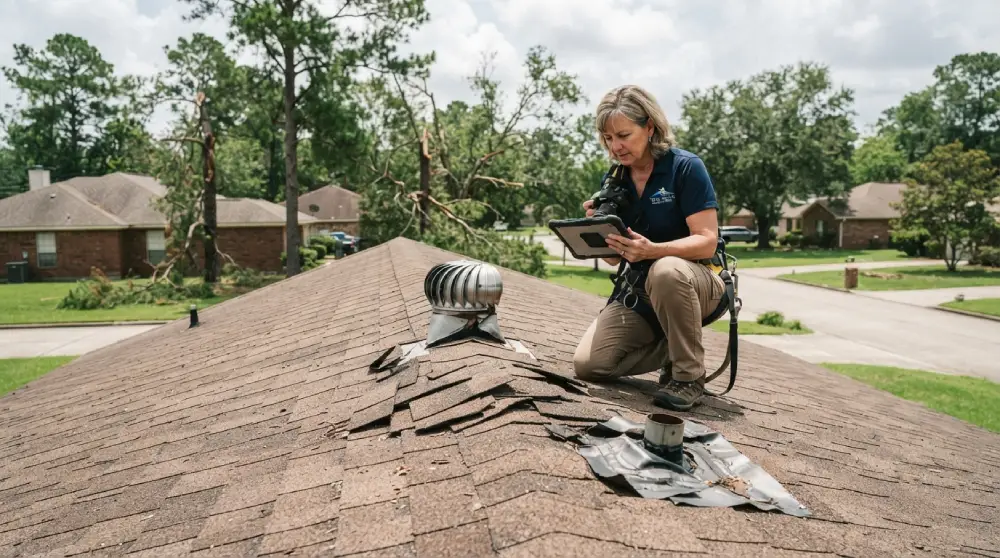
The most visible damage is not always the most expensive. A few missing shingles may indicate stress across a larger roof section. Wind-driven rain may enter through roof vents, wall openings, windows, or compromised flashing and then travel behind finishes. By the time stains appear, insulation, decking, drywall, and flooring may already be affected.
A strong hurricane claim should distinguish between:
- Direct wind damage
- Wind-driven rain intrusion
- Damage caused by fallen trees or debris
- Interior water damage resulting from a storm-created opening
- Damage to detached structures, fencing, signage, and equipment
- Emergency mitigation and temporary repair expenses
Heavy Rain and Drainage-Related Water Damage
Flooding and drainage are serious regional concerns. Orange County’s hazard mitigation work addresses both tropical events and flooding, and Vidor officials have discussed ditch clearing and retention ponds as part of local storm preparation.
Coverage depends on the source of the water and the wording of the policy. Standard property policies commonly treat rain entering through storm damage differently from rising surface water or overflow. A public adjuster reviews the facts carefully rather than treating every form of water damage as the same type of loss.
For example, water entering after wind damages a roof may involve different coverage considerations than water rising from streets or drainage channels. The inspection, timeline, moisture documentation, photographs, and repair records all matter.
Wind, Hail, and Severe Thunderstorms
Vidor is not in the most hail-prone part of Texas, but Southeast Texas thunderstorms can still produce damaging wind, hail, lightning, and intense rainfall. Roof damage may include bruised or fractured shingles, loosened fasteners, bent vents, damaged metal flashing, cracked skylights, and impact marks on gutters or air-conditioning components.
On commercial properties, the same storm may affect membrane roofing, rooftop mechanical equipment, metal panels, signage, awnings, fencing, and exterior lighting. A narrow estimate that addresses only the roof covering may omit related damage.
Freezes, Burst Pipes, and Interior Water Losses
Winter freezes are less frequent than tropical weather, but exposed plumbing, exterior lines, attic pipes, and vacant buildings can still sustain damage during a hard freeze. A burst line can affect walls, ceilings, cabinetry, insulation, flooring, electrical components, and personal property.
The claim should address more than the pipe repair. Drying, demolition, access, reconstruction, testing, contents handling, and matching concerns may also need to be evaluated.
Fire, Smoke, and Electrical Damage
Vidor fire claims may involve direct flame damage, smoke residue, soot, water used during suppression, damaged wiring, odors, and contamination of contents. Smoke can move through attic spaces, wall cavities, ductwork, and adjoining rooms even when those areas do not appear burned. A fire insurance adjuster working for the policyholder can review both the directly burned areas and the secondary damage that may extend through ductwork, wall cavities, attics, and adjoining rooms.
A complete fire claim may require separate documentation for the building, personal property, debris removal, emergency services, additional living expenses, and code-related work.
Common Insurance Claims in Vidor
| Claim type | Damage frequently reviewed |
| Hurricane and wind | Shingles, decking, flashing, siding, windows, fencing, tree impact, interior leaks |
| Water damage | Drywall, insulation, flooring, cabinets, trim, electrical components, contents |
| Roof damage | Asphalt shingles, metal roofing, vents, gutters, underlayment, penetrations |
| Fire and smoke | Structural materials, soot, odor, wiring, HVAC contamination, personal property |
| Hail damage | Shingles, metal components, rooftop equipment, gutters, skylights, siding |
| Commercial losses | Roofing, inventory, equipment, tenant improvements, signage, operational expenses |
Hail Damage Claims
Hail damage is frequently disputed because the signs can be subtle and may be described as cosmetic deterioration or normal aging. A proper inspection considers the roof surface, soft metals, vents, flashing, gutters, window screens, fencing, siding, and other indicators of storm direction and impact. Property owners who are preparing a hail damage insurance claim should document more than the most visible marks. Roofing accessories, gutters, vents, flashing, siding, screens, and outdoor equipment can help establish the direction and extent of the storm.
Photographs should establish both close-up damage and overall roof context. The estimate should also account for access, tear-off, disposal, underlayment, flashing, ventilation, and other required components—not just the visible roofing material.
Water Damage Claims
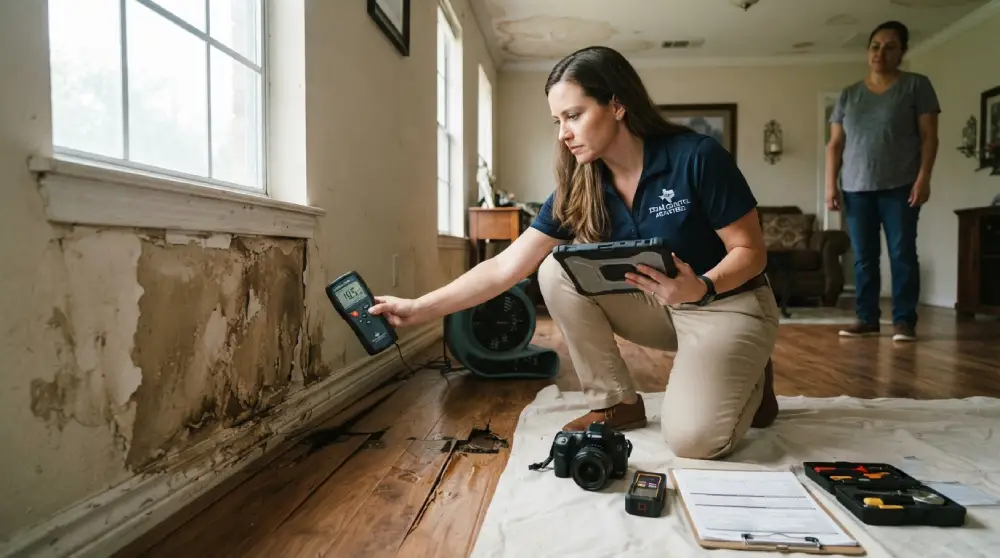
Water losses can spread well beyond the first stain. Moisture may move under flooring, behind cabinets, through insulation, or into wall cavities. Drying equipment may reduce surface moisture while concealed materials remain damaged. Our guide to dealing with an insurance adjuster after a water damage insurance claim explains why moisture documentation, mitigation records, photographs, and a complete repair scope can affect the outcome.
TX Public Adjusting reviews the source of the water, affected areas, mitigation records, moisture documentation, demolition needs, repair scope, and personal property impact. The goal is to present the loss clearly and connect the claimed work to the documented event.
Fire Damage Claims
Fire losses often involve several overlapping categories. A room may have direct flame damage while the rest of the property has smoke residue, suppression water, electrical concerns, and odor. Contents may require cleaning, testing, replacement, or detailed inventory documentation.
We review the building estimate, contents documentation, temporary housing or operational expenses, debris removal, and the treatment proposed for smoke-affected materials. Property owners can also review our Texas guide to fire damage insurance claims for more information about structural damage, smoke, soot, damaged contents, debris removal, and temporary living expenses.
Storm Damage Claims
Storm claims in Vidor may include damage from hurricane-force winds, severe thunderstorms, falling limbs, lightning, hail, and wind-driven rain. Because one event can affect several building systems, the inspection should not stop at the first obvious issue.
We evaluate roofing, exterior elevations, openings, attic areas, interior finishes, detached structures, and commercial equipment where applicable.
Roof Damage Claims
Roof claims are often underpaid when the estimate treats the loss as a small isolated repair. The carrier may include several shingles but omit surrounding components, steep-access costs, underlayment, flashing, vents, disposal, or necessary interior work. Hiring a public adjuster for a roof claim may be useful when the insurer approves only a limited repair, attributes storm damage to age, or omits associated roofing components from its estimate.
The proper scope depends on the roof material, damage pattern, repairability, policy terms, and applicable construction requirements. We compare the carrier’s scope with the physical evidence and the work reasonably required to complete the covered repair.
Commercial Property Claims
Vidor’s commercial properties range from Main Street and Highway 105 businesses to service companies, retail operations, offices, warehouses, and properties connected to the wider Orange and Jefferson County industrial economy.
Commercial claims may involve:
- Flat or low-slope roofing
- Metal panels and commercial siding
- Inventory and business personal property
- Machinery and rooftop equipment
- Tenant improvements
- Signage and exterior lighting
- Water extraction and remediation
- Business-income documentation
- Extra expenses incurred to continue operations
Commercial losses require careful coordination because delay can affect customers, employees, vendors, and revenue. We work to organize the building and business-related portions of the claim into a clear submission.
Why Vidor Insurance Claims Become Underpaid
An underpaid claim is not always the result of one dramatic error. More often, several small omissions accumulate. Several common property insurance claim mistakes can contribute to a low payment, including incomplete photographs, missed damage, inaccurate measurements, premature repairs, and accepting the first estimate without reviewing its scope.
Missed or Hidden Damage
The first inspection may be brief, or damaged materials may be concealed. Wet insulation, roof decking, wall cavities, underlayment, flashing, and electrical components may not be visible without a more detailed evaluation.
Scope Omissions
A carrier estimate may recognize the main damaged material but leave out associated work. For a roof claim, that can mean missing ventilation, flashing, starter materials, drip edge, disposal, access, or interior repairs. For a water claim, it may mean missing cabinets, insulation, baseboards, painting transitions, or manipulation of contents.
Low Measurements or Quantities
Incorrect roof measurements, room dimensions, linear footage, or material quantities can reduce the estimate. Small measurement differences become significant when repeated across a large home or commercial building.
Depreciation Issues
Property owners may not understand what was depreciated, whether depreciation is recoverable, or what documents must be submitted to recover withheld funds. We review the estimate and policy provisions to identify how depreciation has been handled.
Documentation Problems
A valid loss can still be difficult to resolve when photographs, invoices, inventories, repair estimates, timelines, and mitigation records are incomplete or inconsistent. Good documentation connects the event, damage, repair scope, and claimed amount.
Damage Attributed to Age or Maintenance
Roof wear, prior repairs, deterioration, and storm damage can exist at the same time. The question is not simply whether the building is older. The claim investigation should identify what changed during the reported event and whether that change caused covered physical damage.
Received a low estimate for your Vidor property? A free claim review can identify missing areas, incomplete quantities, and documentation gaps before you accept the carrier’s scope.
Our Public Adjusting Process
1. Claim and Policy Review
We begin by discussing the loss, claim status, inspection history, payments, estimates, and any denial or reservation letters. We also review relevant policy provisions and requested documentation.
2. Property Inspection
We inspect the reported damage and related areas. Depending on the loss, this may include the roof, exterior elevations, attic, interior rooms, detached structures, commercial equipment, or damaged contents.
3. Damage Documentation
We organize photographs, measurements, inventories, contractor information, mitigation records, invoices, and other evidence. We then prepare or review the repair scope so the submission reflects the documented loss.
4. Estimate and Scope Comparison
The insurance company’s estimate is compared with the observed damage and required repairs. We identify omitted materials, incorrect quantities, unsupported exclusions, and areas needing further evaluation.
5. Claim Presentation and Negotiation
We present the documented claim and communicate with the carrier regarding the scope and amount. Questions, requests, reinspections, and supplemental documentation are tracked throughout the process.
6. Settlement Review
When the carrier issues a revised estimate or payment, we review it with the property owner and explain remaining depreciation, deductibles, conditions, and unresolved differences.
Why Choose TX Public Adjusting
Licensed Texas Representation
TX Public Adjusting operates through Rise Public Adjusting LLC, Texas License #3356839. Our work is focused on Texas property claims and the documentation issues that commonly arise after wind, hail, water, fire, roof, and commercial losses.
We Represent Policyholders
We do not work for the insurance company. Our duty is to the residential or commercial policyholder who hires us.
Residential and Commercial Claim Experience
Our team has reviewed thousands of property claims involving homes, offices, retail properties, warehouses, multifamily buildings, roofing systems, contents, and business-related losses. We do not publish invented settlement figures or promise a particular result. Each claim is evaluated on its documentation, policy, facts, and applicable claim process.
Detailed Scope Review
A claim can be underpaid because of one major coverage dispute or dozens of smaller omissions. We look at measurements, repair methods, associated materials, damage patterns, photographs, invoices, and estimate line items.
Free Claim Review and No Upfront Fees
Property owners can speak with TX Public Adjusting before deciding how to proceed. We offer a free initial claim review, and there are no upfront fees.
Local Areas We Serve Around Vidor
Vidor does not have the same formally branded neighborhood structure found in larger Texas cities. Local references are more commonly organized around road corridors and nearby communities: the North Main Street and downtown area, Railroad Street, FM 105, Interstate 10, residential areas extending north toward Pine Forest, and properties toward Rose City and the Neches River corridor.
The City of Vidor identifies Rose City to the west and Pine Forest to the north as part of the wider Vidor trade area.
TX Public Adjusting serves property owners in and around:
- Vidor
- Pine Forest
- Rose City
- Orange
- West Orange
- Bridge City
- Mauriceville
- Orangefield
- Beaumont
- Lumberton
- Evadale
- Buna
- Port Neches
- Nederland
- Groves
Local landmarks and reference points include Vidor City Hall and its Visitors Center on North Main Street, the Captain Jack figure near Interstate 10 and Highway 105, the Main Street commercial corridor, Crossroads Shopping Center, and the nearby Neches River.
Frequently Asked Questions
What does a public adjuster in Vidor do?
A public adjuster represents the policyholder during a property insurance claim. The work may include inspecting damage, reviewing the policy, preparing an estimate, documenting personal property, comparing the carrier’s scope, and negotiating disputed claim items.
TX Public Adjusting works for the Vidor homeowner or business owner who hires us—not for the insurance carrier.
When should I hire a public adjuster after Vidor storm damage?
Many property owners call after receiving a low estimate, denial, or partial payment. Others hire a public adjuster earlier when the damage is extensive, the property is commercial, or the claim involves several categories of loss.
The best time depends on the facts, but early documentation can help preserve evidence before repairs or cleanup alter the property. Property owners who already received a payment or claim decision can review our explanation of when it is too late to hire a public adjuster.
Can you help with a hurricane claim in Vidor?
Yes. We review hurricane claims involving wind damage, roof damage, falling debris, broken openings, interior water intrusion, fencing, detached structures, and commercial property.
Coverage for flood or rising water is different from coverage for wind and rain entering through storm damage. We review the source of water and the applicable policy rather than assuming all hurricane-related damage is handled the same way.
Can a public adjuster help if my Vidor roof claim was denied?
A denied roof claim can be reviewed to determine what evidence the carrier relied on and whether additional documentation is available. This may include photographs, storm information, damage patterns, repairability concerns, contractor findings, and the carrier’s inspection notes or estimate.
A review does not guarantee the denial will be reversed, but it can show whether the claim deserves further presentation or reconsideration.
What if the insurance company already paid my claim?
You may still have options when the payment does not address all covered damage. We can compare the payment and estimate with the property conditions, contractor information, invoices, and policy provisions.
Timing matters. Contacting a public adjuster before completing all repairs or signing a final release may preserve more opportunities to document unresolved items.
How much does a public adjuster cost in Texas?
Public adjusters generally work under a written agreement that explains the fee and services. The exact arrangement can depend on the claim status and applicable Texas requirements.
TX Public Adjusting offers a free initial claim review and charges no upfront fees. The agreement is reviewed with the property owner before representation begins.
Do public adjusters work for the insurance company?
No. A public adjuster represents the insured property owner. The insurance company may employ or contract its own adjusters, but those adjusters participate in the carrier’s claim-handling process.
TX Public Adjusting independently documents and presents the policyholder’s claim.
Can you help with commercial property claims in Vidor?
Yes. We assist Vidor-area businesses with claims involving roofs, water intrusion, fire, smoke, equipment, inventory, tenant improvements, signage, and other covered property.
Commercial claims may also involve business-income or extra-expense documentation. Those categories require careful recordkeeping and should be evaluated under the specific policy.
Is flood damage covered by a standard property policy?
Standard home and commercial policies commonly exclude or limit damage caused by rising surface water, but they may cover certain water intrusion resulting from covered wind damage or a storm-created opening. Flood policies are separate contracts with their own terms.
Because Vidor faces both tropical wind and flooding risk, identifying the water source is a critical part of the claim review.
How long does a Vidor property claim take?
The timeline depends on the size of the loss, policy requirements, inspections, documentation, contractor involvement, carrier response, and whether coverage or scope is disputed. A simple loss may move faster than a large commercial, hurricane, or fire claim.
Our role is to keep the documentation organized, respond to requests, and identify unresolved issues as the claim proceeds.
Get a Free Vidor Insurance Claim Review
A low insurance estimate can leave a Vidor property owner responsible for repairs that should have been addressed in the claim. Missing roof components, incomplete water-damage scopes, overlooked commercial equipment, and undocumented contents can materially affect the amount available for recovery.
TX Public Adjusting provides independent insurance claim assistance for Vidor homeowners, landlords, investors, and business owners.
Contact TX Public Adjusting for a free claim review.
- Licensed Texas Public Adjuster
- Residential and commercial claims
- Rise Public Adjusting LLC
- Texas License #3356839
- No upfront fees
- Policyholder representation throughout Texas