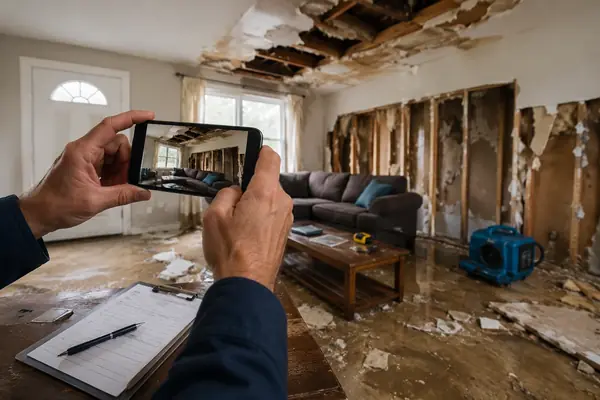
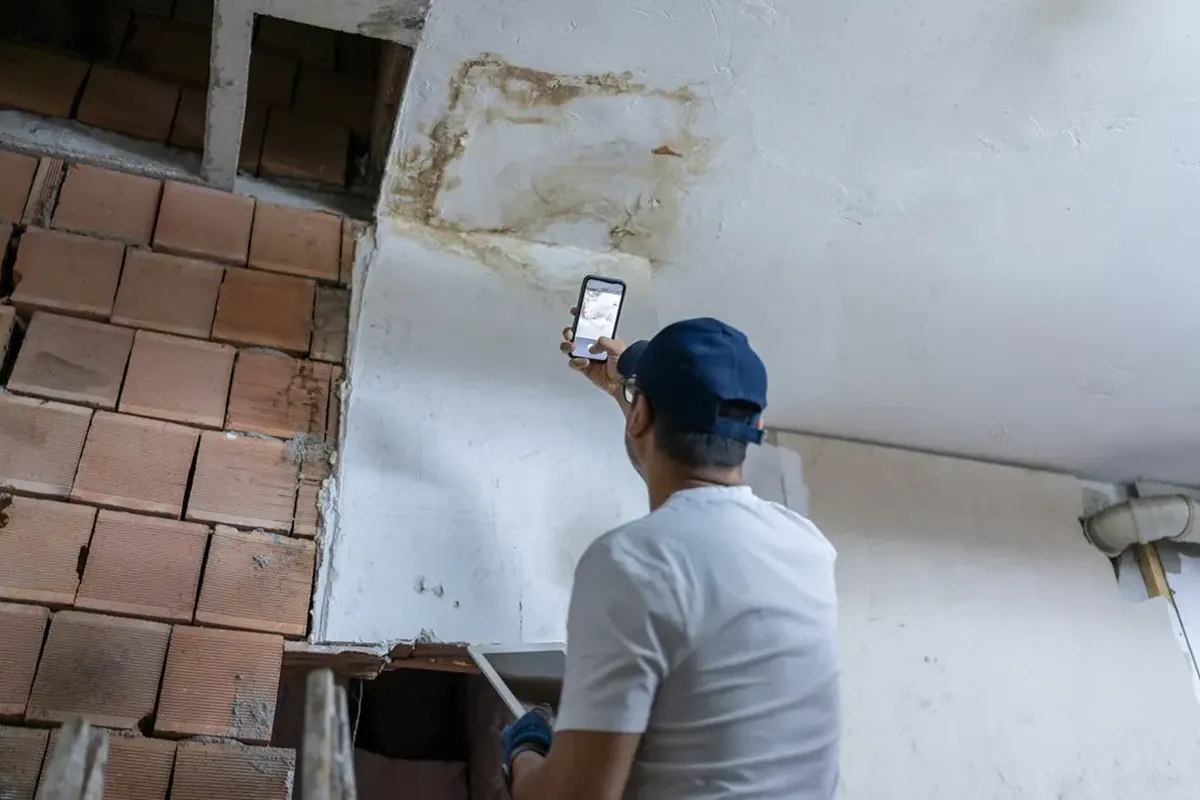
The mistakes that cost Texas property owners the most money are rarely about the big decisions. They are about evidence thrown away, deadlines missed and documents not read: a soaked rug hauled to the curb before anyone photographed it, an estimate accepted without checking whether it includes the attic insulation, a check deposited without knowing it was labeled "final." Each one is easy to avoid if you know about it in advance.
Here are ten, roughly in the order they happen on a claim.
1. Throwing out damaged items before documenting them
After a water or fire loss, the instinct is to clean. Wet carpet pad, swollen cabinets and smoke-damaged clothes go straight to the curb. Then the insurer's adjuster arrives a week later and there is nothing to see.
Instead: photograph and video every item before it leaves the property, with a close-up of brand and model labels where possible. Keep samples of flooring, carpet and pad (a cut square is enough). If something must go for health reasons, document it first and note it in writing to the insurer. Our contents inventory builder helps you list items room by room as you go.
2. Reporting the damage late
Most policies require "prompt" notice of a loss. Waiting weeks or months gives the insurer room to argue that the delay made the damage worse or made it impossible to tell what caused it. Hail and wind claims carry extra risk: many Texas homeowners policies set a one-year or similar deadline to report wind and hail damage, and TWIA claims must be filed within one year of the date of damage.
Instead: report as soon as you know about the damage, even if you are unsure it is above your deductible. Then check your own policy's "Duties after loss" and "Suit against us" conditions for the deadlines that apply to you. If a storm passed months ago, read how long you have to file a hail claim in Texas.
3. Giving a recorded statement without preparing
Insurers often ask for a recorded statement early. Questions about when you first noticed the leak, when the roof was last replaced or whether there was "any prior damage" can be used later to argue long-term deterioration or a pre-existing condition. Guessing at dates is the most common problem.
Instead: ask what the statement will cover and schedule it for when you have your notes in front of you. Answer only what you know; "I don't know" and "I'd need to check" are complete answers. Ask for a copy of the recording or transcript.
4. Accepting the first estimate without a line-by-line review
The insurer's estimate is usually written in Xactimate, the same software contractors and public adjusters use. That makes it reviewable line by line. Common gaps include missing drip edge or starter course on a roof, no allowance for removing and resetting fixtures, paint priced for one wall instead of the whole room, missing baseboard or insulation on a water loss, and no overhead and profit where a general contractor is clearly needed.
Instead: sit down with the estimate and your contractor's proposal side by side. Compare quantities (squares, square feet, linear feet), not just totals. Anything missing or underpriced becomes a written supplement request. See how supplement requests work.
5. Not reading the declarations page and endorsements
Your coverage is not "the policy" in general. It is the declarations page (limits, deductibles), the base policy form, and the endorsements that modify it. In Texas, the endorsements often decide the outcome: a cosmetic damage exclusion common on metal roofs, an actual cash value schedule for older roofs, a percentage wind and hail deductible, water backup limits, or a mold sublimit.
Instead: request a full certified copy of your policy, not just the declarations page. Read the endorsements list first. Knowing your roof is on an ACV schedule, for example, changes what you should expect to be paid.
6. Missing receipts for additional living expenses
If your home is unlivable, the Loss of Use or Additional Living Expense coverage pays the increase in your living costs: hotel or rental, extra mileage, laundry, meals above your normal grocery spend. Without receipts, those costs are very hard to recover.
Instead: keep every receipt in one envelope or one phone folder from the first night. Write a one-line note on each saying what it was for. Track your normal monthly costs too, since ALE pays the difference.
7. Cashing a check without knowing what it covers
Insurers often issue payments in pieces: one check for the dwelling at actual cash value, another for contents, another for mitigation. If you deposit a check without reading the payment letter, you may not know what is still open, what depreciation is being held back, or whether the letter describes the payment as a full settlement of a coverage.
Instead: match every check to its explanation of payment letter and to a line in your claim diary. If you disagree with the amount, say so in writing. Cashing a check does not usually end a claim on its own, but you should know exactly what each payment is for and read any release language before signing anything. By Texas law you must be a payee on every check; a public adjuster can never endorse one for you.
8. Letting the contractor "handle the insurance"
A good contractor is essential, and their findings help your claim. But Texas Insurance Code §4102.163 bars a contractor from acting as a public adjuster, or advertising to adjust claims, on property they are repairing or may repair. A contractor negotiating your claim has an interest in the job, not in your policy.
Instead: let the contractor do the repairs and provide their estimate and photos. Keep claim decisions with you, or with a licensed public adjuster who has no stake in the repair. More in can a public adjuster work for a contractor.
9. Missing the depreciation recovery deadline
On a replacement cost policy, the first payment is usually actual cash value: replacement cost minus depreciation. The withheld depreciation is "recoverable" once repairs are done, but many policies set a time limit to complete repairs and claim it. Miss it and that money may be gone.
Instead: find the loss settlement condition in your policy and write down the deadline. Once repairs are finished, send the final invoice and photos promptly and request the recoverable depreciation in writing. If repairs are delayed by contractor availability, ask the insurer in writing for an extension before the deadline passes. The claim settlement calculator shows how much of your claim is sitting in withheld depreciation.
10. Not documenting mitigation
Your policy requires you to take reasonable steps to protect the property from further damage. It also pays for that work. Owners lose on both sides when they do the work but cannot prove it: no receipts for the tarp or fans, no photos of the drying, no moisture readings.
Instead: photograph the emergency work, keep every invoice, and if a mitigation company is drying the property, get their daily moisture logs and equipment records. Those logs show both that you mitigated and how far the water traveled, which supports the repair scope.
The pattern behind all ten
Every mistake on this list is a documentation problem. The insurer pays for what it can see and verify. The fix is the same each time: photograph it, write it down, get it in writing, and keep a copy. Our claim documentation checklist walks through what to collect for each loss type, and how to document damage for your claim goes deeper on photos and records.
If you have already made one of these mistakes, the claim is usually still recoverable. We review claims for free and can tell you what can still be fixed.
Frequently asked questions
What is the biggest mistake people make on a home insurance claim?
Throwing away or repairing damage before it is documented. Without photos, samples and receipts, the insurer has no way to verify what was lost.
Should I give a recorded statement to my insurance company?
Your policy may require cooperation, but you can ask what it will cover and schedule it when you have your notes. Answer only what you know and ask for a copy.
Does cashing an insurance check mean I accept the settlement?
Not usually by itself, but read the payment letter and any release before you sign or deposit. Know what each check covers and dispute shortfalls in writing.
What is recoverable depreciation and when can I claim it?
It is the amount withheld from a replacement cost payment until repairs are done. Many policies set a time limit to complete repairs and claim it, so check your loss settlement condition.
Can a contractor negotiate my insurance claim in Texas?
No. Texas Insurance Code §4102.163 bars contractors from acting as public adjusters on property they are repairing or may repair.

Joseph inspects, documents and negotiates residential and commercial property claims across Texas, working only for policyholders.