

Property damage in Horizon City can become complicated quickly. A sudden desert thunderstorm may bring wind-driven rain, hail, airborne debris, and water intrusion within the same afternoon. A plumbing failure can spread through drywall and flooring before the source is found. Fire and smoke losses may affect areas of a home that were not included in the insurance company’s initial estimate.
TX Public Adjusting helps residential and commercial property owners document, prepare, and negotiate insurance claims. As a licensed public adjuster in Horizon City, we represent the policyholder—not the insurance company. Our team reviews the policy, inspects the damage, develops a detailed claim scope, and communicates with the carrier throughout the process.
TX Public Adjusting is operated by Rise Public Adjusting LLC, Texas License #3356839.
Need help with a new, delayed, denied, or underpaid claim? Request a free claim review. There are no upfront fees.
Why Property Owners Hire a Public Adjuster in Horizon City
Horizon City is a fast-growing community in eastern El Paso County. Much of the area includes newer residential construction, expanding commercial corridors, stucco exteriors, tile or shingle roofing systems, perimeter walls, and properties exposed to open desert winds.
The community sits in a high-desert environment at roughly 4,000 feet in elevation. During severe weather, the lack of dense tree cover and the open terrain can leave roofs, exterior finishes, windows, HVAC equipment, fences, and commercial signage exposed to strong gusts and blowing debris.
An insurance company will usually assign an adjuster to inspect the loss. That adjuster represents the carrier. A public insurance adjuster represents the property owner and prepares an independent assessment based on the policy and the documented damage. Property owners who are unfamiliar with the role can review our guide explaining what a public adjuster does before deciding whether representation is appropriate for their claim.
Horizon City property owners often contact us when:
- The carrier’s estimate seems too low.
- Roof, stucco, window, or interior damage was omitted.
- A hail or wind claim was partially denied.
- The insurer attributed damage to wear and tear.
- The claim contains confusing depreciation deductions.
- Water damage spread beyond the room listed in the estimate.
- The carrier requested additional documentation.
- A commercial loss includes business interruption or equipment damage.
- Repairs uncovered hidden damage after the initial inspection.
- The policyholder does not have time to manage repeated inspections and carrier correspondence.
A public adjuster does not guarantee a particular settlement. Our job is to identify covered damage, prepare support for the claim, and advocate for a properly documented resolution under the policy.
Property Damage Risks in Horizon City
Horizon City has a different claim profile from coastal Texas and the hail-heavy communities of North Texas. It does not face hurricanes directly, but that does not mean property losses are simple or rare.
The most relevant hazards in this part of El Paso County include high winds, isolated hail, monsoon thunderstorms, flash or arroyo flooding, extreme heat, plumbing failures, fire, smoke, and sudden roof leaks.
High Winds and Blowing Debris
Strong winds are one of the most important property risks in Horizon City. Open desert terrain can allow gusts to strike buildings with limited obstruction. Wind may lift or crease shingles, displace roof tiles, loosen flashing, damage vents, bend fencing, tear exterior fixtures from walls, and drive dust or rain through vulnerable openings.
Wind damage is not always obvious from ground level. A roof can remain in place while tabs, underlayment, fasteners, seal strips, penetrations, or edge components have been compromised.
Commercial properties may also sustain damage to:
- Rooftop HVAC units
- Metal panels
- Membrane roofing
- Signs and awnings
- Exterior lighting
- Doors and loading areas
- Solar panels
- Parapet walls
- Communications equipment
When an insurer only addresses the most visible damage, the estimate may not include the full repair scope.
Hail Damage
Hail events in Horizon City are less frequent than in parts of the Texas Panhandle or Dallas–Fort Worth, but radar-detected hail and severe weather warnings do occur in the area. One hail-tracking source reports multiple radar-indicated hail events near Horizon City, reinforcing the need for a roof inspection after a severe thunderstorm rather than assuming no damage occurred.
Hail may affect:
- Asphalt shingles
- Clay or concrete roof tiles
- Metal roof components
- Gutters and downspouts
- Stucco finishes
- Window screens
- Exterior paint
- Garage doors
- HVAC fins
- Patio covers
- Fences
- Commercial rooftop equipment
A proper hail claim should consider more than the roof covering. Soft metals, vents, flashing, screens, air-conditioning equipment, exterior finishes, and related water intrusion may all require evaluation.
Monsoon Rain and Flash Flooding
Heavy rain can create localized flash and arroyo flooding in Far West Texas, particularly when a large amount of water falls over dry, hard ground in a short period. The National Weather Service office serving El Paso warns that excessive rainfall can create dangerous flash and arroyo flooding in Southwest Texas.
Horizon City’s overall modeled flood risk may be lower than many coastal Texas communities, but individual parcels can still face drainage problems, street runoff, low-point accumulation, and water entering through doors, roofs, walls, or damaged exterior openings. One risk assessment estimates that hundreds of Horizon City properties could face some degree of flood exposure over a 30-year period.
Coverage depends heavily on the source of the water. Standard property insurance frequently treats wind-driven rain, roof leaks, plumbing releases, surface water, and rising floodwater differently. That distinction can determine whether a loss is covered and under which policy.
Extreme Heat and Plumbing Failures
Long periods of high heat can stress roofing materials, sealants, plumbing components, HVAC systems, and exterior finishes. Temperature swings may contribute to cracking, separation, or accelerated deterioration.
Insurance generally does not cover ordinary age or maintenance problems. However, a sudden covered event may damage an older component, and carriers sometimes over-attribute storm-related conditions to wear and tear. The cause, timing, documentation, and policy language must be reviewed carefully.
Fire and Smoke Damage
Residential fires, kitchen fires, electrical events, HVAC failures, garage fires, and commercial fires may cause damage well beyond the point of ignition.
A complete fire claim may need to address:
- Burned structural materials
- Smoke migration
- Soot contamination
- Water used during firefighting
- Damaged personal property
- Electrical systems
- HVAC contamination
- Debris removal
- Temporary housing
- Code-required repairs
- Business interruption
- Professional cleaning and testing
Smoke can travel through wall cavities, ductwork, attics, and connected rooms. A limited estimate focused only on visibly burned materials may leave substantial portions of the loss unaddressed.
Common Insurance Claims in Horizon City
Hail Damage Claims
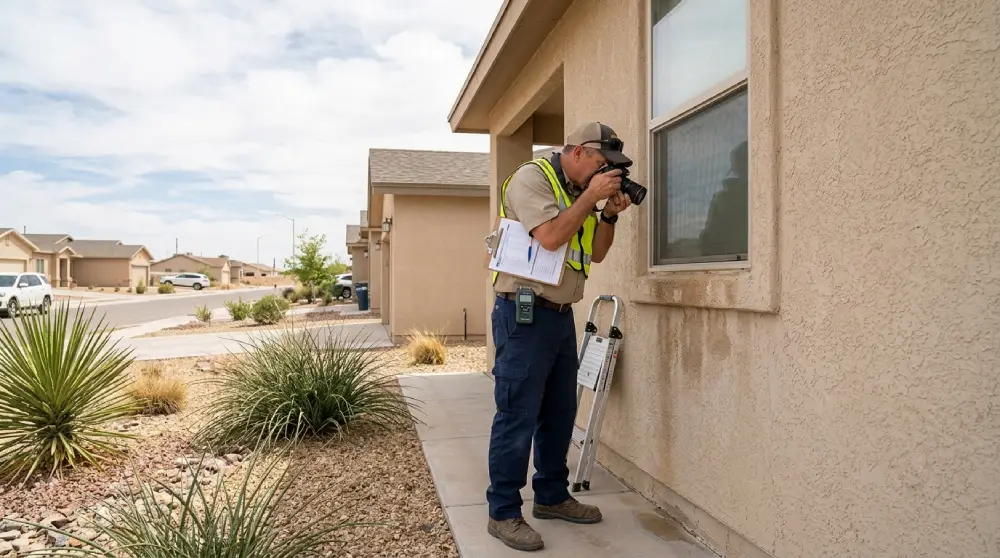
A hail damage insurance claim may involve roof bruising, fractured tiles, dented metals, damaged vents, HVAC impacts, broken exterior finishes, and ensuing interior leaks. We review the roof and related building components instead of treating the loss as a single-line repair.
Clear photographs, storm-date records, measurements, and close-up images of damaged materials can strengthen the claim. Property owners can use our guide on how to document hail damage for an insurance claim before repairs alter the original condition of the property.
For a more detailed breakdown of roof inspections, carrier estimates, and commonly missed damage, see our hail damage roof insurance claim guide.
Water Damage Claims
A water damage public adjuster can help document losses caused by burst supply lines, appliance leaks, water heaters, roof openings, plumbing backups, HVAC drainage failures, or water entering after wind damage.
The visible stain is rarely the entire loss. Water may travel beneath flooring, behind cabinets, through insulation, and into adjoining rooms. Moisture mapping, demolition scope, drying records, photographs, and repair estimates may all become important.
Fire and Smoke Claims
A fire insurance adjuster working for the policyholder can evaluate more than the visibly burned area. Fire claims often include structural repairs, contents, cleaning, temporary relocation, code issues, debris removal, and smoke remediation.
Our guide to a fire damage insurance claim explains how structural damage, smoke contamination, contents, and additional living expenses may be documented under the policy.
Storm and Wind Damage Claims
Desert thunderstorms may bring strong outflow winds, dust, hail, lightning, and brief but intense rainfall. Claims may include roofing, exterior walls, windows, fences, signs, patio structures, equipment, and interior water damage.
Roof Damage Claims
Roof claims are frequently under-scoped because insurers approve isolated repairs without addressing matching, access, underlayment, flashings, tile availability, damaged penetrations, or related interior repairs.
A roof may also contain more than one cause of damage. The carrier may identify age-related deterioration while missing distinct storm-created impacts. When the insurer approves only a limited repair or attributes storm damage to age, working with a public adjuster for a roof claim may help identify omitted components, repair-method issues, and unsupported coverage conclusions.
Commercial Property Claims
Horizon City continues to grow along the Horizon Boulevard and Eastlake corridors. Commercial losses may affect retail spaces, offices, restaurants, medical facilities, warehouses, multifamily properties, churches, and other local operations.
Commercial claims can involve:
- Building repairs
- Tenant improvements
- Inventory
- Machinery and equipment
- Electronic systems
- Signs
- Business personal property
- Extra expense
- Business interruption
- Lost rental income
- Code upgrades
The documentation burden is usually much greater than it is for a small residential claim.
Why Horizon City Insurance Claims Become Underpaid
An underpaid claim does not always begin with an outright denial. In many cases, the insurer accepts that a covered loss occurred but issues an estimate that does not include everything required to restore the property. Many underpayments begin with avoidable documentation, inspection, or communication problems. Reviewing the most common property insurance claim mistakes can help Horizon City property owners protect the claim from the beginning.
Missed or Hidden Damage
Damage beneath roofing, flooring, drywall, cabinets, insulation, or exterior finishes may not be visible during a brief inspection. Hidden conditions often appear after demolition or further testing.
Scope Omissions
Carrier estimates may omit flashing, detach-and-reset work, labor minimums, waste, access, overhead items, code-related repairs, matching materials, contents manipulation, or repairs to adjacent surfaces.
Low Unit Pricing
The insurer’s pricing may not reflect current local labor, material, access, or specialty-trade costs. An estimate can list the right items but still be too low to complete the work.
Depreciation Problems
Policies may provide replacement cost coverage, actual cash value coverage, or a combination of both. Depreciation may be recoverable after repairs, subject to the policy. Errors can occur when components are assigned the wrong age, condition, life expectancy, or depreciation method.
Cause-of-Loss Disputes
A carrier may classify roof damage as wear, cracking as settlement, interior staining as long-term seepage, or stucco damage as maintenance-related. The policyholder may need stronger photographs, measurements, reports, weather information, or professional opinions to support a different conclusion.
Incomplete Documentation
The strongest claim position is difficult to present without photographs, measurements, inventories, invoices, mitigation records, estimates, communications, and proof of damaged property.
New Damage Found During Repairs
Once repairs begin, contractors may discover wet decking, damaged insulation, concealed plumbing damage, cracked tile, or hidden structural issues. These items may require a supplemental claim supported by photographs and an updated scope.
Our Public Adjusting Process
1. Free Claim Review
We start by discussing what happened, when the damage occurred, what the insurer has done, and where the claim stands.
We may review:
- The insurance policy
- Carrier estimates
- Coverage letters
- Photographs
- Contractor proposals
- Payment records
- Inspection reports
- Prior correspondence
This helps determine whether public adjusting services may be appropriate.
2. Property Inspection
We inspect the reported damage and look for related conditions that may have been missed. Depending on the loss, the inspection may include the roof, exterior elevations, interior rooms, mechanical equipment, commercial spaces, and damaged contents.
3. Policy and Coverage Review
We identify relevant coverages, deductibles, exclusions, limitations, endorsements, duties after loss, valuation terms, and deadlines.
A public adjuster can interpret and present a property claim but does not provide legal advice. Legal questions may need to be referred to a qualified attorney.
4. Damage Documentation
We organize photographs, measurements, inventories, reports, estimates, invoices, and supporting records. The goal is to create a clear connection between the covered event and the repair or replacement work being claimed.
5. Claim Scope and Estimate
We prepare an itemized scope based on the documented damage. The estimate may include structural work, roofing, interior finishes, contents, mitigation, debris removal, specialty trades, and other applicable categories.
6. Carrier Communication and Negotiation
We present the claim package, respond to questions, attend inspections when appropriate, and discuss scope and pricing differences with the insurer. Carrier response times depend on the claim and applicable requirements. Property owners dealing with prolonged silence can review our explanation of how long an insurance adjuster has to contact you.
7. Settlement Review
When the carrier issues a revised estimate or payment, we review it against the documented claim. We also help identify recoverable depreciation, remaining supplements, or unresolved items.
Your carrier has an adjuster. You are allowed to have licensed representation too. Contact TX Public Adjusting for a free Horizon City claim review.
Why Choose TX Public Adjusting
Licensed in Texas
TX Public Adjusting operates through Rise Public Adjusting LLC, Texas License #3356839.
Texas consumers should verify a public adjuster’s license and understand the contract before hiring one. The Texas Department of Insurance also explains that a public adjuster represents the policyholder and is subject to state rules governing conduct and fees.
We Represent Policyholders
The insurance company’s adjuster works on behalf of the insurance company. Our comparison of a public adjuster vs. independent adjuster explains the differences in who each professional represents during the claim process. We work for the residential or commercial policyholder.
That distinction shapes every part of the claim—from the inspection and documentation to the estimate and negotiation.
Residential and Commercial Experience
Our work includes homeowners, landlords, investors, multifamily owners, business owners, property managers, and commercial operators.
We have reviewed thousands of property claims involving storm, roof, water, fire, smoke, and commercial damage. We do not publish invented settlement figures or promise outcomes. Every claim depends on the policy, cause of loss, evidence, and carrier response.
Texas-Focused Claim Knowledge
Texas property claims involve specific policy forms, weather patterns, construction systems, carrier practices, deadlines, and licensing requirements. Our work is centered on Texas property owners.
No Upfront Fees
We offer a free initial claim review. Public adjusting fees are explained in the written agreement before representation begins.
Horizon City Neighborhoods and Local Service Areas
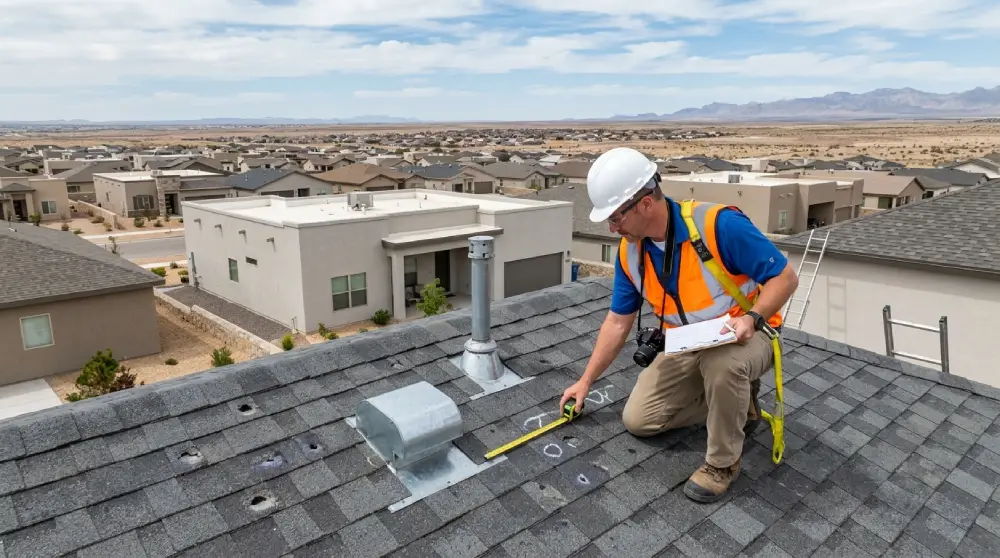
Horizon City includes a mix of established subdivisions, golf-course-area homes, and newer developments spreading along Eastlake Boulevard and Horizon Boulevard.
Local communities and residential areas include:
- Horizon Heights
- Horizon Manor
- Horizon Mesa
- Eastlake
- Paseo del Este
- Emerald Estates
- Emerald Park Estates
- Neighborhoods surrounding the Horizon Golf Course
Horizon Heights and Horizon Manor were among the community’s original subdivisions. Horizon Heights developed around the local golf course, while later growth expanded through Eastlake, Horizon Mesa, Paseo del Este, and Emerald Estates.
We also assist property owners in and around:
- El Paso
- Socorro
- Sparks
- Clint
- San Elizario
- Fabens
- Montana Vista
- Homestead Meadows
- Far East El Paso
- Lower Valley communities
Our service area is not limited to properties inside the Horizon City municipal boundary.
Local Landmarks and Property Corridors
Horizon City is closely associated with several local destinations and corridors, including:
- Horizon Golf Course and the surrounding Horizon Heights area
- Horizon City Town Hall
- Horizon Boulevard
- Eastlake Boulevard
- Horizon City parks and community facilities
- The nearby desert landscape of eastern El Paso County
These areas reflect the community’s mix of established homes, new subdivisions, public facilities, and expanding commercial development.
Frequently Asked Questions
What does a public adjuster in Horizon City do?
A public adjuster represents the policyholder during a property insurance claim. The adjuster reviews the policy, inspects the damage, prepares documentation and estimates, communicates with the insurance company, and negotiates disputed scope or pricing issues.
Unlike the carrier’s adjuster, a public adjuster does not work for the insurance company.
When should I hire a public adjuster for a Horizon City claim?
You may want help when the claim is large, technically complicated, delayed, denied, or underpaid. A public adjuster can also become involved before the carrier finishes its first estimate.
It is generally easier to document damage early, but existing claims can still be reviewed to determine whether omitted or disputed items remain. Our guide on when it is too late to hire a public adjuster explains how timing can affect inspections, documentation, and negotiations.
Can you help after my insurance company has already paid?
Yes. An initial payment does not always mean the claim is complete. We can review the carrier’s estimate, payment breakdown, depreciation, exclusions, and repair scope.
Additional payment is never guaranteed, but a detailed review may identify documented damage or costs that were not included.
How much does a Horizon City public adjuster charge?
Public adjusters usually work under a fee agreement tied to the claim recovery, subject to Texas law and the written contract. The exact fee depends on the circumstances and scope of representation.
TX Public Adjusting provides a free initial review and does not charge upfront fees.
Can a public adjuster help with a denied roof claim?
A public adjuster can review the denial letter, policy, roof conditions, photographs, weather information, and carrier estimate. We may also identify whether the insurer considered all relevant components and causes of damage.
Some denials are supported by the policy and evidence. Others may warrant additional documentation, reinspection, supplementation, appraisal consideration, or legal review. Property owners facing this situation should also review what to do if your hail claim was denied before discarding damaged materials or beginning permanent repairs.
Does homeowners insurance cover flash flooding in Horizon City?
Standard homeowners policies commonly exclude rising surface water or flood damage. Flood insurance is typically written under a separate policy.
However, water entering after covered wind or roof damage may be treated differently. Plumbing leaks, appliance failures, roof openings, groundwater, sewer backup, and surface flooding can each fall under different policy provisions. The source of the water must be established.
Is hail damage common enough in Horizon City to justify an inspection?
Not every storm produces claim-worthy hail, but radar-detected hail and severe thunderstorms do occur around Horizon City. Roof damage may be difficult to see from the ground, especially on tile, shingle, or metal components.
After a documented hail or wind event, an inspection can help determine whether filing a claim is reasonable. Avoid filing solely because a storm passed nearby; confirm that the property actually sustained damage.
Can you handle commercial insurance claims in Horizon City?
Yes. We assist with commercial buildings, tenant improvements, inventory, equipment, business personal property, loss of income, extra expense, and other covered categories.
Commercial claims require detailed financial and operational documentation. Early organization can reduce disputes later.
What if the contractor’s estimate is higher than the insurance estimate?
That difference may result from omitted items, different measurements, labor pricing, code requirements, material availability, repair methods, overhead costs, or contractor assumptions.
We compare both scopes line by line and determine which differences can be supported under the policy and loss documentation.
How long does a property claim take?
The timeline depends on the severity of the damage, availability of documentation, carrier inspections, coverage questions, repair discoveries, and whether the scope is disputed.
A straightforward residential claim may move faster than a major fire, commercial interruption, or multi-building storm loss. We keep the claim organized and respond to carrier requests so avoidable delays are reduced.
Get a Free Horizon City Insurance Claim Review
Property owners should not have to guess whether an insurance estimate includes all covered damage.
TX Public Adjusting can review your policy, carrier estimate, photographs, inspection findings, and claim correspondence. We handle residential and commercial losses throughout Horizon City and El Paso County. Property owners who are still deciding what steps to take can review our property loss recovery guide or contact TX Public Adjusting directly for a free claim review.
TX Public Adjusting
Rise Public Adjusting LLC
Texas License #3356839
- Free claim review
- No upfront fees
- Residential and commercial claims
- New, delayed, denied, and underpaid claims
- Independent representation for policyholders
Contact TX Public Adjusting to schedule your free claim review.