If your hail claim was denied, start by finding the exact reason in the denial letter, then get the insurer's claim file: the adjuster's photos, estimate and any engineer report. With those in hand, have the roof independently inspected and ask in writing for a re-inspection or reconsideration. Many denials are reversed or narrowed at that stage. If they aren't, your options are a complaint to the Texas Department of Insurance, appraisal if the real dispute is about the amount, and an attorney if the dispute is about coverage.
Why hail claims get denied
Denial letters tend to use a handful of phrases. Each one points to a different kind of evidence.
| Reason in the letter | What the insurer is saying | What answers it |
|---|---|---|
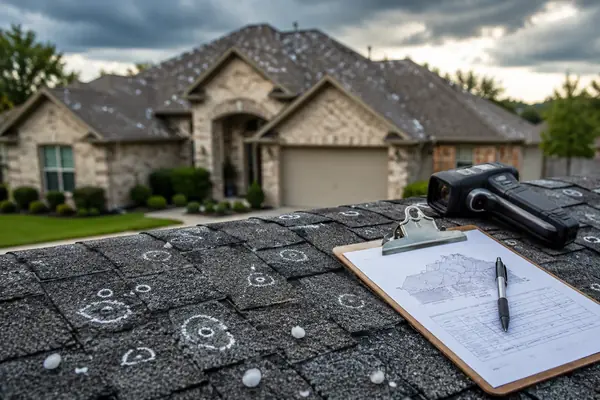
| "No hail damage observed" or "no storm-related damage" | The adjuster found too few hits, or none | Your own test squares and roof-level photos on every slope |
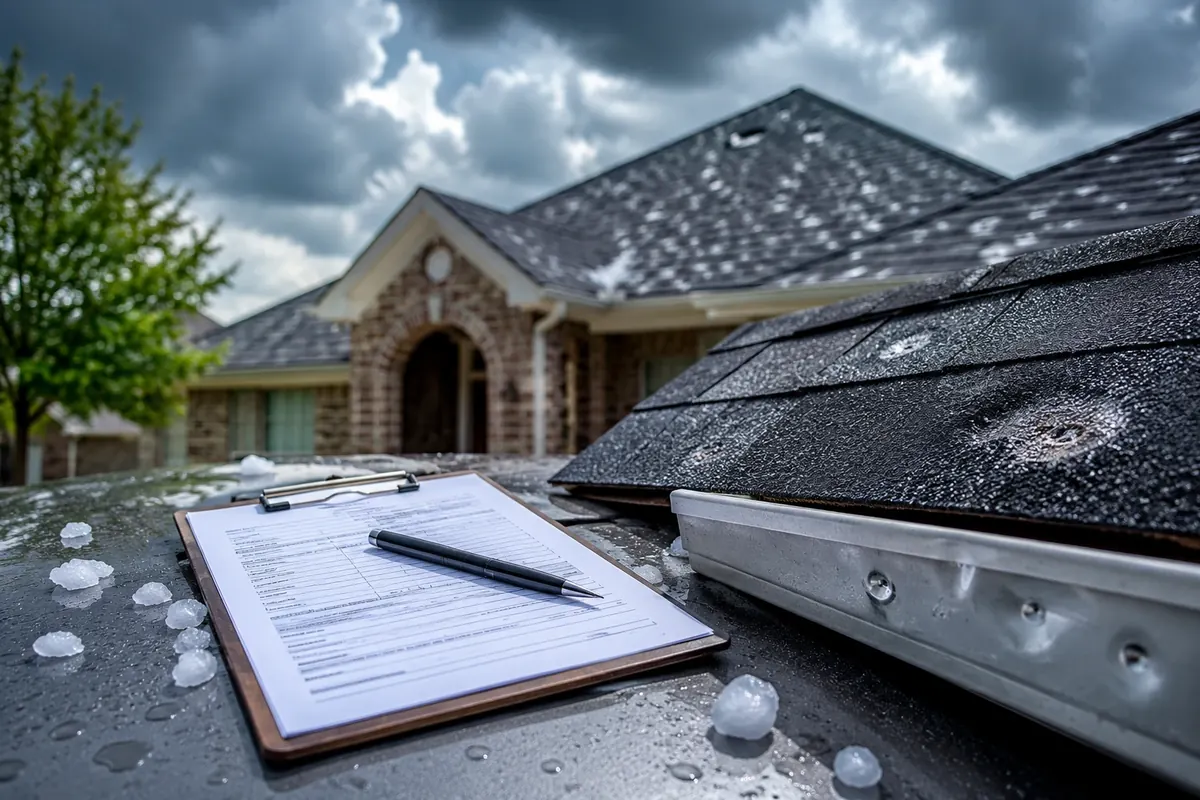
| "Wear and tear," "deterioration," "age" | Marks on the roof are from aging, not hail | Photos showing random, circular, directional hits; soft-metal dents |
| "Cosmetic damage excluded" | Damage exists but only affects appearance | Evidence of functional damage, quoted against the endorsement's wording |
| "Damage below deductible" | Covered damage exists but the estimate is smaller than your deductible | An independent estimate showing missing slopes and items |
| "Late notice" or "prior damage" | The damage can't be tied to the reported date, or predates the policy | NOAA storm reports, pre-storm photos or inspection reports |
| "Manufacturing defect," "improper installation," "mechanical damage" | Something other than hail caused the condition | Pattern evidence and, if needed, an independent roofer's or engineer's opinion |
Two of these aren't really coverage denials. A "below deductible" letter means the insurer agrees there's covered damage and disagrees about how much. That's an amount dispute, which matters later when we get to appraisal. And a partial denial, where some slopes or items are paid and others refused, is common; treat it as a dispute over the unpaid portion.
Step 1: Read the letter and the policy language it cites
Denial letters normally quote or cite the policy provision the insurer is relying on. Find that provision in your own policy and read it in full, including any endorsement that changes it. Check the date of loss the letter uses, the policy number and period, and whether the letter refers to an engineer's report or inspection date. Errors in any of these are worth raising right away.
Step 2: Get the claim file
You can't respond to a denial you can't see the basis for. Write to the adjuster and ask for:
- The adjuster's estimate, even if it's below the deductible
- The photo report from every inspection
- Any engineer's or consultant's report, including photos and the hail size assumed
- Any roof diagram or measurement report
- Any weather or storm data the insurer relied on
- A certified copy of the policy in effect on the date of loss
Keep the request short, include the claim number, and send it by email or another method that leaves a record. If the insurer refuses, that refusal is itself something to note in any later complaint.
Step 3: Get an independent inspection
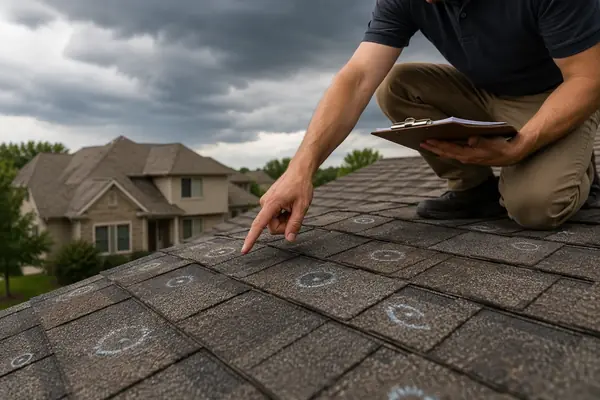
A second set of eyes on the roof is the most important step. A roofer can tell you whether there's hail damage, but under Texas law a contractor can't negotiate the claim for you (Tex. Ins. Code §4102.163). A licensed public adjuster can inspect, document and present the claim. Either way, the goal is roof-level evidence that answers the specific reason in the letter: test squares on every slope, close-ups with scale, soft-metal dents on every side of the house, and an estimate.
For what hail damage looks like on your roof type, see our guide to hail damage by roof type, and for how the insurer reached its conclusion, how insurance companies evaluate hail damage.
Step 4: Ask for a re-inspection or reconsideration
Send the insurer a written request to reconsider, with your evidence attached. Keep it factual:
- Quote the denial reason. "Your letter of June 3 states no hail damage was observed on the roof."
- Answer it with specifics. "Enclosed are photos of 14 hits in a 10-by-10 test square on the west slope and 11 on the north slope, plus dents in the gutters and A/C fins on both elevations."
- Ask for an action. "Please re-inspect the roof with our inspector present, or revise your determination."
Ask that a different adjuster, or the original adjuster with a supervisor, perform the re-inspection, and be there. Re-inspections where someone walks the roof with the adjuster and points to specific damage are where most denials get turned around.
Reopening a closed hail claim
If the claim was closed, or paid and closed, and new evidence appears, you can ask the insurer to reopen it. Common reasons are a leak that shows up months later, damage found by a roofer during another job, or slopes and components the original inspection skipped. Write to the insurer with the original claim number, describe what's new, and include photos and an estimate.
Keep three things straight:
- Reopening means the insurer reviews the same claim, same date of loss, again. Your deductible was already applied.
- A supplement adds costs found during repairs to an open claim. That's covered in our hail damage supplement guide.
- A new claim is for damage from a different storm, with a new date of loss and a new deductible.
Reopening is subject to your policy's deadlines. Check the reporting and "Suit against us" conditions, and see how long you have to file a hail claim in Texas.
Appraisal: only for disputes about the amount
Most Texas homeowners policies have an appraisal clause. Each side chooses an appraiser, the two appraisers choose an umpire, and an agreement by any two of them sets the amount of loss. It's often faster and cheaper than a lawsuit.
Appraisal decides how much, not whether. It fits a "below deductible" letter, a partial denial where the insurer accepts some slopes, or a claim where both sides agree there's hail damage but disagree on the scope and price. It generally doesn't fit a denial based on an exclusion, late notice, or a finding that there was no hail at all, because those are coverage questions. Our article on appraisal for hail damage claims explains the process and when to invoke it.
File a complaint with the Texas Department of Insurance
If the insurer won't respond, misses its deadlines, or won't explain the denial, you can file a complaint with the Texas Department of Insurance. TDI forwards complaints to the insurer and asks for a response. It doesn't decide the value of your claim, but a complaint often gets a stalled file moving. Include your claim number, a timeline, and copies of your letters.
Know the insurer's response deadlines under Chapter 542: it must acknowledge your claim within 15 days, decide within 15 business days of receiving what it requested (with a 45-day limit if it notifies you it needs more time), and pay within 5 business days of accepting. Our claim deadline calculator works out the dates for your claim.
When to call a lawyer
Talk to an insurance attorney when:
- The insurer has denied coverage outright and won't reconsider after you've sent evidence
- The denial rests on an exclusion or policy interpretation you dispute
- The insurer has missed Chapter 542 deadlines or stopped responding
- Your policy's deadline to sue is getting close
Texas law: before suing over a weather-related property claim, you must give the insurer written notice at least 61 days before filing suit, stating the specific amount you claim is owed (Tex. Ins. Code §542A.003). An attorney will usually prepare this notice, and it has to go out well before your policy's suit deadline.
A public adjuster and an attorney do different jobs, and they often work the same claim. We document the damage, write the estimate and negotiate; when a claim needs litigation, we work with the policyholder's attorney. Our denied and underpaid claims service explains how we take on a denied hail file.
Frequently asked questions
Can I appeal a denied hail claim in Texas?
There is no formal appeal, but you can ask the insurer in writing to reconsider and re-inspect, with new evidence attached. Many denials are revised at that stage. If not, the options are a TDI complaint, appraisal for amount disputes, or an attorney.
Can you reopen a hail damage claim after it is closed?
Usually, if new damage or evidence appears and you are within your policy's deadlines. Write to the insurer with the original claim number and the new photos and estimate.
Can I use appraisal if my hail claim was denied?
Appraisal settles the amount of loss, not coverage. It can work when the insurer says the damage is below the deductible or approved only part of the roof. It generally does not resolve a denial based on an exclusion or a finding of no hail damage.
Should I file a new claim instead of disputing the denial?
Only if the damage came from a different storm. Filing a new claim for the same storm with a different date can hurt your credibility and add a second deductible.
Will a public adjuster take a denied hail claim?
Often, yes, if the roof shows hail damage the insurer missed or the dispute is over scope. We review denial letters and claim files for free and will tell you if your claim needs an attorney instead.

Joseph inspects, documents and negotiates residential and commercial property claims across Texas, working only for policyholders.