

Property damage in Mineral Wells can develop quickly when a North Texas storm crosses Palo Pinto County. Hail can bruise shingles and damage metal roofing, straight-line winds can lift roof edges, and heavy rain can enter through openings that are difficult to spot from the ground. When the resulting insurance estimate leaves out part of the damage, a public adjuster in Mineral Wells can help the policyholder document the loss and present a more complete claim.
TX Public Adjusting represents residential and commercial property owners—not insurance companies. Property owners who are unfamiliar with the process can review our guide explaining what a public adjuster does. We review policies, inspect damaged property, prepare supporting documentation, identify scope omissions, and negotiate covered property claims on behalf of policyholders.
TX Public Adjusting is operated by Rise Public Adjusting LLC, Texas License #3356839.
Need help with a damaged home, rental property, commercial building, or underpaid claim? Contact TX Public Adjusting for a free claim review. There are no upfront fees.
Why Property Owners Hire a Public Adjuster in Mineral Wells
Mineral Wells sits primarily in Palo Pinto County, with a portion of the city extending into Parker County. The community developed around its historic mineral wells and remains closely associated with downtown Mineral Wells, the Baker Hotel, Fort Wolters, Lake Mineral Wells State Park, and the US 180 and US 281 corridors.
That combination of older homes, historic commercial buildings, industrial facilities, apartments, ranch-style properties, newer construction, and low-slope commercial roofing creates a wide range of insurance-claim challenges.
A small roof leak on a newer home may be relatively simple to identify. Damage to an older downtown building, warehouse, multifamily property, or structure near Fort Wolters can require a much broader evaluation. The visible damage may be only one part of the covered loss.
Property owners commonly hire a Mineral Wells public adjuster when:
- The insurance company’s estimate appears too low.
- The carrier identified only a small repair area.
- Roof damage was blamed on age or maintenance.
- Interior water damage was excluded from the scope.
- A storm damaged several building systems at once.
- The claim involves a business, rental property, apartment building, or industrial facility.
- The adjuster did not inspect every elevation, roof section, room, or accessory.
- The carrier applied depreciation that the policyholder does not understand.
- The claim has stalled because documentation is incomplete.
- A denied or partially denied claim needs a detailed second review.
An insurance company adjuster works within the carrier’s claim process. A licensed public adjuster works for the policyholder. That distinction becomes especially important when the loss involves disputed causation, hidden damage, extensive contents, multiple structures, or a complicated repair scope.
Mineral Wells Storm Risks and Property-Damage Conditions
Mineral Wells is exposed to several property-loss risks that regularly produce insurance claims across North and Central Texas.
Tornado and Extreme Wind Damage
Tornado risk is not an abstract concern for Mineral Wells. On April 28, 2026, an EF-3 tornado struck the city with estimated peak winds of approximately 145 mph. Local reporting documented injuries, displaced residents, damaged homes, destroyed commercial properties, roof loss, downed power infrastructure, and significant impacts in residential and industrial parts of the city.
The National Weather Service recorded a broader six-day North and Central Texas severe-weather outbreak from April 24 through April 29, 2026. That event produced hundreds of hail, tornado, flooding, and wind reports, including large hail and severe gusts.
Wind and tornado claims in Mineral Wells may involve:
- Missing or creased shingles
- Lifted roof membranes
- Damaged decking
- Broken rafters or trusses
- Detached gutters and flashing
- Collapsed fences and accessory structures
- Broken windows and exterior doors
- Siding damage
- Water intrusion through storm-created openings
- Electrical and mechanical damage
- Business interruption
- Debris-removal expenses
- Damage caused by fallen trees or airborne objects
A carrier estimate may address an obvious opening while overlooking movement, displaced materials, water migration, code-related work, or damage on other elevations.
Hail Damage
Mineral Wells lies within a region that experiences severe thunderstorms capable of producing damaging hail. Hail can affect asphalt shingles, metal roofing, gutters, vents, skylights, exterior finishes, fencing, HVAC equipment, vehicles, and outdoor commercial equipment.
Hail claims are frequently disputed because damage can be subtle. A roof may not leak immediately, yet hail impacts can fracture shingle mats, loosen granules, dent metal components, crack brittle materials, or shorten the useful life of the roofing system.
A thorough hail inspection should evaluate more than the field shingles. It may also need to address:
- Ridge and hip caps
- Flashing
- Pipe jacks
- Roof vents
- Soft-metal components
- Gutters and downspouts
- Window screens
- Siding
- Exterior paint and stains
- HVAC condenser fins
- Detached garages, barns, and sheds
- Commercial rooftop equipment
When these items are omitted, the difference between the carrier’s estimate and the actual repair requirements can be substantial.
Heavy Rain and Water Intrusion
Thunderstorms can produce wind-driven rain and localized drainage problems. Water may enter through lifted roofing, damaged flashing, broken windows, wall penetrations, low-slope roof seams, or compromised exterior cladding.
A water claim may extend beyond the first stained ceiling. Moisture can travel through insulation, wall cavities, flooring systems, electrical components, cabinetry, and structural materials.
Important parts of a water-damage claim can include:
- Emergency mitigation
- Water extraction
- Drying equipment
- Moisture mapping
- Removal of wet insulation
- Drywall and texture repairs
- Flooring replacement
- Cabinet or millwork damage
- Painting and finish matching
- Mold-related evaluation when applicable
- Temporary protection
- Damage to personal property
A public adjuster helps organize these components into one documented claim rather than treating each visible symptom as an isolated repair.
Fire, Smoke, and Electrical Losses
Mineral Wells includes historic structures, older housing stock, commercial properties, light-industrial facilities, rural-edge properties, and buildings with different generations of electrical and mechanical systems. A fire claim can therefore involve much more than burned materials. For larger losses, a public fire insurance adjuster can help document structural damage, smoke contamination, contents, debris removal, and related covered expenses.
Smoke, soot, heat, water from firefighting, corrosion, odor, debris, damaged contents, and temporary relocation expenses may all need to be evaluated.
Commercial fire claims can also involve:
- Inventory loss
- Machinery or equipment damage
- Tenant improvements
- Lost income
- Extra operating expenses
- Code-required upgrades
- Professional cleaning
- Demolition and debris removal
Common Insurance Claims in Mineral Wells
Hail Damage Claims
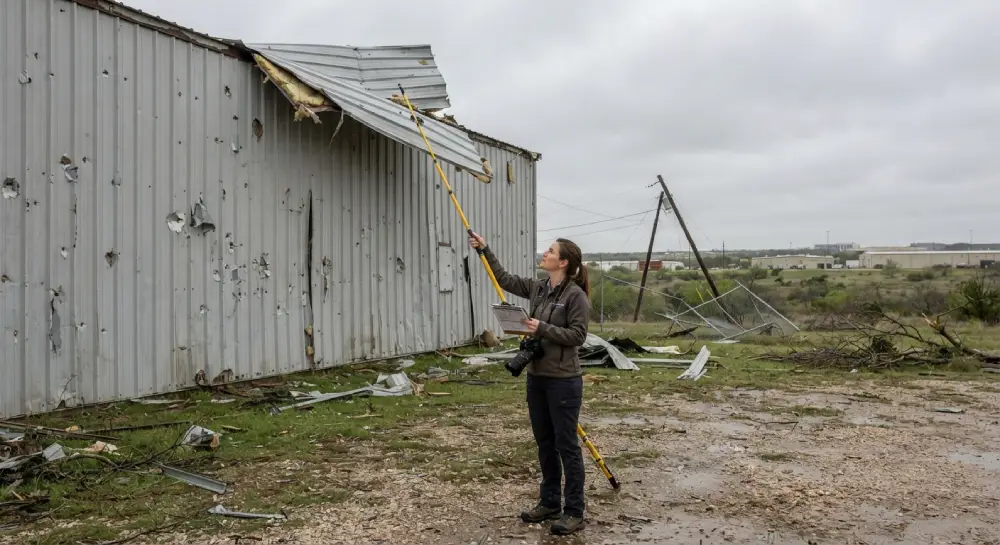
Hail claims are among the most common reasons Texas property owners request an independent claim review. Property owners can learn more about documenting hail damage insurance claims in Texas before accepting a roof estimate or settlement. In Mineral Wells, hail damage may affect residences, apartment buildings, churches, stores, offices, warehouses, agricultural structures, and industrial buildings.
TX Public Adjusting can review the roof, exterior components, carrier estimate, repair assumptions, depreciation, exclusions, and supporting photographs to determine whether the loss was fully documented.
Water Damage Claims
Water losses may result from storm openings, plumbing failures, appliance leaks, roof leaks, broken supply lines, overflowing fixtures, or fire-suppression activity. Because moisture can spread beyond the first visible stain, property owners may benefit from understanding what to expect when dealing with an insurance adjuster after water damage.
The cause of loss matters because insurance policies do not treat every type of water damage the same way. The documentation should clearly connect the covered event to the resulting damage while separating unrelated maintenance conditions.
Fire Damage Claims
A fire damage insurance claim may require evaluation of the structure, finishes, contents, odor, soot, smoke migration, water damage, electrical systems, mechanical equipment, debris, temporary housing, and business interruption.
TX Public Adjusting helps policyholders organize the loss and prepare documentation that reflects the full extent of covered damage.
Storm Damage Claims
Storm claims can combine wind, hail, rain, falling objects, debris impact, power interruption, roof damage, and interior water intrusion.
Claims involving multiple causes are often under-scoped when the inspection focuses on only the most obvious damage.
Roof Damage Claims
Roof claims frequently become disputed over repairability, matching, age, wear, installation conditions, prior damage, and whether the storm caused functional damage. A public adjuster for a roof claim can review the carrier’s scope, measurements, photographs, pricing, and omitted roofing components.
Our review may include the carrier’s roof measurements, line items, material assumptions, waste factors, flashing, ventilation, steep charges, access issues, code items, and related interior repairs.
Commercial Property Claims
Commercial claims often require more documentation than residential claims. The damaged building may include multiple roof systems, tenant spaces, specialized equipment, inventory, signage, parking structures, or business-income exposure. Commercial roofing losses may also involve specialized systems, including modified bitumen, metal, membrane, and built-up roof repair requirements.
We assist owners of:
- Retail buildings
- Offices
- Warehouses
- Restaurants
- Churches
- Apartment and multifamily properties
- Manufacturing and industrial facilities
- Storage properties
- Mixed-use buildings
- Rental portfolios
If your Mineral Wells claim involves substantial damage, a denial, or an estimate that does not match the repair scope, request a free claim review before accepting the carrier’s position as final.
Why Mineral Wells Insurance Claims Become Underpaid
An underpaid claim does not always result from one obvious error. More often, several smaller omissions reduce the estimate. Many underpayments begin with avoidable documentation or communication problems. Reviewing these common property insurance claim mistakes can help owners protect the claim before accepting a final payment.
Missed or Inaccessible Damage
Some areas may not be inspected closely, especially steep roofs, high elevations, mechanical equipment, attic spaces, crawlspaces, detached structures, and concealed wet materials.
Incomplete Repair Scope
The estimate may include replacement of one damaged item without accounting for the surrounding work required to complete the repair correctly.
For example, replacing shingles may also require removal, underlayment, flashing work, ventilation components, edge metal, labor minimums, disposal, and repairs to adjoining materials.
Depreciation Problems
Depreciation affects the initial payment on many replacement-cost policies. Policyholders may not understand what was depreciated, why the amount was withheld, or what documentation is required to recover eligible depreciation after repairs.
Low Pricing or Missing Labor
An estimate can appear detailed while still using incorrect quantities, missing trades, incomplete labor, unrealistic productivity assumptions, or pricing that does not reflect the actual repair.
Documentation Gaps
The carrier cannot evaluate damage that was never clearly presented. Missing photographs, inventories, contractor documentation, moisture readings, invoices, repair estimates, and proof of damaged contents can reduce or delay payment.
Wear-and-Tear Arguments
Insurance companies may attribute roof or exterior damage to age, deterioration, installation defects, or maintenance. Those issues require careful separation from the recent storm-created damage.
Fragmented Commercial Claims
Commercial losses may be divided among building damage, equipment, inventory, tenant improvements, business income, and extra expenses. When those components are handled separately without one coordinated claim strategy, important costs may be missed.
Our Public Adjusting Process
1. Claim Review
We review the available policy documents, claim correspondence, carrier estimates, payment letters, photographs, contractor information, and denial or coverage explanations.
The purpose is to identify what has already been accepted, what remains disputed, and which parts of the loss require further documentation.
2. Property Inspection
We inspect the reported damage and related areas of the property. Depending on the loss, that may include roofing, exterior elevations, interior rooms, contents, detached structures, commercial equipment, and affected business spaces.
3. Documentation and Scope Preparation
We assemble photographs, measurements, repair details, inventories, estimates, reports, and other supporting material needed to present the claim.
Our scope is designed to account for the work reasonably associated with the covered damage rather than only the most visible repair.
4. Claim Presentation and Negotiation
We communicate with the insurance company, submit supporting documentation, respond to claim questions, compare competing estimates, and negotiate disputed items.
5. Settlement Review
We review the carrier’s revised position and help the policyholder understand the proposed claim resolution, including payments, depreciation, deductibles, supplements, and remaining requirements.
No public adjuster can guarantee a specific settlement. The objective is to give the policyholder organized, experienced representation and a properly documented claim.
Why Choose TX Public Adjusting
Texas-Focused Claim Experience
Texas property claims are shaped by hail, tornadoes, windstorms, freezes, fires, plumbing losses, and severe rain events. Our work is focused on the damage patterns and policy issues Texas property owners regularly face.
Licensed Public Adjuster Representation
TX Public Adjusting is operated by Rise Public Adjusting LLC, Texas License #3356839.
A public adjuster represents the insured policyholder. We do not work for the insurance company and do not owe our claim duties to the carrier.
Residential and Commercial Knowledge
We assist homeowners, landlords, investors, business owners, property managers, churches, associations, and commercial property owners.
That experience matters because a residential roof claim and an industrial tornado claim require very different documentation.
Detailed Claim Review
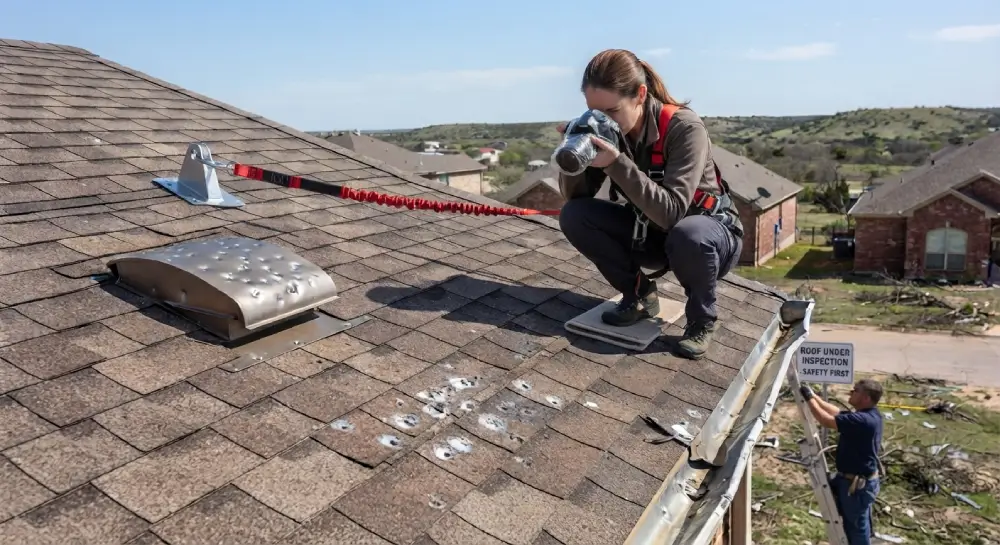
Many property owners contact us after receiving an estimate that looks complete but leaves out necessary work. We review quantities, measurements, line items, damaged components, pricing, depreciation, and the relationship between exterior and interior damage.
Experience Reviewing Thousands of Claims
Our team brings experience from reviewing thousands of property claims involving residential and commercial losses. That volume gives us practical familiarity with claim documentation, policy language, estimating disputes, supplements, negotiations, and common carrier objections.
No Upfront Fees
Mineral Wells property owners can request a free initial claim review. Public adjusting services are generally provided on a contingency basis, subject to the written agreement and applicable Texas requirements.
Mineral Wells Neighborhoods and Local Service Areas
Mineral Wells does not rely on the same widely branded neighborhood system found in larger Texas cities, so local property discussions are often organized around established districts, roads, landmarks, and nearby communities.
We assist property owners throughout areas such as:
- Downtown Mineral Wells and the Central Historic District
- Properties surrounding the Baker Hotel
- The US 180 corridor
- The US 281 corridor
- South Mineral Wells
- North and northwest Mineral Wells
- The Fort Wolters area
- Residential and commercial properties near Mineral Wells Regional Airport
- Communities and rural properties toward Lake Mineral Wells
- Properties near the Palo Pinto–Parker County line
The Mineral Wells Central Historic District includes a collection of historically significant buildings, with the Baker Hotel serving as one of its best-known landmarks. Older masonry, roofing, windows, ornamental finishes, and mixed-use construction can make storm and water-loss scopes more complicated than claims involving newer standardized construction.
Areas We Serve Near Mineral Wells
TX Public Adjusting serves policyholders throughout Mineral Wells and surrounding Palo Pinto and western Parker County communities, including:
- Weatherford
- Millsap
- Cool
- Garner
- Perrin
- Graford
- Palo Pinto
- Santo
- Strawn
- Gordon
- Possum Kingdom Lake communities
- Rural properties throughout Palo Pinto County
Local geography matters. A commercial property near US 180, an older downtown building, a home close to Lake Mineral Wells State Park, and a rural structure outside the city limits may face different access, construction, repair, and documentation issues.
Frequently Asked Questions
What does a public adjuster in Mineral Wells do?
A public adjuster represents the policyholder during a property insurance claim. The adjuster reviews the policy and carrier documents, inspects the damage, prepares supporting evidence, develops a repair scope, communicates with the insurance company, and negotiates disputed claim items.
The insurance company’s adjuster works within the carrier’s process. A Mineral Wells public adjuster works for the insured property owner. Property owners can also compare a public adjuster vs. an independent adjuster to better understand who each adjuster represents.
When should I hire a public adjuster after a Mineral Wells storm?
A public adjuster can be hired early in the claim or after a problem develops. Early involvement can help preserve evidence, organize documentation, and reduce confusion before the carrier finalizes its scope.
Policyholders also contact us after receiving a low estimate, partial denial, unexplained depreciation, stalled claim, or payment that does not cover the documented repairs.
Can you help with tornado damage in Mineral Wells?
Yes. Tornado claims may involve structural damage, roof loss, windows, siding, electrical systems, water intrusion, debris, contents, temporary relocation, commercial equipment, and business interruption.
Because the April 28, 2026 Mineral Wells tornado affected both homes and businesses, local owners may face claims involving multiple structures or categories of loss. Each claim should be evaluated according to the policy and documented property damage.
Can I hire a public adjuster after the insurance company has already inspected?
Yes. The carrier’s initial inspection does not prevent a policyholder from seeking independent representation.
A public adjuster can review the first inspection, compare the carrier estimate with the actual damage, document omissions, and present supplemental information when the claim remains open and policy deadlines allow it.
What if my Mineral Wells roof claim was denied because the roof is old?
Roof age does not automatically prove that a recent storm caused no damage. Older roofs can have pre-existing wear and new storm damage at the same time.
The claim review should distinguish age-related conditions from hail impacts, wind-created openings, lifted materials, displaced components, and resulting interior damage. Coverage ultimately depends on the policy language and evidence.
How much does a public adjuster cost in Texas?
Public adjusters are commonly paid a percentage of the insurance proceeds they help recover, subject to the written contract and Texas law. The exact fee depends on the claim and agreement.
TX Public Adjusting offers a free claim review and does not require upfront fees for its standard contingency-based public adjusting services.
Can you help with commercial claims in Mineral Wells?
Yes. We assist owners of retail buildings, warehouses, offices, apartments, restaurants, churches, storage properties, and industrial facilities.
Commercial claims may include building damage, business personal property, inventory, equipment, tenant improvements, extra expenses, and business-income losses.
What happens if the insurance estimate leaves out interior water damage?
Interior damage should be documented and connected to the covered event. That may require photographs, moisture readings, repair estimates, mitigation records, and evidence of the storm-created opening or covered water source.
We review whether the carrier addressed all affected ceilings, walls, insulation, flooring, finishes, cabinetry, and related labor.
How long does a Mineral Wells property claim take?
The timeline depends on the size of the loss, the quality of the documentation, policy requirements, carrier responsiveness, inspections, expert involvement, and the extent of any dispute. Separate Texas claim-handling requirements may also affect how long an insurance adjuster has to contact you after notice of a loss.
A simple claim may move quickly. A major tornado, fire, commercial, or structural loss usually requires more time because the scope and supporting records are larger.
Is it too late to hire a public adjuster for an older claim?
Not necessarily. A claim may still be reviewable if it remains open, was recently denied, received a supplemental payment, or is still within contractual and legal deadlines.
Because policy deadlines and Texas legal limitations can affect available options, older claims should be reviewed promptly. Our guide explains situations in which property owners may wonder when it is too late to hire a public adjuster.
Get a Free Mineral Wells Claim Review
Property owners should not have to guess whether a carrier estimate includes the full scope of covered damage.
TX Public Adjusting helps Mineral Wells homeowners, landlords, business owners, investors, and commercial property owners evaluate tornado, hail, wind, roof, water, fire, and underpaid insurance claims.
We represent policyholders—not insurance companies.
Contact TX Public Adjusting for a free claim review.
- Licensed Texas Public Adjuster
- Rise Public Adjusting LLC
- Texas License #3356839
- Residential and Commercial Claims
- No Upfront Fees
- Independent Policyholder Representation