

Property damage in Highland Village can leave homeowners and business owners facing a claim that is far more complicated than expected. Hail can bruise shingles across an entire roof system. Wind can lift flashing and expose the structure to rain. A plumbing failure or water-main incident can send water into a home positioned below street level. When the carrier’s estimate does not reflect the full scope of the loss, a public adjuster in Highland Village can help document the damage and present the policyholder’s claim.
TX Public Adjusting represents residential and commercial property owners—not insurance companies. Our team reviews policies, inspects damaged property, prepares supporting documentation, identifies missing claim items, and communicates with the carrier throughout the adjustment process.
TX Public Adjusting is operated by Rise Public Adjusting LLC, Texas License #3356839. We offer a free claim review with no upfront fees so Highland Village property owners can understand their options before deciding how to proceed.
Licensed Texas Public Adjuster | Residential and Commercial Claims | Free Claim Review
Why Property Owners Hire a Public Adjuster in Highland Village
Highland Village is a distinctive lakeside community in Denton County. The city borders Lake Lewisville, and its housing stock includes custom residences, lake-view properties, established subdivisions, newer construction, and homes built across rolling terrain. The city notes that many local homes sit below street level because of Highland Village’s topography, which can create additional water-intrusion concerns when sudden runoff or a water-main break occurs.
These property characteristics can make an insurance loss difficult to evaluate. Damage may extend beyond the first visible problem. A roof leak can affect insulation, decking, drywall, electrical components, flooring, cabinets, and personal property. Hail damage can involve gutters, metal vents, fencing, window screens, exterior finishes, HVAC equipment, and detached structures—not just shingles.
The insurance company will usually send its own adjuster to inspect the loss. That adjuster works within the carrier’s claim-handling process. A public adjuster works for the policyholder.
Highland Village property owners often hire TX Public Adjusting when:
- The carrier’s estimate appears too low.
- Important damage was left out of the scope.
- The claim has become delayed or difficult to manage.
- The insurance company disputes the cause of damage.
- Repair estimates exceed the carrier’s allowance.
- Depreciation has been applied incorrectly or is poorly explained.
- A residential or commercial claim requires extensive documentation.
- A denied claim needs an independent review.
- Supplemental damage has been discovered after work begins.
- The policyholder does not have time to manage repeated inspections and requests.
Hiring a public insurance adjuster in Highland Village does not guarantee a particular settlement. It gives the policyholder dedicated representation from a licensed professional whose role is to prepare and support the claim from the policyholder’s perspective.
Concerned that your Highland Village insurance claim is underpaid? Contact TX Public Adjusting for a free claim review.
Property Risks Unique to Highland Village
Highland Village sits within the greater Dallas–Fort Worth region, where severe thunderstorms can bring large hail, straight-line winds, lightning, heavy rain, and occasional tornado activity. Independent risk assessments identify hail and tornadoes among the community’s primary storm concerns, while broader wind-risk modeling also recognizes exposure to tornado and severe-storm winds.
Hail and Roof Damage
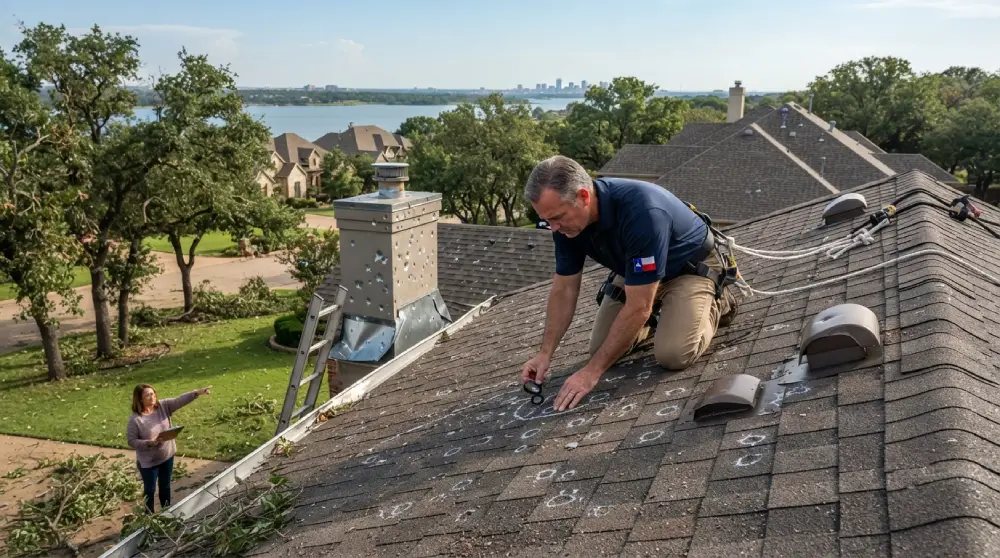
Hail is one of the most frequent causes of disputed roof claims in North Texas. Property owners preparing a hail damage insurance claim should document every affected component, including shingles, gutters, vents, flashing, window screens, fencing, and HVAC equipment. Damage is not always obvious from the ground. A roof may continue shedding water after a storm while still having fractured shingles, displaced granules, dented metal, cracked vents, damaged flashing, or compromised seals.
Carriers sometimes characterize hail-related conditions as cosmetic, pre-existing, related to age, or insufficient to justify replacement. Those conclusions may depend heavily on the quality of the inspection, the documentation submitted, the policy language, and the condition of each roof slope.
A Highland Village hail claim may involve:
- Asphalt shingle bruising or mat fracture
- Metal roof dents and coating damage
- Broken or displaced tile
- Damaged ridge caps
- Dented gutters and downspouts
- Window-screen and glazing damage
- Fence and gate damage
- HVAC condenser damage
- Exterior paint and siding impacts
- Water intrusion following roof damage
Straight-Line Wind and Tornado Damage
A roof does not need to be removed entirely to sustain a covered wind loss. Strong gusts can loosen shingles, lift edges, bend flashing, separate membranes, displace vents, damage siding, and create openings that allow rain inside.
Wind claims can become difficult when the carrier attributes the condition to installation defects, wear and tear, poor maintenance, or long-term deterioration. A detailed inspection can help distinguish storm-created damage from unrelated conditions and document how exterior damage connects to interior water intrusion.
Water Intrusion and Below-Street-Level Homes
The rolling topography that gives Highland Village much of its character also creates a localized concern. The city reports that nearly half of local homes are below street level, making some properties vulnerable to a sudden rush of water, including water released by a broken water main. The city also cautions residents not to assume municipal insurance will automatically pay for resulting home repairs.
Water losses can develop quickly and affect more than the visibly wet surface. Property owners who are dealing with an insurance adjuster after water damage should preserve photographs, mitigation records, moisture readings, invoices, damaged-material samples, and written communications with the carrier. Moisture can travel beneath flooring, behind cabinets, into wall cavities, through insulation, and around electrical systems. Proper claim documentation may require moisture readings, photographs, demolition records, drying logs, inventories, repair estimates, and a clear timeline of events.
Lakefront and Lakeside Property Concerns
Highland Village borders Lake Lewisville and includes lakefront and lake-view homes. Lakeside exposure can contribute to wind-driven rain, moisture concerns, tree damage, erosion-related issues, and storm debris impacts.
Insurance coverage for water damage depends heavily on the source of the water and the wording of the policy. Rain entering through a storm-created opening may be treated differently from rising surface water, seepage, or a plumbing release. Our role is to review the facts and policy provisions rather than assume that every type of water damage is handled the same way.
Common Insurance Claims in Highland Village
Hail Damage Claims
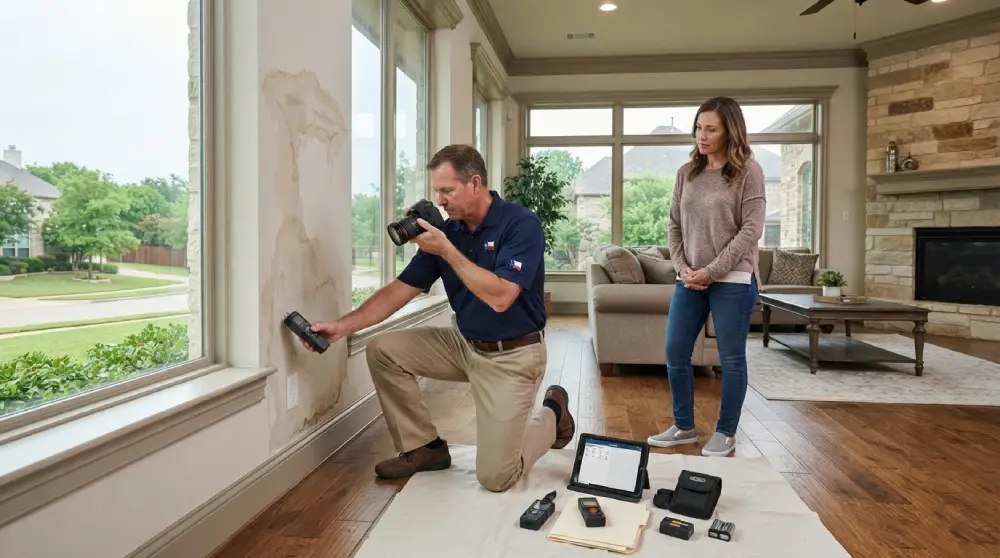
A Highland Village hail damage claim should include all storm-related components, not only the roof covering. TX Public Adjusting evaluates roofing materials, roof accessories, gutters, exterior finishes, windows, fencing, mechanical equipment, detached structures, and related interior damage.
We also compare the carrier’s estimate with observed conditions and available repair documentation to identify omissions or inconsistencies.
Water Damage Claims
Water losses may result from burst pipes, plumbing failures, appliance leaks, roof openings, water heaters, HVAC systems, drain backups, or sudden water-main events.
The initial dry-out invoice is only one part of the claim. Depending on the loss, the scope may also involve:
- Removal and replacement of flooring
- Cabinet and millwork repairs
- Drywall and insulation
- Painting and texturing
- Electrical evaluation
- Mold-related testing or remediation, subject to policy terms
- Contents cleaning or replacement
- Temporary relocation expenses
- Business interruption documentation
Fire and Smoke Damage Claims
Fire losses frequently involve more than burned materials. Smoke, soot, heat, water used during suppression, debris removal, odor, corrosion, and contamination can affect rooms far from the fire’s origin. Our guide to a fire damage insurance claim explains several of the property and documentation issues that may arise after a residential or commercial fire.
A fire claim may require structural estimates, personal-property inventories, cleaning assessments, temporary housing documentation, code-related research, and coordination among multiple contractors and consultants.
A qualified fire insurance adjuster can help evaluate structural damage, smoke contamination, contents losses, debris removal, temporary housing expenses, and repair estimates as parts of the same claim. TX Public Adjusting helps organize those claim components into a supported presentation for the carrier.
Storm and Wind Damage Claims
North Texas thunderstorms can damage roofing, siding, gutters, fences, windows, landscaping, outdoor structures, and commercial signage. Wind-driven rain may create interior damage even when the roof appears largely intact.
We inspect the full property and document the relationship between exterior storm conditions and interior effects.
Roof Damage Claims
Roof claims are commonly underpaid because the estimate addresses isolated repairs without accounting for matching, access, underlayment, flashing, ventilation, code-required work, steep or high charges, material availability, or damage to adjacent components. A property owner considering a public adjuster for a roof claim should have the carrier’s estimate compared with the roof’s complete storm-damage scope.
A roof damage claim should be evaluated as a system. Replacing shingles without addressing flashings, vents, ridges, valleys, drainage components, and affected decking may not return the property to its pre-loss condition.
Commercial Property Claims
Highland Village includes retail, restaurant, office, professional-service, multifamily, and other commercial properties, particularly around FM 2499, FM 407, and The Shops at Highland Village. The Shops is a major local retail and dining destination located at the intersection of those two corridors.
Commercial losses may involve:
- Flat or low-slope roofing systems
- Rooftop HVAC units
- Exterior signs and lighting
- Storefront glass
- Inventory and equipment
- Tenant improvements
- Business personal property
- Loss of income
- Extra operating expenses
- Multiple tenants or ownership interests
Commercial claims often require more documentation than residential losses. TX Public Adjusting assists with building-damage estimates, contents documentation, repair scopes, loss-of-income support, and communication with the carrier’s representatives.
Why Highland Village Insurance Claims Become Underpaid
An insurance estimate is not automatically a complete repair plan. It represents the carrier’s initial evaluation based on the information available at the time. Several common property insurance claim mistakes can weaken an otherwise valid claim, including disposing of damaged materials too early, failing to photograph hidden damage, missing policy deadlines, and relying on an incomplete initial estimate.
Missed or Hidden Damage
Some damage is concealed beneath roofing materials, behind walls, under floors, or inside mechanical systems. Additional conditions may not become apparent until demolition or repairs begin.
A policyholder may need to submit a supplement with photographs, measurements, contractor findings, moisture records, or updated estimates.
Scope Omissions
Carrier estimates may leave out necessary work such as:
- Roof flashing replacement
- Detaching and resetting fixtures
- Access and protection
- Debris handling
- Interior texture matching
- Cabinet manipulation
- Contractor overhead and profit
- Code-related items
- Material waste
- Equipment damage
- Temporary repairs
The issue is not always the price assigned to an item. Sometimes the item is missing entirely.
Depreciation Problems
Insurance estimates may apply depreciation based on age, condition, expected useful life, or other factors. Some depreciation may be recoverable after repairs, while other amounts may not be, depending on the policy.
Policyholders should understand:
- How depreciation was calculated
- Which items were depreciated
- Whether depreciation is recoverable
- What documentation is needed to recover it
- What deadlines apply
Low Repair Estimates
Contractor pricing may exceed the carrier’s estimate because of labor conditions, material availability, access challenges, required trades, local permitting, project complexity, or differences in the proposed repair method.
A public adjuster can compare estimates, investigate discrepancies, and submit supporting information. The goal is not to inflate the claim. It is to present a detailed scope tied to the actual covered damage.
Documentation Gaps
A valid loss can still become difficult to resolve when the file lacks photographs, receipts, inventories, measurements, reports, or a clear chronology.
Documentation matters because the policyholder generally must support the claim. TX Public Adjusting helps organize the evidence so the carrier can evaluate a clear, structured submission.
Our Public Adjusting Process
1. Claim Review
We begin by learning what happened, reviewing the claim status, and examining available documents. These may include the policy, declarations, carrier correspondence, estimates, photographs, contractor proposals, payment letters, and denial or reservation-of-rights letters.
We identify the disputed issues and explain what additional information may be needed.
2. Property Inspection
We inspect the damaged residential or commercial property and document visible conditions. The inspection may include roofing, exterior elevations, interiors, mechanical systems, contents, and detached structures, depending on the loss.
When specialized expertise is needed, engineers, industrial hygienists, contractors, accountants, or other consultants may be considered.
3. Damage Documentation
We develop a claim presentation supported by relevant records. Depending on the situation, this may include:
- Photographs and videos
- Measurements
- Repair scopes
- Estimates
- Contents inventories
- Invoices and receipts
- Moisture documentation
- Temporary-repair records
- Contractor findings
- Business-income records
- Policy and coverage analysis
4. Carrier Communication and Negotiation
TX Public Adjusting communicates with the insurance company regarding the documented claim. We respond to requests, discuss differences in scope, submit supplemental items, and advocate for the policyholder’s position.
The carrier retains the right to investigate, evaluate coverage, and make claim decisions. Our responsibility is to present the policyholder’s claim thoroughly and professionally.
5. Claim Resolution
We continue working through the adjustment process until the documented issues are addressed or the available claim process reaches its conclusion.
Each claim is different. Timing depends on the size of the loss, policy terms, documentation, inspections, expert involvement, carrier response, and whether coverage or causation is disputed.
Why Choose TX Public Adjusting
Texas-Focused Claim Experience
TX Public Adjusting focuses on property claims throughout Texas. Our team understands the types of losses Texas owners frequently face, including hail, wind, water, freeze, fire, smoke, roof, and commercial-property damage.
Licensed Representation
TX Public Adjusting is operated by Rise Public Adjusting LLC, Texas License #3356839.
Licensing matters because a public adjuster handles insurance claim activity on behalf of policyholders. Highland Village property owners should verify the license and identity of any adjuster they consider hiring.
Independent Policyholder Representation
The insurance company’s adjuster represents the carrier’s interests. Contractors repair property. Insurance agents sell and service policies.
A public adjuster has a different role: preparing, documenting, and negotiating a property claim for the policyholder.
Residential and Commercial Experience
Our team has reviewed thousands of property claims involving houses, multifamily buildings, retail locations, offices, warehouses, restaurants, churches, and other insured properties.
We understand that a custom home near Lake Lewisville presents different concerns from a retail loss near The Shops at Highland Village. The inspection, documentation, valuation, and business-impact analysis must fit the property and the claim.
No Upfront Fees
Highland Village property owners can request a free initial claim review. There are no upfront fees for engaging our public adjusting services. Any fee arrangement is explained in writing before representation begins.
Highland Village Neighborhoods and Areas We Serve
TX Public Adjusting assists property owners throughout Highland Village, including homes and businesses near:
- Highland Shores
- Castlewood
- Chapel Hill
- Highland Oaks
- Rolling Hills
- Briarhill Boulevard
- Highland Village Road
- FM 2499
- FM 407
- Lake Lewisville
- Pilot Knoll Park
- Doubletree Ranch Park
- The Shops at Highland Village
We also serve nearby Denton County and North Texas communities, including:
- Flower Mound
- Lewisville
- Double Oak
- Copper Canyon
- Lantana
- Argyle
- Bartonville
- Corinth
- Lake Dallas
- Hickory Creek
- Denton
- Grapevine
Pilot Knoll Park and the Lake Lewisville shoreline are among the area’s most recognizable recreational features, while The Shops at Highland Village anchors a major local commercial corridor.
Frequently Asked Questions
What does a public adjuster do for a Highland Village property owner?
A public adjuster represents the policyholder during a property insurance claim. This detailed guide explains what a public adjuster does, including policy review, damage inspection, estimate preparation, contents documentation, carrier communication, and negotiation of disputed claim items.
TX Public Adjusting works for Highland Village homeowners and business owners—not the insurance company.
When should I hire a public adjuster in Highland Village?
You may consider hiring a public adjuster shortly after a significant loss, after receiving a low estimate, when damage has been omitted, after a denial, or when the claim becomes too complicated to handle alone.
Early involvement can help preserve evidence and organize documentation, but an existing claim may still be reviewable. Read more about when it is too late to hire a public adjuster, especially when the carrier has already issued payment, denied the claim, or marked the file closed.
Can you help if my Highland Village roof claim was underpaid?
Yes. We can review the carrier’s roof estimate, inspect the property, compare the scope with observed damage, and identify potentially missing components.
Common issues include overlooked slopes, omitted flashing, inadequate repair allowances, missing gutters or vents, and failure to account for related interior water damage.
Does homeowners insurance cover hail damage in Highland Village?
Many homeowners policies cover sudden hail damage, but deductibles, exclusions, cosmetic-damage provisions, roof-payment schedules, depreciation terms, and reporting requirements vary.
Coverage should be evaluated using the actual policy. A public adjuster cannot change the contract but can help document the damage and present the claim under the applicable provisions.
Does insurance cover water entering a home below street level?
Coverage depends on how the water entered and what caused it. A sudden plumbing release or storm-created opening may be treated differently from surface flooding, groundwater, seepage, or long-term leakage.
Because Highland Village has rolling terrain and many homes located below street level, owners should document the source and path of the water carefully.
Can a public adjuster reopen a closed claim?
A closed claim may sometimes be reviewed or supplemented, but the options depend on the policy, the reason it was closed, applicable deadlines, prior payments, releases, and Texas requirements.
TX Public Adjusting can review the available documents and explain whether further claim activity appears possible. We do not recommend delaying because contractual deadlines may apply.
How much does a public adjuster cost in Texas?
Public adjuster fees are generally established through a written agreement and may be based on a percentage of the claim recovery, subject to applicable Texas requirements.
TX Public Adjusting provides a free claim review and charges no upfront fee. The fee structure is explained before a representation agreement is signed.
How long does a Highland Village property claim take?
There is no universal timeline. A straightforward roof claim may progress faster than a major fire, commercial water loss, or disputed structural claim. Texas property owners may also need to understand how long an insurance adjuster has to contact you after a claim is reported. Contact timing is only one part of the process; inspections, document requests, estimate preparation, and coverage review can extend the overall claim timeline.
The duration may depend on inspection scheduling, document requests, engineering reviews, contractor estimates, contents inventories, coverage questions, supplements, and carrier response time.
Can you help with a commercial claim near The Shops at Highland Village?
Yes. We handle commercial property claims involving retail spaces, restaurants, offices, multifamily properties, equipment, inventory, roofing, business interruption, and tenant improvements.
Commercial claims often require coordination among the owner, tenants, contractors, accountants, and carrier representatives. We help organize the property and financial documentation.
Is TX Public Adjusting part of my insurance company?
No. TX Public Adjusting is an independent public adjusting firm operated by Rise Public Adjusting LLC, Texas License #3356839.
We represent policyholders. We do not work for the insurance carrier and do not control whether the carrier accepts coverage or issues a particular payment.
Get a Free Highland Village Claim Review
A low estimate does not always reflect the full cost of restoring a damaged property. Missing roof components, undocumented water migration, omitted interior repairs, depreciation errors, and incomplete commercial-loss calculations can materially affect the claim.
TX Public Adjusting helps Highland Village homeowners and business owners understand what was included, what may have been missed, and what documentation may strengthen the presentation.
Contact TX Public Adjusting for a free claim review.
- No upfront fees
- Licensed Texas public adjuster
- Residential and commercial claims
- Independent policyholder representation
- Rise Public Adjusting LLC
- Texas License #3356839