

Property damage in Fairview can turn a quiet week into a complicated insurance dispute. A North Texas hailstorm may leave bruised shingles across a roof without creating an obvious leak. A burst supply line can spread water beneath flooring and cabinets. Strong winds can damage fencing, gutters, roof edges, windows, and exterior finishes across the same property.
TX Public Adjusting provides insurance claim help in Fairview for residential and commercial property owners who need an independent review of their loss. We represent policyholders—not insurance companies—and help identify, document, present, and negotiate covered property damage claims.
TX Public Adjusting is operated by Rise Public Adjusting LLC, Texas License #3356839.
Request a free claim review. There are no upfront fees for the initial review.
Insurance Claim Help for Fairview Property Owners
Fairview is a Collin County community located between Allen, McKinney, and Lucas. It combines larger residential lots and low-density neighborhoods with newer homes, retail development, senior communities, and commercial properties near major North Texas transportation corridors. Fairview sits along State Highway 5 and near U.S. Highway 75, placing it within the broader Dallas–Fort Worth severe-weather region.
That mix of property types creates a wide range of insurance claim concerns.
A large custom home may have multiple roofing slopes, detached structures, exterior lighting, fencing, landscaping, and high-value interior finishes. A townhome or condominium claim may involve questions about association responsibilities. A retail loss near Fairview Town Center may affect inventory, tenant improvements, signage, equipment, and business operations.
Fairview’s rural character also means that damage is not always limited to the main structure. Gates, barns, workshops, guesthouses, long fences, drainage systems, and mature trees may all need to be inspected after a severe storm.
The insurance carrier sends an adjuster to evaluate the claim for the carrier. A licensed public adjuster works for the policyholder. Our job is to examine the damage, review the policy and carrier estimate, organize supporting documentation, and advocate for a properly supported settlement under the policy.
Why Property Owners Hire a Public Adjuster in Fairview
A property insurance claim requires more than reporting that something was damaged.
The policyholder may need to establish:
- What caused the damage
- When the loss occurred
- Which areas of the property were affected
- What repairs are reasonably required
- Which damaged items are covered
- Whether depreciation was applied correctly
- Whether code-related work or matching issues apply
- Whether the carrier’s scope is complete
- Whether additional documentation is required
These questions become more difficult when damage is widespread, partially hidden, technically complex, or disputed.
A Fairview public adjuster may be helpful when:
- The carrier’s estimate appears too low
- Important rooms, roof slopes, or exterior components were omitted
- A hail or wind claim was denied
- Interior water damage extends beyond the visible stain
- The carrier attributes storm damage to age or wear
- Multiple buildings or detached structures are involved
- A commercial loss interrupts normal operations
- The claim requires extensive contents documentation
- The policyholder does not have time to manage repeated inspections
- The claim has stalled or communication has become difficult
Hiring a public adjuster does not guarantee a particular outcome. It gives the policyholder professional representation focused on preparing and supporting the claim.
Fairview Storm Risks and Property Damage Patterns
Fairview is not exposed to coastal hurricane surge, but North Texas properties face significant severe-thunderstorm hazards. The Town of Fairview maintains hazardous-weather preparedness information addressing dangers such as tornadoes and other major weather events. Texas climate records also identify hail, tornadoes, and high winds as recurring sources of severe-weather damage.
Hail Damage in Fairview
Hail is one of the most common reasons property owners in Collin County inspect their roofs and exteriors. Our Texas guide to filing a hail damage insurance claim explains how roof impacts, exterior damage, and claim documentation should be evaluated after a storm.
Hail damage may affect:
- Asphalt shingles
- Metal roofing
- Clay or concrete tile
- Roof vents and flashing
- Gutters and downspouts
- Window screens
- Exterior paint and siding
- Fences and gates
- Skylights
- HVAC fins and rooftop equipment
Some hail damage is easy to see. Dented gutters, torn screens, and impact marks on soft metals may be noticeable from the ground. Roof damage is often less obvious.
A shingle may remain in place while losing protective granules or suffering an impact fracture. Metal panels may retain functional damage even when a dent appears cosmetic. Tile roofs may have cracked or displaced pieces that are difficult to see without a close inspection.
Texas continues to experience substantial hail and lightning losses. Industry reporting has identified Texas as one of the states most heavily affected by natural-catastrophe exposure, including costly hail-related property damage.
Wind and Tornado Damage
Strong straight-line winds can damage a property without a tornado touching down.
Wind-related claims may involve:
- Lifted or creased shingles
- Missing ridge caps
- Damaged flashing
- Detached gutters
- Broken fencing
- Fallen limbs
- Window and door damage
- Water intrusion through wind-created openings
- Damage to detached garages or outbuildings
Tornadoes may produce more concentrated structural damage, including roof displacement, broken windows, wall movement, debris impact, and damage to utilities.
After a major storm, the full scope should be evaluated. Repairing one missing shingle may not address damage to surrounding materials, flashing, underlayment, interior finishes, or connected roof components.
Heavy Rain and Water Intrusion
Fairview properties may experience water intrusion from roof openings, window failures, drainage problems, plumbing leaks, or appliance failures.
Water moves quickly through building materials. A ceiling stain may represent only one visible part of the loss. Moisture can travel behind walls, under flooring, through insulation, and into cabinets or structural cavities.
A complete water damage claim may require documentation of:
- The source of the water
- Emergency mitigation
- Moisture readings
- Drying equipment
- Damaged flooring and underlayment
- Cabinet or millwork damage
- Drywall and insulation removal
- Baseboards and trim
- Personal property
- Potential microbial growth
- Necessary reconstruction
Flooding from rising surface water is generally handled differently from water entering through a storm-created opening or an accidental plumbing discharge. Coverage depends on the policy, endorsements, cause of loss, and specific facts.
Winter Freeze Damage
North Texas freezes can cause pipes to rupture in walls, ceilings, attics, garages, and exterior plumbing systems.
Freeze losses may affect multiple floors before the water is discovered. Vacant rooms, guesthouses, outdoor kitchens, detached buildings, and poorly insulated plumbing lines can be especially vulnerable.
The resulting claim may involve plumbing repairs, water extraction, demolition, drying, insulation, flooring, cabinetry, drywall, paint, contents, and temporary living arrangements.
Fire, Smoke, and Electrical Damage
Fire claims are rarely limited to the visibly burned area. These losses often require more detailed documentation than a routine repair claim. A fire insurance adjuster can help evaluate structural damage, smoke contamination, contents, cleanup costs, and the carrier’s proposed scope.
Heat, smoke, soot, water, and firefighting activity may affect rooms far from the point of origin. Electrical systems, HVAC equipment, insulation, framing, finishes, furniture, clothing, electronics, and stored items may all require evaluation.
Smoke contamination can also vary by material. A surface that appears clean may retain odor or residue. A detailed fire claim should distinguish between items that can be cleaned, items requiring specialized restoration, and items that cannot reasonably be restored.
Common Insurance Claims in Fairview
Hail Damage Claims
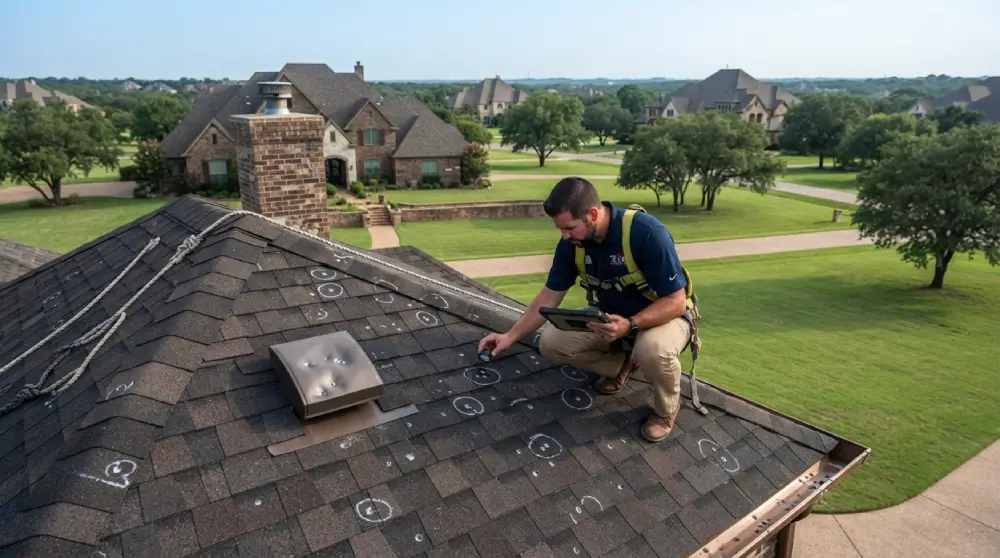
A hail claim should document more than the number of roof impacts.
The inspection may need to address the roofing system, soft metals, gutters, downspouts, vents, screens, fencing, siding, paint, HVAC components, detached structures, and interior leaks.
Carriers may dispute whether damage is functional, whether it resulted from the reported storm, or whether repair is possible. Clear photographs, measurements, weather information, and a properly written scope can make a meaningful difference.
Roof Damage Claims
Roof claims commonly become disputed when the parties disagree about cause, repairability, age, matching, or the extent of the affected area. Commercial buildings and some residential structures may also use low-slope systems that require a different repair analysis. Property owners dealing with those systems can review our guide to built-up roof repair.
A carrier estimate may include a small repair while the property owner or contractor believes broader work is required. The correct answer depends on the observed conditions, roofing system, policy language, repair methods, and applicable requirements.
Our review considers the roof as a connected system—not simply a collection of isolated shingles.
Water Damage Claims
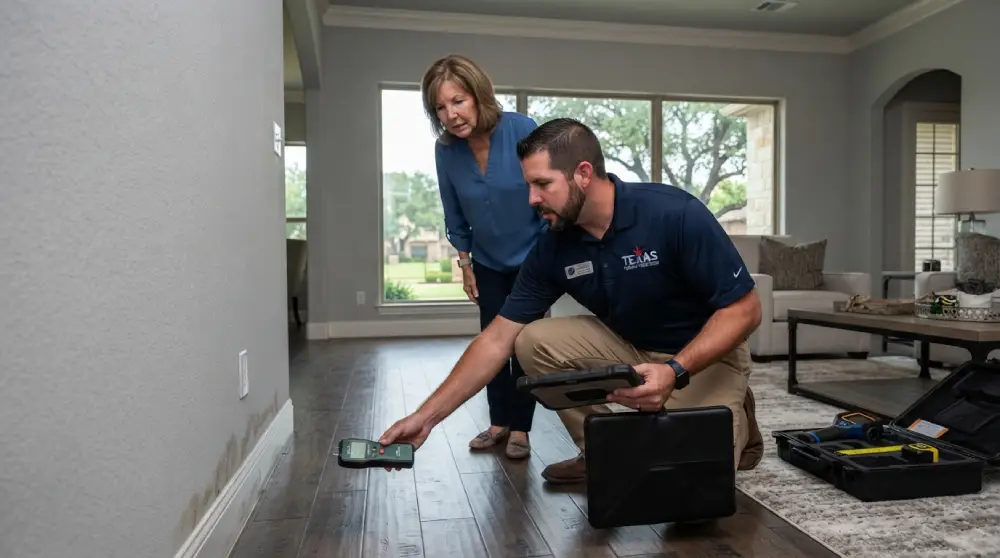
Water claims frequently become underpaid because only visible damage is included.
The estimate may allow for ceiling paint but omit wet insulation. It may include flooring in one room but fail to address continuous flooring through connected spaces. Cabinet boxes may be included while countertops, backsplashes, plumbing access, or matching concerns are left out.
We review the source, spread of moisture, mitigation records, damaged materials, and reconstruction needs.
Fire and Smoke Damage Claims
A fire damage insurance claim may involve structural repairs, contents inventories, cleaning protocols, debris removal, temporary housing, code-related upgrades, and coordination among multiple specialists.
A detailed contents inventory can be especially time-consuming. Items must often be identified, described, valued, categorized, and supported with photographs or other records.
Our role is to help organize the claim so the carrier receives a clear, documented presentation of the loss.
Storm Damage Claims
Severe thunderstorms can combine hail, wind, lightning, falling debris, and rain.
That can create several distinct types of damage during one event:
- Roof impacts from hail
- Lifted shingles from wind
- Tree damage
- Broken exterior fixtures
- Water intrusion
- Electrical damage
- Fence and gate damage
- Detached-structure damage
The inspection should account for all affected areas, not only the first condition reported.
Commercial Property Claims
Fairview commercial claims may affect retail spaces, restaurants, offices, medical facilities, professional buildings, senior-living properties, multifamily communities, and light commercial operations.
Commercial losses may require documentation of:
- Building damage
- Tenant improvements
- Inventory
- Furniture and equipment
- Exterior signage
- Roofing systems
- Mechanical units
- Lost income
- Extra expenses
- Temporary relocation
- Business interruption
- Lease responsibilities
Commercial policies can differ significantly from residential policies. The claim should be prepared according to the actual policy and business operations involved.
Fairview Neighborhoods and Properties We Serve
Fairview includes established subdivisions, rural residential tracts, master-planned communities, senior-living neighborhoods, and newer development near its commercial district.
Neighborhood and community references found in municipal subdivision materials include:
- Heritage Ranch
- Sloan Creek Estates
- Ascot Heath
- The Woods of Ascot Heath
- Oakwood
- Stone Creek
- Fairview Farms
- The Vineyards of Fairview
- Oaks of Fairview
- River’s Edge
- Cypress Crossing
- Wellington Park Estates
- Villas in the Park
- Shadow Creek Farms
- Red Oak Ranch
- Countryside
The Town’s subdivision mapping identifies many of these communities, while local planning materials emphasize Fairview’s mix of low-density residential areas, trails, parks, and open spaces.
Larger properties in Fairview may have claim components that are easily missed, including detached garages, pool equipment, perimeter fencing, exterior kitchens, long driveways, workshops, landscape lighting, retaining features, and multiple HVAC systems.
Our inspections are structured around the actual property rather than a standard checklist alone.
Local Landmarks and Commercial Areas
Fairview Town Center is one of the community’s main commercial destinations. Municipal economic-development materials describe the center as a major town-center project near the U.S. 75 and State Highway 121 area.
The community is also associated with Sloan Creek, local trails, Veterans Park, Beaver Run, Monarch Park, Cypress Park, and nearby natural areas. Fairview’s local planning materials emphasize preservation of open space and the town’s rural character.
Nearby, the Heard Natural Science Museum & Wildlife Sanctuary serves as a recognizable regional landmark along Sloan Creek. The historic Houston & Texas Central Railroad district also includes features such as the stone-arched railroad bridge over Sloan Creek and the Trolley Lake Dam.
These references matter because Fairview is not simply another dense North Texas suburb. Its combination of open land, mature trees, larger homes, commercial development, and historic areas creates a distinct property profile.
Why Insurance Claims Become Underpaid
Scope omissions, weak documentation, missed damage, and misunderstandings about depreciation are among the most common reasons claims fall short. Our guide to common property insurance claim mistakes explains several problems property owners should avoid before and during the adjustment process.
Damage Is Missed During the First Inspection
A carrier inspection may be brief, especially after a regional storm produces a high volume of claims.
Damage may be missed because it is:
- On a steep or inaccessible roof slope
- Hidden behind walls
- Beneath flooring
- Inside insulation
- Located on a detached structure
- Outside the immediate area of the reported loss
- Not visible until demolition begins
A public adjuster can perform a broader review and identify areas that may require additional inspection.
The Estimate Omits Necessary Work
An estimate may recognize damage but leave out required steps.
For example, a roof estimate may include shingles but omit:
- Flashing
- Drip edge
- Vent components
- Underlayment
- Valley materials
- Access requirements
- Detach-and-reset work
- Interior repairs
- Debris handling
A water loss estimate may include drywall but omit insulation, trim, cabinets, flooring transitions, or painting connected surfaces.
Depreciation Is Misunderstood
Many policies distinguish between actual cash value and replacement cost.
A carrier may initially withhold depreciation until repairs are completed and supporting documents are submitted. Some depreciation may be recoverable; some may not be. The answer depends on the policy and claim.
We help property owners understand how depreciation was calculated and what documentation may be required to request recoverable amounts.
The Cause of Damage Is Disputed
The carrier may attribute damage to:
- Wear and tear
- Long-term leakage
- Installation problems
- Maintenance issues
- Age
- Deterioration
- Pre-existing conditions
The property owner may believe a recent storm or accidental event caused the loss.
Resolving that disagreement requires evidence. Photographs, weather records, inspection findings, maintenance records, expert opinions, and a clear timeline may all be relevant.
Documentation Is Incomplete
Insurance carriers make claim decisions based on the information in the file.
A contractor’s brief proposal may not contain enough detail. Photographs without labels may not establish location or cause. Receipts may be missing. Damaged contents may have been discarded before being inventoried.
The Texas Department of Insurance advises policyholders to photograph or record damage as soon as it is safe and to avoid discarding damaged property before speaking with the adjuster.
Good documentation does not create coverage, but incomplete documentation can make a covered claim harder to evaluate.
Our Public Adjusting Process
1. Claim Review
We begin by discussing what happened, when the loss occurred, what the carrier has done, and where the claim currently stands.
We may review:
- The insurance policy
- Carrier correspondence
- Estimates
- Payment letters
- Denial letters
- Photographs
- Contractor proposals
- Mitigation documents
- Prior inspection reports
If carrier communication has been delayed, property owners may also want to review how long an insurance adjuster has to contact you after a claim is reported. The goal is to identify the main issues before recommending the next step.
2. Property Inspection
When appropriate, we inspect the affected property and document visible damage.
The inspection may include the roof, exterior elevations, interior rooms, detached structures, commercial spaces, contents, and building systems connected to the loss.
3. Damage Documentation
We organize photographs, measurements, inventories, estimates, reports, and other supporting materials into a claim presentation.
A strong claim file should make it easier to understand:
- What was damaged
- Where the damage occurred
- What caused it
- What work is required
- How the requested amount was calculated
4. Scope and Estimate Review
We compare the carrier’s scope with the observed damage and required repair work.
We look for omitted rooms, missing components, incorrect quantities, incomplete repair steps, and other differences that should be addressed.
5. Claim Presentation and Negotiation
We submit the documentation and communicate with the carrier regarding the scope and valuation of the claim.
This may include responding to questions, coordinating inspections, discussing estimate differences, and providing supplemental documentation.
6. Settlement and Next Steps
Once the carrier makes a decision, we review the outcome with the policyholder and explain any remaining requirements, such as submitting repair invoices or requesting recoverable depreciation.
Already received a low estimate or denial? Request a free Fairview claim review before assuming the carrier’s first decision is final.
Why Choose TX Public Adjusting
Licensed Texas Representation
TX Public Adjusting is operated by Rise Public Adjusting LLC, Texas License #3356839.
We focus on Texas property claims and understand the recurring hail, wind, water, freeze, fire, and commercial-loss issues faced by property owners across the state.
We Work for Policyholders
The insurance company’s representatives work for the insurance company.
A public adjuster is hired by the policyholder. Our responsibility is to the property owner or business we represent.
Residential and Commercial Experience
Our experience includes reviewing thousands of claim files involving residential and commercial losses.
Every claim is different, but repeated experience helps identify common omissions, documentation gaps, scope disagreements, and valuation issues.
Independent Claim Review
We do not begin with the assumption that the carrier is wrong or that every claim requires a dispute.
We review the available information, inspect the property when appropriate, and explain what we find. When additional covered damage appears to be supported, we help document and present it.
No Upfront Fee for the Initial Review
Property owners can request an initial claim review without paying an upfront review fee.
We explain our services and fee arrangement before representation begins.
Areas We Serve Near Fairview
TX Public Adjusting serves property owners throughout Fairview and surrounding Collin County communities, including:
- Allen
- McKinney
- Lucas
- Plano
- Parker
- Lowry Crossing
- Princeton
- Melissa
- Anna
- Frisco
- Prosper
- Wylie
Fairview directly adjoins or sits near McKinney, Allen, and Lucas, making claims in these communities part of the same broader North Texas storm environment.
Frequently Asked Questions
How much does a public adjuster cost in Fairview?
Public adjusters are generally paid according to the service agreement and applicable Texas requirements. The fee is commonly tied to the amount recovered through the public adjuster’s work rather than charged as an upfront inspection fee.
Before you sign an agreement, the fee structure should be explained clearly. TX Public Adjusting offers a free initial claim review so you can understand whether public adjusting services may be appropriate for your situation.
When should I hire a public adjuster for a Fairview property claim?
A public adjuster may be hired early in the claim or after problems arise.
Property owners commonly contact us when the damage is extensive, the carrier estimate appears incomplete, a payment is lower than expected, or the claim has been denied. Our guide explains when it is too late to hire a public adjuster and why policy deadlines and claim status should be reviewed promptly.
Can a public adjuster help after my claim has already been paid?
Possibly. An initial payment does not always mean every issue in the claim has been resolved.
We can review the policy, carrier estimate, payment documents, repair information, and observed damage to determine whether additional covered items appear to have been omitted. The available options depend on the policy, timing, prior communications, and facts of the loss.
What if my Fairview hail claim was denied because the roof is old?
Roof age does not automatically answer whether a recent storm caused covered damage.
The important questions include the observed conditions, storm date, type of roofing material, prior condition, maintenance history, policy language, and evidence supporting the cause of loss. We can review the denial and available documentation to identify whether further evaluation may be warranted.
Do you inspect commercial properties in Fairview?
Yes. We assist with residential and commercial property claims.
Commercial claims may involve roofing, building interiors, inventory, equipment, tenant improvements, signage, mechanical systems, extra expenses, and business interruption. The documentation process should reflect both the physical damage and the way the business operates.
Can you help with water damage from a broken pipe?
Yes. A plumbing discharge may affect walls, ceilings, flooring, cabinets, insulation, contents, and adjacent rooms.
Coverage depends on the policy and circumstances. We help document the resulting damage, review the carrier’s scope, and identify repair components that may have been omitted.
What should I do immediately after storm damage?
Protect people first. Once conditions are safe, take photographs and video before cleanup or temporary repairs begin.
Make reasonable efforts to prevent additional damage, save receipts, retain damaged materials when practical, and notify the carrier promptly. Avoid making permanent repairs before the loss has been adequately documented unless emergency conditions require immediate action.
Does homeowners insurance cover flooding in Fairview?
Standard homeowners policies generally treat rising surface-water flooding differently from water damage caused by a covered plumbing event or storm-created opening.
Flood coverage may require a separate flood policy. The exact answer depends on how the water entered, what caused it, and which policies or endorsements were in force.
Can a public adjuster reopen a closed claim?
A closed claim may sometimes be reviewed, but the available options depend on deadlines, policy provisions, prior payments, releases, and Texas law.
A review should be requested promptly. Waiting can affect available evidence and the ability to pursue additional benefits.
How long does a Fairview property claim take?
There is no single timeline for every claim.
A straightforward loss with clear documentation may move quickly. A large residential loss, commercial claim, disputed roof claim, or fire loss can take longer because of inspections, estimates, expert evaluations, contents documentation, and negotiations. We keep the policyholder informed as the claim progresses.
Get a Free Fairview Claim Review
A low estimate, delayed claim, or denial does not always tell the full story.
TX Public Adjusting can review your Fairview property claim, inspect the damage when appropriate, compare the carrier’s estimate with the observed loss, and explain the available next steps.
We represent residential and commercial policyholders throughout Fairview and Collin County.
TX Public Adjusting
Rise Public Adjusting LLC
Texas License #3356839
Request your free claim review today. No upfront fees for the initial review.