

Property damage in Sulphur Springs can escalate quickly. A spring thunderstorm may bring hail, straight-line winds, wind-driven rain, and falling tree limbs in the same afternoon. A plumbing failure or roof leak can then create hidden moisture damage that spreads long after the storm has passed. When the resulting insurance estimate leaves out necessary repairs, a public adjuster in Sulphur Springs can help you document the full loss and present a stronger property claim.
As a licensed Texas public adjuster, TX Public Adjusting represents residential and commercial policyholders throughout Sulphur Springs and Hopkins County. We inspect covered damage, review insurance estimates, prepare supporting documentation, identify missing scope items, and negotiate with the insurance company on the policyholder’s behalf.
TX Public Adjusting is operated by Rise Public Adjusting LLC, a licensed Texas public adjusting firm under Texas License #3356839.
Licensed Texas Public Adjuster | Free Claim Review | Residential and Commercial Claims
Contact TX Public Adjusting for a free claim review. There are no upfront fees.
Insurance Claim Help for Sulphur Springs Property Owners
Sulphur Springs is the county seat of Hopkins County and serves as a commercial center for much of Northeast Texas. The city sits along Interstate 30 between the Dallas area and Texarkana, with residential neighborhoods, agricultural properties, retail centers, industrial facilities, schools, churches, and locally owned businesses spread throughout the area.
That mix of property types creates a wide range of insurance claims. A hailstorm may damage asphalt shingles on a home near Coleman Park while denting metal roofing, rooftop equipment, and exterior panels on a commercial building near the I-30 corridor. High winds can lift shingles, loosen flashing, damage fences, and drive rain through openings that are difficult to see from ground level.
The insurance company normally assigns its own adjuster to investigate a claim. Property owners who are unfamiliar with the difference can review our guide to a public adjuster vs. independent adjuster. That adjuster works for the carrier. A public adjuster works for the property owner. Our guide explaining what a public adjuster is provides a fuller overview of the role, responsibilities, and claim process.
Our role is to help determine what was damaged, what repairs may be required under the policy, and whether the carrier’s estimate reflects the complete scope of the covered loss. We also help organize the records, photographs, estimates, inventories, and communications needed to support the claim.
Why Property Owners Hire a Public Adjuster in Sulphur Springs
Many policyholders initially assume the insurance company’s inspection will identify every damaged component. Sometimes it does. In other claims, the first estimate addresses only the most visible damage.
A roof estimate, for example, may include replacement shingles but omit damaged flashing, vents, gutters, underlayment, edge metal, interior staining, or code-related work. A water-damage estimate may address drywall and flooring while failing to account for moisture behind cabinets, insulation inside wall cavities, or the labor required to move and protect contents.
Sulphur Springs property owners commonly hire a public adjuster when:
- The insurance settlement appears too low for the documented repairs
- The carrier’s scope omits visible or hidden damage
- A roof, hail, wind, fire, or water claim has been denied
- The property owner is overwhelmed by claim paperwork
- Several contractors identify damage not included in the carrier estimate
- A commercial loss involves equipment, inventory, tenant spaces, or business interruption
- The claim has stalled or communication has become difficult
- The insurer applies depreciation that the policyholder does not understand
- Additional damage is discovered after the initial inspection
- The owner wants independent representation before accepting a settlement
Hiring a Sulphur Springs public adjuster does not guarantee that every disputed item will be covered. Coverage depends on the policy, the cause of loss, exclusions, deductibles, endorsements, and the available evidence. Our job is to investigate the claim carefully and advocate for the policyholder within the terms of the insurance contract.
Local Storm and Property Risks in Sulphur Springs
Hopkins County’s official hazard-planning materials identify severe thunderstorms, damaging winds, hail, tornadoes, and flash flooding as local concerns. County records also document past tornado damage to homes, businesses, and public buildings.
Hailstorms
Hail is one of the most frequent sources of roof and exterior claims in Northeast Texas. Even when shingles remain in place, hail impacts may fracture the asphalt mat, dislodge protective granules, bruise soft metals, dent gutters, crack skylights, and damage rooftop vents.
Commercial properties may experience damage to:
- Metal roof panels
- HVAC condenser fins
- Roof membranes
- Exterior siding
- Signage
- Skylights
- Rooftop equipment
- Vehicles and outdoor inventory
Hail damage is not always obvious from the ground. Property owners can also review our Texas guide to documenting a hail damage insurance claim before accepting the carrier’s roof estimate. A professional roof inspection and detailed photographic record can be critical when the carrier’s initial inspection finds little or no damage.
Straight-Line Wind and Tornado Damage
Strong thunderstorm winds can damage a building without producing a tornado. Shingles may be lifted or creased, tree limbs may fall onto structures, fencing may collapse, and wind-driven rain may enter through damaged roofing or wall systems.
Tornadoes have also caused documented property damage in Hopkins County. Historical county records describe an EF1 tornado near Birthright that damaged dozens of houses and businesses, including a volunteer fire department building.
After a wind event, the visible roof damage may represent only part of the loss. Interior moisture, attic damage, displaced insulation, broken seals, and damage to exterior components can be missed if the inspection focuses only on missing shingles.
Heavy Rain and Flash Flooding
Sulphur Springs is not exposed to coastal storm surge, but intense thunderstorms can produce localized drainage problems, water intrusion, overflowing gutters, ponding near foundations, and flash flooding. Hopkins County’s hazard plan specifically notes susceptibility to flash flooding during severe storms.
Standard property insurance often treats floodwater differently from rain entering through storm-created openings. The exact cause and path of the water matter. Policyholders should avoid assuming that all water damage is either automatically covered or automatically excluded.
Fire and Smoke Damage
Residential and commercial fires can create several distinct categories of damage:
- Direct flame and heat damage
- Smoke and soot contamination
- Water damage from firefighting efforts
- Electrical-system damage
- Structural damage
- Damaged personal property or inventory
- Debris-removal costs
- Temporary relocation or business-interruption expenses
For a more detailed explanation of structural, contents, smoke, and cleanup issues, review our guide to fire damage insurance claims. Smoke can travel well beyond the room where the fire began. Porous materials, HVAC systems, insulation, furniture, clothing, and electronics may require specialized evaluation.
Plumbing and Appliance Leaks
Not every Sulphur Springs claim begins with severe weather. Failed water heaters, supply lines, washing-machine hoses, refrigerator lines, roof drains, HVAC systems, and plumbing fixtures can release large amounts of water.
The biggest dispute is often not whether water was present, but how far it traveled and which materials must be removed, dried, cleaned, or replaced. Our guide to dealing with an insurance adjuster after water damage explains what records and inspection details may become important during the claim.
Common Insurance Claims in Sulphur Springs
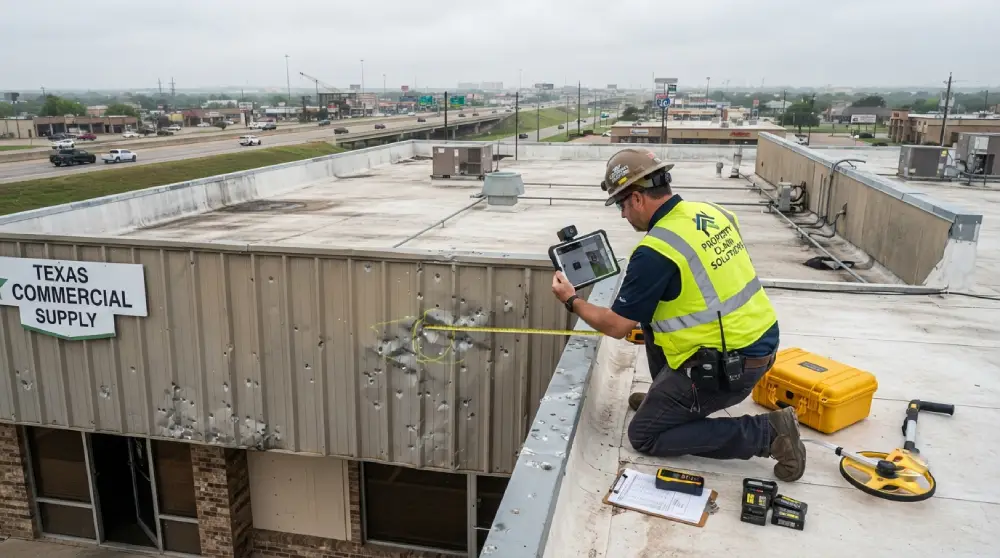
Hail Damage Claims
A hail claim may involve roofing, gutters, vents, siding, windows, screens, fencing, HVAC systems, and interior water damage. We compare the physical evidence with the insurance company’s estimate and help identify components that were overlooked or undervalued.
Water Damage Claims
Water can move beneath flooring, behind cabinets, through wall cavities, and into insulation. We review moisture records, mitigation documents, photographs, repair estimates, and the cause of loss to help present the full scope of damage.
Fire and Smoke Damage Claims
Fire claims can involve the structure, personal property, cleaning, demolition, code requirements, debris removal, additional living expenses, and commercial income losses. These claims often require extensive documentation and careful coordination among several specialists.
Storm and Wind Damage Claims
Windstorms can affect roofing systems, siding, windows, doors, detached structures, exterior equipment, trees, and interior finishes. We look beyond the most obvious storm damage to determine whether related components should also be evaluated.
Roof Damage Claims
Roof claims may involve asphalt shingles, standing-seam metal, modified bitumen, built-up roofing, membrane systems, tile, flashing, ventilation, underlayment, decking, and rooftop equipment. Property owners facing a disputed or incomplete estimate can review when to hire a public adjuster for a roof claim.
A roof claim can become underpaid when the estimate treats the loss as a small repair even though matching, repairability, access, or surrounding damage creates a broader scope issue.
Commercial Property Claims
Sulphur Springs businesses may need help documenting commercial property claims involving retail space, restaurants, warehouses, offices, agricultural facilities, multifamily properties, churches, manufacturing operations, and service businesses.
Commercial claims can include:
- Building damage
- Tenant improvements
- Machinery and equipment
- Inventory and stock
- Electronic systems
- Signs and exterior features
- Business interruption
- Extra expenses
- Debris removal
- Multiple buildings or coverage limits
A commercial claim should be evaluated in light of the property’s operations, lease obligations, construction, occupancy, and applicable policy provisions.
Why Sulphur Springs Insurance Claims Become Underpaid
An underpaid claim does not always result from one dramatic mistake. More often, several smaller omissions reduce the total estimate.
Missed or Hidden Damage
Some damage is not visible during a brief exterior inspection. Water may be trapped under flooring, hail impacts may be concentrated on specific roof slopes, or wind-created openings may be concealed beneath loosened materials.
Incomplete Repair Scope
The estimate may include a damaged item but omit the work needed to remove, access, reinstall, protect, seal, finish, or dispose of surrounding materials.
Low Material or Labor Pricing
Construction prices vary by location, trade availability, project size, and market conditions. An estimate based on outdated or inappropriate pricing may not reflect the reasonable cost of completing repairs in Sulphur Springs.
Depreciation Confusion
Replacement-cost policies may initially withhold depreciation until repairs are performed and documented. Other policies may settle certain items at actual cash value. We help policyholders understand how depreciation was applied and what documentation may be needed to recover eligible amounts.
Documentation Problems
A claim can lose momentum when photographs are incomplete, damaged contents are discarded too soon, estimates lack detail, communications are not organized, or supporting records are never submitted. Reviewing common property insurance claim mistakes early in the process can help a policyholder avoid preventable documentation gaps.
Scope Omissions
Carrier estimates may leave out flashing, gutters, ventilation, insulation, paint transitions, code-related work, detach-and-reset labor, interior protection, contents manipulation, overhead, or other items needed to perform the repair properly.
Cause-of-Loss Disputes
Insurers may attribute damage to wear, deterioration, maintenance problems, prior events, flooding, or excluded causes. A clear timeline, storm data, photographs, maintenance records, contractor findings, and physical evidence can become especially important in these disputes.
Our Public Adjusting Process
1. Claim Review
We begin by reviewing the current status of the claim. This may include the policy, carrier estimate, payment letters, denial correspondence, photographs, repair proposals, mitigation invoices, and prior communications.
We identify the main questions:
- What caused the damage?
- When did it occur?
- What has the insurer accepted or disputed?
- Which damages have been documented?
- Are deadlines or policy conditions approaching?
- Has the carrier issued payment?
2. Property Inspection
We inspect accessible damaged areas and document the condition of the property. Depending on the loss, that may include roofing, exterior elevations, interior rooms, equipment, contents, and detached structures.
For complex claims, additional specialists may be needed to address engineering, roofing, moisture, construction, inventory, accounting, or environmental issues.
3. Damage Documentation
We organize the evidence supporting the claim. This may include:
- Photographs and video
- Measurements
- Damage notes
- Repair estimates
- Contractor proposals
- Moisture readings
- Contents inventories
- Receipts and invoices
- Temporary repair records
- Business financial documents
- Carrier correspondence
Clear documentation helps connect each requested claim item to the actual loss.
4. Estimate and Scope Preparation
We prepare or review a detailed repair scope based on the observed damage and available records. The goal is to account for the work reasonably required to return covered property to its pre-loss condition, subject to the policy.
5. Claim Presentation and Negotiation
TX Public Adjusting communicates with the insurance company and presents the supporting documentation. We address estimate differences, omitted items, inspection findings, and requests for additional information.
We remain independent from the carrier and represent the policyholder’s financial interests throughout the engagement.
6. Settlement Review
When the insurer responds, we review the revised scope, coverage position, depreciation, deductible, prior payments, and proposed settlement. We explain the claim documents so the policyholder can make an informed decision.
Need a Second Look at Your Sulphur Springs Claim?
A low estimate does not always mean the claim is finished. Additional damage may be documented, omitted items may be presented, and disputed scope questions may be reviewed.
TX Public Adjusting offers a free claim review for Sulphur Springs homeowners, business owners, landlords, property managers, and commercial policyholders.
No upfront fees. Licensed Texas representation. Residential and commercial claim experience.
Why Choose TX Public Adjusting?
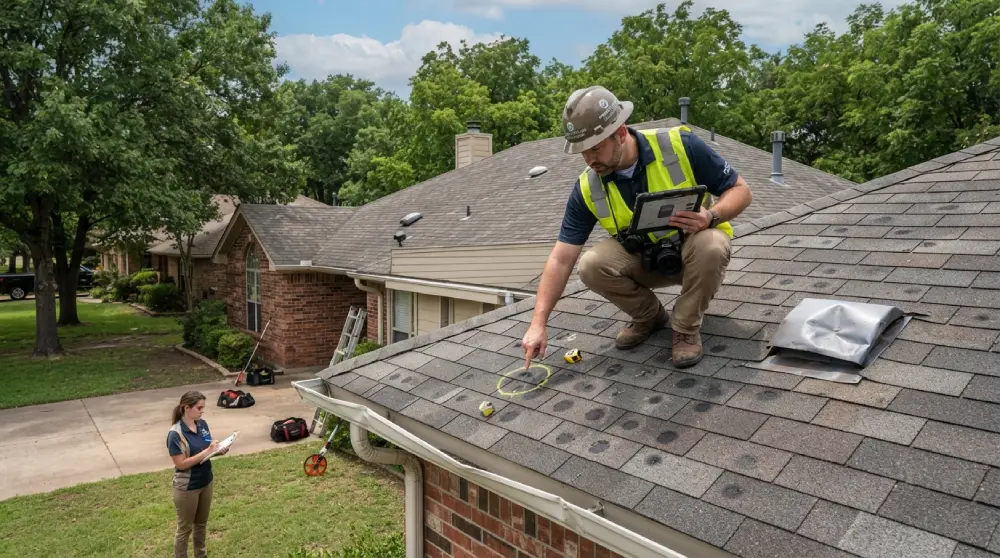
We Represent Policyholders
The insurance company’s adjuster represents the insurance company. TX Public Adjusting represents you.
Our responsibility is to document and present the policyholder’s claim—not to protect the carrier’s financial interests.
Texas-Focused Experience
Texas claims are shaped by hailstorms, wind events, tornadoes, freezes, plumbing losses, fires, and severe thunderstorms. Our work focuses on the types of residential and commercial losses Texas property owners encounter regularly.
Licensed Public Adjusting Firm
TX Public Adjusting is operated by Rise Public Adjusting LLC, Texas License #3356839.
Residential and Commercial Knowledge
Residential claims require close attention to roofing, interior finishes, personal property, temporary housing, and repair sequencing.
Commercial losses may add tenant obligations, specialized equipment, inventory, income loss, multiple structures, and operational deadlines. We understand the different documentation demands involved in each type of property.
Detailed Claim Documentation
A successful claim presentation requires more than a general statement that the settlement is too low. We build organized documentation showing what was damaged, where it was located, how it relates to the loss, and what work may be required.
Experience Reviewing Large Numbers of Claims
Our team has reviewed thousands of insurance claims involving residential and commercial property. That experience helps us recognize common omissions, estimate inconsistencies, documentation gaps, and areas that may require further investigation.
Direct, Practical Communication
We explain the process in plain language. You receive a clear understanding of what has been documented, what remains disputed, and what the next step may involve.
Sulphur Springs Properties We Assist
Our public adjusting services are available for many property types, including:
- Single-family homes
- Rental homes
- Duplexes and multifamily buildings
- Retail properties
- Restaurants
- Offices
- Warehouses
- Churches
- Schools and nonprofit facilities
- Agricultural buildings
- Manufacturing and industrial properties
- Self-storage facilities
- Mixed-use buildings
- Commercial properties along the I-30 corridor
Sulphur Springs has a diverse local economy that includes education, healthcare, food distribution, manufacturing, retail, county government, and solar-related operations. Those uses can create very different insurance-documentation requirements after a loss.
Neighborhoods and Areas We Serve in Sulphur Springs
We assist policyholders throughout Sulphur Springs, including properties near:
- Downtown Sulphur Springs
- Celebration Plaza
- Heritage Park
- Coleman Park
- Lake Sulphur Springs
- The Interstate 30 commercial corridor
- South Broadway Street
- Gilmer Street
- Church Street
- Texas Highway 19
- Residential areas north and south of downtown
- Rural properties outside the city limits
Downtown properties near Celebration Plaza and the Hopkins County Courthouse may involve older construction, masonry, historic finishes, commercial roofing, shared walls, or tenant spaces. Properties near I-30 may include hotels, restaurants, retail buildings, warehouses, and other commercial occupancies with rooftop equipment and larger exterior systems.
Residential areas near Coleman Park and Lake Sulphur Springs may have mature trees that create an additional risk of limb impact during high-wind events. Rural Hopkins County properties may include multiple structures, metal roofing, barns, agricultural equipment, fencing, and outbuildings that require separate documentation.
Areas We Serve Near Sulphur Springs
TX Public Adjusting also assists policyholders in surrounding Hopkins County communities, including:
- Como
- Cumby
- Tira
- Brashear
- Birthright
- Dike
- Miller Grove
- Pickton
- Saltillo
- Sulphur Bluff
View our complete directory of public adjuster service areas across Texas. We also serve property owners in nearby Northeast Texas communities such as Greenville, Commerce, Winnsboro, Cooper, Mount Vernon, Mount Pleasant, Emory, and Quitman.
Sulphur Springs sits near several major regional routes, including Interstate 30, State Highway 19, State Highway 11, and State Highway 154, making it a central service point for surrounding communities.
Frequently Asked Questions
What does a public adjuster in Sulphur Springs do?
A public adjuster represents the policyholder during a property insurance claim. The work may include reviewing the policy and carrier estimate, inspecting damage, preparing documentation, identifying missing repair items, communicating with the insurer, and negotiating disputed scope or value issues.
The public adjuster is independent of the insurance company. TX Public Adjusting works for Sulphur Springs homeowners and business owners, not for the carrier.
When should I hire a Sulphur Springs public adjuster?
You may consider hiring a public adjuster when a claim is large, complicated, denied, delayed, or underpaid. You may also need assistance when the insurer’s estimate differs substantially from contractor findings or when additional damage is discovered after the carrier inspection.
Hiring an adjuster early can help preserve documentation, but assistance may still be available after an initial payment or denial. The specific options depend on the policy, claim status, applicable deadlines, and prior communications.
Can a public adjuster help with a hail-damaged roof?
Yes. A public adjuster can inspect and document roof and exterior damage, compare the findings with the carrier’s estimate, and identify potentially omitted items.
A Sulphur Springs hail claim may involve more than shingles. Gutters, vents, flashing, HVAC units, siding, windows, screens, fencing, interior finishes, and commercial rooftop equipment may also require evaluation.
What happens if my insurance company already paid the claim?
An initial payment does not necessarily prevent further review. The carrier may have issued payment based on its first estimate while leaving open the possibility of supplemental documentation.
We can review the estimate, payment summary, depreciation, deductible, photographs, and repair proposals to determine whether there appear to be unresolved scope issues. No additional payment can be guaranteed. The timing and available options vary, so review our guide on when it is too late to hire a public adjuster before assuming the claim can no longer be evaluated.
Can you help if my Sulphur Springs claim was denied?
We can review the denial letter, policy language, reported cause of loss, inspection records, and available evidence. Some denials are based on exclusions or late reporting, while others may involve disputes over causation, maintenance, wear, or the date of loss.
A denial review does not guarantee that the insurer will reverse its decision, but it can help clarify whether additional documentation or professional evaluation may be appropriate.
How much does a public adjuster cost in Texas?
Public adjusters commonly work under a contingency-based fee agreement, meaning the fee is tied to the recovery obtained through their work. The exact fee and terms should be stated in a written contract before representation begins.
TX Public Adjusting offers a free initial claim review and does not require an upfront fee for the review.
Can you help with commercial property claims?
Yes. We assist Sulphur Springs businesses, property owners, landlords, churches, warehouses, retail operations, restaurants, and other commercial policyholders.
Commercial claims may involve the building, tenant improvements, equipment, inventory, signage, multiple roof systems, business interruption, and extra expenses. These losses often require broader documentation than a typical residential claim.
Does homeowners insurance cover storm-related water damage?
It depends on how the water entered and what the policy covers. Rain entering through a storm-created roof or wall opening may be treated differently from rising surface water, groundwater, long-term leakage, or maintenance-related moisture.
Because water sources can overlap, document the condition before repairs whenever safely possible. Photograph the entry point, affected materials, standing water, temporary measures, and damaged contents.
What should I do immediately after storm damage?
Protect people first. Avoid unstable roofs, standing water near electrical equipment, fallen power lines, and damaged structures.
Then take reasonable steps to prevent additional damage, such as temporary tarping or water extraction. Photograph the property before materials are removed, retain receipts, keep damaged items when practical, and notify the insurer promptly. Avoid permanent repairs until the damage has been thoroughly documented unless emergency conditions require immediate work.
How long does a property claim take?
The timeline depends on the size of the loss, the complexity of the damage, the carrier’s inspection schedule, document requests, contractor availability, and whether coverage or scope is disputed.
A straightforward roof claim may move faster than a fire, commercial, or business-interruption claim. Clear documentation and timely responses can help prevent avoidable delays, but no public adjuster can guarantee a specific settlement date.
Get a Free Sulphur Springs Insurance Claim Review
Your insurance company has professionals protecting its interests. You have the right to seek independent assistance for your side of the claim.
TX Public Adjusting helps Sulphur Springs property owners document damage, review carrier estimates, identify missing items, and pursue the benefits available under their policies.
Contact TX Public Adjusting today for a free review of your Sulphur Springs property claim.
- No upfront fees
- Licensed Texas public adjuster
- Residential and commercial claims
- Hail, roof, wind, water, fire, and storm losses
- Independent representation for policyholders
- Rise Public Adjusting LLC
- Texas License #3356839