

Property damage in Brushy Creek can become an insurance dispute faster than many homeowners or business owners expect. A spring hailstorm can damage roofing, gutters, window screens, fencing, and exterior finishes across the same property. A plumbing failure can affect flooring, drywall, cabinetry, insulation, and personal property. Heavy rain near Brushy Creek and its connected drainage areas can also expose weaknesses that were not visible before the storm.
When the insurance company’s estimate does not reflect the full damage, a public adjuster in Brushy Creek can represent the policyholder throughout the claim. TX Public Adjusting helps residential and commercial property owners inspect losses, document covered damage, review insurance estimates, prepare detailed claim scopes, and negotiate with the carrier.
TX Public Adjusting is operated by Rise Public Adjusting LLC, Texas License #3356839. We represent policyholders—not insurance companies.
Request a free claim review. There are no upfront fees for our public adjusting services.
Why Property Owners Hire a Public Adjuster in Brushy Creek
Insurance carriers assign adjusters to investigate claims on behalf of the insurance company. That adjuster may be professional and courteous, but the carrier’s inspection is not the same as having an independent claim professional working specifically for the policyholder. Property owners who are unfamiliar with the role can first review what a public adjuster does during a residential or commercial insurance claim.
A Brushy Creek public adjuster focuses on the property owner’s side of the claim. Understanding the difference between a public adjuster vs. independent adjuster can help clarify whose interests each professional represents.
Our work may include:
- Reviewing the policy and carrier correspondence
- Inspecting visible and potentially concealed damage
- Comparing the carrier’s estimate with actual repair requirements
- Photographing and organizing damaged components
- Preparing a detailed scope of loss
- Identifying missing labor, materials, and code-related items
- Communicating with the insurance company
- Negotiating disputed or underpaid portions of the claim
This type of help can be valuable when a claim involves multiple structures, extensive interior damage, a commercial building, conflicting contractor estimates, or an insurance payment that seems too low to complete proper repairs.
Brushy Creek includes a mix of established homes, newer residential construction, community amenities, multifamily properties, retail spaces, offices, and buildings serving the growing Round Rock–Cedar Park corridor. Each property type creates different claim-documentation challenges. A roof claim on a single-family home in Cat Hollow is not scoped the same way as water damage affecting a commercial tenant space near major roads serving the community.
Local Property-Damage Risks in Brushy Creek
Brushy Creek sits in Williamson County, between Round Rock, Cedar Park, and the northern Austin area. The community’s location in Central Texas exposes properties to several recurring weather and building-loss risks.
Hailstorms
Hail is one of the most significant property threats in Brushy Creek, and property owners should understand how hail damage insurance claims in Texas are documented and evaluated. Central Texas thunderstorms can produce hail capable of damaging:
- Asphalt shingles
- Metal roofing
- Roof vents and flashing
- Gutters and downspouts
- Window screens
- Fences and gates
- Garage doors
- Exterior paint and siding
- HVAC condenser fins
- Skylights and solar components
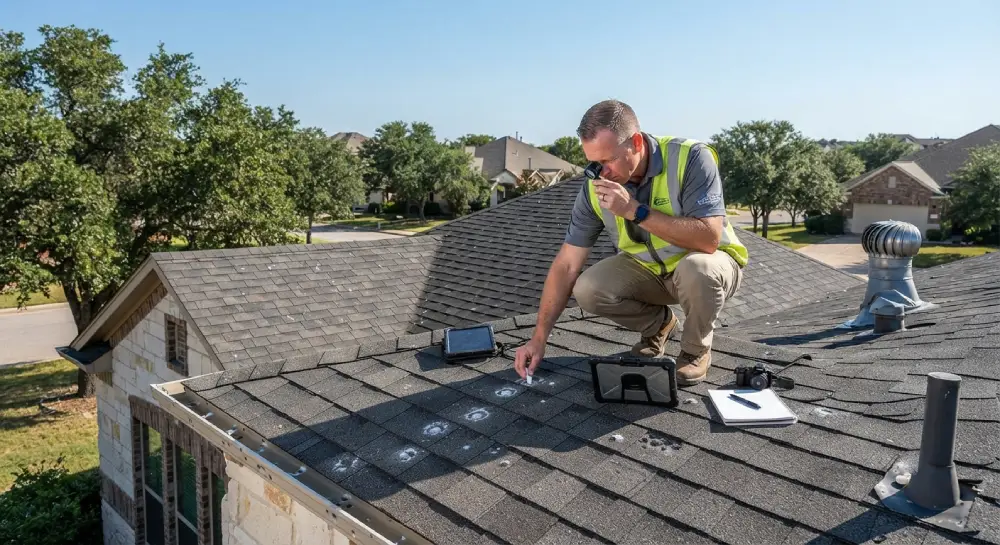
Hail damage is not always obvious from the ground. A roof may not leak immediately, but impacts can fracture the shingle mat, loosen granules, dent soft metals, or compromise roofing accessories. Problems often arise when the carrier pays for a limited repair while the damage pattern, material availability, or repairability supports a broader scope.
A proper hail claim should consider the complete exterior system—not just a small section of shingles.
Straight-Line Wind and Severe Thunderstorms
Fast-moving storm systems can produce strong wind without a tornado. These winds may lift shingles, loosen ridge materials, damage flashing, pull gutters away from fascia, break tree limbs, and allow wind-driven rain into attics or wall assemblies.
In neighborhoods such as Brushy Creek North, Great Oaks, Cat Hollow, and Sendero Springs, mature trees can create additional risk. Falling limbs may damage roofing, fencing, vehicles, detached structures, or outdoor equipment.
Wind claims frequently become underpaid when the inspection focuses on the most visible damage but overlooks:
- Lifted or creased shingles
- Damaged roof edges
- Displaced flashing
- Interior staining caused by wind-created openings
- Debris impact
- Matching issues
- Damage to accessory structures
Tornado Activity
Central Texas severe-weather systems can produce isolated tornadoes along with hail and damaging wind. Even when the main circulation does not cross a property, nearby wind fields and flying debris may cause substantial damage.
Tornado-related claims can involve the roof, framing, exterior cladding, windows, doors, garages, fences, trees, electrical systems, and interior finishes. These losses should be documented as connected parts of one event rather than treated as unrelated repairs.
Heavy Rain and Drainage-Related Water Intrusion
The community takes its name from Brushy Creek, a tributary system that runs through Williamson County. Parks, trails, drainage features, and residential areas are closely connected to the local watershed.
Heavy rainfall can create fast runoff, ponding, overflowing drainage channels, roof leaks, and water intrusion around doors, windows, foundations, or exterior penetrations. The source of water matters because property policies often distinguish between storm-created openings, plumbing discharge, roof leakage, surface water, and flooding.
A public adjuster does not determine coverage independently from the policy. We document what happened, identify the damaged components, review the applicable policy language, and present the claim based on the available evidence.
Property owners should also remember that standard property policies commonly treat flooding differently from other water losses. Flood-related damage may require separate coverage. Damage caused by wind-driven rain, a plumbing failure, or a covered roof opening may be evaluated differently.
Freezing Temperatures and Pipe Breaks
Although Brushy Creek is known for hot summers, hard freezes can cause major residential and commercial losses. Frozen pipes may rupture inside walls, ceilings, attics, garages, exterior walls, or mechanical rooms.
A pipe break can damage much more than the area directly below the leak. Water may travel through insulation, framing cavities, flooring systems, cabinetry, and adjacent rooms. A quick visual inspection may not capture the full moisture migration.
Fire and Smoke Damage
Fire claims can involve direct flame damage, smoke residue, heat effects, water used during suppression, debris removal, odor treatment, damaged personal property, electrical repairs, and temporary living expenses.
Even a contained kitchen, garage, or electrical fire can affect rooms that were not touched by flames. Smoke may enter HVAC systems and settle on surfaces throughout the building. A complete fire claim should distinguish between cleanable items, repairable materials, and components requiring replacement.
Common Insurance Claims in Brushy Creek
Hail Damage Claims
Hail claims are among the most common reasons property owners seek insurance claim assistance in Brushy Creek. Disagreements often involve the number of damaged roof slopes, the cause of marks on shingles, the repairability of the existing roof, or whether exterior components should be replaced. Property owners who are preparing a claim can review our hail damage roof insurance claim guide for a closer look at roof impacts, carrier inspections, repair scopes, and common claim disputes. Taking the right photographs early can make a major difference, so review how to document hail damage for an insurance claim before repairs or cleanup remove important evidence.
TX Public Adjusting can inspect the property, compare the observed conditions with the carrier’s estimate, and document related damage to roofing, soft metals, gutters, screens, fencing, and exterior finishes. If the carrier rejected all or part of the loss, our guide explains what to do if your hail claim was denied.
Roof Damage Claims
Roof claims may involve hail, wind, fallen trees, debris impact, fire, or water intrusion. The roof is a system, so an accurate estimate may need to address underlayment, flashing, vents, valleys, ridge materials, drip edge, penetrations, decking, steep charges, access, and disposal.
A carrier estimate that includes only shingles may not account for everything required to complete a compliant repair, which is one reason property owners may consult a public adjuster for a roof claim.
Water Damage Claims
Common sources of water damage include:
- Burst supply lines
- Failed water heaters
- Appliance leaks
- Overflowing plumbing fixtures
- Air-conditioning drain problems
- Roof leaks after storms
- Damaged windows or exterior openings
- Fire-suppression water
- Hidden leaks inside walls or cabinets
When moisture has affected multiple rooms, concealed materials, or expensive finishes, a water damage public adjuster can help document the full scope of the loss. Water losses should be documented quickly. Photographs, moisture readings, mitigation records, plumbing reports, invoices, and damaged-material samples may become important later in the claim.
Fire and Smoke Damage Claims
Fire claims often require coordination across several categories of loss. The building estimate is only one part of the process. The claim may also include contents, cleaning, demolition, debris handling, additional living expenses, temporary repairs, and specialty services. A fire insurance adjuster working for the policyholder can review building damage, contents, cleaning, debris removal, and related expenses as connected parts of the same loss.
TX Public Adjusting helps organize the loss and present the different claim components in a clear, supported format. Property owners can also review our guide to fire damage insurance claims for more information about documentation, coverage issues, and claim preparation.
Storm Damage Claims
A single Central Texas storm may create hail impacts, wind damage, fallen limbs, electrical problems, fence damage, and interior leaks. When those conditions are separated or incompletely documented, the settlement may not reflect the event as a whole.
We evaluate how the storm affected the entire property and identify related damage that may have been omitted from the initial scope.
Commercial Property Claims
Commercial losses in and around Brushy Creek may affect offices, retail buildings, restaurants, warehouses, medical spaces, schools, churches, apartment communities, and mixed-use properties.
Commercial claims may include:
- Building damage
- Tenant improvements
- Business personal property
- Equipment
- Inventory
- Signage
- Common areas
- Mechanical systems
- Business-income considerations
- Extra expenses
- Code and access requirements
A commercial claim can become difficult when ownership responsibilities, tenant responsibilities, leases, deductibles, mitigation decisions, and operating needs overlap. We help property owners organize the building-loss documentation and communicate a supported claim position.
Why Brushy Creek Insurance Claims Become Underpaid

An underpaid claim is not always caused by one obvious error. It may result from several smaller omissions that add up to a significant difference.
Damage Was Missed During the Inspection
Carrier inspections can be brief, particularly after a regional storm creates a high volume of claims. Inspectors may document the most visible damage but overlook less obvious conditions on elevated roofs, behind finishes, in attics, or across secondary structures.
The Scope Does Not Include Every Repair Step
An estimate might identify a damaged material without including all labor and related work needed to remove, access, protect, install, finish, and dispose of it.
For example, replacing water-damaged cabinetry may involve plumbing detach-and-reset work, countertop handling, drywall repairs, painting, flooring transitions, and contents manipulation. Leaving out those connected operations can produce a settlement that looks reasonable on paper but does not fund the actual project.
Depreciation Was Applied Incorrectly or Misunderstood
Many policies calculate an initial payment using actual cash value and withhold recoverable depreciation until repairs are completed and documented. Other policies may settle certain items differently.
Policyholders can become confused about:
- What depreciation was withheld
- Whether it is recoverable
- Which documents are needed
- When deadlines apply
- Whether the estimate includes replacement-cost items
- Why the final payment differs from the contractor’s price
We review the settlement documents and explain how the estimate and payment structure relate to the claim.
The Carrier Used a Limited Repair Approach
The insurance company may propose patching a roof slope, replacing a small flooring area, spot-painting a wall, or repairing one cabinet. That approach may not address material matching, continuous surfaces, repair access, product availability, or the condition of surrounding materials.
The issue should be evaluated using policy language, physical evidence, repair methods, and the facts of the property—not assumptions.
Documentation Was Incomplete
A valid claim may still be difficult to prove when there are too few photographs, missing invoices, no moisture records, discarded materials, unclear dates, or inconsistent descriptions of what happened.
Strong documentation creates a timeline and connects the cause of loss to the damaged property.
Contractor Estimates and Insurance Estimates Use Different Detail
A contractor may provide a lump-sum proposal, while the insurance carrier uses a line-item estimating platform. Even when both parties recognize the same general damage, differences in quantities, labor assumptions, materials, overhead, and repair sequence can create a substantial gap.
A public adjuster helps translate the physical repair requirements into a detailed claim presentation. Some underpayments begin with avoidable documentation or communication problems. Reviewing these common property insurance claim mistakes can help property owners protect the claim from the beginning.
Our Public Adjusting Process
1. Claim Review
We begin by discussing the loss, the current status of the claim, the carrier’s position, and the property owner’s concerns.
We may review:
- The insurance policy
- The declaration page
- The carrier’s estimate
- Payment letters
- Reservation-of-rights letters
- Denial or partial-denial letters
- Contractor proposals
- Photographs
- Mitigation records
- Prior claim documents
Even when a claim has already been inspected or partially paid, it may not be too late to seek help. Learn more about when it is too late to hire a public adjuster. This initial review helps determine whether professional claim representation may be appropriate.
2. Property Inspection
We inspect the damaged property and document the conditions related to the reported loss. The inspection may include roofing, exterior elevations, interiors, accessory structures, mechanical equipment, and damaged contents, depending on the claim.
Specialty experts may be needed in some claims. The appropriate resources depend on the type and complexity of the loss.
3. Damage Documentation
We organize photographs, measurements, estimates, reports, inventories, and other supporting materials. The goal is to create a clear record showing what was damaged and what work may be required.
4. Scope and Estimate Review
We compare the carrier’s scope with our documented findings. We look for missing areas, incorrect quantities, omitted operations, pricing concerns, and inconsistencies between the property conditions and the estimate.
5. Claim Presentation and Negotiation
We present the supported claim information to the insurance company and communicate about disputed items. We respond to requests, address scope differences, and work to move the claim toward a fair resolution under the policy.
6. Settlement Review
When the carrier issues revised estimates or payments, we review them with the policyholder. We explain what changed, what may remain unresolved, and which documentation may still be required.
Concerned that your Brushy Creek property claim is missing damage? Contact TX Public Adjusting for a free claim review.
Why Choose TX Public Adjusting
Licensed Texas Representation
TX Public Adjusting is operated by Rise Public Adjusting LLC, Texas License #3356839.
Licensing matters. Property owners should verify that anyone offering public adjusting services is properly authorized to represent policyholders in Texas.
We Work for Policyholders
Insurance-company adjusters represent the carrier. Public adjusters represent the insured property owner.
Our responsibility is to document and present the policyholder’s claim—not to protect the insurance company’s financial interests.
Texas-Focused Claim Experience
Texas claims are shaped by hailstorms, severe wind, hurricanes, freezes, plumbing failures, fires, and rapidly changing weather. Our work is focused on Texas residential and commercial property claims.
Our team has experience reviewing thousands of claim files and working with losses ranging from roof damage to complex commercial property claims.
Residential and Commercial Expertise
We assist homeowners, landlords, business owners, investors, associations, and commercial property owners. Every claim is evaluated based on the property, the policy, the cause of loss, and the available documentation.
Detailed Claim Preparation
A claim should be more than a handful of photographs and a general repair quote. We work to connect the damage evidence, repair scope, estimate, and policy requirements into a well-organized presentation.
No Upfront Public Adjusting Fees
Our fee is generally based on the claim recovery as stated in the written agreement and subject to Texas requirements. Property owners do not pay an upfront public adjusting fee merely to begin the claim review process.
Brushy Creek Neighborhoods and Community Areas We Serve
TX Public Adjusting assists property owners throughout Brushy Creek and nearby Williamson County communities.
Local service areas include:
- Cat Hollow
- Brushy Creek North
- Great Oaks
- Sendero Springs
- Woods of Brushy Creek
- Village of Brushy Creek
- Highland Horizon
- Fern Bluff
- Walsh Ranch
- Avery Ranch
- Round Rock
- Cedar Park
- Leander
- Georgetown
- Hutto
- Pflugerville
- North Austin
Properties near the Brushy Creek Regional Trail, Cat Hollow Park, Sendero Springs Park, Brushy Creek Community Center, and the broader creek corridor may face many of the same Central Texas storm and water-loss concerns as surrounding Round Rock and Cedar Park neighborhoods.
We help with claims involving primary residences, rental homes, multifamily buildings, retail properties, offices, houses of worship, and other insured structures throughout the area.
Frequently Asked Questions
How can a public adjuster help with a Brushy Creek hail claim?
A public adjuster can inspect the property, document hail impacts, compare the observed damage with the carrier’s estimate, prepare a detailed scope, and communicate with the insurance company about disputed items.
The review may extend beyond shingles to gutters, flashing, vents, screens, fences, exterior finishes, HVAC components, and interior leaks connected to the storm.
Should I hire a public adjuster before filing my claim?
A public adjuster can become involved before or after the claim is filed. Early involvement may help preserve evidence and organize the loss from the beginning, especially after a major fire, water event, or commercial loss.
Property owners also hire public adjusters after receiving a low estimate, partial denial, or settlement that does not appear sufficient.
Can TX Public Adjusting review an already-paid claim?
Yes. An initial payment does not always mean every issue has been resolved. Depending on the policy, claim status, deadlines, and available evidence, additional documentation may support reconsideration or a supplemental claim.
We can review the carrier’s estimate, payment documents, and property conditions to determine whether there appear to be unresolved scope items.
What should I do immediately after storm damage in Brushy Creek?
Protect people first. Avoid damaged electrical systems, unstable structures, standing water, and unsafe roof access. Take photographs and videos from safe locations before temporary repairs begin.
Notify the carrier promptly, keep receipts, save damaged materials when practical, and document emergency work. Do not delay reasonable steps needed to prevent additional damage.
Does homeowners insurance cover flooding from Brushy Creek?
Standard homeowners policies commonly exclude or limit damage caused by surface flooding. Separate flood insurance may be required for that type of loss.
However, water entering because wind damaged a roof or created another covered opening may be evaluated differently. Coverage depends on the source of the water, the policy wording, and the facts of the event.
Can a public adjuster help with a burst-pipe claim?
Yes. Burst-pipe losses may affect walls, ceilings, flooring, insulation, cabinetry, framing, personal property, and other concealed areas.
We help document the extent of the damage, review mitigation records, compare estimates, and present supported repair requirements to the carrier.
How much does a public adjuster cost in Texas?
Public adjusters generally work under a written agreement that explains how the fee is calculated. The fee may be based on a percentage of the insurance recovery and must comply with applicable Texas requirements.
TX Public Adjusting provides a free claim review and does not charge an upfront public adjusting fee to evaluate whether we may be able to assist.
How long does an insurance claim take?
The timeline depends on the type of loss, the extent of damage, the carrier’s response, inspection availability, requested documents, and whether the scope or coverage is disputed.
A straightforward roof claim may move differently from a commercial fire or extensive water loss. Our role includes organizing information and communicating with the carrier so unresolved issues are addressed. For more detail about early carrier-response timelines, review how long an insurance adjuster has to contact you.
Can you guarantee that my insurance payment will increase?
No ethical public adjuster should guarantee a specific settlement or claim result. Every claim depends on the policy, evidence, cause of loss, damages, deadlines, and insurance company’s evaluation.
We can provide professional representation, detailed documentation, and a supported claim presentation, but the result cannot be guaranteed.
Do public adjusters work for the insurance company?
No. A licensed public adjuster represents the policyholder. The insurance company’s adjuster represents the carrier.
That distinction is one of the main reasons property owners hire a public adjuster when a claim is large, complicated, denied, delayed, or underpaid.
Get a Free Brushy Creek Insurance Claim Review
Property damage can disrupt your home, rental property, or business long after the storm or accident has passed. The insurance paperwork, inspections, estimates, repair decisions, and carrier communications can quickly become a second full-time responsibility.
TX Public Adjusting helps Brushy Creek property owners take control of the claim.
Rise Public Adjusting LLC is a licensed Texas public adjusting firm, License #3356839. We represent residential and commercial policyholders throughout Williamson County and across Texas.
Contact TX Public Adjusting today for a free claim review. There are no upfront public adjusting fees.