

Property damage in Woodway can turn a quiet week into a complicated insurance claim. A severe thunderstorm can leave shingles bruised, flashing lifted, fences down, trees against the roof, and water entering through areas that looked intact from the ground. Plumbing failures, appliance leaks, fires, and commercial losses create a different set of problems, but the core challenge is often the same: proving the full extent and value of the damage.
TX Public Adjusting provides public adjuster services in Woodway, Texas, for residential and commercial policyholders who need help documenting, presenting, or negotiating a property insurance claim. We are Rise Public Adjusting LLC, a licensed Texas public adjusting firm operating under Texas License #3356839.
A public adjuster works for the policyholder—not the insurance company. Property owners who are unfamiliar with the process can learn more about what a public adjuster does, including how claim inspections, documentation, estimates, and negotiations are handled. Our role is to evaluate the loss, identify covered damage, prepare a detailed claim presentation, and advocate for a fair settlement based on the policy and documented scope of repair.
Need help with a Woodway property claim? Contact TX Public Adjusting for a free claim review. There are no upfront fees.
Property Damage Challenges in Woodway, Texas
Woodway is located in McLennan County and forms part of the greater Waco metropolitan area. The community sits along the western side of Waco near Hewitt, Lake Waco, Highway 84, and the Bosque River corridor. Most of Woodway is served by Midway Independent School District, and the city includes established residential areas, newer subdivisions, schools, churches, professional offices, retail properties, and other commercial buildings.
Woodway property owners face a combination of Central Texas weather risks. McLennan County’s hazard planning identifies floods, tornadoes, thunderstorms, lightning, winter storms, hail, drought, wildfire, and dam-related hazards among the risks affecting the county.
For insurance claims, the most common concerns include:
- Hail damage to shingles, metal roofing, gutters, vents, and exterior finishes
- Wind damage to roofs, fences, trees, siding, and detached structures
- Water intrusion following severe thunderstorms
- Interior water damage from plumbing or appliance failures
- Fire, smoke, soot, and electrical damage
- Winter freeze damage to pipes and building systems
- Commercial roof and business-interruption claims
- Damage that is initially overlooked or underestimated
These losses may occur anywhere in Woodway, including properties near Estates Drive, Bosque Boulevard, Highway 84, Woodway Drive, Poage Drive, Oak Ridge, Western Ridge, Lake Forest, and the neighborhoods surrounding Midway schools.
The presence of mature trees and established landscaping can also complicate storm losses. High winds may break limbs, damage roofing, puncture exterior materials, or create openings that allow rainwater into attics and wall cavities. A carrier’s first inspection may document the obvious impact without tracing all resulting damage inside the building.
Why Property Owners Hire a Public Adjuster in Woodway
Insurance policies place significant responsibilities on the policyholder. The property owner may be required to protect the property from additional damage, provide prompt notice, document damaged contents, submit repair estimates, cooperate with inspections, and prove the amount of the loss.
That is a heavy workload for someone who is also trying to manage contractors, temporary repairs, family needs, tenants, employees, or business operations.
A Woodway public adjuster can help by:
- Reviewing the policy and claim documents
- Inspecting visible and potentially hidden damage
- Preparing a room-by-room or component-by-component scope
- Photographing and organizing supporting evidence
- Reviewing the insurance company’s estimate
- Identifying omitted or underpriced repair items
- Preparing documentation for supplemental damage
- Communicating with the carrier and its representatives
- Negotiating the claim on behalf of the policyholder
The insurance company’s adjuster represents the carrier. TX Public Adjusting represents you. Understanding the difference between a public adjuster and an independent adjuster can help Woodway property owners determine who is responsible for protecting their interests during the claim.
That distinction matters when there is disagreement about whether damage is storm-related, how much roofing must be replaced, whether interior staining is connected to an exterior opening, or whether the carrier’s estimate reflects the actual work required by a qualified contractor.
Common Insurance Claims in Woodway
Hail Damage Claims
Hail is one of the most important property risks for Woodway and the surrounding McLennan County area. Historical risk data identifies McLennan County as particularly vulnerable to hailstorms, and Woodway has experienced repeated severe-weather warnings and reported hail activity.
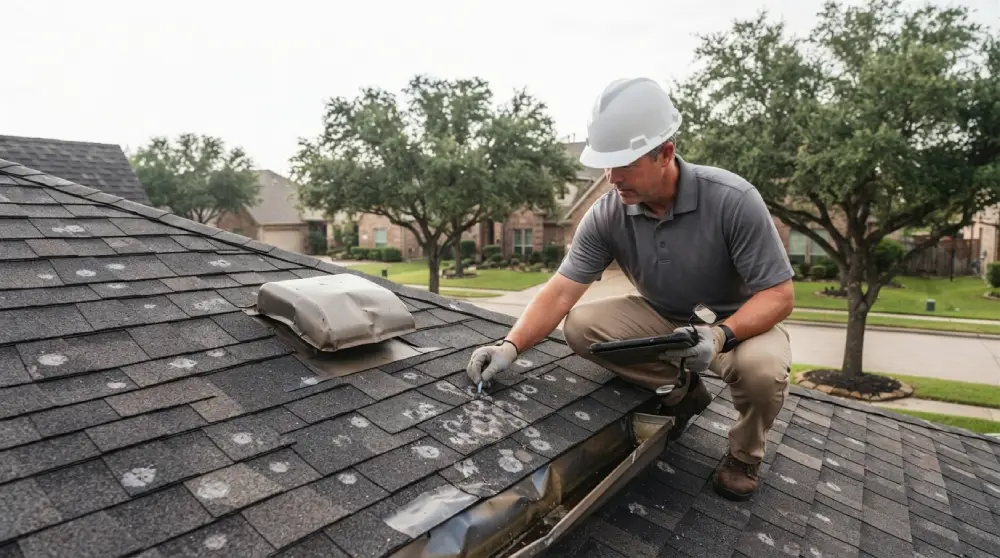
Hail damage is not always obvious. Large hail may crack shingles or dent metal components, but smaller hail can also remove protective granules, fracture the shingle mat, damage ridge caps, bruise soft metals, and weaken the roof’s ability to shed water.
A hail claim may involve:
- Asphalt shingles
- Metal roofs
- Clay or concrete tile
- Gutters and downspouts
- Roof vents and flashing
- Skylights
- HVAC equipment
- Window screens
- Garage doors
- Siding and exterior paint
- Fences and detached structures
One common dispute is whether the roof has functional damage or only cosmetic marks. Another is whether the carrier’s test squares and sample areas accurately represent damage across all slopes.
Our team can review the roof, exterior elevations, accessories, and interior areas to determine whether the carrier’s estimate reflects the complete loss. Property owners can also review our guide to filing a hail damage insurance claim in Texas, including documentation issues that may affect the outcome.
Water Damage Claims
Water damage in Woodway may result from a burst pipe, failed supply line, leaking appliance, plumbing backup, roof opening, frozen pipe, or severe storm.
Water can travel far from its source. A small leak above the ceiling may affect insulation, drywall, paint, trim, flooring, cabinetry, electrical systems, and personal property. Moisture can also migrate behind walls and under finished flooring.
A carrier estimate may address the visible stain but omit:
- Wet insulation
- Hidden drywall damage
- Cabinet removal and resetting
- Flooring continuity
- Baseboards and trim
- Texture matching
- Painting adjacent surfaces
- Drying and dehumidification
- Contents manipulation
- Plumbing access and repair
- Code-related work
The cause of loss, timing, policy language, and documentation all affect how a water damage claim is evaluated. Our guide to dealing with an insurance adjuster after water damage explains what property owners should document and where disagreements commonly arise. A public adjuster can then help organize those issues into a supported claim presentation.
Fire and Smoke Damage Claims
A residential or commercial fire can damage much more than the area touched by flames. Smoke, soot, heat, water from firefighting efforts, and airborne contaminants may spread throughout the structure.
Because these losses can involve the structure, contents, smoke contamination, and additional living expenses, a properly documented fire damage insurance claim may require several separate estimates and inventories. A Woodway fire claim may include:
- Structural damage
- Smoke and soot cleaning
- Odor treatment
- Electrical repairs
- HVAC cleaning or replacement
- Roofing and framing
- Drywall and insulation
- Flooring and cabinetry
- Personal property
- Debris removal
- Temporary housing
- Business income loss
Fire claims can become especially difficult when the carrier proposes cleaning materials that cannot reasonably be restored, applies aggressive depreciation, or undervalues personal property.
TX Public Adjusting can help document the building loss, inventory damaged contents, and review whether the proposed restoration method is practical and consistent with the policy.
Storm and Wind Damage Claims
Central Texas thunderstorms can produce intense straight-line winds, lightning, hail, heavy rainfall, and isolated tornadoes. McLennan County’s hazard plan recognizes tornadoes, thunderstorms, lightning, hail, and flooding among its relevant hazards.
Wind damage may involve:
- Lifted or creased shingles
- Missing roofing materials
- Displaced flashing
- Broken tree limbs
- Damaged fencing
- Detached carports or awnings
- Siding damage
- Broken windows
- Rain intrusion
- Detached structures
- Commercial rooftop equipment
An insurer may replace a few shingles while overlooking a broader pattern of wind uplift or the collateral damage caused by emergency tarping, tree impact, or water intrusion.
A detailed inspection helps connect the exterior storm damage to the interior repairs needed to restore the property.
Roof Damage Claims
Roof claims are among the most common and disputed property claims in Woodway. The cause may be hail, wind, falling trees, fire, water intrusion, or another covered event.
Disagreements often involve:
- Repair versus replacement
- The number of damaged slopes
- Matching unavailable materials
- Roofing accessories
- Underlayment
- Drip edge and flashing
- Steep or high charges
- Waste calculations
- Code upgrades
- Detach-and-reset labor
- Interior damage below the roof
A roof claim should not be evaluated from the shingles alone. Gutters, vents, flashing, skylights, exterior elevations, attic spaces, ceilings, and insulation may all provide evidence about the loss. A public adjuster for a roof claim can compare the carrier’s scope with the damage observed across the complete roofing system.
Commercial Property Claims
Commercial claims in Woodway can affect medical offices, churches, professional buildings, schools, restaurants, retail spaces, multifamily properties, warehouses, and other businesses throughout the Highway 84 and greater Waco corridor.
Commercial losses often require more detailed documentation because several systems may be involved at once:
- Flat or low-slope roofing
- Metal roof systems
- HVAC units
- Electrical components
- Interior finishes
- Signage
- Inventory
- Tenant improvements
- Business equipment
- Lost rental income
- Business interruption
A low commercial estimate can place pressure on cash flow and delay reopening. TX Public Adjusting has experience reviewing both residential and commercial claims and can coordinate the documentation required for complex losses.
Woodway Storm Risks and Insurance Claim Concerns
Woodway’s location in Central Texas exposes local properties to changing weather patterns throughout the year.
Spring Hail and Severe Thunderstorms
Spring and early summer often bring the highest concern for hail, damaging winds, lightning, and tornado-producing storms. Roofing systems may sustain damage even when neighboring homes appear unaffected because hail size, wind direction, roof pitch, material age, and tree coverage vary from one property to the next.
After a storm, Woodway property owners should inspect for:
- Shingles or roofing debris on the ground
- Dented gutters or downspouts
- Damaged window screens
- Fresh fence damage
- Water stains
- Ceiling discoloration
- Loose flashing
- Fallen limbs
- Granules in gutters
- New leaks or musty odors
Avoid assuming that no visible leak means no roof damage. Some openings do not leak until a later storm, while fractured roofing materials may deteriorate over time.
Heavy Rain and Flash Flooding
McLennan County includes areas exposed to heavy rainfall and flood risk. County flood-protection rules recognize that development and obstructions within floodplains can increase flood heights, velocity, property loss, and public-safety concerns.
Flooding and water intrusion are not always covered under the same policy. Standard property policies may distinguish between wind-driven rain, plumbing water, roof leaks, surface water, and rising floodwater. The source and path of water must be documented carefully.
Tornadoes and Straight-Line Winds
Tornadoes receive the most attention, but straight-line winds can cause extensive property damage without a confirmed tornado. Wind can lift shingles, topple trees, damage fences, drive rain through roof openings, and affect commercial rooftop systems.
A claim should focus on the physical evidence at the property rather than relying only on whether a tornado was officially recorded at that address.
Winter Freeze Damage
The Central Texas climate is generally warm, but occasional freezes can create substantial losses. Frozen pipes, fire-sprinkler failures, damaged plumbing, and prolonged power outages may lead to water damage across several rooms or floors.
Freeze claims can become underpaid when drying, access work, insulation, flooring continuity, cabinetry, or temporary relocation costs are not fully included.
Why Insurance Claims Become Underpaid
An underpaid claim does not always begin with an outright denial. More often, it starts with an estimate that appears organized but does not include everything required to restore the property. Several preventable issues can weaken an otherwise valid claim. Reviewing the most common property insurance claim mistakes can help Woodway policyholders avoid incomplete photographs, missing inventories, premature repairs, vague damage descriptions, and lost receipts.
Missed Damage
The first inspection may be short, limited to visible areas, or completed before all damage becomes apparent. Roof damage, attic moisture, wall-cavity damage, and affected personal property may be missed.
Scope Omissions
An estimate may include drywall replacement but omit insulation, texture matching, painting, trim, contents handling, or access work. Each omitted line item reduces the total claim value.
Low Repair Pricing
Carrier estimates may use labor or material pricing that does not reflect the actual cost to complete the work in the Woodway and Waco market.
Depreciation Issues
Depreciation may be applied to roofing, finishes, or personal property. Some policies allow recoverable depreciation after repairs are completed, while others contain different settlement provisions. The policy and carrier estimate must be reviewed together.
Documentation Problems
A valid claim can become difficult when photographs are incomplete, inventories lack detail, invoices are missing, or damage is not connected clearly to the reported event.
Repair Versus Replacement Disputes
The carrier may propose a patch or partial repair. The property owner or contractor may find that matching materials are unavailable or that a spot repair cannot restore the roof, flooring, cabinetry, or exterior finish to a reasonable condition.
Incomplete Supplemental Claims
Additional damage may be discovered after demolition begins. Without organized documentation and a supported supplement, those repairs may remain unpaid.
Concerned that your Woodway claim estimate is too low? TX Public Adjusting offers a free claim review with no upfront fees.
Our Public Adjusting Process
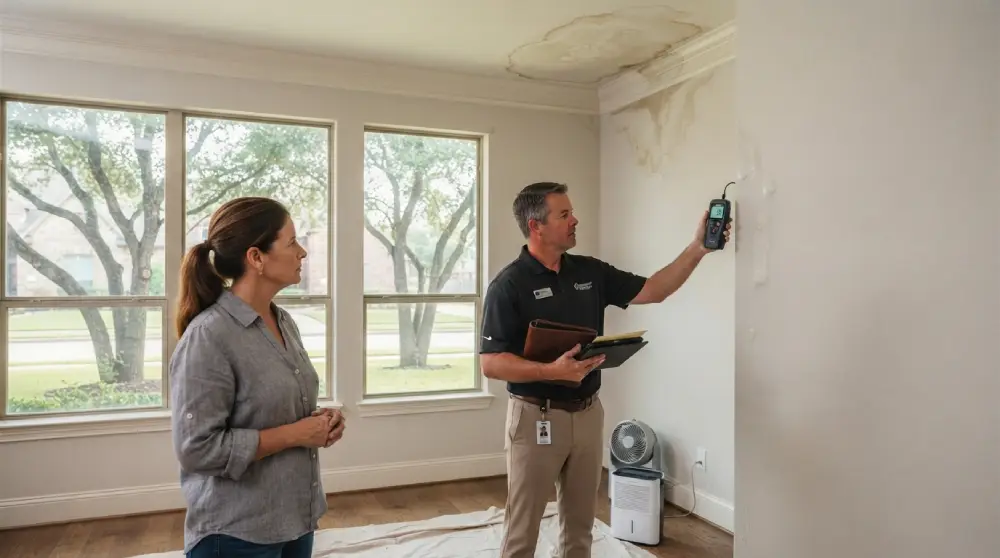
Step 1: Claim Review
We begin by reviewing the policy, carrier correspondence, estimates, photographs, payment documents, and claim history.
We look for coverage questions, deadlines, deductibles, depreciation, scope omissions, and areas that need further investigation.
Step 2: Property Inspection
Our team inspects the affected property and documents the loss. Depending on the claim, this may include the roof, exterior elevations, interior rooms, attic spaces, commercial systems, contents, and detached structures.
Step 3: Damage Documentation
We organize photographs, measurements, inventories, repair scopes, contractor information, and other supporting records.
The goal is to present the claim in a way that clearly explains:
- What was damaged
- How the damage relates to the loss
- What work is required
- What the repairs are reasonably expected to cost
Step 4: Estimate and Scope Review
We compare our findings with the carrier’s estimate and identify discrepancies. These may involve quantities, materials, labor, code items, pricing, overhead, depreciation, or omitted components.
Step 5: Claim Presentation and Negotiation
TX Public Adjusting communicates with the insurance company and presents the supporting claim documentation.
We address carrier questions, coordinate additional inspections when needed, and negotiate the disputed scope and value.
Step 6: Settlement Review
When the carrier issues a revised estimate or settlement offer, we review it against the documented loss and explain the outcome to the policyholder.
Why Choose TX Public Adjusting
Licensed Texas Public Adjuster
TX Public Adjusting operates through Rise Public Adjusting LLC under Texas License #3356839.
Independent Policyholder Representation
We do not work for the insurance company. Our responsibility is to represent residential and commercial policyholders.
Texas-Focused Experience
Texas claims involve hail, wind, hurricanes, freezes, fires, water losses, and complex commercial damage. Our work is centered on the risks affecting Texas property owners.
Residential and Commercial Claims
We handle claims involving homes, rental properties, offices, retail buildings, churches, multifamily properties, industrial facilities, and other commercial structures.
Detailed Claim Documentation
A strong claim depends on evidence. We focus on the condition of the property, the repair scope, policy requirements, and the documents needed to support the loss.
Experience Reviewing High Volumes of Claims
Our team has reviewed thousands of insurance claims and understands how scope omissions, pricing issues, depreciation, and documentation gaps can affect both residential and commercial settlements.
Free Claim Review
There is no charge for the initial review, and there are no upfront fees.
Woodway Neighborhoods and Local Areas We Serve
TX Public Adjusting assists property owners throughout Woodway and neighboring McLennan County communities.
Local service areas include:
- Central Woodway
- Oak Ridge
- Lake Forest
- Western Ridge
- Poage Drive area
- Estates Drive area
- Bosque Boulevard corridor
- Highway 84 corridor
- Woodway Drive
- Hewitt
- Waco
- Lorena
- Robinson
- McGregor
- Crawford
- Bellmead
- Beverly Hills
Woodway’s best-known community landmark is the Carleen Bright Arboretum, a 15-acre site with gardens, an amphitheater, a gazebo, and other community facilities. The city is also close to Lake Waco, the Extraco Events Center, Baylor University, and Downtown Waco.
These local references are more than geographic markers. Properties near wooded areas, lake corridors, open commercial stretches, and mature neighborhoods may face different wind, drainage, tree-impact, and roofing conditions.
Frequently Asked Questions About Public Adjusters in Woodway
What does a public adjuster do for a Woodway property owner?
A public adjuster represents the policyholder during a property insurance claim. The adjuster reviews the policy, inspects the property, documents damage, prepares or reviews estimates, communicates with the carrier, and negotiates disputed claim issues. Our Texas property-owner guide provides a fuller explanation of how public adjusters work.
The insurance company’s adjuster works for the insurer. A public adjuster works for you.
When should I hire a public adjuster in Woodway?
Property owners often hire a public adjuster when a claim is large, complex, denied, delayed, or underpaid. You may also seek help when the carrier’s estimate does not match contractor pricing or when important damage appears to have been omitted.
Hiring an adjuster early can improve documentation, but assistance may still be available after the insurance company issues an estimate or payment. Our guide explains when it is too late to hire a public adjuster and which claim circumstances may still leave room for review.
Can a public adjuster help after my claim has already been paid?
Possibly. An initial payment does not always mean the claim is closed. Some policies and claim situations allow supplemental documentation when additional covered damage is discovered or when the original estimate was incomplete.
The policy, deadlines, release documents, and claim history must be reviewed before determining what options remain.
How much does a public adjuster cost in Texas?
Public adjusters generally work under a written fee agreement. The fee is typically connected to the amount recovered through the adjuster’s work and is subject to Texas law and the terms of the contract.
TX Public Adjusting offers a free claim review and does not charge upfront fees.
Do I need a public adjuster for a small roof claim?
Not every small claim requires professional representation. A straightforward claim with an accurate scope may be resolved directly with the carrier.
A review may be worthwhile when the estimate excludes roof slopes, accessories, matching materials, interior damage, code items, or other necessary work. A small-looking roof claim can become significant when all affected components are considered.
Can you help with a denied hail claim in Woodway?
Yes. A denied claim can be reviewed to determine why the carrier denied coverage and whether the property evidence supports reconsideration.
We may examine inspection findings, storm information, roof condition, carrier photographs, policy language, and other documents. A review does not guarantee reversal, but it can identify whether the denial deserves further challenge.
What should I do immediately after storm damage?
Protect the property from additional damage when it is safe to do so. Take photographs and videos before major cleanup, save damaged materials when practical, keep receipts, document temporary repairs, and report the loss promptly.
Avoid permanent repairs until the damage has been documented unless immediate work is required for safety or to prevent further loss.
Does homeowners insurance cover flooding in Woodway?
It depends on the source of the water and the policies in force. Standard homeowners insurance commonly treats rising surface water differently from water entering through storm-created openings or water released from plumbing systems.
Because coverage depends heavily on the cause and policy language, document where the water entered and avoid describing the loss with broad terms before the facts are clear.
Can a public adjuster help with commercial claims?
Yes. TX Public Adjusting assists with commercial property claims involving roofing, water, fire, wind, hail, equipment, inventory, tenant improvements, and business-income issues.
Commercial policies can involve additional forms, limits, deductibles, valuation methods, and reporting requirements, making detailed documentation especially important.
How long does a Woodway insurance claim take?
Claim timelines vary based on the type of damage, carrier response, number of inspections, documentation needed, repair complexity, and whether coverage or scope is disputed. Texas policyholders who are waiting for an initial response can review how long an insurance adjuster has to contact you after a claim is reported.
A straightforward claim may move relatively quickly. A large fire loss, commercial storm claim, or disputed roof replacement may require additional inspections, estimates, and negotiations.
Get a Free Woodway Insurance Claim Review
You bought insurance to protect your home, business, or investment property. When a covered loss occurs, the settlement should reflect the damage that can be documented under the policy—not only what was included in the first estimate.
TX Public Adjusting helps Woodway property owners with hail, wind, water, fire, roof, storm, and commercial property claims.
Contact TX Public Adjusting for a free claim review.
- Licensed Texas Public Adjuster
- Residential and commercial claims
- Independent policyholder representation
- No upfront fees
- Rise Public Adjusting LLC
- Texas License #3356839