

Property damage in Sweetwater can happen quickly. One severe thunderstorm can leave roofs bruised by hail, metal panels dented, windows broken, commercial equipment exposed, and rainwater entering through openings that were not visible before the storm. A plumbing failure, electrical fire, or wind-driven roof leak can create equally serious problems inside a home or business.
When the resulting insurance estimate does not reflect the full extent of the loss, a public adjuster in Sweetwater can help the property owner document the damage and present the claim more effectively.
TX Public Adjusting is a Texas public adjusting firm representing residential and commercial policyholders—not insurance companies. Our team reviews policies, inspects damaged property, prepares detailed claim documentation, identifies missing scope items, and communicates with the carrier throughout the adjustment process.
TX Public Adjusting is operated by Rise Public Adjusting LLC, a licensed Texas public adjusting firm, Texas License #3356839.
Dealing with a denied, delayed, or underpaid property claim in Sweetwater? Request a free claim review. There are no upfront fees.
Why Property Owners Hire a Public Adjuster in Sweetwater
Insurance claims are rarely as simple as reporting the damage and waiting for a check.
The insurance company may send an adjuster to inspect the property, but that adjuster works for the carrier. Their assignment is to evaluate the claim under the insurer’s procedures, estimate the covered damage, and report their findings to the company.
A public adjuster has a different role. We work for the policyholder.
Sweetwater property owners often contact us when:
- The insurance estimate appears too low
- Important damage was left out of the scope
- A roof claim was classified as repairable
- Interior water damage was minimized
- The carrier applied substantial depreciation
- A commercial loss is interrupting business operations
- The claim has stalled without a clear resolution
- The property owner does not have time to manage inspections and documentation
- A claim was denied based on wear, deterioration, or maintenance
- Additional damage was discovered after the first inspection
The purpose of hiring a public insurance adjuster in Sweetwater is not to create damage or request benefits that the policy does not provide. The purpose is to document the actual covered loss accurately and make sure the claim is evaluated using a complete scope.
That distinction matters after severe weather in West Texas. Wind and hail damage may affect roofing, flashing, vents, exterior finishes, HVAC equipment, fencing, windows, interiors, and detached structures during the same event. When the inspection focuses on only one portion of the property, the estimate may fail to account for the full repair process.
Sweetwater’s Property-Damage Risks
Sweetwater sits in Nolan County along the Interstate 20 corridor, west of Abilene. The area’s open terrain, strong spring storm systems, dryline thunderstorms, intense summer heat, and periodic winter freezes create several recurring property risks.
Large Hail
Hail is one of the most significant insurance-loss risks for Sweetwater homes, ranch properties, warehouses, churches, retail buildings, and industrial facilities.
A hailstorm may damage:
- Asphalt shingles
- Standing-seam and exposed-fastener metal roofs
- Modified bitumen and built-up roofing
- Roof vents and turbine vents
- Gutters and downspouts
- Window screens
- Exterior lighting
- HVAC condenser fins
- Siding and painted surfaces
- Skylights
- Vehicles and exterior equipment
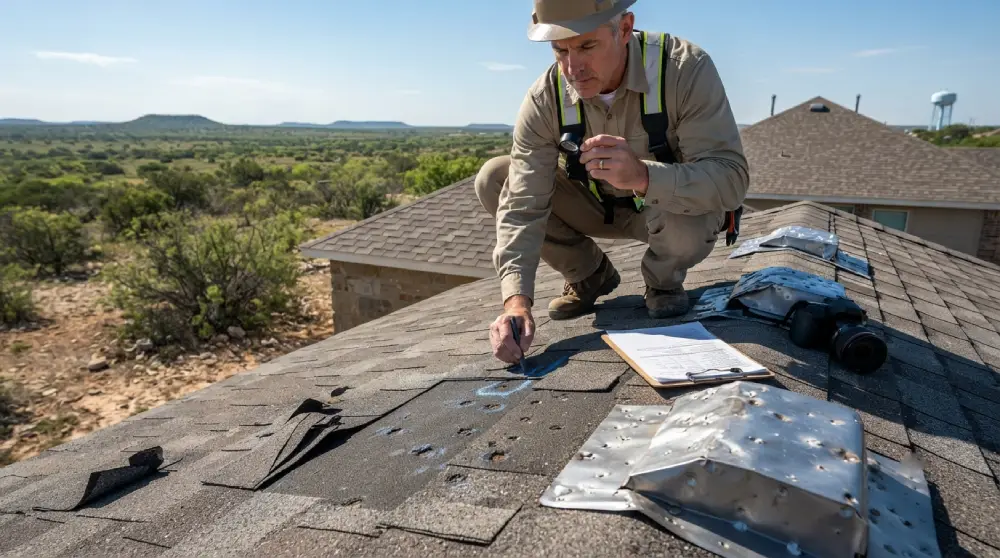
Some hail damage is obvious. Other damage is difficult to identify from the ground. Property owners can review our hail damage insurance claim guide for more information about documenting roof impacts and responding when the carrier’s estimate appears incomplete. A roof may not leak immediately, yet hail impact can fracture shingle mats, loosen granules, damage seams, deform metal components, or compromise the roof’s expected service life.
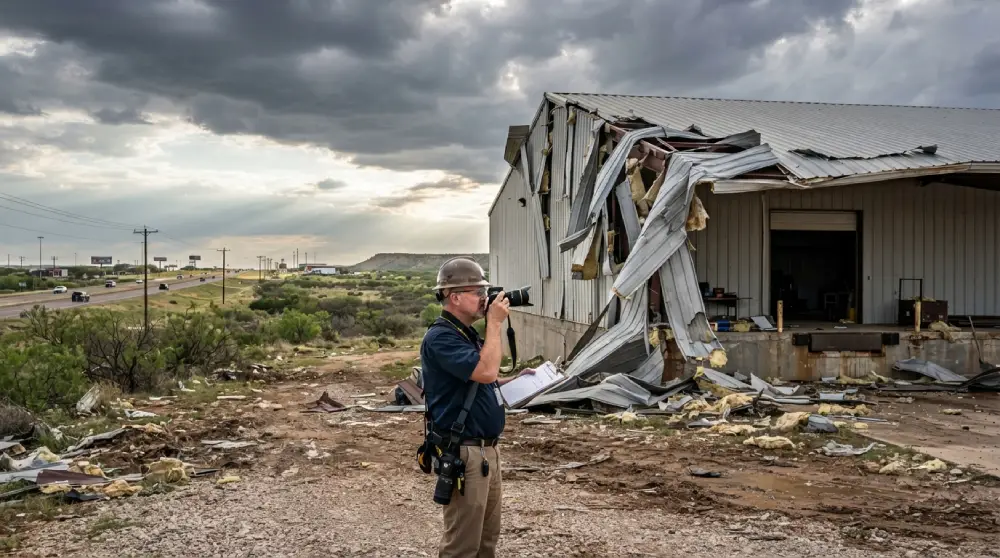
Sweetwater has experienced storms capable of producing damaging wind and large hail. National Weather Service records for the region include reports of golf-ball and baseball-size hail near Sweetwater and Nolan County. Recent regional summaries have also documented downed power poles and major wind damage to a cotton storage warehouse southwest of the city.
That history makes thorough documentation especially important after a storm.
Straight-Line Wind and Downburst Damage
Strong West Texas thunderstorms do not need to produce a tornado to cause extensive damage.
Straight-line winds and downbursts may:
- Lift shingles
- Crease tabs
- Damage roof edges
- Loosen flashing
- Bend metal panels
- Tear membrane roofing
- Damage awnings and signage
- Push rain through wall or roof openings
- Blow down fences
- Damage outbuildings
- Topple trees or utility poles
- Interrupt electrical service
Commercial properties near Interstate 20, industrial areas, and open parcels around the edge of Sweetwater can be especially exposed because there are fewer structures or trees to interrupt strong surface winds.
Wind claims can become disputed when the carrier attributes the damage to age or maintenance. A detailed inspection should distinguish storm-created openings, displaced materials, impact marks, and mechanical damage from ordinary deterioration.
Tornado Activity
Sweetwater has a documented tornado history. The city and surrounding Nolan County communities have experienced severe storms capable of producing tornadoes, large hail, and destructive winds.
Tornado-related claims may involve much more than a missing roof. Damage can include:
- Structural movement
- Wall and roof framing damage
- Broken glazing
- Damaged doors
- Interior water intrusion
- Detached garages and sheds
- Electrical systems
- Personal property
- Debris removal
- Temporary repairs
- Business interruption
After a major wind event, some of the most important damage is not visible from outside. Attic framing, decking, roof-to-wall connections, interior ceilings, electrical components, and mechanical systems may require additional evaluation.
Extreme Heat and Thermal Stress
Sweetwater regularly experiences periods of intense heat. High temperatures can place sustained stress on roofing materials, sealants, HVAC systems, plumbing connections, electrical equipment, and commercial refrigeration.
Heat alone may not create a covered insurance claim, but it can complicate a storm loss. For example, damaged shingles and sealants may deteriorate faster after hail. Air-conditioning equipment affected by electrical surge, windblown debris, or hail may fail during peak summer demand.
The cause of loss must be documented carefully. An insurer may deny damage it considers ordinary wear, even when a sudden covered event contributed to the failure.
Freeze and Plumbing Damage
West Texas properties are not immune to sudden winter freezes. Frozen pipes, failed supply lines, damaged outdoor plumbing, burst fire-suppression lines, and prolonged power outages can lead to significant water damage.
A single pipe break can affect:
- Drywall
- Insulation
- Cabinets
- Flooring
- Electrical systems
- Furniture
- Inventory
- Machinery
- Documents
- Tenant improvements
Water often travels farther than it appears. Moisture may move behind walls, under flooring, through ceiling cavities, or into adjacent rooms. A surface-level estimate may not include demolition, drying, testing, content manipulation, code-related work, or reconstruction of continuous finishes.
Fire, Smoke, and Electrical Damage
Homes, workshops, restaurants, retail buildings, warehouses, and agricultural facilities in and around Sweetwater may suffer losses from cooking fires, electrical faults, equipment failures, lightning, heating systems, or wind-driven grass fires.
Fire claims frequently include separate categories of damage:
- Direct flame damage
- Heat damage
- Smoke residue
- Soot contamination
- Water used for suppression
- Demolition and debris removal
- Odor treatment
- Damaged personal property
- Electrical evaluation
- Temporary housing
- Lost income
- Code-required upgrades
Smoke can enter wall cavities, attic spaces, HVAC systems, fabrics, equipment, and porous building materials. A claim estimate that addresses only visibly burned materials may overlook a substantial portion of the loss.
Common Insurance Claims in Sweetwater
Hail Damage Claims
Hail damage claims are among the most common reasons property owners seek insurance claim help in Sweetwater.
A complete hail claim may involve more than replacing shingles. Roofing accessories, flashing, vents, gutters, metal trim, windows, screens, fencing, HVAC units, and interior finishes may also require repair.
TX Public Adjusting reviews the carrier’s scope and compares it with the observed damage and the actual repair requirements. When appropriate, we document additional covered items and prepare a claim presentation for the insurer.
Roof Damage Claims
Roof claims can become disputed over causation, repairability, matching, age, prior damage, and policy exclusions. A public adjuster for a roof claim can review the insurer’s scope against the documented condition of the roofing system.
Insurance estimates may omit:
- Underlayment
- Flashing
- Starter course
- Ridge materials
- Valley components
- Steep or high-access charges
- Roofing accessories
- Detachment and reset work
- Interior protection
- Disposal
- Required permits
- Code-related items, when covered
We inspect the roofing system as a whole rather than viewing it as a single surface.
Water Damage Claims
Water losses may result from burst pipes, appliance failures, supply-line leaks, roof openings, HVAC drain problems, or fire-suppression systems. A water damage public adjuster can help document the source, affected materials, mitigation work, and full repair scope.
The visible stain is rarely the entire claim. Proper documentation may require moisture readings, photographs, drying records, repair estimates, damaged-content inventories, and a clear explanation of the source.
Policies often distinguish between sudden water damage, long-term seepage, flood, surface water, and water entering through storm damage. Correctly identifying the cause is essential.
Fire and Smoke Damage Claims
Fire claims are document-intensive. Property owners may need to address emergency services, structural repairs, cleaning, smoke remediation, temporary housing, inventory preparation, debris removal, and communication with multiple insurance representatives. For larger structural, smoke, soot, contents, or additional-living-expense losses, a fire insurance adjuster can organize the separate parts of the claim and document items that may not appear in the carrier’s initial estimate.
TX Public Adjusting helps organize the loss into clear categories and presents supporting documentation to the carrier.
Storm and Wind Damage Claims
Severe thunderstorms around Sweetwater can affect multiple building components at once. Wind may damage roofing and siding while allowing rain to enter the structure. Debris may break windows or damage rooftop equipment.
We look for both direct exterior damage and resulting interior damage.
Commercial Property Claims
Sweetwater serves as a regional center for retail, transportation, agriculture, energy, education, manufacturing, and local services. Commercial losses may involve buildings near Downtown Sweetwater, Interstate 20, Avenger Field, industrial areas, and properties serving surrounding Nolan County communities.
Our commercial public adjusting services address both the physical property damage and the operational or financial documentation associated with a business loss. Commercial claims can include:
- Building damage
- Inventory loss
- Machinery and equipment
- Tenant improvements
- Business personal property
- Signage
- Refrigeration systems
- Electronic equipment
- Extra expenses
- Business interruption
- Lost rental income
Commercial claim documentation should address both the physical property and the financial effects of the loss.
Property Claims Throughout Sweetwater
Our work may involve properties across Sweetwater rather than only one formal neighborhood.
We assist policyholders in and around:
- Downtown Sweetwater
- The northeast residential side
- Areas near Newman Park
- Properties surrounding Avenger Field
- The Lake Sweetwater area
- Neighborhoods near Sweetwater High School
- Residential streets east and west of Lamar Street
- Commercial corridors near Broadway Street
- Businesses and industrial properties along Interstate 20
- Rural and agricultural properties outside the city limits
Local landmarks such as the National WASP WWII Museum, Sweetwater Municipal Auditorium, Pioneer City-County Museum, Nolan County-City Library, Lake Sweetwater, and the historic downtown area help define the community.
The building stock also varies considerably. Sweetwater includes older homes, newer residential construction, metal-roofed properties, masonry commercial buildings, warehouses, churches, schools, retail centers, and agricultural structures. Each construction type responds differently to hail, wind, water, smoke, and heat.
A uniform claim estimate may not reflect those differences.
Why Sweetwater Insurance Claims Become Underpaid
Damage Is Missed During the First Inspection
Carrier inspections may be brief, especially when a major storm creates a high volume of claims.
The adjuster may inspect the roof and overlook:
- Interior moisture
- Exterior elevations
- Window damage
- HVAC impacts
- Fencing
- Detached structures
- Commercial equipment
- Roof accessories
- Matching issues
- Code-related work
A missed item does not always mean the carrier acted improperly. It does mean the claim may need additional documentation.
The Estimate Uses an Incomplete Scope
Pricing software cannot correct an incomplete scope.
An estimate may include roofing shingles but exclude flashing, underlayment, vents, steep-access charges, interior protection, disposal, and other necessary work. The result can appear detailed while still being insufficient.
Damage Is Attributed to Wear and Tear
Older Sweetwater roofs often show normal aging. That does not automatically mean recent storm damage is excluded.
The important question is whether a covered event caused new, direct physical damage. Photographs, weather data, material condition, impact patterns, and repair feasibility may help distinguish recent damage from long-term deterioration.
Depreciation Is Misunderstood
Many replacement-cost policies initially pay the actual cash value of damaged property and hold back recoverable depreciation until repairs are completed.
Problems can occur when:
- Depreciation is excessive
- Items are incorrectly classified
- The deadline for recovering depreciation is missed
- The policyholder does not understand the documentation requirements
- The underlying replacement-cost estimate is too low
Recoverable depreciation does not solve an incomplete scope. The starting estimate still needs to account for the covered repairs.
Interior Water Damage Is Minimized
A small ceiling stain may indicate moisture in insulation, framing, decking, or wall cavities. Flooring may require removal beyond the visibly damaged area. Cabinets, trim, and continuous finishes may also be affected.
When the estimate addresses only paint and drywall, it may not include the full restoration process.
Commercial Losses Are Treated Like Residential Claims
A warehouse, restaurant, retail store, church, office, or multifamily property has different operational needs from a single-family residence.
Commercial claims may require:
- Specialized contractors
- Engineering
- Equipment testing
- Inventory valuation
- Temporary operations
- Security
- Expedited materials
- Income-loss documentation
- Tenant coordination
Failing to document those needs can lead to an incomplete settlement.
Our Public Adjusting Process
Property owners who are unfamiliar with representation can first review what a public adjuster does and how that role differs from the adjuster assigned by the insurance company.
1. Free Claim Review
We begin by discussing what happened, when the loss occurred, the condition of the claim, and the concerns you have about the insurer’s response.
We may review:
- The insurance policy
- Carrier estimates
- Payment letters
- Denial letters
- Photographs
- Contractor estimates
- Repair invoices
- Prior correspondence
This initial review helps determine whether public adjusting services may add value.
2. Property Inspection
We inspect the reported damage and identify areas requiring documentation.
Depending on the loss, the inspection may include roofing, exterior elevations, interiors, equipment, detached structures, contents, or commercial areas.
3. Policy and Scope Review
We compare the observed damage with the carrier’s estimate and the applicable policy provisions.
Public adjusters do not provide legal opinions or guarantee coverage. We identify claim-related issues, document covered damage, and help the policyholder satisfy the policy’s claim requirements.
4. Detailed Documentation
A strong property claim may require:
- Photographs
- Measurements
- Damage notes
- Repair estimates
- Moisture documentation
- Inventories
- Contractor information
- Receipts
- Business records
- Proof-of-loss support
The exact documentation depends on the property and the type of claim.
5. Claim Presentation
We organize the information and submit the documented claim position to the insurance carrier.
This may involve responding to questions, coordinating inspections, discussing scope differences, and providing supporting records.
6. Negotiation and Resolution
We communicate with the carrier regarding disputed or omitted items and work toward a claim resolution based on the available policy coverage and documentation.
The insurance company makes coverage decisions. Our role is to advocate for the policyholder and support the claimed loss with evidence.
Mid-Claim Help Is Available
You do not necessarily need to hire a public adjuster before filing the claim. The right timing depends on the claim’s status, applicable deadlines, and available evidence, which we explain further in our guide to when it is too late to hire a public adjuster.
Sweetwater property owners often contact us after:
- Receiving a low estimate
- Discovering omitted damage
- Learning the roof will only be partially repaired
- Receiving a denial
- Experiencing repeated delays
- Finding additional damage during construction
- Struggling to document a commercial loss
The earlier we review the file, the more opportunity there may be to preserve evidence and organize the claim. However, an existing or previously adjusted claim may still warrant review.
Contact TX Public Adjusting for a free claim review. There are no upfront fees.
Why Choose TX Public Adjusting
Licensed in Texas
TX Public Adjusting is operated by Rise Public Adjusting LLC, Texas License #3356839.
Licensing provides accountability and confirms that the firm is authorized to perform public adjusting services in Texas.
We Represent Policyholders
Insurance-company adjusters represent the carrier. Our guide comparing a public adjuster versus an independent adjuster explains who each adjuster works for and how their responsibilities differ.
TX Public Adjusting represents the residential or commercial policyholder. Our responsibility is to document the covered loss and advocate for the property owner during the claim.
Texas Claim Experience
Our team understands Texas property policies, severe-weather claims, roof systems, water losses, fire damage, commercial estimating, documentation requirements, and carrier communication.
We have reviewed thousands of residential and commercial insurance claims. That experience helps us recognize scope omissions and documentation issues that property owners may not notice on their own.
Residential and Commercial Expertise
We assist with claims involving:
- Single-family homes
- Rental properties
- Apartment and multifamily buildings
- Retail centers
- Offices
- Restaurants
- Churches
- Warehouses
- Industrial buildings
- Agricultural properties
- Mixed-use properties
Independent Claim Evaluation
A public adjuster does not work for the insurance company or the contractor.
Our focus is the insurance claim. We evaluate the documented damage, policy requirements, carrier scope, and repair considerations from the policyholder’s side.
No Upfront Fees
TX Public Adjusting offers a free initial claim review and does not charge an upfront fee for public adjusting services.
Applicable fees and contract terms are explained before representation begins.
Areas We Serve Near Sweetwater
TX Public Adjusting assists property owners throughout Sweetwater and surrounding West Texas communities, including:
- Roscoe
- Blackwell
- Nolan
- Maryneal
- Trent
- Merkel
- Colorado City
- Snyder
- Roby
- Rotan
- Abilene
- Rural Nolan County
- Nearby portions of Fisher, Mitchell, Taylor, and Scurry counties
Storm paths do not stop at city limits. A hail or wind event affecting Sweetwater may also create claims across Interstate 20, Lake Sweetwater, Roscoe, Trent, and nearby communities. TX Public Adjusting also assists property owners looking for a public adjuster in Abilene or a public adjuster in Snyder.
Frequently Asked Questions
What does a public adjuster in Sweetwater do?
A public adjuster represents the policyholder during a property insurance claim. The adjuster reviews the policy and carrier documents, inspects the damage, prepares supporting documentation, and communicates with the insurance company regarding the claimed loss.
The insurance company’s adjuster works for the carrier. A public adjuster works for the residential or commercial property owner.
When should I hire a public adjuster after a Sweetwater hailstorm?
You may hire a public adjuster before filing, during the adjustment process, or after receiving an estimate that appears incomplete.
It is often helpful to seek a review when the loss is substantial, multiple building components are damaged, the roof claim is disputed, interior water entered the property, or the insurer’s payment does not appear sufficient for the covered repairs.
Can you help if my roof claim was denied?
A denied roof claim may still be reviewed. We examine the denial letter, policy, photographs, estimates, reported date of loss, and available damage evidence.
A denial cannot always be changed. The review may help determine whether the decision appears consistent with the documented conditions or whether additional evidence should be presented.
How much does a public adjuster cost in Texas?
Public adjusters generally work under a contingency-fee agreement based on the insurance recovery obtained through their services. The specific fee and terms must be stated in the contract.
TX Public Adjusting offers a free claim review and charges no upfront fee. Representation terms are explained before any agreement is signed.
Can a public adjuster reopen an underpaid claim?
Some underpaid or closed claims may be eligible for additional review, depending on the policy, date of loss, claim history, deadlines, payments, releases, and available evidence.
Contacting a public adjuster does not automatically reopen a claim. We can review the available documents and discuss practical next steps.
Do you handle commercial claims in Sweetwater?
Yes. TX Public Adjusting handles residential and commercial property claims.
Commercial losses may involve building repairs, roofing, equipment, inventory, tenant improvements, business interruption, extra expense, and lost income. These claims often require more extensive documentation than residential losses.
What if the insurance company says my damage is old?
Insurance policies generally do not cover ordinary wear, deterioration, or maintenance. However, an older building can still sustain new damage from hail, wind, fire, or a sudden water event.
The claim should focus on evidence showing what changed during the reported event. Photographs, impact patterns, weather information, repair feasibility, and material condition can be relevant.
Does homeowners insurance cover flooding in Sweetwater?
Standard homeowners insurance generally treats flood or surface-water damage differently from water entering through a storm-created opening or sudden plumbing failure.
Coverage depends on the cause of the water and the language of the policy. A separate flood policy may be required for rising surface water. We review property claims based on the reported source and available documentation.
How long does a Sweetwater property claim take?
Claim timelines vary. A limited roof claim may move faster than a major fire, commercial loss, structural claim, or disputed water loss.
Timing can be affected by inspection availability, policy requirements, engineering, documentation, contractor estimates, carrier response times, and disagreements over scope or coverage.
Is it too late to hire a public adjuster after receiving payment?
Not necessarily. An initial payment may represent only the insurer’s first estimate, and some policies allow supplemental documentation when additional covered damage or repair costs are identified.
Deadlines still matter. Property owners should request a review promptly and keep all claim letters, estimates, photographs, invoices, and payment records.
Get a Free Sweetwater Insurance Claim Review
A low insurance estimate can affect far more than the immediate repair.
Unaddressed roof damage may lead to future leaks. Incomplete water mitigation can leave hidden moisture. An underdocumented commercial claim can delay reopening and place additional pressure on cash flow.
TX Public Adjusting helps Sweetwater property owners understand what the carrier included, what may have been omitted, and what documentation may be needed to support the claim.
Our team represents policyholders throughout Sweetwater, Nolan County, and surrounding West Texas communities.
- Licensed Texas Public Adjuster
- Residential and Commercial Claims
- Free Claim Review
- No Upfront Fees
- Independent Policyholder Representation
- Rise Public Adjusting LLC
- Texas License #3356839
Contact TX Public Adjusting today to request your free claim review.