Serving homeowners and commercial property owners across Texas.
Call a Professional NOW!
Licensed Texas Public Adjuster

Public Adjuster Gainesville, TX

Roof

Hail, wind, leaks, matching disputes

Water

Burst pipes, mitigation, interior loss

Fire

Smoke, contents, structure, ALE

Storm

Hurricane, tornado, wind-driven rain

Free Texas Claim Review

Tell us what happened. We will help you understand whether the carrier’s estimate, denial, delay, or payment deserves a second look.

Fast response during business hours. No obligation.
Licensed Public Adjuster
Roof Claims
Hail Claims
Fire Claims
Storm Claims
Commercial Claims
Table of Contents

Property damage in Gainesville can move quickly from a repair problem to a complicated insurance dispute. A spring hailstorm may damage shingles, metal roofing, gutters, windows, fencing, and exterior finishes across the same property. A severe thunderstorm can drive rain through a compromised roof. A frozen pipe can release water into walls, flooring, insulation, and cabinetry before the source is discovered.

When the insurance company’s estimate does not account for the full scope of damage, a public adjuster in Gainesville, TX can help document the loss and present the policyholder’s claim.

TX Public Adjusting represents residential and commercial property owners—not insurance companies. Our team reviews policies, inspects damaged property, prepares supporting documentation, identifies omitted claim items, and communicates with the carrier regarding the amount of the covered loss.

TX Public Adjusting is operated by Rise Public Adjusting LLC, a licensed Texas public adjusting firm, License #3356839.

Concerned that your Gainesville property claim was denied, delayed, or underpaid? Request a free claim review from TX Public Adjusting. There are no upfront fees.

Why Property Owners Hire a Public Adjuster in Gainesville

Gainesville sits in Cooke County near the Texas-Oklahoma border, an area exposed to severe thunderstorms, damaging winds, hail, tornadoes, winter weather, and localized flooding. Cooke County’s hazard planning materials identify floods, tornadoes, winter storms, drought, and other hazardous events as local concerns. The City of Gainesville also provides residents with floodplain information, including historical flood data and information about locations that may flood outside mapped Special Flood Hazard Areas.

These conditions create insurance claims that may involve more than one type of damage. A single storm can affect the roof, exterior, interior, detached structures, mechanical systems, business equipment, and personal property.

Insurance company adjusters evaluate claims for the carrier. A public insurance adjuster represents the policyholder’s financial interest in the claim. Property owners who are unfamiliar with the role can read more about what a public adjuster does during a residential or commercial insurance claim. 

Gainesville property owners often contact TX Public Adjusting when:

  • The insurance estimate appears too low.
  • Roof damage was classified as cosmetic or caused by wear.
  • Interior water damage was included, but the source was excluded.
  • A claim payment does not cover contractor pricing.
  • Important rooms, materials, or elevations were omitted.
  • The insurer applied excessive depreciation.
  • A commercial claim is affecting operations or rental income.
  • The carrier requested additional documentation.
  • A claim was denied despite visible storm damage.
  • The owner does not have time to manage repeated inspections and requests.

A public adjuster does not guarantee a particular settlement. The role is to investigate the damage, review the policy and claim documents, prepare a supportable scope, and advocate for a fair evaluation under the coverage available. Understanding the difference between a public adjuster and an independent adjuster can help Gainesville property owners determine who each professional represents. 

Gainesville Storm Risks and Property Damage

Gainesville’s location in North Texas creates a different risk profile from coastal cities. Hurricanes are not the primary concern here. Severe convective storms—especially hail, straight-line wind, lightning, heavy rain, and tornado-producing systems—are more relevant to local property owners.

The National Weather Service has documented tornado activity near Gainesville, including an EF-0 tornado observed approximately two miles southwest of the city. NOAA also identifies large hail and damaging winds as major causes of costly property losses across North Texas.

Hail Damage in Gainesville

Hail is one of the most frequent reasons property owners seek insurance claim help in Gainesville.

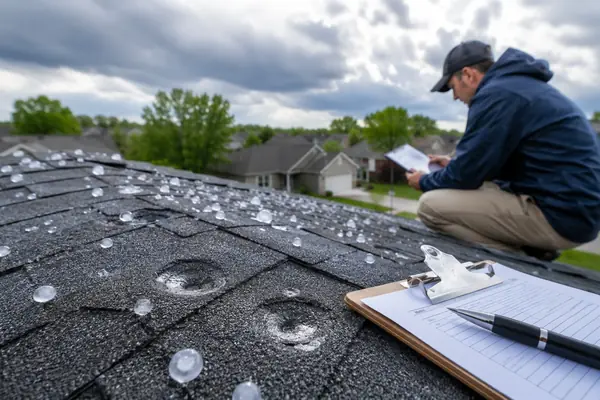
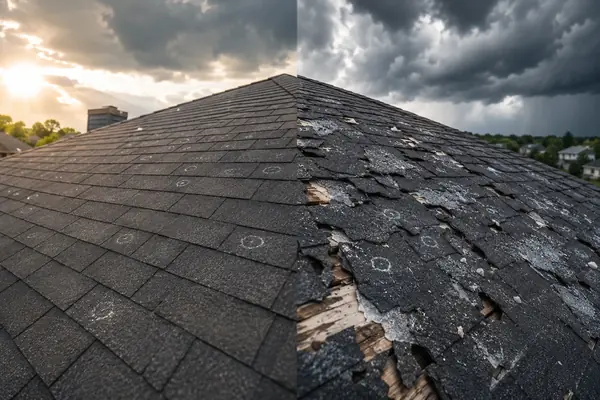
Hail damage is not always obvious from ground level. Shingles may remain in place while their protective granules are fractured or displaced. Metal components may show dents, punctures, loosened seams, or damaged coatings. Gutters, vents, flashing, skylights, window screens, fencing, siding, and outdoor equipment may also be affected.

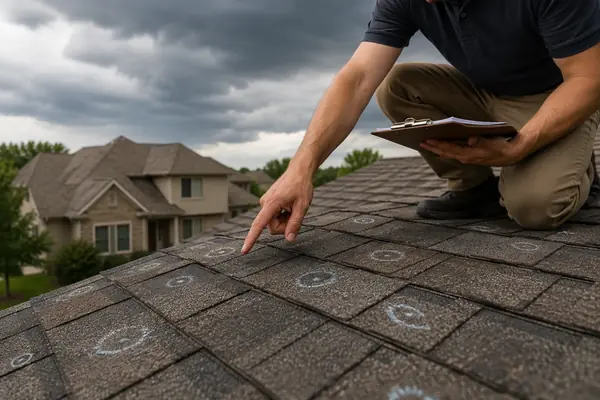
A hail claim inspection should consider the property as a complete system rather than focusing only on a few roof test squares.

Common hail-related claim items include:

  • Asphalt shingle bruising and granule loss
  • Metal roof dents or coating damage
  • Broken clay or concrete tiles
  • Damaged ridge caps and roof vents
  • Dented gutters, downspouts, and flashing
  • Cracked skylights
  • Damaged window screens and glazing
  • Exterior paint and siding damage
  • Fence and gate damage
  • HVAC condenser fin damage
  • Commercial rooftop equipment damage

Photographs should show both close-up impact marks and the location of each affected component. Our guide explains how to document hail damage for an insurance claim before repairs or material removal begin. Property owners who need a more detailed explanation of roof inspections, carrier estimates, and claim documentation can review our guide to a hail damage roof insurance claim. A low hail estimate may result from missed elevations, incomplete roof measurements, limited test squares, disputed repairability, or failure to account for matching and access requirements.

Tornado and High-Wind Claims

Tornadoes and severe straight-line winds can produce overlapping damage patterns. Shingles may be creased, lifted, torn, or removed. Flashing can separate from walls. Trees and debris may strike roofs, windows, siding, fences, and outbuildings.

Wind can also create openings that allow rain to enter the building. That means the resulting claim may include both exterior storm damage and interior water damage.

For Gainesville homes and businesses, a wind claim may involve:

  • Missing or displaced roofing materials
  • Detached gutters or fascia
  • Broken windows and doors
  • Damaged siding and masonry
  • Fallen trees and impact damage
  • Water intrusion through storm-created openings
  • Ceiling and drywall staining
  • Wet insulation
  • Flooring damage
  • Electrical or mechanical damage
  • Detached garage, barn, fence, or sign damage

Temporary repairs should be photographed and documented before damaged materials are removed whenever it is safe to do so.

Water and Flood-Related Damage

Heavy rain does not always produce a covered property claim. Coverage may depend on where the water came from, how it entered, whether a covered opening was created, and whether the policy includes applicable endorsements.

For example, wind-driven rain entering through storm-damaged roofing may be evaluated differently from rising surface water. Pipe leaks, appliance failures, drain backups, roof leaks, groundwater, and floodwater may all be treated differently under an insurance policy.

That distinction makes documentation critical.

The City of Gainesville maintains floodplain resources for residents, including information about floodways, flood depth, historical flooding, and areas that can flood beyond formally mapped hazard zones.

Winter Freeze Claims

North Texas freezes can cause plumbing failures, damaged water lines, sprinkler system breaks, and extended interior water releases. These losses may affect walls, ceilings, flooring, cabinets, insulation, electrical components, inventory, and tenant spaces.

Disputes commonly arise over:

  • The source and timing of the leak
  • Access required to reach damaged plumbing
  • Drying and remediation costs
  • Cabinet and flooring continuity
  • Whether materials can be repaired or require replacement
  • Mold or microbial growth exclusions
  • Additional living expenses
  • Business interruption expenses

Common Insurance Claims in Gainesville

Common Insurance Claims in Gainesville

Hail Damage Claims

Hail claims are especially common in Gainesville and throughout Cooke County. The damage may extend well beyond the roof, so the claim should include all affected building components.

TX Public Adjusting can review the carrier’s hail estimate, inspect the property, compare observed damage with the reported storm date, and identify potentially omitted items.

Water Damage Claims

Water losses can become expensive because moisture travels behind walls and beneath finished surfaces. A visible ceiling stain may be only one part of the damage. A water damage public adjuster can review the affected materials, drying records, carrier estimate, and disputed repair scope. 

A thorough water claim review may include:

  • Moisture mapping
  • Drywall and insulation damage
  • Flooring and underlayment
  • Cabinets and built-ins
  • Paint and texture continuity
  • Plumbing access
  • Drying equipment
  • Contents manipulation
  • Mold-related limitations
  • Temporary housing or business relocation

Fire and Smoke Damage Claims

A fire damage insurance claim may involve direct flame damage, smoke residue, soot, heat, firefighting water, demolition, debris removal, odor treatment, personal property, code requirements, and temporary relocation. 

Smoke can travel into rooms that were not directly touched by flames. HVAC systems may distribute residue throughout a home or commercial building. A claim limited only to the visibly burned area may miss significant cleaning, sealing, testing, and replacement work. For larger losses, a fire insurance adjuster can help organize the building, contents, cleanup, temporary expense, and repair portions of the claim. 

Storm Damage Claims

Storm claims may combine wind, hail, rain, fallen debris, power interruption, and structural movement. Proper documentation should separate the causes while presenting the full resulting scope.

Commercial storm claims may also include damaged signage, awnings, equipment, inventory, tenant improvements, and lost operating income where coverage applies.

Roof Damage Claims

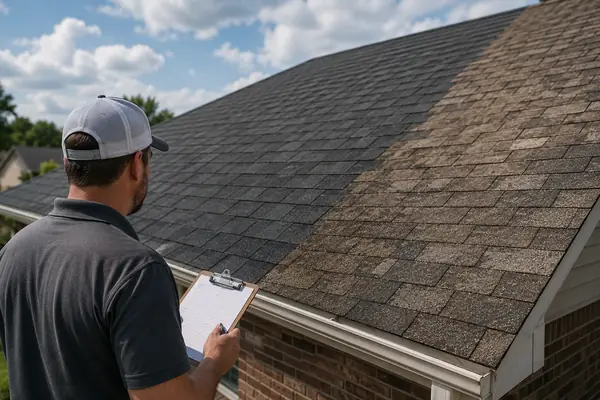
A public adjuster for a roof claim may become helpful when the insurer attributes visible damage to age, deterioration, installation defects, mechanical damage, or prior conditions. 

A roof claim review may consider:

  • Date-of-loss evidence
  • Shingle condition and repairability
  • Wind creasing or uplift
  • Hail impact indicators
  • Flashing and penetration damage
  • Decking conditions
  • Underlayment and accessory components
  • Matching concerns
  • Code-related requirements
  • Interior damage connected to the roof opening

Commercial buildings with low-slope systems may require different documentation than residential roofs, particularly when the loss involves a built-up roof repair, rooftop equipment, insulation, or membrane continuity. 

Commercial Property Claims

Gainesville has a mix of retail, industrial, agricultural, hospitality, office, and service properties. A commercial public adjuster can help document losses involving the building, tenant improvements, specialized equipment, inventory, lease obligations, and business operations. 

TX Public Adjusting assists with commercial claims involving:

  • Retail buildings
  • Restaurants
  • Warehouses
  • Offices
  • Multifamily properties
  • Churches
  • Hotels and hospitality properties
  • Manufacturing facilities
  • Agricultural and support buildings
  • Self-storage facilities

Local Property Concerns Across Gainesville

Gainesville is the Cooke County seat and has long served as a regional commercial center. Its history is tied to the Chisholm and Shawnee cattle trails, which helped establish the city as an important North Texas trading hub.

That history is visible in and around downtown Gainesville, where older construction may involve materials and repair considerations that differ from newer subdivisions and commercial developments.

Properties near the Cooke County Courthouse, historic downtown, and the Morton Museum of Cooke County may include older roofing systems, plaster, wood windows, masonry, specialty trim, or finishes that require careful estimating. The Morton Museum highlights Gainesville’s historic homes, the Cooke County Courthouse, Camp Howze, and other elements of local history.

Near Leonard Park and the Frank Buck Zoo, residential and municipal properties may face tree impact, wind damage, drainage issues, and hail exposure. Commercial properties along Interstate 35 and Highway 82 may have large low-slope roofs, rooftop equipment, signage, metal panels, and inventory that require a detailed post-storm inspection.

Gainesville claim reviews may involve properties in or near:

  • Historic Downtown Gainesville
  • South Gainesville
  • East Gainesville
  • West Gainesville
  • The California Street corridor
  • The Highway 82 corridor
  • The Interstate 35 commercial corridor
  • Areas surrounding North Central Texas College
  • Residential areas near Leonard Park
  • Rural properties outside the city limits

Neighborhood names in Gainesville are not always used as formally as they are in larger Texas cities. Many residents identify their location by a road, school, landmark, subdivision, or direction from downtown. Our inspection and documentation process is based on the property itself, not whether it falls within a formally named neighborhood.

Why Gainesville Insurance Claims Become Underpaid

An underpaid claim does not always begin with an obvious denial. It may start with an estimate that appears detailed but leaves out important work. Avoiding common property insurance claim mistakes can make it easier to preserve evidence, respond to carrier requests, and support disputed claim items. 

Missed Damage

A carrier inspection may be brief or limited to easily visible areas. Damage to roof accessories, siding, interior finishes, fencing, detached structures, or mechanical equipment may not appear in the initial estimate.

Scope Omissions

The insurer may approve replacement of one damaged component but exclude the work required to complete that replacement properly.

Common omissions include:

  • Tear-off and disposal
  • Underlayment
  • Flashing
  • Drip edge
  • Starter course
  • Ridge materials
  • Interior protection
  • Contents manipulation
  • Detachment and resetting
  • Painting adjacent surfaces
  • Contractor overhead and profit
  • Permit or code-related costs

Depreciation Issues

Many policies initially pay actual cash value and hold back recoverable depreciation until repairs are completed and documented. Problems can arise when depreciation is calculated incorrectly, applied to non-depreciable items, or withheld without a clear explanation.

Low Repair Estimates

Insurance estimates may use labor rates, material pricing, assumptions, or repair methods that do not reflect the actual work required at the Gainesville property.

A contractor’s proposal and an insurer’s estimate may also differ because they were written for different purposes. The issue is not simply which number is higher. The issue is whether the proposed scope accurately reflects the covered damage and reasonable restoration work.

Documentation Problems

Photos without labels, missing invoices, incomplete inventories, unclear repair records, and inconsistent dates can weaken an otherwise valid claim.

A well-prepared claim file connects the damage, cause of loss, policy language, measurements, photographs, estimates, and supporting records in a clear sequence.

Our Public Adjusting Process

1. Claim Review

We begin by reviewing the available policy, carrier correspondence, estimates, payment records, photographs, contractor proposals, and claim history.

The purpose is to understand what has been claimed, what has been accepted, what has been denied, and where the current scope may be incomplete.

2. Property Inspection

We inspect the affected Gainesville property and document visible damage. Depending on the loss, this may include the roof, exterior elevations, interior rooms, detached structures, equipment, contents, and commercial areas.

When specialized testing or professional input is needed, we discuss the appropriate next steps with the property owner.

3. Damage Documentation

We organize photographs, measurements, inventories, estimates, invoices, and related records into a supportable claim presentation.

For complex losses, the documentation may address:

  • Building damage
  • Contents
  • Debris removal
  • Temporary repairs
  • Additional living expenses
  • Extra expenses
  • Business interruption
  • Code upgrades
  • Professional fees
  • Applicable limits and endorsements

4. Claim Presentation and Negotiation

TX Public Adjusting communicates with the insurance company regarding the documented scope and value of the loss.

This can include responding to questions, attending inspections, submitting estimates, identifying omissions, and discussing disputed claim items.

5. Settlement and Claim Resolution

When an agreement is reached, we review the carrier’s revised estimate and payment documents with the policyholder.

The final result depends on the facts of the loss, policy terms, available limits, exclusions, deductibles, depreciation, and the insurer’s coverage decisions.

Mid-Claim Help for Gainesville Property Owners

You do not necessarily have to hire a public adjuster before filing the claim. Property owners who have already received an estimate, payment, or denial can review our explanation of when it is too late to hire a public adjuster

TX Public Adjusting may be able to assist after:

  • The first insurance inspection
  • An initial payment
  • A partial denial
  • A full denial
  • A contractor identifies additional damage
  • The carrier rejects a supplement
  • Communication has stalled
  • A second inspection is requested
  • The claim has been open for months

The earlier the claim is reviewed, the more opportunity there may be to preserve evidence and organize documentation. Still, an existing or previously evaluated claim may warrant professional review.

Receive a free claim review before accepting that the carrier’s first estimate is the final answer. TX Public Adjusting charges no upfront fees.

Why Choose TX Public Adjusting

Licensed Texas Representation

TX Public Adjusting is operated by Rise Public Adjusting LLC, Texas public adjuster License #3356839.

Licensing matters because public adjusters handle insurance claim documentation, policy issues, estimates, and settlement discussions on behalf of policyholders.

We Represent Policyholders

The insurance company’s adjuster works for the insurer. TX Public Adjusting works for the property owner.

That independent role is central to the service. Our responsibility is to document and present the policyholder’s claim—not to protect the carrier’s financial position.

Residential and Commercial Experience

Our team has experience reviewing thousands of residential and commercial claim files involving hail, wind, water, fire, smoke, roof, freeze, and business-related losses.

The company’s own search strategy identifies city pages, hail claims, roof claims, water damage, fire damage, and commercial claims as its core high-intent service areas rather than unrelated informational topics.

Texas-Focused Claim Knowledge

Texas property claims require familiarity with severe weather patterns, roofing systems, regional construction, carrier estimates, depreciation, and local contractor practices.

Our work is focused on Texas property owners and Texas claims.

No Upfront Fees

TX Public Adjusting offers a free initial claim review and does not charge upfront fees. Any fee arrangement is explained in writing before representation begins.

Detailed Claim Preparation

A strong claim requires more than uploading a few photographs. We evaluate the relationship between the cause of loss, damaged components, repair scope, available coverage, and supporting documentation.

Areas We Serve Near Gainesville

Areas We Serve Near Gainesville

TX Public Adjusting serves property owners throughout Gainesville and surrounding Cooke County communities, including:

  • Lindsay
  • Lake Kiowa
  • Callisburg
  • Valley View
  • Muenster
  • Oak Ridge
  • Myra
  • Era
  • Woodbine
  • Whitesboro
  • Sanger
  • Pilot Point

Cooke County communities include Gainesville, Callisburg, Lindsay, Muenster, Valley View, Oak Ridge, Lake Kiowa, Myra, Era, Woodbine, and several rural areas.

We also assist owners of rural homes, agricultural buildings, rental properties, warehouses, retail spaces, and commercial facilities outside the Gainesville city limits.

Frequently Asked Questions

What does a public adjuster in Gainesville do?

A Gainesville public adjuster represents the policyholder during a property insurance claim. The work may include reviewing the policy, inspecting damage, preparing an estimate, organizing records, attending carrier inspections, identifying omitted items, and negotiating the documented value of the covered loss.

A public adjuster does not work for the insurance company and does not decide coverage. The carrier still makes coverage decisions under the policy.

How much does a public adjuster cost in Texas?

Public adjusters commonly charge a percentage of the claim recovery or an agreed portion of the additional recovery obtained through their work. The exact fee depends on the contract, claim status, loss size, and applicable Texas requirements.

TX Public Adjusting provides a free claim review and does not charge upfront fees. The fee structure is disclosed before the owner signs a representation agreement.

Can you help if my Gainesville hail claim was underpaid?

Yes. We can review the insurance estimate, photographs, inspection findings, payment records, and contractor documentation to determine whether potentially covered damage or necessary repair items were omitted.

Hail claims often require evaluation of the roof, gutters, vents, flashing, siding, windows, fencing, HVAC equipment, and interior leaks—not just the most visible roof impacts. If the carrier rejected the damage or attributed it to another cause, review what to do if your hail claim was denied before accepting the decision as final. 

What if the insurance company says my roof damage is caused by age?

Age and storm damage can exist on the same roof. The question is whether a covered event caused direct physical damage during the policy period.

We review the condition of the roof, reported date of loss, storm indicators, damage pattern, repairability, carrier photographs, and relevant documentation. We then present the evidence supporting the claim while recognizing that the insurer retains authority over its coverage determination.

Can a public adjuster help with a denied claim?

A denied claim can be reviewed to determine why the carrier denied coverage and whether additional facts or documentation may support reconsideration.

Some denials involve exclusions, late notice, causation disputes, lack of documentation, wear and tear, prior damage, or maintenance allegations. Not every denial can be reversed, but the written denial and policy should be reviewed before the owner assumes no further options exist.

Is flood damage covered by homeowners insurance?

Standard homeowners policies generally treat rising surface water differently from water entering through a storm-created opening or a failed plumbing system. Flood coverage is usually provided through a separate flood policy.

Because Gainesville has mapped and unmapped flood concerns, property owners should identify the water source before assuming the damage is or is not covered. The city provides floodplain and historical flooding information to residents.

Can you assist with a commercial property claim in Gainesville?

Yes. TX Public Adjusting assists Gainesville business owners, landlords, investors, property managers, churches, retailers, warehouse operators, and other commercial policyholders.

Commercial claims may include building damage, tenant improvements, equipment, inventory, extra expenses, loss of income, debris removal, and code-related work, depending on the policy.

Should I hire a public adjuster before contacting a contractor?

You may contact a contractor for emergency protection and repair guidance, but a contractor and a public adjuster perform different roles.

A contractor estimates and completes construction work. A licensed public adjuster represents the policyholder in preparing and negotiating the insurance claim. Keeping those roles clear can help avoid confusion over scope, coverage, and claim communication.

How long does a Gainesville property insurance claim take?

The timeline varies based on the size of the loss, carrier response times, coverage questions, inspection scheduling, documentation, supplements, and whether the scope is disputed. Texas property owners can also review general information about how long an insurance adjuster has to contact you after a claim is reported. 

A straightforward roof claim may move faster than a commercial fire or widespread water loss. Our goal is to keep the claim organized, respond to requests, and move the process forward without sacrificing necessary documentation.

Is it too late to hire a public adjuster after receiving payment?

Not always. An initial payment may be based on the carrier’s first estimate rather than the complete cost of repair.

We can review the payment, estimate, depreciation, deadlines, repair status, prior communications, and policy provisions. The available options depend on the specific claim and how much time has passed.

Get a Free Gainesville Insurance Claim Review

Property damage is stressful enough without trying to determine whether every damaged component, repair step, and policy benefit has been included in the insurance estimate.

TX Public Adjusting helps Gainesville homeowners, commercial property owners, landlords, and investors prepare and present property damage claims.

Our team can review claims involving:

  • Hail damage
  • Wind and tornado damage
  • Roof damage
  • Water damage
  • Fire and smoke damage
  • Winter freeze losses
  • Commercial property damage
  • Denied claims
  • Underpaid claims
  • Supplemental claims

TX Public Adjusting is operated by Rise Public Adjusting LLC, Texas License #3356839.

For a broader overview of inspections, documentation, carrier communication, and claim resolution, read our property loss recovery guide

Contact TX Public Adjusting for a free claim review. There are no upfront fees, and our public adjusters represent policyholders—not insurance companies.

Learn More About Public Adjusting Services