

Property damage in Levelland can happen quickly. A spring thunderstorm can drive large hail into a roof, straight-line winds can tear at siding and metal panels, and heavy rainfall can enter through openings that were not visible before the storm. When the resulting insurance estimate does not reflect the full loss, a public adjuster in Levelland can help the policyholder document the damage and present a more complete claim.
TX Public Adjusting is a licensed Texas public adjuster representing residential and commercial property owners—not insurance companies. Our team reviews policies, inspects damaged property, prepares supporting documentation, identifies missing claim items, and communicates with the carrier regarding the scope and value of the loss.
TX Public Adjusting is operated by Rise Public Adjusting LLC, Texas License #3356839. We have experience reviewing thousands of property claims involving roofs, interiors, contents, commercial buildings, water intrusion, fire damage, hail, and severe storms.
Concerned that your Levelland insurance claim is delayed, denied, or underpaid? Request a free claim review. There are no upfront fees for the initial review.
Property Claim Help for Levelland and Hockley County
Levelland is the county seat of Hockley County and the county’s largest community. It sits west of Lubbock along U.S. Highway 385 and State Highway 114, surrounded by the open terrain of the South Plains. South Plains College is one of the city’s best-known institutions, while the historic Hockley County Courthouse, Wallace Theater, downtown walking-tour district, Brashear Lake Park, and Lobo Lake Park are familiar local landmarks. Levelland is part of our broader network of Texas service areas for residential and commercial property claims.
That combination of homes, agricultural properties, small businesses, educational facilities, churches, warehouses, and light-industrial buildings creates a wide range of insurance exposures.
A storm may affect:
- Asphalt-shingle and metal roofing systems
- Exterior siding, stucco, trim, and paint
- Windows, skylights, doors, and overhead doors
- HVAC condensers and rooftop mechanical units
- Fencing, signs, carports, sheds, and detached structures
- Commercial inventories, equipment, and interior finishes
- Ceiling insulation, drywall, flooring, and electrical components
- Agricultural outbuildings and storage facilities
Levelland property owners often discover that the visible damage is only part of the loss. A few missing shingles may indicate broader wind uplift. A ceiling stain may trace back to damaged flashing, a punctured roof membrane, or a compromised rooftop unit. Hail impacts on a metal roof may affect seams, fasteners, coatings, vents, and drainage components in addition to the panels themselves.
A thorough claim review looks at how the building functions as a complete system—not simply the most obvious damaged item.
Why Property Owners Hire a Public Adjuster in Levelland
The insurance carrier assigns an adjuster to investigate the claim for the insurance company. A public adjuster serves a different role: representing the policyholder’s interests during the property-claim process. Property owners who want a deeper explanation can review what a public adjuster does and the differences between a public adjuster vs. independent adjuster.
Property owners contact TX Public Adjusting when they need help with situations such as:
- The carrier’s estimate appears too low
- Important roof or exterior items were omitted
- Interior water damage was treated as cosmetic
- The insurer disputes the cause or date of loss
- The claim has stalled without a clear explanation
- Depreciation was applied incorrectly or misunderstood
- Repairs reveal additional concealed damage
- A commercial estimate does not include all affected areas
- The carrier requests extensive documentation
- The claim was denied and the owner wants an independent review
Hiring a public insurance adjuster in Levelland does not guarantee a particular settlement. It gives the policyholder an experienced representative who can evaluate the policy, organize the evidence, prepare a detailed scope, and communicate the claim in a professional manner.
For many homeowners and business owners, that representation also saves time. Instead of trying to coordinate inspections, estimates, photographs, inventories, contractor documents, and carrier correspondence alone, the owner has a licensed claims professional managing the presentation of the loss.
Levelland Storm Risks and Property-Damage Patterns
Large Hail
Hail is one of the most serious property risks across the South Plains. Levelland experienced a particularly damaging storm in June 2026. Local reporting described large hail and strong winds west of Lubbock, with shattered windshields, roof damage, and torn-up yards. National Weather Service event data recorded hail measurements of 1.75 inches in Levelland and 2.75 inches southwest of the city during that storm.
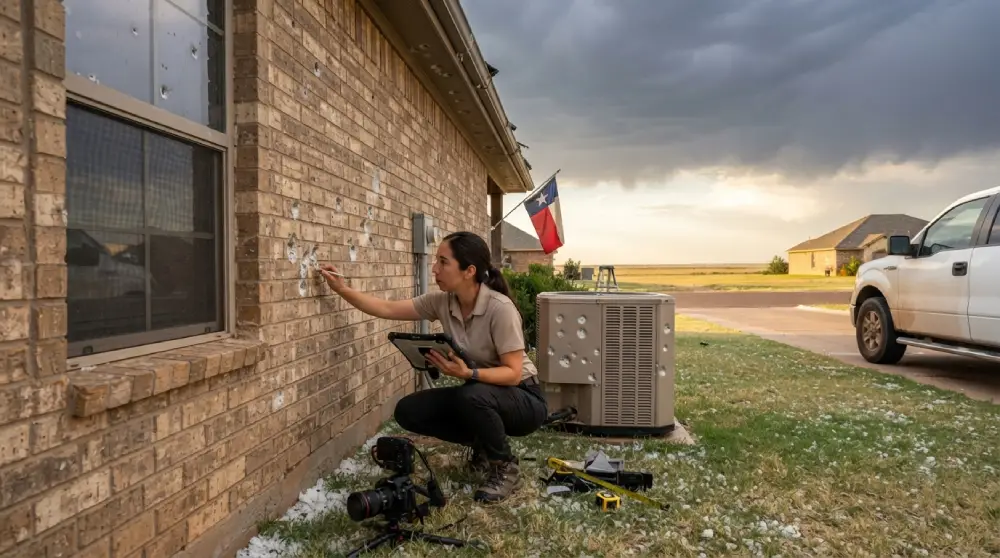
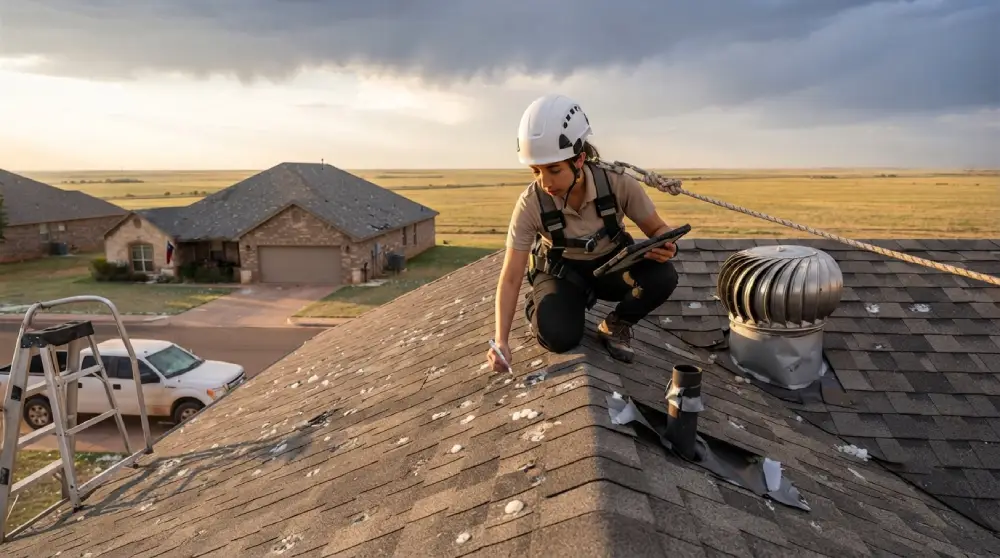
Hail damage is not always easy to identify from the ground. On asphalt roofs, it may appear as bruising, fractured mats, exposed fiberglass, or displaced granules. On metal roofs, impacts may dent panels and damage coatings, seams, vents, flashing, and rooftop equipment. Our hail damage insurance claim in Texas guide explains how roof impacts, exterior damage, and supporting documentation may affect a claim.
Common hail-related claim items include:
- Roofing materials
- Gutters and downspouts
- Vents, flashing, and pipe boots
- Skylights and windows
- HVAC condenser fins
- Exterior paint and siding
- Fences and detached structures
- Commercial roof membranes
- Signs and rooftop equipment
A carrier inspection may focus on one roof slope or a limited set of test areas. A public adjuster can document the entire property and determine whether associated components were left out of the estimate.
Straight-Line Wind and Severe Thunderstorms
Open terrain can allow thunderstorm winds to strike buildings with substantial force. Wind damage may include lifted shingles, loosened metal panels, damaged edge flashing, broken fencing, displaced rooftop equipment, fallen limbs, and water entry through newly created openings.
Wind claims become difficult when damage is subtle. Shingles can reseal after lifting, leaving creases, broken seals, or weakened fasteners that are not obvious from the ground. On commercial roofs, membrane displacement or edge damage may appear isolated even though a wider section has lost secure attachment.
The June 2026 storm around Levelland brought widespread wind damage in addition to large hail, illustrating how a single event can affect roofing, vehicles, landscaping, outbuildings, and multiple exterior systems at once. Property owners facing widespread wind and rain damage may also find our guide to property damage after a hurricane or major storm useful when documenting multiple affected building systems.
Tornado and Rotational-Wind Damage
Hockley County is also exposed to tornadoes and landspouts. Severe storms can produce highly localized damage, meaning one property may have extensive structural loss while a nearby building has only minor exterior impacts.
Tornado-related claims may involve:
- Partial or complete roof removal
- Structural movement
- Broken windows and doors
- Wall and framing damage
- Damage from wind-driven debris
- Detached structures and fencing
- Utility and electrical damage
- Rain entering after the building envelope is opened
When a storm produces several causes of damage—wind, hail, debris impact, and rain—it is especially important to document the sequence of events and connect each repair item to the covered loss.
Heavy Rain and Interior Water Intrusion
Levelland is not known for the coastal flooding conditions seen around Houston or Corpus Christi, but intense thunderstorms can still overwhelm drainage systems, create localized ponding, and drive rain through damaged roofs, windows, doors, and wall assemblies.
Water can travel far from the original entry point. Moisture entering near a roof penetration may move through insulation or framing before appearing as a ceiling stain in another room. Commercial buildings with low-slope roofs may experience water entry around drains, seams, parapets, rooftop units, or membrane punctures. Our guide to dealing with an insurance adjuster after water damage covers documentation and claim issues that commonly arise after water enters a building.
Prompt documentation matters because moisture conditions change. Drying efforts, emergency repairs, and demolition may remove important evidence unless photographs, measurements, damaged materials, and invoices are preserved.
Freeze and Plumbing Losses
West Texas properties can also experience freezing temperatures. Frozen supply lines, exterior plumbing, fire-suppression systems, or unheated spaces may lead to sudden water releases.
A plumbing-loss estimate should address more than the broken pipe. Depending on the policy and facts, the claim may involve:
- Water extraction
- Drying and dehumidification
- Access to reach the damaged line
- Insulation and drywall
- Flooring and cabinetry
- Electrical evaluation
- Mold-prevention measures
- Temporary repairs
- Business interruption or loss of use
Common Insurance Claims in Levelland
Hail Damage Claims
Hail claims are among the most common reasons property owners seek insurance claim assistance in Levelland. Problems often arise when the carrier identifies minor damage but does not include all affected roof slopes, collateral items, code-related work, or associated exterior components.
Our review may examine the roof covering, vents, flashing, gutters, windows, siding, fencing, detached structures, HVAC units, and interior signs of water intrusion. See our hail damage insurance claim guide for more information about inspecting and documenting storm-related roof and exterior damage.
Roof Damage Claims
Roof claims may involve hail, wind, falling limbs, fire, or sudden water intrusion. The dispute is often not whether some damage occurred, but how much of the roof must be repaired and what related work is necessary. A public adjuster for a roof claim can compare the carrier’s scope with the damage and repair requirements documented at the property.
The claim scope may need to address:
- Tear-off and disposal
- Underlayment
- Flashing
- Valley materials
- Drip edge
- Ventilation
- Pipe penetrations
- Decking repairs
- Labor access and safety requirements
- Matching concerns
- Building-code requirements where applicable
Water Damage Claims
A water-loss claim can become underpaid when the estimate covers only visible staining or surface materials. A complete scope may require moisture mapping, demolition, drying, antimicrobial treatment, insulation replacement, cabinetry work, flooring repairs, contents handling, and reconstruction.
TX Public Adjusting reviews both the source of the loss and the full path of resulting damage. Property owners can also review our resource on water damage claim assistance before responding to a low or incomplete estimate.
Fire and Smoke Damage Claims
Fire losses can affect the structure, contents, electrical systems, HVAC equipment, insulation, roofing, and indoor air quality. Smoke and soot may travel into rooms that were not touched by flames. Our guide to fire damage insurance claims explains several of the structural, contents, cleaning, and documentation issues that may arise after a fire.
A fire claim may also require:
- Detailed contents inventories
- Cleaning-versus-replacement analysis
- Debris-removal documentation
- Temporary housing or loss-of-use records
- Business-income documentation
- Code and permit considerations
- Coordination with restoration professionals
- Review of smoke, soot, and odor contamination
Commercial Property Claims
Levelland’s commercial property claims may involve downtown businesses near the Hockley County Courthouse and Wallace Theater, buildings along the Highway 114 and Highway 385 corridors, college-area properties, agricultural operations, offices, churches, retail spaces, and industrial facilities.
Commercial claims may involve:
- Low-slope and metal roofing
- Business personal property
- Inventory
- Machinery and equipment
- Signs and awnings
- Tenant improvements
- Business-income loss
- Extra expenses
- Multiple buildings
- Specialized construction systems
Commercial losses often produce more documentation than residential claims. Policyholders may need to coordinate repair scopes, leases, accounting records, inventory reports, contractor estimates, and operational-loss information at the same time.
Why Levelland Insurance Claims Become Underpaid
Missed or Incomplete Damage
A short inspection can overlook portions of the roof, detached buildings, mechanical equipment, interior moisture, fencing, or damage on less visible elevations.
Scope Omissions
The carrier may acknowledge a damaged item but omit the labor and materials required to complete the repair. A roof estimate, for example, may include shingles while leaving out flashing, vents, disposal, access, protective measures, or interior repairs.
Low Repair Estimates
Material and labor assumptions may not reflect the actual work needed for the building. Commercial roofing, metal systems, specialty finishes, older construction, and limited local contractor availability can create significant differences between an initial carrier estimate and a detailed repair scope.
Depreciation Issues
Property owners may not understand what depreciation was withheld, whether it is recoverable, or what documentation is required to request payment of recoverable depreciation after repairs.
Cause-of-Loss Disputes
The insurer may attribute roof conditions to wear, maintenance, installation, age, or prior damage instead of the reported storm. These questions require careful inspection and documentation. A public adjuster does not determine coverage, but can present evidence supporting the policyholder’s position.
Poor Claim Documentation
Missing photographs, incomplete inventories, discarded materials, unclear invoices, and unorganized communication can weaken a legitimate claim. Good documentation creates a clear timeline and supports each requested repair item.
Our Public Adjusting Process
1. Claim and Policy Review
We begin by reviewing the reported loss, the insurance policy, carrier correspondence, estimates, payment documents, photographs, and any denial or reservation-of-rights letters.
The purpose is to identify what has already been accepted, what remains disputed, and what additional evidence may be needed.
2. Property Inspection
We inspect accessible areas of the property and document visible damage. Depending on the loss, this may include roofing, exterior elevations, interiors, detached structures, commercial areas, mechanical systems, and damaged contents.
3. Scope and Documentation
We organize photographs, measurements, inventories, contractor information, invoices, moisture records, and other supporting material. We then prepare or review a detailed scope of damage based on the conditions found.
4. Claim Presentation
TX Public Adjusting submits relevant documentation and communicates with the insurance company’s representatives. We address scope questions, missing items, and differences between the carrier estimate and the documented loss.
5. Negotiation and Resolution
We advocate for the policyholder throughout the adjustment process. The carrier retains authority to make coverage and payment decisions, but our role is to make sure the claim is clearly supported and that documented damage is not ignored. For a broader explanation of claim representation, see how public adjusters work.
Have an estimate that does not appear to cover the repairs? Contact TX Public Adjusting for a free Levelland claim review before accepting the scope as complete.
Why Choose TX Public Adjusting
Licensed Texas Representation
TX Public Adjusting is operated by Rise Public Adjusting LLC, Texas License #3356839.
We Represent Policyholders
Insurance-company adjusters work on behalf of the carrier. Public adjusters work for the insured property owner. Our responsibility is to document and present the policyholder’s claim.
Texas Property-Claim Experience
Our work focuses on Texas residential and commercial claims, including hail, wind, fire, water, roof, and major property losses.
Residential and Commercial Capability
We assist homeowners, landlords, business owners, property managers, churches, agricultural property owners, and commercial policyholders.
Detailed Claim Documentation
Strong claims require more than a few photographs. We help connect the damage, repair scope, policy provisions, and supporting records into a clear claim presentation.
Free Claim Review
Property owners can speak with our team about an existing or newly reported claim without paying an upfront review fee. Any public-adjusting fee and service terms are explained in the written agreement before representation begins.
Areas We Serve Near Levelland
TX Public Adjusting assists policyholders throughout Hockley County and surrounding West Texas communities, including:
- Sundown
- Smyer
- Ropesville
- Anton
- Whitharral
- Opdyke West
- Whiteface
- Wolfforth
- Brownfield
- Lubbock
- Littlefield
- Morton
View our complete list of Texas service areas for additional cities and communities served by TX Public Adjusting. We also assist owners of rural, agricultural, and commercial properties outside Levelland when the loss falls within our service capabilities.
Frequently Asked Questions
What does a public adjuster in Levelland do?
A public adjuster represents the policyholder during a property insurance claim. The work may include reviewing the policy and carrier estimate, inspecting damage, preparing documentation, identifying omitted items, and communicating with the insurance company.
The public adjuster does not work for the carrier and does not have authority to approve coverage. The role is to advocate for the insured and support the claim with evidence.
When should I hire a public adjuster after a Levelland storm?
A public adjuster can become involved early in the claim or after problems develop. Early involvement may help preserve evidence and organize the initial scope. Later involvement may be useful when the carrier estimate is low, the claim is delayed, or important damage was missed.
Do not allow deadlines to pass while deciding. Insurance policies contain duties and time requirements that vary by policy and claim. Our guide explains situations involving delayed or older claims and addresses when it is too late to hire a public adjuster.
Can a public adjuster help with an underpaid hail claim?
Yes. Hail claims frequently involve disputes over the number of damaged roof slopes, the extent of collateral damage, repair versus replacement, and omitted roofing components.
A Levelland public adjuster can inspect the property, compare the observed damage with the carrier estimate, and prepare documentation supporting additional covered work.
What if my insurance company says the roof damage is wear and tear?
The carrier may determine that some or all conditions are caused by age, deterioration, installation, maintenance, or another excluded cause. A public adjuster can review the damage, photographs, storm information, and estimate to determine whether there is evidence supporting a storm-related claim.
Coverage ultimately depends on the policy language and facts of the loss. A public adjuster cannot guarantee that the carrier will reverse its position.
Can you help after the insurance company has already paid?
Often, yes. An initial payment does not always mean every part of the claim has been resolved. Repairs may reveal concealed damage, or the first estimate may omit necessary items.
The policy, deadlines, settlement documents, and current claim status must be reviewed before determining what options remain.
Do you handle commercial claims in Levelland?
Yes. TX Public Adjusting assists with commercial roof, hail, wind, water, fire, inventory, equipment, and business-interruption claims.
Commercial claims often require coordination among owners, property managers, tenants, contractors, accountants, and insurance representatives. Organized documentation is especially important.
How much does a Levelland public adjuster charge?
Public adjusters commonly work under a contingency-fee agreement based on the insurance recovery they help obtain. The exact fee and terms depend on the claim and applicable Texas requirements.
TX Public Adjusting provides a free initial claim review and explains the agreement before services begin. There are no upfront fees for the initial review.
How long does the insurance claim process take?
There is no single timeline. The length of a claim depends on the severity of the loss, policy questions, inspection availability, documentation, carrier response times, contractor input, and whether the scope is disputed.
A simple loss may move relatively quickly. A major commercial, fire, water, or disputed roof claim can take longer because more evidence and negotiation are required. For additional information about early carrier response timelines, read how long an insurance adjuster has to contact you.
What should I do immediately after storm damage in Levelland?
Protect people first, then take reasonable steps to prevent additional damage when it is safe. Photograph the property before cleanup, save damaged materials when practical, keep emergency-repair invoices, and report the claim according to the policy.
Avoid permanent repairs before the damage has been adequately documented unless they are necessary for safety or to prevent further loss.
Is hiring a public adjuster the same as hiring an attorney?
No. A public adjuster handles property-claim preparation and adjustment on behalf of the policyholder. An attorney provides legal advice and represents clients in legal disputes.
Some claims may require legal counsel, particularly when litigation, policy interpretation, bad-faith allegations, or legal deadlines are involved. A public adjuster does not provide legal advice.
Get a Free Levelland Insurance Claim Review
A storm-damage claim should reflect the complete loss—not only the easiest damage to see during a brief inspection.
TX Public Adjusting helps Levelland homeowners and commercial property owners review hail, wind, roof, water, fire, and other property claims. We work for policyholders, not insurance companies.
Contact TX Public Adjusting today for a free Levelland property claim review.
- Licensed Texas Public Adjuster
- Rise Public Adjusting LLC
- Texas License #3356839
- Residential and Commercial Claims
- No upfront fee for the initial claim review