

Property damage in Henderson can create a complicated insurance claim long after the storm, fire, or plumbing failure is over. A roof may look intact from the ground while hail has weakened shingles, wind has lifted flashing, and rain has entered the attic. Interior water may travel behind walls. Commercial equipment, inventory, signage, and business income losses can be overlooked entirely.
When you need a public adjuster in Henderson, TX, TX Public Adjusting represents your interests—not the insurance company’s. We inspect the property, review the policy and carrier estimate, document covered damage, prepare a detailed claim scope, and negotiate for a fair resolution. Property owners who are unfamiliar with the process can also review our guide explaining what a public adjuster does.
TX Public Adjusting is operated by Rise Public Adjusting LLC, a licensed Texas public adjusting firm under Texas License #3356839. We assist Henderson homeowners, landlords, business owners, property managers, churches, and commercial property owners with residential and commercial insurance claims.
Need help understanding an offer, denial, or damage estimate? Request a free claim review from TX Public Adjusting. There are no upfront fees.
Why Property Owners Hire a Public Adjuster in Henderson
The insurance company sends an adjuster to inspect the loss, but that adjuster represents the carrier. A public adjuster works for the policyholder.
That distinction matters when the cause of damage is disputed, the inspection is rushed, the estimate leaves out necessary repairs, or the carrier treats related damage as separate maintenance problems.
Henderson is the county seat of Rusk County and sits in the Piney Woods of East Texas. Its housing and commercial property mix includes older buildings near historic downtown, homes around Lake Forest Park and Fair Park, properties along South Main Street, and businesses near the U.S. Highway 79 and U.S. Highway 259 corridors. Henderson also has numerous historic properties and markers, including the Howard-Dickinson House and other landmark homes.
Different buildings produce different claim challenges. An older downtown structure may have multiple roofing layers, outdated electrical systems, specialty masonry, or materials that are difficult to match. A newer home may have a modern roofing system but still sustain hidden wind or hail damage. A commercial property may involve roof membranes, HVAC units, signs, equipment, inventory, tenant improvements, and lost income.
A Henderson public adjuster can help when:
- The carrier’s estimate appears too low.
- Part of the claim was denied.
- The insurer says damage is cosmetic or caused by wear.
- Necessary repairs are missing from the scope.
- Water damage was limited to a small area despite broader moisture migration.
- Depreciation was applied incorrectly or not explained.
- You are overwhelmed by inspections, documentation, and carrier requests.
- A commercial claim includes inventory, equipment, or business interruption.
- Supplemental damage was discovered after repairs began.
- You want an independent review before accepting the settlement.
The purpose is not to create damage that does not exist. It is to identify, document, and value the covered damage that is actually present.
Henderson Property Risks and East Texas Storm Exposure
Henderson does not face the same direct coastal surge exposure as Galveston or Corpus Christi, but East Texas weather can still produce serious property losses.
Severe Thunderstorms and Straight-Line Wind
Strong thunderstorms can damage shingles, metal panels, gutters, fencing, trees, detached structures, windows, and exterior finishes. National Weather Service criteria classify a severe thunderstorm at the baseline level when it produces one-inch hail or winds of at least 58 mph. Those conditions can cause meaningful roof and exterior damage even when a property does not appear heavily damaged from the street.
Wind claims in Henderson often involve more than missing shingles. Common issues include:
- Lifted or creased shingles
- Broken adhesive seals
- Displaced flashing
- Damaged ridge caps
- Bent metal roofing
- Detached gutters and downspouts
- Fallen limbs
- Water entry around roof penetrations
- Damage to sheds, carports, fences, and signs
Tree cover throughout the Piney Woods adds another concern. Saturated soil and strong winds can bring down branches or entire trees, damaging roofs, vehicles, utility lines, and outbuildings. Although Henderson is inland, major Texas storm systems can still produce widespread wind and water losses. Our guide to property damage after a hurricane explains how roofs, interiors, utilities, equipment, and exterior structures can be affected during powerful storm events.
Hail Damage
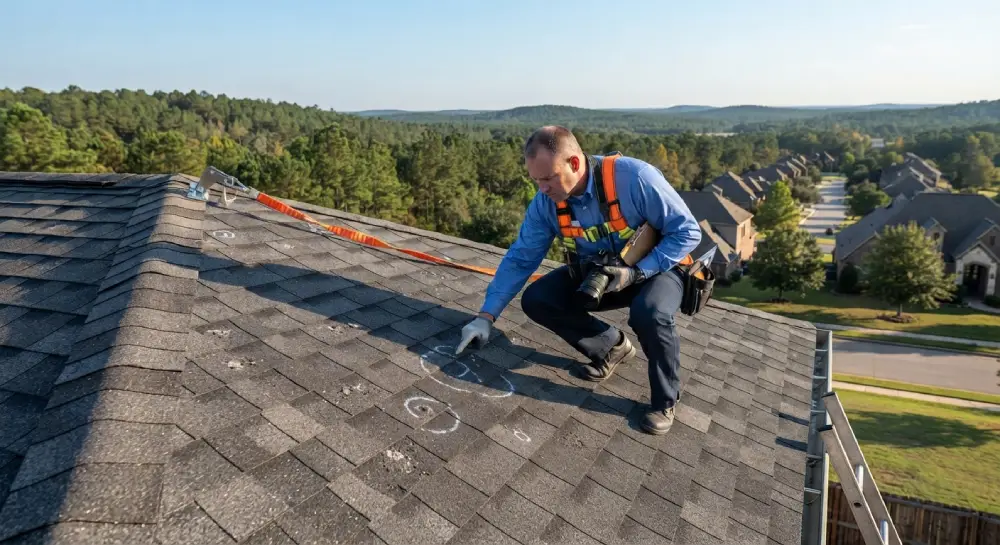
Hail can fracture shingles, loosen granules, dent metal surfaces, damage roof vents, crack skylights, and affect HVAC condenser fins. It may also strike several building components during the same storm.
A carrier estimate that includes only a few shingles may not address collateral damage to soft metals, gutters, window screens, siding, fencing, or mechanical equipment. On commercial buildings, hail can damage membrane roofs, metal roof systems, rooftop units, vents, edge metal, and signage.
The full claim should be evaluated as one property loss rather than a collection of isolated cosmetic issues.
Tornado and Rotational Wind Damage
Henderson has documented tornado history. An EF-2 tornado struck the city on May 25, 2015, uprooting trees and damaging buildings, including areas near downtown.
Tornado and rotational wind claims can involve:
- Partial or total roof failure
- Structural movement
- Broken windows and doors
- Rain intrusion
- Tree impact
- Detached exterior materials
- Damage to electrical service
- Debris impact
- Contents damage
- Temporary relocation or business interruption
Even properties outside the tornado’s main path can experience damaging inflow or outflow winds.
Heavy Rain and Water Intrusion
Heavy rainfall can expose weaknesses around roofs, windows, doors, flashing, vents, and wall systems. Once water enters, it may travel through insulation, ceiling cavities, flooring, wall assemblies, and electrical components.
A visible ceiling stain is often only the starting point. A proper water claim inspection may require moisture readings, evaluation of adjacent materials, review of photographs, and consideration of whether drying, removal, treatment, or replacement is appropriate.
Surface water and flooding are not automatically treated the same as wind-driven rain or water entering through storm-created openings. Coverage depends on the policy language and the documented cause of loss. A public adjuster can help organize those facts and present the claim accurately.
Freeze and Plumbing Losses
East Texas properties can also experience frozen plumbing, broken supply lines, failed water heaters, appliance leaks, roof drain problems, and HVAC condensation losses. Water can move quickly through pier-and-beam homes, slab properties, multi-story buildings, and commercial spaces.
Fast mitigation is important, but so is preserving evidence. Before materials are discarded, property owners should photograph the damage, save invoices, document emergency work, and retain damaged components when practical.
Common Insurance Claims in Henderson
Hail Damage Claims
Hail damage is one of the most frequently disputed property claim categories in Texas. Property owners can review our detailed guide to filing a hail damage insurance claim for more information about documentation, roof inspections, and common carrier disputes. Carriers may argue that dents are cosmetic, shingle conditions are caused by age, or the roof can be repaired in a limited area.
TX Public Adjusting evaluates roofing, exterior elevations, vents, flashing, gutters, mechanical equipment, fencing, and related components. We compare observed damage with the carrier’s scope and identify documented omissions.
Water Damage Claims
A water damage insurance claim may result from storms, broken plumbing, appliance failures, roof leaks, HVAC systems, or fire-suppression activity.
The dispute often centers on the extent of affected materials. Water may be visible in one room but extend into an adjoining wall, cabinet, floor assembly, or ceiling cavity. Drying equipment, demolition, antimicrobial treatment, contents handling, and reconstruction should be considered where supported by the loss.
Fire and Smoke Damage Claims
A fire damage insurance claim can involve direct burn damage, smoke migration, soot, odor, water used during suppression, damaged personal property, debris removal, electrical concerns, and temporary living expenses.
Smoke can move into rooms that were not directly touched by flames. Commercial fire claims may also include equipment, inventory, code upgrades, tenant improvements, and lost business income.
A fire insurance adjuster working for the policyholder can help create an organized inventory, document structural damage, evaluate cleaning versus replacement, and communicate the complete loss to the carrier.
Storm and Wind Damage Claims
Storm claims can affect roofing, siding, windows, doors, fences, detached buildings, trees, electrical service, and interiors. The primary issue is often proving how the weather event created the damage.
We document the physical condition, compare it with the reported date of loss, review the policy and carrier estimate, and prepare a supportable claim presentation.
Roof Damage Claims
Roof claims frequently become underpaid when the estimate focuses only on the most obvious area.
A complete roof claim may involve:
- Shingles or metal panels
- Underlayment
- Flashing
- Drip edge
- Ridge materials
- Pipe boots
- Roof vents
- Skylights
- Gutters
- Valleys
- Decking
- Interior water damage
- Code-required work when covered
Older homes near historic downtown Henderson may also involve material matching, multiple roof layers, unique construction details, or repairs that require more labor than a standard estimate reflects.
Commercial Property Claims
Commercial claims require attention to both the building and its operations. Properties with low-slope or built-up roofing systems may also require specialized evaluation after commercial roof damage, especially when moisture has entered beneath the visible roofing surface. Henderson businesses along the major highway corridors, downtown storefronts, churches, offices, restaurants, warehouses, multifamily properties, and light industrial facilities may face losses involving:
- Low-slope or metal roofing
- HVAC and mechanical systems
- Inventory
- Equipment
- Signs
- Interior finishes
- Tenant improvements
- Ordinance or law considerations
- Extra expenses
- Lost income
- Temporary relocation
- Damage to multiple structures
Business interruption claims require records, timelines, and a clear explanation of how the covered property damage affected operations.
Concerned that your Henderson claim does not include everything damaged? TX Public Adjusting offers a free claim review for residential and commercial losses.
Why Henderson Insurance Claims Become Underpaid
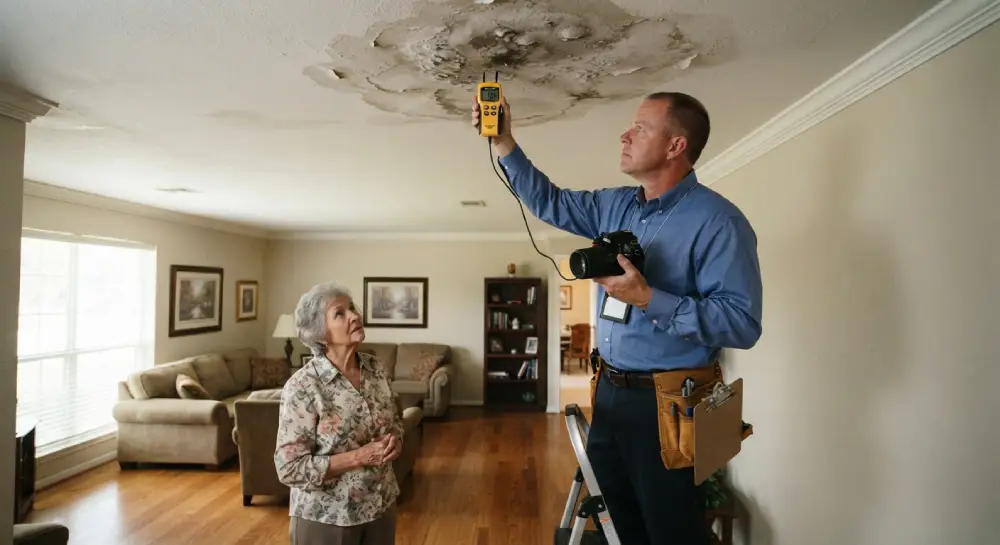
An underpaid claim is not always the result of one major mistake. More often, several smaller omissions combine to create a settlement that does not cover the documented scope of repair.
Missed or Hidden Damage
An inspection may focus on visible surfaces without evaluating attic spaces, roof accessories, adjacent rooms, insulation, moisture migration, mechanical systems, or detached structures.
Hidden damage needs evidence. That may include photographs, measurements, moisture readings, contractor findings, expert reports, invoices, or a detailed inspection narrative.
Scope Omissions
A carrier may acknowledge the claim but omit labor steps, access requirements, removal and disposal, protection of undamaged areas, matching considerations, or work needed to complete a proper repair.
For example, replacing a damaged roof section can require more than the replacement material itself. The estimate may need to consider removal, underlayment, flashing, ventilation, edge components, disposal, and related interior repairs.
Depreciation Issues
Depreciation can substantially reduce an initial payment. Property owners may not understand how it was calculated, whether it is recoverable, or what documentation is needed to request the withheld amount after repairs.
A public adjuster can review the estimate and policy to identify how depreciation was applied and explain the claim steps that may affect recoverable depreciation.
Low or Incomplete Estimates
Insurance estimating software is only as accurate as the information entered. The wrong measurements, quantities, labor assumptions, material selection, or line items can produce an incomplete estimate.
Local construction conditions also matter. Historic materials, steep roofs, high elevations, limited access, specialty finishes, and commercial systems may require additional labor or specialized contractors.
Documentation Problems
Claims can lose momentum when photographs are unclear, damage is discarded before documentation, receipts are missing, or communication with the carrier is scattered across emails and phone calls. Reviewing these common property insurance claim mistakes can help policyholders avoid preventable problems during the adjustment process.
We help create a more organized claim file, including:
- Date-of-loss information
- Photographs and videos
- Measurements
- Repair estimates
- Emergency mitigation invoices
- Personal property inventories
- Contractor reports
- Carrier correspondence
- Proof of expenses
- Business records where applicable
Our Public Adjusting Process
Step 1: Claim Review
We begin by reviewing the known facts, the carrier’s estimate, claim correspondence, payment information, and relevant policy provisions.
The initial review helps determine where the claim may need further investigation. It also helps identify deadlines, post-loss duties, and documentation that may still be needed.
Step 2: Property Inspection
We inspect the affected property and document visible damage. Depending on the loss, the inspection may include roofing, exterior elevations, interior rooms, contents, equipment, detached structures, and commercial systems.
When another qualified professional is needed, such as an engineer, hygienist, restoration specialist, roofer, or accountant, that need can be identified during the claim process.
Step 3: Damage Documentation and Scope Preparation
We organize photographs, measurements, estimates, reports, inventories, invoices, and supporting records. Our goal is to present the complete documented loss in a format the carrier can evaluate.
For commercial claims, this may include separate documentation for the building, business personal property, equipment, extra expenses, and business income.
Step 4: Claim Presentation and Negotiation
TX Public Adjusting communicates with the insurance company regarding the documented scope and valuation. We address estimate differences, omitted line items, supplemental damage, and supporting evidence.
The insurance company retains the right to investigate and make its coverage determination. Our role is to advocate for the policyholder and present a clear, well-supported claim.
Step 5: Settlement Review
We review revised estimates, coverage letters, payment calculations, and depreciation details with the policyholder. We also help identify unresolved items or documentation that may be needed to complete the claim.
Why Choose TX Public Adjusting
Licensed Texas Representation
TX Public Adjusting is operated by Rise Public Adjusting LLC, Texas License #3356839.
Licensing matters. Property owners should verify that the person representing them is authorized to provide public adjusting services in Texas.
We Represent Policyholders
Public adjusters work for insured property owners—not insurance companies. Our responsibility is to evaluate the loss from the policyholder’s perspective and support the claim with appropriate documentation.
Residential and Commercial Experience
Our experience includes residential and commercial property losses involving roofs, water, fire, smoke, wind, hail, contents, equipment, inventory, and business operations.
Our team has reviewed thousands of property claims and understands that no two losses are identical. A residential roof claim requires a different approach from a downtown commercial fire or a multi-building storm loss.
Texas-Focused Claim Knowledge
Texas claims involve severe weather, changing construction costs, diverse roof systems, large geographic service areas, and policy language that may differ substantially between carriers.
We focus on Texas property claims and understand the practical issues that property owners face after hailstorms, wind events, fires, freezes, and water losses.
Independent Claim Evaluation
We do not work for the insurance carrier. We evaluate the property, estimate, documentation, and claim position independently.
That independence can be especially useful when the initial offer feels incomplete or the carrier’s explanation does not match the physical damage.
Free Claim Review and No Upfront Fees
TX Public Adjusting offers a free initial claim review. There are no upfront public adjusting fees. Compensation terms are explained in the written agreement before representation begins.
Henderson Neighborhoods and Property Areas We Serve
We assist property owners throughout Henderson and surrounding Rusk County, including properties in and around:
- Historic Downtown Henderson
- The Rusk County Courthouse area
- Lake Forest Park
- Fair Park
- South Main Street
- North Henderson
- U.S. Highway 79
- U.S. Highway 259
- West Main Street
- Jacksonville Drive
- Longview Drive
- Residential areas near Henderson High School
- Rural properties outside the city limits
Henderson’s landmarks and public spaces include its historic downtown, the Depot Museum, the Howard-Dickinson House, Fair Park, Lake Forest Park, and the Henderson Civic Center.
We also serve nearby East Texas communities such as:
- Kilgore
- Overton
- New London
- Mount Enterprise
- Tatum
- Joinerville
- Laneville
- Reklaw
- Price
- Turnertown
- Carthage
- Longview
- Jacksonville
Property owners outside Henderson can contact us to confirm service availability for their location and claim type.
Frequently Asked Questions
How does a public adjuster help with a Henderson insurance claim?
A public adjuster evaluates the loss on behalf of the policyholder. That may include inspecting the property, reviewing the insurance policy and carrier estimate, documenting damage, preparing a repair scope, organizing contents or commercial records, and negotiating claim differences.
For Henderson property owners, the process can be particularly useful after hail, wind, tornado, fire, water, or tree-impact losses where damage extends beyond what was included in the first estimate.
Is a public adjuster the same as the insurance company’s adjuster?
No. The insurance company’s adjuster represents the carrier during its investigation. A public adjuster is hired by the policyholder and represents the insured’s interests. Our comparison of a public adjuster vs. independent adjuster explains the different roles in greater detail.
Both may inspect the same property, but their responsibilities are different. TX Public Adjusting works for the residential or commercial property owner.
When should I hire a public adjuster in Henderson?
You may hire a public adjuster before the claim is filed, while it is being adjusted, after receiving a low estimate, or after discovering additional damage. The best timing depends on the condition of the claim and any policy or legal deadlines.
Getting help early can improve documentation, but an existing Henderson claim may still be reviewable. Read more about when it is too late to hire a public adjuster before assuming that your opportunity for assistance has passed.
Can you help if my roof claim was underpaid?
Yes. We can review the roof, carrier estimate, photographs, correspondence, and payment calculation to identify documented damage or repair components that may have been omitted.
Roof disputes commonly involve causation, repairability, matching, depreciation, code items, flashing, underlayment, ventilation, gutters, and interior water damage.
What if the insurance company says my roof damage is wear and tear?
Wear and deterioration exclusions are commonly raised in roof claims. The key issue is whether a covered event caused direct physical damage, even if the roof also shows age-related conditions.
A public adjuster documents storm-related indicators and organizes supporting evidence. The carrier ultimately makes its coverage decision, but the claim should be evaluated based on the actual conditions rather than assumptions made from the roof’s age alone.
Do you handle commercial claims in Henderson?
Yes. TX Public Adjusting assists with commercial building, business personal property, equipment, inventory, extra expense, and business income claims when those coverages apply.
Commercial documentation can be extensive. Property managers and business owners should preserve financial records, leases, invoices, repair estimates, photographs, sales information, and records showing how operations were affected.
Can a public adjuster overturn a denied claim?
A public adjuster cannot guarantee that a denial will be reversed. We can review the denial, policy, damage, supporting records, and carrier reasoning to determine whether additional documentation or clarification may be appropriate.
Some denials involve missing evidence, disputed causation, late reporting, exclusions, or conflicting inspection findings. The specific basis of the denial must be examined.
How much does a public adjuster cost in Texas?
Public adjusters generally charge a fee based on the claim recovery, subject to Texas law and the written representation agreement. The specific fee and scope of services should be disclosed before you sign.
TX Public Adjusting offers a free initial claim review and does not charge upfront public adjusting fees. You will have an opportunity to review the agreement and ask questions before representation begins.
How long does a Henderson property claim take?
The timeline depends on the type of damage, size of the loss, carrier response, inspections, documentation, policy issues, and whether experts are needed. Property owners waiting for an initial response may also want to review how long an insurance adjuster has to contact you after a claim is reported.
A straightforward residential roof claim may move differently from a commercial fire, disputed water loss, or tornado claim involving structural damage. We keep the file organized, respond to claim developments, and work to move the process forward.
What should I do immediately after property damage?
Protect people first and contact emergency services when needed. Then take reasonable steps to prevent additional damage, such as temporary roof covering, water extraction, securing broken openings, or shutting off a failed water line.
Photograph and video the property before cleanup whenever it is safe. Keep damaged items when practical, save receipts, record conversations, and avoid permanent repairs until the damage has been properly documented.
Get a Free Henderson Insurance Claim Review
A property claim can affect your home, business, rental income, inventory, and financial stability. You should not have to rely on an incomplete estimate or guess which damage belongs in the claim.
TX Public Adjusting helps Henderson property owners inspect, document, prepare, and negotiate property damage claims. We represent policyholders—not insurance companies.
Contact TX Public Adjusting for a free claim review.
- Licensed Texas public adjuster
- Rise Public Adjusting LLC
- Texas License #3356839
- Residential and commercial claims
- No upfront fees
- Henderson and Rusk County service