

Property damage in Andrews can happen quickly. A spring thunderstorm can send hail across a roof, a powerful West Texas wind can damage exterior materials, and a frozen pipe can release water into several rooms before the problem is discovered. When the resulting insurance claim is delayed, denied, or valued below the actual cost of repairs, a public adjuster in Andrews, TX can help the property owner prepare and present the claim.
TX Public Adjusting represents homeowners, business owners, landlords, and other policyholders—not insurance companies. Our team reviews the damage, studies the policy, documents covered losses, prepares a detailed claim scope, and communicates with the carrier throughout the adjustment process.
TX Public Adjusting is operated by Rise Public Adjusting LLC, Texas License #3356839. We assist with residential and commercial property damage claims throughout Andrews, Andrews County, and surrounding West Texas communities.
Licensed Texas Public Adjuster | Residential and Commercial Claims | Free Claim Review
Contact TX Public Adjusting for a free claim review. There are no upfront fees for the initial review.
Why Property Owners Hire a Public Adjuster in Andrews
Andrews is the county seat of Andrews County and sits at the intersection of major West Texas routes, including U.S. Highway 385, State Highway 115, and State Highway 176. The local economy has strong ties to petroleum, ranching, agriculture, construction, and supporting businesses. That means insurance claims in Andrews may involve everything from single-family homes and rental properties to offices, warehouses, workshops, retail buildings, and energy-related facilities.
An insurance company normally assigns an adjuster to investigate a reported loss. That adjuster may be courteous and experienced, but the carrier’s claim representative does not work as the policyholder’s advocate. A licensed public insurance adjuster works for the person or business that purchased the policy. Property owners who want a clearer explanation of what a public adjuster does can review our detailed Texas guide.
Property owners often hire a public adjuster in Andrews when:
- A carrier’s estimate does not include all visible or hidden damage.
- The insurance payment appears too low for local repair costs.
- Roof damage has been classified as cosmetic or maintenance-related.
- Wind-driven rain has affected ceilings, insulation, walls, or flooring.
- The carrier disputes the date, cause, or extent of the loss.
- A commercial claim includes business equipment, inventory, or operational interruption.
- The claim has become too time-consuming or technical to manage alone.
- An earlier claim decision needs to be reviewed for omissions.
The goal is not to create damage that is not present or demand benefits the policy does not provide. The goal is to identify covered damage accurately, support it with evidence, and present a complete claim under the policy.
Property-Damage Risks in Andrews, Texas
Andrews has a semiarid West Texas climate. Although the region is generally dry, its weather can still produce serious property losses. Local emergency-preparedness materials identify thunderstorms, hail, occasional ice, high winds, tornadoes, and flooding during heavy rainfall as hazards property owners should understand.
Hail and Severe Thunderstorms
Hail is one of the most significant claim concerns for Andrews homes and commercial buildings. A single storm may affect shingles, metal roofing, vents, flashing, skylights, air-conditioning equipment, windows, siding, fencing, and exterior finishes.
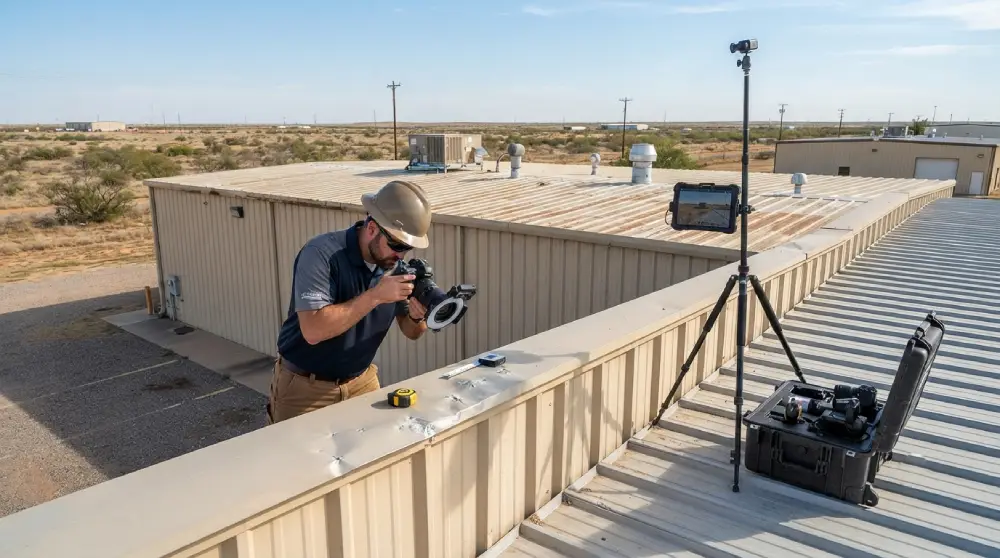
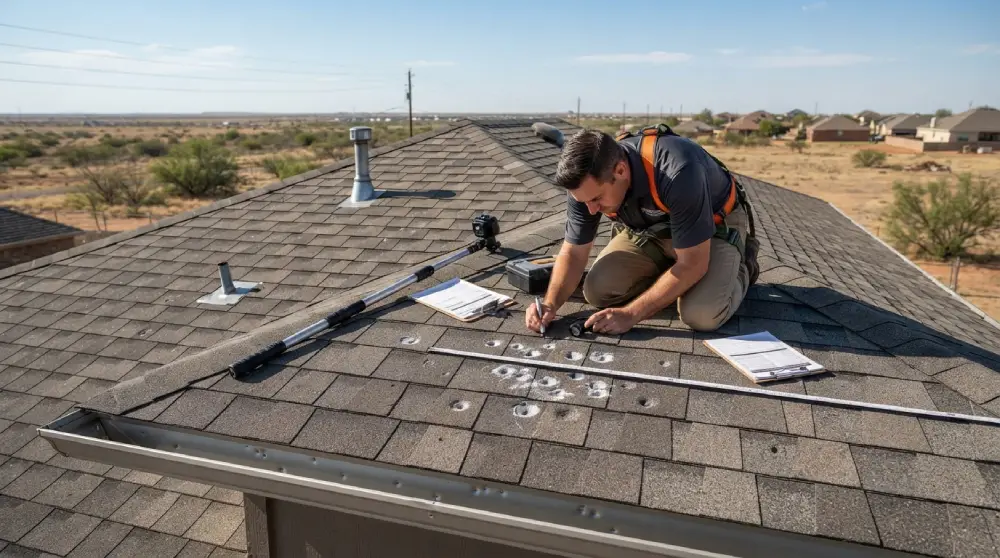
Hail damage is not always obvious from the ground. Asphalt shingles may show displaced granules, impact marks, exposed matting, or bruising that becomes more noticeable over time. Metal roofs may have dents at seams, panels, fasteners, vents, or drainage components. Flat commercial roofs may sustain punctures or compression damage to membranes and insulation.
Andrews County’s preparedness guide notes that hail can damage roofs and vehicles and may interrupt utilities. A documented Andrews storm in March 2019 brought extreme wind, heavy rain, and hail, with residents reporting damaged structures and overturned trailers.
A proper hail claim should look beyond the most visible roof surface. Related damage may exist on:
- Gutters and downspouts
- Roof vents and flashing
- HVAC condenser fins
- Window screens and glazing
- Garage doors
- Exterior paint and siding
- Fences, sheds, and detached structures
- Interior ceilings affected by later water intrusion
High-Wind and Tornado Damage
Open terrain and strong storm systems can expose Andrews properties to sudden wind pressure. Wind can lift shingles, loosen metal panels, damage roof edges, break windows, move exterior equipment, topple fencing, and allow rain to enter through openings.
Wind claims become complicated when the damage is scattered. A carrier may pay for a small repair without addressing whether surrounding roofing materials can be matched or whether the wind compromised a broader section of the assembly.
Tornadoes have also been documented in Andrews County. Even when a tornado does not directly strike a building, straight-line winds and storm-generated debris can cause roof, window, siding, outbuilding, and structural damage.
Water Damage After Storms or Plumbing Failures
Andrews is not known for the persistent coastal flooding seen in other parts of Texas, but intense thunderstorms can overwhelm drainage areas or cause localized flash flooding. The Andrews County preparedness guide explains that flash flooding can develop during heavy thunderstorms even though it is not common in the county.
Water losses in Andrews may also result from:
- Wind-driven rain
- Roof openings
- Failed plumbing lines
- Water-heater leaks
- Appliance supply-line failures
- Drain backups
- Fire-suppression systems
- Frozen or burst pipes
The visible water is only part of the loss. Moisture may travel behind cabinets, under flooring, into insulation, or through wall cavities. A complete claim may require moisture readings, drying records, demolition details, material identification, and documentation of damaged personal or business property.
Freeze and Ice Damage
Occasional West Texas ice storms and freezing temperatures can damage pipes, roofing materials, HVAC equipment, and exterior components. Andrews County emergency guidance specifically recognizes ice storms as an occasional regional hazard.
Freeze claims frequently involve multiple areas. A burst pipe in an attic or wall may affect insulation, drywall, paint, flooring, cabinets, electrical fixtures, and personal property. The cost of opening and restoring the building may be much greater than the cost of repairing the failed pipe itself.
Fire and Smoke Damage
Residential fires, electrical failures, cooking fires, equipment fires, and commercial incidents can create several categories of damage at once. The claim may include:
- Burned structural components
- Smoke and soot contamination
- Water from firefighting efforts
- Damaged electrical systems
- Debris removal
- Temporary repairs
- Personal-property losses
- Code-related repairs
- Additional living expenses
- Business interruption
Smoke can move far beyond the room where the fire started. Porous materials, HVAC systems, attic insulation, cabinetry, textiles, and electronics may require specialized evaluation.
Common Insurance Claims in Andrews
Hail Damage Claims
Hail claims are among the most common reasons an Andrews property owner may need insurance claim assistance. We inspect roof surfaces and related exterior components, document storm impacts, compare findings with the carrier’s estimate, and identify items that may have been omitted. Property owners can also review our guide to filing a hail damage insurance claim in Texas for more information about documenting roof and exterior damage.
Disagreements often concern repairability, prior wear, cosmetic exclusions, roof age, matching materials, or the number of damaged roof slopes. These issues should be addressed with photographs, measurements, product information, weather evidence, and a clear repair scope.
Water Damage Claims
Water losses require fast mitigation and careful documentation. Drying the building is necessary, but the claim should also account for the work required to access wet materials and restore the property afterward.
A water-damage estimate may need to include removal and replacement of flooring, drywall, insulation, trim, cabinets, paint, electrical components, and other affected finishes. It may also need to address contents manipulation, temporary storage, equipment use, antimicrobial treatment, and post-mitigation repairs. Our guide to dealing with an insurance adjuster after water damage explains what property owners should document as the claim develops.
Fire Damage Claims
Fire damage insurance claims may involve the structure, contents, debris, smoke contamination, temporary housing, and code requirements. Commercial fire claims can also involve equipment, inventory, lost income, and continuing expenses.
TX Public Adjusting helps organize the claim into supported categories so that direct fire damage, smoke damage, water damage, and resulting expenses are not treated as one incomplete line item.
Storm Damage Claims
A severe storm may combine hail, wind, rain, debris impact, and power-related damage. When several causes are present, documentation becomes especially important. Although Andrews faces different weather patterns from the Texas Gulf Coast, our guide to property damage after a hurricane provides useful information about documenting wind, rain, debris, roof, and interior damage after a major storm.
We examine how the storm affected the building envelope and whether interior damage is connected to a covered opening or another covered cause. The policy language and physical evidence must be reviewed together.
Roof Damage Claims
Property owners considering a public adjuster for a roof claim may be dealing with asphalt shingles, metal panels, modified bitumen, built-up roofing, or other residential and commercial systems.
The roof is a system rather than a single surface. A valid scope may include underlayment, flashing, vents, edge metal, pipe jacks, drainage components, insulation, sealants, fasteners, labor access, and related interior repairs.
Commercial Property Claims
Commercial claims can be more complex than residential claims because they may affect the building, tenant improvements, machinery, stock, records, furnishings, and income.
We assist Andrews businesses with claims involving:
- Retail and office buildings
- Warehouses and storage facilities
- Workshops and service buildings
- Restaurants and hospitality properties
- Apartment and multifamily properties
- Agricultural and ranch-related structures
- Churches and nonprofit facilities
- Petroleum-support and industrial properties
Commercial owners with low-slope roofing systems can also review our guide to built-up roof repair and the insurance-claim issues that may arise after roof damage. A commercial property claim may require coordination between owners, tenants, contractors, accountants, engineers, mitigation companies, and insurance representatives. Clear documentation helps keep that process organized.
Why Andrews Insurance Claims Become Underpaid
An underpaid claim does not always result from one major error. It often results from several smaller omissions that compound. Many underpayments begin with the same common property insurance claim mistakes, including incomplete photographs, missing estimates, weak inventories, and failure to document hidden damage.
Missed or Hidden Damage
An initial inspection may focus on obvious damage while overlooking wet insulation, damaged flashing, compromised roof accessories, detached structures, interior moisture, or items that cannot be seen without closer inspection.
Incomplete Scope of Work
The carrier may acknowledge damage but estimate only a limited repair. The scope might exclude removal, access, disposal, preparation, matching work, permits, overhead, or work needed to restore adjacent finishes.
Depreciation Issues
Replacement-cost policies often involve an initial actual-cash-value payment followed by recoverable depreciation after eligible repairs are completed. Problems arise when depreciation is applied incorrectly, deadlines are misunderstood, or the carrier disputes completed work.
Low Pricing or Labor Allowances
An estimate may use pricing that does not reflect the actual labor, material, equipment, access, and project requirements in Andrews or the broader Permian Basin. Storm demand can also affect contractor availability and scheduling.
Weak Documentation
Photographs without labels, incomplete inventories, missing receipts, and vague contractor proposals may make it harder to support a claim. A strong file connects each requested item to physical evidence, policy coverage, and a reasonable cost.
Cause-of-Loss Disputes
Carriers may distinguish storm damage from deterioration, faulty installation, maintenance issues, or prior damage. These distinctions can determine whether the claim is paid. A public adjuster can review the evidence and help present the policyholder’s position clearly.
Our Public Adjusting Process
1. Claim Review
We begin by discussing what happened, when the damage occurred, what the carrier has done, and what concerns the property owner has about the claim.
We review available documents, which may include:
- Insurance policy and endorsements
- Claim correspondence
- Carrier estimates
- Coverage letters
- Contractor proposals
- Photographs and videos
- Mitigation invoices
- Proof-of-loss documents
- Personal-property inventories
2. Property Inspection
We inspect accessible damaged areas and document the condition of the property. Depending on the loss, this may include roof surfaces, exterior components, interior rooms, detached structures, equipment, inventory, or affected contents.
3. Damage Documentation
We prepare an organized record of the loss. Documentation may include photographs, measurements, room-by-room notes, repair descriptions, inventories, invoices, and supporting reports.
For complicated claims, additional specialists may be appropriate. Their roles depend on the damage and policy issues involved.
4. Scope and Estimate Review
We compare the carrier’s estimate with the observed damage and the work reasonably required to restore the covered property. We identify missing items, quantity differences, pricing concerns, and areas needing further explanation.
5. Claim Presentation and Negotiation
We submit supported claim information and communicate with the insurance company regarding the documented scope. When the carrier requests clarification or additional material, we help organize the response.
6. Settlement Review
When the carrier issues a revised estimate or payment decision, we review it with the policyholder. No public adjuster can guarantee a particular outcome, but a well-documented claim gives the insurer a clearer and more complete basis for evaluation.
Concerned that your Andrews property claim is underpaid? Contact TX Public Adjusting for a free claim review before accepting the carrier’s estimate as complete.
Why Choose TX Public Adjusting
Texas-Focused Claim Experience
Texas property claims are shaped by hail, wind, freezes, plumbing failures, fires, and major storms. Our work focuses on the conditions, policies, and claim disputes Texas property owners routinely face.
Licensed Representation
TX Public Adjusting is operated by Rise Public Adjusting LLC, Texas License #3356839.
Licensing matters. Property owners should verify the credentials of anyone offering to negotiate an insurance claim on their behalf.
Independent Policyholder Representation
Insurance-company adjusters represent the carrier’s interests. Contractors repair property. Public adjusters prepare and negotiate insurance claims for policyholders. Understanding the difference between a public adjuster and an independent adjuster can help a policyholder identify who each professional represents during the claim.
That distinction helps avoid confusion about who is responsible for documenting the loss and advocating for the insured.
Residential and Commercial Knowledge
Our experience includes residential and commercial property claims. We understand that a homeowner may be concerned about safe housing and repairs, while a business owner may also be concerned about inventory, equipment, tenants, continuing expenses, and lost operations.
Detailed Claim Preparation
A claim should tell a coherent story. It should explain what happened, what was damaged, what work is needed, what costs are supported, and which policy provisions may apply.
TX Public Adjusting has experience reviewing thousands of insurance claim files and working with both residential and commercial losses. We do not invent damage or promise a specific settlement. We document the loss and advocate for a fair evaluation under the policy.
Areas We Serve Near Andrews
Our public adjusting services are available throughout Andrews and Andrews County, including properties near central Andrews, the U.S. 385 corridor, neighborhoods around Andrews High School, areas near the Andrews County Veterans Memorial, and homes or businesses near the city’s outer residential and commercial corridors.
Local reference points such as the ACE Arena, Andrews Bird Viewing Trail, Legacy Park, and Downtown Andrews reflect the community’s combination of residential, civic, and business properties.
We also assist policyholders in surrounding West Texas communities, including:
- Odessa
- Midland
- Seminole
- Gardendale
- Goldsmith
- Kermit
- Monahans
- Stanton
- Crane
- Other Permian Basin communities
Property owners outside Andrews can contact us to confirm service availability.
Frequently Asked Questions
What does a public adjuster in Andrews do?
A public adjuster represents the policyholder during a property insurance claim. The work may include reviewing the policy, inspecting damage, preparing a detailed scope, documenting repair costs, organizing personal-property losses, and communicating with the insurance company.
The public adjuster does not work for the carrier and does not perform construction. The role is focused on claim preparation and negotiation.
When should I hire a public adjuster after property damage?
You can hire a public adjuster early in the claim, after the insurance company has inspected the property, or after receiving an estimate that appears incomplete.
Getting help early can improve documentation, but an existing claim may still be reviewed if important deadlines and policy rights remain open.
Can you help with an underpaid Andrews roof claim?
Yes. We can compare the carrier’s roof estimate with the documented damage and the work required for repair or replacement.
We look for missing slopes, accessories, flashing, underlayment, ventilation, interior water damage, quantity errors, and repairability issues. Coverage still depends on the policy and facts of the loss.
Does homeowners insurance cover hail damage in Andrews?
Many homeowners policies cover sudden hail damage, but deductibles, exclusions, roof-payment schedules, cosmetic-damage provisions, and settlement terms vary.
The policy should be reviewed before assuming that every dent or roof impact will be paid the same way. Documentation of the storm date and resulting physical damage is critical.
Can a public adjuster help after a water leak?
Yes. Water claims may involve far more than drying visible surfaces. Moisture can affect flooring, cabinets, drywall, insulation, trim, paint, electrical items, and personal property.
We review the source of the water, the affected areas, mitigation records, repair scope, and relevant policy provisions.
What if the insurance company says the damage is wear and tear?
Wear and tear is commonly excluded, but the existence of older materials does not automatically mean new storm damage is excluded.
The issue is whether a covered event caused distinct physical damage. Photographs, storm information, material condition, and expert observations may help separate recent damage from long-term deterioration.
Can you assist Andrews businesses with commercial claims?
Yes. We assist with commercial property claims involving buildings, equipment, inventory, tenant improvements, and other insured property.
Where coverage applies, the claim may also involve business-income loss or extra expenses. These calculations often require detailed financial and operational documentation.
How long does an insurance claim take?
The timeline depends on the size of the loss, policy terms, documentation, inspections, specialist involvement, and the carrier’s response.
A straightforward roof claim may move faster than a major fire or commercial loss. A public adjuster cannot control every deadline, but organized documentation can reduce avoidable delays. Our guide explains in more detail how long an insurance adjuster has to contact you and what Texas property owners can do when communication stalls.
What does it cost to hire TX Public Adjusting?
The fee arrangement is explained before representation begins and is documented in the public-adjusting agreement. The free initial claim review does not require an upfront fee.
Property owners can review our explanation of public adjuster fees to better understand common fee structures and what should be included in the agreement. The applicable fee and terms can depend on the claim and Texas requirements.
Is it too late to hire a public adjuster after receiving payment?
Not necessarily. An issued payment does not always mean the claim is permanently finished. There may be supplemental procedures, documentation deadlines, depreciation requirements, or dispute options still available.
The policy, claim correspondence, release language, deadlines, and prior payments must be reviewed before determining what can still be done. Our guide explains situations in which property owners ask when it is too late to hire a public adjuster.
Get a Free Andrews Insurance Claim Review
You paid for property insurance to protect your home or business when a covered loss occurs. You should not have to determine the full repair scope, interpret every estimate, document every damaged item, and negotiate with the carrier without professional support.
TX Public Adjusting helps Andrews policyholders prepare, document, and present residential and commercial property claims.
Contact TX Public Adjusting for:
- A free claim review
- No upfront fee for the initial review
- Licensed Texas public adjusting services
- Residential and commercial claim assistance
- Help with hail, wind, water, fire, roof, freeze, and storm claims
TX Public Adjusting
Rise Public Adjusting LLC
Texas License #3356839