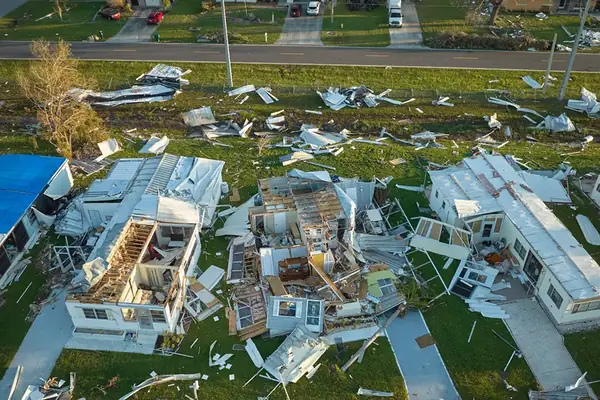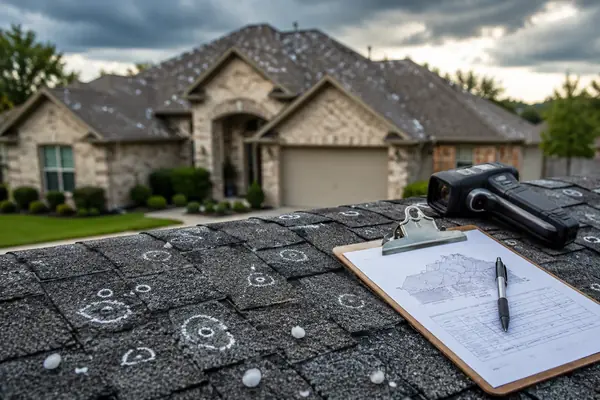
If you own property in Corpus Christi, Rockport, Portland or anywhere on the Coastal Bend, your wind claim is probably a TWIA claim. Nueces, San Patricio and Aransas counties (along with Kleberg and Refugio) are among the 14 first-tier coastal counties where the Texas Windstorm Insurance Association writes wind and hail coverage. We help property owners file and document those claims, write an independent Xactimate estimate, and dispute TWIA's or a private carrier's findings when they fall short.
Our office is in Belton. We travel to the Coastal Bend to inspect homes and commercial buildings in person.
How a TWIA claim moves
Hurricane Harvey made landfall near Rockport in August 2017, and the wind damage across Aransas, San Patricio and Nueces counties sent thousands of owners into the TWIA process at once. The basic sequence hasn't changed:
- Report the claim within one year. Texas law requires TWIA claims to be filed within one year of the date of damage. The commissioner can extend that by up to 180 days for good cause, but don't plan around an extension.
- TWIA assigns an adjuster. The adjuster inspects, may bring in an engineer, and asks for documents such as photos, repair invoices and receipts.
- TWIA accepts or denies. It generally has 60 days after receiving the claim and the information it requested to accept or deny, in whole or in part.
- Payment or dispute. If you disagree with the amount, your TWIA policy and denial or payment letter set out the dispute process, which can include appraisal for disagreements over the amount of loss. Disputes over coverage follow a different path, so read the letter closely and act promptly.
Texas law: TWIA claims must be filed within one year of the date of damage (Tex. Ins. Code §2210.573), and TWIA generally has 60 days to accept or deny after it receives the claim and the requested information.
Private carriers on the Coastal Bend follow different rules: the Chapter 542 prompt-payment deadlines (15 days to acknowledge and start investigating, 15 business days to accept or reject after receiving what they asked for) and the policy's own reporting conditions. If you have both a TWIA wind policy and a homeowners policy, you may have two claims with two timelines from one storm.
Storm damage or salt-air corrosion?
This is the dispute that's most specific to coastal property. Salt air slowly rusts screws and nails, eats galvanized flashing, pits metal roofing and corrodes AC condenser coils. When a storm then tears those components loose, the adjuster may say they failed because of long-term corrosion, which most policies exclude as wear and tear.
What the carrier tends to point to
- Rust staining around fasteners
- Pitting or flaking on metal panels and flashing
- Corroded condenser fins
- Age of the roof or equipment
What shows the storm did it
- Fasteners pulled out or sheared, with clean metal exposed
- Panels lifted or creased in the direction of the wind
- Debris impact marks and torn, not worn, edges
- Neighboring properties with the same pattern on the same side
A component can be both corroded and storm-damaged. The question is whether the storm caused the loss. We photograph failures close-up and at roof level, note direction and pattern across the building, and tie them to the storm date.
Elevated homes and waterfront property
Many homes in Rockport, Port Aransas, Aransas Pass and the bayfront neighborhoods sit on pilings or raised piers. That changes how damage gets divided. The roof, siding and windows are usually a wind question. The area under the house (enclosures, stairs, utilities, and anything stored there) is often reached by surge or rising water, which is a flood question, and flood policies limit coverage below the lowest elevated floor. Decks, docks and fences may have separate limits or exclusions on either policy.
The way to protect yourself is to have the damage measured and photographed by location before anything is removed, so each item can be assigned to the policy that covers it.
Know your deductible before you settle
Coastal wind deductibles are often 1–2% of dwelling coverage. On a home insured at $300,000, a 2% deductible is $6,000 before the policy pays anything for wind. If the carrier's estimate comes in at $5,500, you get nothing, so every missing line item matters: starter strip, drip edge, ridge cap, hip and ridge vents, permits, code upgrades the policy covers, and interior repairs from water that came through storm openings. The settlement calculator below shows how deductible, depreciation and fees change the check.
Free toolClaim settlement calculatorSee what your claim should pay after depreciation and your deductible, and what you net with or without a public adjuster.After a storm on the Coastal Bend
- Photograph the roof, siding, windows and the area under elevated homes before cleanup
- Report wind to TWIA or your wind carrier and rising water to your flood carrier, separately
- Keep corroded parts that a contractor removes; don't let them go in the dumpster
- Write down the claim number, adjuster name and every date
- Read the TWIA or carrier letter for what they asked for and by when
For more on what happens after a hurricane, see our guide to property damage after a hurricane and our hurricane and windstorm claims service. If TWIA has already paid less than you expected, our denied and underpaid claims page explains how we reopen the numbers.
Communities covered from this page
Don't see your town? We serve every Texas county. Ask us about your property.
Frequently asked questions
Do I have to use TWIA for wind coverage in Corpus Christi?
Not necessarily. TWIA is available in Nueces, San Patricio, Aransas and the other first-tier coastal counties, but some property owners have wind coverage through a private carrier instead. Check your declarations page.
How long do I have to file a TWIA claim?
One year from the date of damage. The commissioner may extend that by up to 180 days for good cause.
TWIA said my metal roof failed from corrosion, not wind. What can I do?
Ask for the inspection photos and any engineer report, then document fastener pull-outs, wind-direction creasing and torn edges. A public adjuster can submit that evidence and a revised estimate.
Can a public adjuster help with a TWIA claim?
Yes. A licensed Texas public adjuster can represent you on a TWIA claim just as on a private-carrier claim. Our fee is a percentage of the payment and is capped at 10% by Texas law.