

Property damage in Leon Valley can become complicated quickly. A severe thunderstorm may damage roofing near Bandera Road, wind-driven rain may enter a home around Evers Road, or sudden flooding may affect a property near Leon Creek. When the insurance company’s estimate does not reflect the full scope of the loss, a public adjuster in Leon Valley can help the policyholder document the damage and pursue a fair claim settlement.
As a licensed Texas public adjuster, TX Public Adjusting represents residential and commercial property owners—not insurance companies. Our team reviews policies, inspects damaged property, prepares detailed claim documentation, and communicates with the carrier throughout the adjustment process.
TX Public Adjusting is operated by Rise Public Adjusting LLC, Texas License #3356839. Property owners can request a free claim review with no upfront fees to learn whether professional insurance claim assistance may improve their position.
Licensed Texas Public Adjuster | Residential and Commercial Claims | Free Claim Review
Insurance Claim Help for Leon Valley Property Owners
Leon Valley is a distinct Bexar County community surrounded by northwest San Antonio. The city sits near the intersection of Loop 410 and State Highway 16, commonly known locally as Bandera Road. It is approximately three miles from the South Texas Medical Center and serves as a gateway between central San Antonio and attractions such as SeaWorld San Antonio and Six Flags Fiesta Texas.
That location gives Leon Valley property owners convenient access to the larger San Antonio area, but it also exposes homes and businesses to many of South Central Texas’s most disruptive weather conditions:
- Hail-producing thunderstorms
- Straight-line wind
- Wind-driven rain
- Flash flooding
- Roof leaks
- Lightning and electrical damage
- Tornado-related damage
- Freeze-related pipe breaks
- Fire and smoke losses
Leon Valley maintains its own flood-warning system because the city is prone to flash flooding. Local officials caution that floodwater can rise again rapidly, even after warning sirens stop.
These conditions can produce losses that extend well beyond the most visible damage. A storm may loosen shingles without tearing them away. Water may travel behind drywall before staining a ceiling. Hail may damage vents, gutters, flashing, fencing, air-conditioning equipment, and exterior finishes while the initial insurance estimate accounts only for part of the roof.
Our job is to investigate the full loss and present the claim in a clear, organized format supported by photographs, measurements, repair scopes, inventories, policy information, and other relevant documentation.
Concerned that your Leon Valley insurance claim is incomplete, delayed, denied, or underpaid? Contact TX Public Adjusting for a free claim review.
Why Property Owners Hire a Public Adjuster in Leon Valley
The insurance company assigns an adjuster to investigate the claim on behalf of the carrier. A public adjuster serves a different role. We are hired by the policyholder and advocate for the property owner’s interests throughout the claim process. Property owners who are unsure how the roles differ can read our guide comparing a public adjuster vs. independent adjuster.
Leon Valley homeowners and business owners may seek public adjusting services when:
- The carrier’s estimate appears too low
- Important damage was left out of the scope
- The claim involves several rooms, structures, or building systems
- The property has roof, interior, and exterior damage from the same storm
- Water damage has spread into concealed areas
- Business equipment or inventory was affected
- The insurance company requested extensive supporting documentation
- Depreciation was applied incorrectly or without explanation
- A claim was denied based on wear, maintenance, or prior damage
- The policyholder does not have time to manage inspections and claim communications
- Repair estimates are significantly higher than the carrier’s estimate
- The claim has stalled without a clear path forward
Property owners are responsible for proving their loss. That often requires more than notifying the carrier and submitting a few photographs. The claim must connect documented damage to the reported event, identify the work reasonably required to restore the property, and comply with policy conditions.
TX Public Adjusting helps Leon Valley clients organize those responsibilities into a structured claim presentation.
Common Insurance Claims in Leon Valley
Hail Damage Claims
Hailstorms can damage asphalt shingles, metal roofing, roof vents, flashing, skylights, gutters, downspouts, siding, window screens, fences, and outdoor equipment. Our hail damage insurance claim guide explains how property owners can document roof and exterior damage after a Texas hailstorm.
Some hail damage is easy to identify. Other impacts are subtle and may not cause immediate leaking. Bruised shingles, fractured mats, loosened granules, dented metal components, and compromised roof accessories can be missed during a brief inspection.
A Leon Valley hail damage claim may become underpaid when the estimate includes only isolated roof repairs but excludes:
- Matching considerations
- Roofing accessories
- Flashing and edge metal
- Gutters and downspouts
- Damaged exterior finishes
- Code-related work when covered
- Interior water damage
- Detach-and-reset labor
- Contractor overhead and profit when applicable
We compare the carrier’s scope with the observed conditions and available repair documentation.
Water Damage Claims
Water damage can come from plumbing failures, appliance leaks, overflowing fixtures, damaged supply lines, roof openings, storm-created penetrations, or water entering around doors and windows. A water damage public adjuster can review whether the carrier’s estimate includes affected materials, mitigation work, access requirements, and hidden moisture damage.
The visible water stain is rarely the complete loss. Moisture may affect insulation, wall cavities, flooring systems, cabinetry, baseboards, electrical components, and personal property.
A detailed water claim assessment may examine:
- The apparent source of water
- Affected rooms and materials
- Moisture migration
- Emergency mitigation work
- Drying records
- Demolition requirements
- Access needed to reach damaged plumbing
- Potential microbial growth
- Matching and continuity of finishes
- Contents cleaning or replacement
Floodwater and plumbing or storm-related water are not always treated the same under an insurance policy. Coverage depends on the cause of loss, exclusions, endorsements, and the specific facts of the claim.
Fire and Smoke Damage Claims
Fire claims often involve more than burned materials. Our fire damage insurance claim resource explains common issues involving structural repairs, smoke contamination, contents, and debris removal. Smoke particles and heat can affect areas far from the point of origin. Fire suppression may also cause water damage throughout the structure.
A properly developed fire claim may include:
- Structural repairs
- Smoke and soot cleaning
- Odor treatment
- Contents inventory
- Debris removal
- Temporary protection
- Electrical evaluation
- HVAC cleaning
- Code-related work when covered
- Additional living expenses
- Business interruption documentation
- Professional cleaning and restoration
TX Public Adjusting reviews fire and smoke losses for both residential and commercial properties in Leon Valley.
Storm and Wind Damage Claims
Strong thunderstorms can lift shingles, damage roof edges, break tree limbs, dislodge exterior components, and drive rain through openings that were not previously leaking.
Recent severe-weather reporting for the broader San Antonio area has included damaging wind, large hail, flash flooding, and tornado activity. In July 2026, the National Weather Service confirmed an EF-1 tornado with estimated peak winds of 100 mph in northwest San Antonio.
After a major wind event, policyholders should document conditions promptly and protect the property from additional damage when it is safe to do so.
Property owners dealing with widespread wind and rain damage may also find our Texas hurricane property damage guide useful for understanding documentation, emergency repairs, and overlapping types of loss.
Roof Damage Claims
Roof claims are among the most disputed property claims because insurers may attribute deterioration to age, installation, maintenance, or long-term wear rather than the reported storm.
A roof inspection should not stop at the shingles. Depending on the building, the scope may also involve:
- Tile, metal, or membrane roofing
- Ridge caps
- Underlayment
- Flashing
- Drip edge
- Pipe boots
- Roof vents
- Skylights
- Gutters
- Drainage systems
- Decking
- Insulation
- Interior finishes
A public adjuster for a roof claim can compare the insurance estimate with the observed damage and the complete repair sequence rather than a limited list of surface-level items.
Commercial Property Claims
Leon Valley has commercial activity along Bandera Road, Loop 410, Evers Road, Huebner Road, and the corridors leading toward the Medical Center.
Commercial claims can involve:
- Retail properties
- Restaurants
- Medical offices
- Professional offices
- Apartment and multifamily properties
- Warehouses
- Shopping centers
- Churches
- Hotels
- Industrial buildings
A commercial public adjuster can assist with building damage, business personal property, equipment, inventory, tenant improvements, and other documented losses. These losses may include building damage, business personal property, inventory, equipment, tenant improvements, signage, debris removal, loss of income, and extra expenses.
Commercial claims require careful coordination because repair decisions can affect tenants, employees, customers, inventory, and daily operations.
Leon Valley Storm and Flood Risks
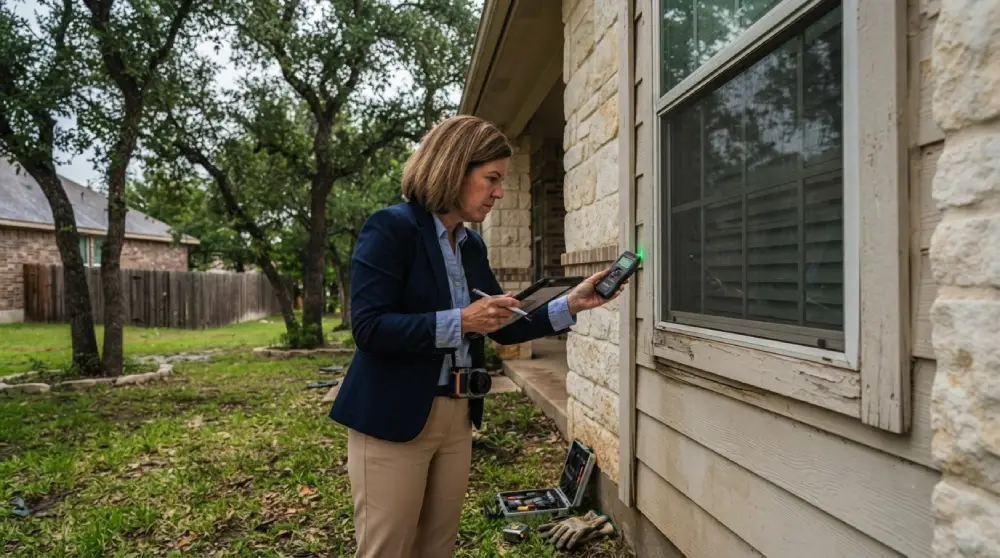
Leon Valley’s position in northwestern Bexar County places it within a region known for fast-moving thunderstorms and intense rainfall. The city’s proximity to Leon Creek and surrounding drainage systems makes flash flooding an especially important local concern.
Leon Valley’s official emergency guidance specifically states that the city is prone to flash flooding and warns residents that water may rise quickly and unexpectedly. The broader Leon Creek area has also been included in Bexar County flash-flood warnings during significant rainfall events.
Why Flash Flood Claims Become Complicated
Flood-related damage often raises difficult coverage questions. A standard property policy may distinguish among:
- Rising surface water
- Wind-driven rain
- Roof leakage
- Sewer or drain backup
- Plumbing discharge
- Foundation seepage
- Water entering through a storm-created opening
The physical damage may look similar even when the policy treats each cause differently. That is why establishing the source, timing, path, and extent of the water is critical.
Hail and Straight-Line Wind
South Central Texas thunderstorms can produce hail and damaging wind during the same event. That can leave overlapping damage to roofing, siding, trees, fences, windows, mechanical equipment, and interiors.
In May 2026, Bexar County was included in forecasts for storms capable of producing large hail, damaging wind, heavy rainfall, and localized flooding.
Tornado and Rotational Wind Damage
Tornadoes are less frequent than ordinary thunderstorms, but even a short-track event can create severe roof, structural, and tree-impact losses. Rotational damage can also complicate inspections because adjacent properties may experience very different conditions.
Policyholders should preserve photographs, videos, weather alerts, repair invoices, and damaged materials whenever practical.
Winter Freeze Damage
Leon Valley is better known for heat and thunderstorms, but hard freezes can damage plumbing systems, fire-suppression lines, water heaters, exterior fixtures, and building interiors.
Freeze losses may involve several stages:
- A pipe or fitting freezes and breaks.
- Water is released when temperatures rise.
- Flooring, drywall, insulation, cabinetry, or contents become saturated.
- Emergency mitigation begins.
- Hidden moisture or microbial growth is discovered later.
A complete claim should account for the covered resulting damage, not merely the broken plumbing component.
Why Leon Valley Insurance Claims Become Underpaid
Missed or Hidden Damage
Fast inspections may focus on the most obvious area while overlooking connected damage. A damaged roof can lead to wet insulation and interior staining. A plumbing leak can affect rooms below or behind the original source.
Scope Omissions
An estimate may identify the correct damaged material but omit related work necessary to perform the repair. Common omissions include removal, disposal, access, surface preparation, protective measures, finish matching, and resetting attached components.
Low Measurements or Quantities
Incorrect roof measurements, room dimensions, material quantities, or labor assumptions can materially reduce an estimate.
Depreciation Issues
Policies may pay claims based on actual cash value, replacement cost, or a combination of both. Recoverable depreciation may depend on completing repairs and submitting documentation within the required time.
We review how depreciation was calculated and whether the estimate correctly identifies recoverable and nonrecoverable amounts.
Documentation Problems
A carrier may request photographs, inventories, receipts, estimates, mitigation records, repair invoices, or proof of ownership. Missing or inconsistent documents can delay payment or weaken the claim.
Cause-of-Loss Disputes
Insurers may attribute damage to:
- Wear and tear
- Improper installation
- Long-term leakage
- Deterioration
- Maintenance problems
- Pre-existing conditions
- Excluded flooding
A public adjuster documents the observed conditions and presents the policyholder’s position. We do not provide legal opinions, engineering opinions, or coverage guarantees.
Our Public Adjusting Process
1. Claim Review
We begin by discussing what happened, when the loss occurred, which areas were affected, and what the insurance company has done so far.
We may review available materials such as:
- The insurance policy
- Carrier estimates
- Coverage letters
- Payment summaries
- Photographs
- Contractor proposals
- Mitigation invoices
- Claim correspondence
2. Property Inspection
We inspect the affected property and document visible damage. The inspection may include roofing, exteriors, interiors, mechanical components, detached structures, contents, or commercial equipment.
3. Damage Documentation
We organize photographs, measurements, notes, inventories, estimates, and supporting records. The goal is to create a clear explanation of the complete loss.
4. Scope and Estimate Review
We compare the carrier’s estimate with the observed damage and repair requirements. When appropriate, we prepare or coordinate a more detailed scope.
5. Claim Presentation and Negotiation
TX Public Adjusting communicates with the insurance company, submits supporting documentation, responds to claim questions, and advocates for the policyholder’s documented position.
6. Settlement and Next Steps
We help the client understand claim payments, depreciation, supplements, repair documentation, and other steps that may remain before the file is complete.
Every claim is different. Hiring a public adjuster does not guarantee coverage or a particular payment, but it can give the policyholder organized, independent representation.
Mid-Claim Help Is Available
You do not always have to hire a public adjuster before reporting the loss.
TX Public Adjusting may be able to review a Leon Valley claim after:
- The initial inspection
- The first estimate
- A partial payment
- A denial
- A supplement request
- A disagreement over repair scope
- Extended carrier delays
Before accepting a low estimate or closing a disputed claim, request a free claim review from TX Public Adjusting.
Timing matters, especially when the carrier has already inspected the property or issued a payment. Our guide explains when it is too late to hire a public adjuster and what options may remain during an active or disputed claim.
Why Choose TX Public Adjusting
Texas-Focused Experience
Texas claims involve regional construction methods, severe convective storms, hurricanes, hail, freeze events, and state-specific insurance practices. TX Public Adjusting focuses on property claims throughout Texas.
Licensed Representation
TX Public Adjusting operates through Rise Public Adjusting LLC, Texas License #3356839.
Independent Policyholder Advocacy
We work for property owners, not insurance companies. Our role is to document and present the policyholder’s claim.
Residential and Commercial Knowledge
Our team reviews losses involving houses, rental properties, multifamily buildings, retail centers, offices, warehouses, restaurants, churches, and other commercial facilities.
Extensive Claim Review Experience
Our professionals draw on experience reviewing thousands of residential and commercial claims. That experience helps us identify scope gaps, documentation problems, and claim issues that may not be obvious to a property owner handling a major loss for the first time.
Detailed Claim Preparation
We focus on the evidence supporting the loss:
- Policy review
- Damage photographs
- Measurements
- Repair scopes
- Contents documentation
- Contractor information
- Mitigation records
- Carrier correspondence
No Upfront Fees
Property owners can begin with a free claim review. Public adjusting services are generally provided under a written agreement without upfront fees, subject to the terms explained before representation begins.
The company’s strategic materials identify substantive, locally specific city pages, licensed trust signals, claim-type internal links, and strong free-review calls to action as priorities for improving the usefulness of its Texas service-area content.
Leon Valley Neighborhoods and Areas We Serve
Leon Valley is compact, but its residential and commercial areas connect closely with northwest San Antonio. We assist property owners near:
- Bandera Road
- Loop 410
- Evers Road
- Huebner Road
- Grissom Road
- Poss Road
- Seneca Drive
- Forest Pine
- Leon Creek
- Raymond Rimkus Park
- The South Texas Medical Center corridor
- The Ingram Park area
Raymond Rimkus Park is one of Leon Valley’s best-known community landmarks, with recreational facilities and public gathering areas serving local residents.
We also serve surrounding communities and nearby areas, including:
- San Antonio
- Helotes
- Balcones Heights
- Castle Hills
- Shavano Park
- Alamo Ranch
- Medical Center
- Ingram Hills
- Great Northwest
- Timberhill
- Braun Station
- Northwest Crossing
Property owners outside these communities can view our complete list of Texas service areas. TX Public Adjusting assists residential and commercial policyholders throughout the state.
Frequently Asked Questions
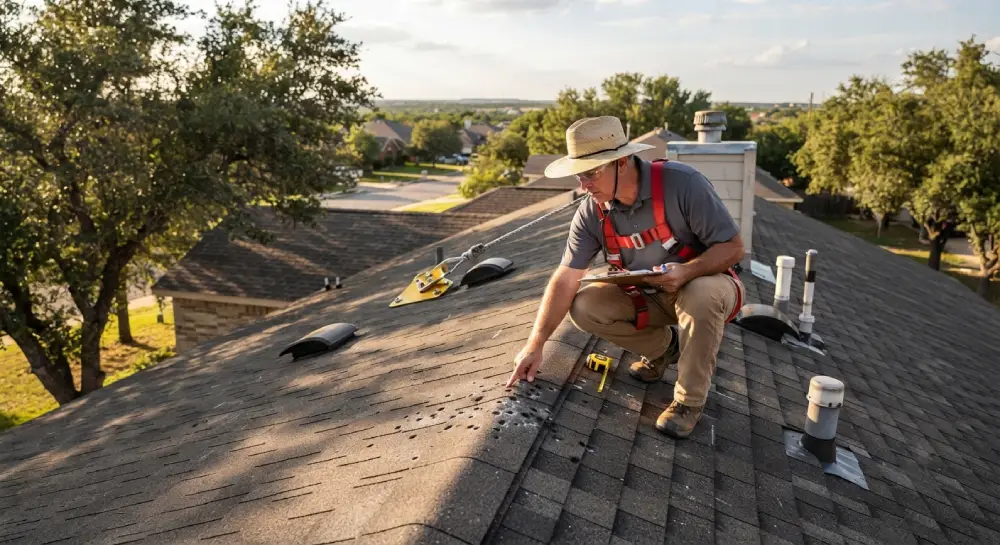
What does a public adjuster in Leon Valley do?
A public adjuster represents the policyholder during a property insurance claim. The adjuster reviews the policy, inspects the loss, documents damage, prepares claim materials, and communicates with the insurance company.
Unlike the carrier’s adjuster, a public adjuster does not work for the insurance company. TX Public Adjusting advocates for Leon Valley homeowners and commercial property owners.
When should I hire a public adjuster after property damage?
Property owners commonly call us when a claim is large, complicated, delayed, denied, or underpaid. It may also make sense to hire a public adjuster early when the damage affects several areas or requires extensive documentation.
You can also request a review after the insurance company has issued its first estimate. The best timing depends on the status of the claim and applicable policy deadlines.
Can you help if my Leon Valley claim has already been paid?
Possibly. An initial payment does not always mean the claim is complete. Additional documented damage, omitted repairs, or higher verified costs may support a supplemental request, depending on the policy and claim circumstances.
We can review the estimate, payment summary, photographs, and repair proposals to identify whether further evaluation is warranted.
How much does a public adjuster charge in Texas?
Public adjusters commonly work for a percentage of the insurance recovery obtained through their services. The fee and scope of representation should be stated clearly in a written contract.
TX Public Adjusting offers a free initial claim review and no-upfront-fee representation. Any applicable fee is explained before the client signs an agreement.
Can a public adjuster help with a denied roof claim?
A public adjuster can review the denial letter, policy language, inspection findings, photographs, estimates, and available evidence. We may help document damage and present the policyholder’s position to the carrier.
We cannot guarantee that a denial will be reversed. Claims involving engineering, legal, or coverage disputes may also require other qualified professionals.
Does homeowners insurance cover flash flooding in Leon Valley?
Standard homeowners insurance generally treats rising surface water differently from water entering through a covered storm-created opening or a sudden plumbing failure. Flood coverage is often provided through a separate flood policy.
Because Leon Valley is prone to flash flooding, property owners should identify the source and path of water before assuming whether the damage is covered.
What should I do immediately after storm damage?
Protect people first. Avoid unstable structures, electrical hazards, floodwater, and damaged roofing. When safe, photograph the property before temporary repairs begin.
Take reasonable steps to prevent further damage, retain receipts, preserve damaged materials when practical, and report the loss according to the policy. Avoid permanent repairs until the damage has been adequately documented.
Can you handle commercial property claims in Leon Valley?
Yes. TX Public Adjusting assists commercial property owners with building damage, business personal property, inventory, equipment, tenant improvements, and other covered losses.
Commercial claims may also involve business income or extra-expense documentation. Coverage and calculation methods depend on the policy and financial records.
How long does an insurance claim take?
The timeline depends on the severity of the loss, the carrier’s investigation, documentation requirements, contractor availability, coverage questions, and whether the parties disagree about the scope.
A straightforward claim may move quickly. A large fire, commercial loss, disputed roof claim, or multi-building storm claim may take substantially longer.
Why was the insurance company’s estimate lower than my contractor’s?
The two estimates may use different measurements, labor rates, material assumptions, repair methods, or scopes. One estimate may also omit required work such as access, disposal, preparation, flashing, code items, or matching.
We compare the estimates item by item and document differences that materially affect the cost of restoring the property.
Get a Free Leon Valley Claim Review
A property insurance claim can affect your home, business, finances, and ability to move forward after a loss. You should not have to guess whether the carrier’s estimate includes everything required to restore the property.
TX Public Adjusting helps Leon Valley policyholders evaluate:
- Hail damage claims
- Water damage claims
- Fire and smoke claims
- Roof claims
- Wind and storm claims
- Commercial property losses
- Denied claims
- Delayed claims
- Underpaid claims
- Supplemental claims
TX Public Adjusting is operated by Rise Public Adjusting LLC, Texas License #3356839.
Contact TX Public Adjusting today for a free claim review. There are no upfront fees, and our team represents policyholders—not insurance companies.