

Property damage in Corinth can turn into a complicated insurance claim quickly. A spring hailstorm may damage shingles, gutters, fencing, windows, and exterior finishes across the same property. A burst pipe may affect flooring, drywall, cabinets, and insulation before the full extent of the loss becomes visible. When the carrier’s estimate leaves out necessary repairs or values the damage too low, a licensed public adjuster in Corinth, TX can help document the claim from the policyholder’s side.
TX Public Adjusting provides residential and commercial property insurance claim assistance throughout Corinth and the surrounding Lake Cities area. We inspect damaged property, review insurance estimates, identify missing scope items, prepare supporting documentation, and negotiate with the insurance company on behalf of the policyholder.
TX Public Adjusting is operated by Rise Public Adjusting LLC, Texas License #3356839.
Request a Free Claim Review. There are no upfront fees.
Why Property Owners Hire a Public Adjuster in Corinth
An insurance company sends an adjuster to investigate the loss, but that adjuster is working within the carrier’s claim-handling process. A public adjuster represents the person or business that owns the damaged property.
That distinction matters when the scope of damage is disputed.
Corinth sits in Denton County, between Denton and the Dallas-Fort Worth metropolitan area. Properties near Lake Sharon, Corinth Parkway, Swisher Road, Interstate 35E, and the Lake Cities communities can be exposed to severe North Texas thunderstorms, large hail, straight-line winds, tornado activity, heavy rainfall, and occasional winter freeze damage. The City of Corinth activates outdoor warning sirens for threats that include hail of at least 1.5 inches, sustained winds of at least 70 mph, or dangerous rotation and tornado conditions.
After one of these events, insurance estimates may address the most visible damage without accounting for every affected component. A roof estimate might include shingles but omit gutters, vents, flashing, soft-metal impacts, fencing, window screens, or interior water staining. A water claim may include drying equipment but undervalue cabinet removal, flooring continuity, insulation replacement, or access required to reach the failed plumbing.
Corinth property owners often hire TX Public Adjusting when:
- The insurance settlement appears too low.
- The carrier’s estimate leaves out damaged areas.
- A roof claim has been partially approved or denied.
- The cause or date of loss is disputed.
- Depreciation has been applied incorrectly.
- The claim involves several buildings or coverage categories.
- Repairs revealed additional concealed damage.
- A commercial loss is interrupting normal operations.
- The policyholder does not have time to manage inspections, estimates, inventories, and carrier communications.
Our role is to evaluate what happened, compare the documented damage with the carrier’s scope, and present a supported claim under the terms of the policy.
Property Claim Risks Specific to Corinth
Corinth is part of the Lake Cities area and includes a mix of established subdivisions, newer residential developments, apartments, schools, offices, retail properties, churches, and light commercial buildings. Neighborhoods and communities in and around the city include Lake Sharon Estates, Kensington Estates, Corinthian Palisades, Lake Bluff Estates, Northwood, Ashford Park, Valencia, Terrace Oaks, and Crosspointe.
Different parts of the city can present different claim challenges. Newer homes may have modern roofing systems and code-related repair requirements. Older properties may contain discontinued materials, layered roof systems, aging plumbing, or prior repairs that complicate the carrier’s assessment. Commercial buildings near I-35E and Corinth Parkway may have larger roof surfaces, rooftop mechanical equipment, signage, inventory, tenant improvements, and business-income concerns.
Hail and Severe Thunderstorms
Large hail is one of the most important property risks in Denton County. Denton County has been identified as one of the Texas counties with a particularly high frequency of hailstones measuring two inches or larger.
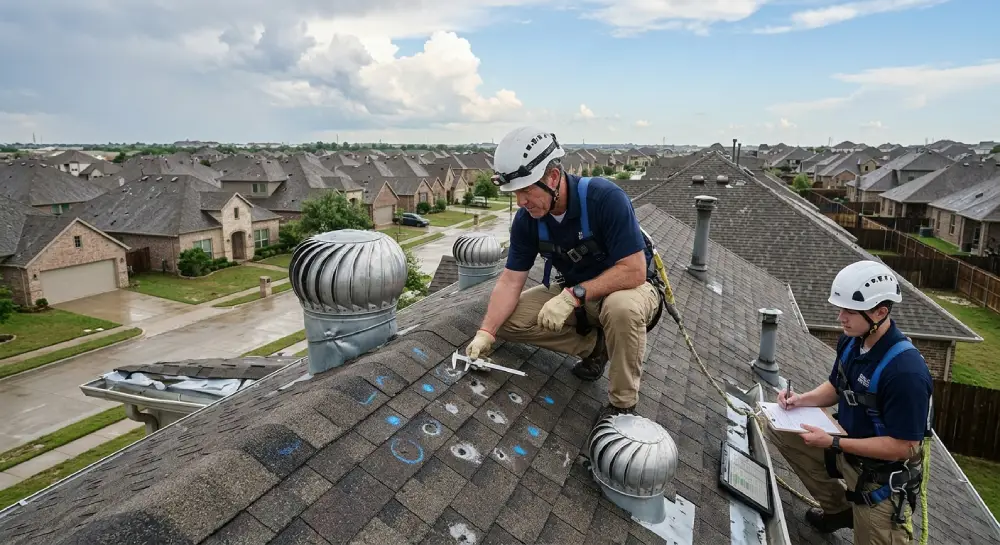
Hail damage is not always obvious from the ground. Impacts may fracture the mat beneath asphalt shingles, loosen granules, dent metal roof panels, damage rooftop equipment, crack skylights, mark gutters, and compromise vents or flashing. On commercial properties, hail can affect membranes, metal coping, HVAC fins, exhaust systems, skylights, and drainage components across a wide roof area. Property owners dealing with a recent storm can review our guide to filing a hail damage insurance claim in Texas.
A complete hail claim should look beyond a small test square. It should consider the entire roofing system, exterior elevations, accessory structures, mechanical equipment, and resulting interior damage.
Straight-Line Wind and Tornado Damage
North Texas storm systems can produce severe wind even when a tornado does not touch down. Wind can lift shingles, break seals, damage ridge caps, loosen flashing, overturn fencing, drive rain behind exterior materials, and send debris into siding or windows.
Tornado watches and severe storm alerts regularly include Denton County when powerful systems move across the region. During a major North Texas severe-weather setup in 2026, forecasts included Denton County in an area threatened by very large hail, damaging winds, tornadoes, and flash flooding.
Wind claims can become disputed when the damage is scattered or when the carrier attributes the condition to age, installation, wear, or maintenance. Careful documentation is essential.
Heavy Rain and Interior Water Damage
Corinth properties can experience roof leaks, wind-driven rain, overflowing drainage systems, plumbing failures, appliance leaks, and water intrusion around windows or exterior openings.
Water can travel behind walls, under flooring, through insulation, and into lower levels. The visible stain may represent only a small part of the affected area. Moisture readings, photographs, repair invoices, plumbing reports, mitigation records, and a detailed room-by-room scope can help establish what must be removed and replaced.
Winter Freeze and Pipe Damage
Extended freezing temperatures can affect plumbing in exterior walls, attics, garages, vacant units, commercial spaces, and irrigation systems. Once a frozen pipe thaws, water may spread through ceilings, walls, cabinetry, flooring, electrical components, and stored contents.
Freeze claims often involve emergency mitigation, plumbing access, demolition, drying, reconstruction, and personal-property documentation. Each category should be reviewed separately rather than reduced to a single general repair allowance.
Common Insurance Claims in Corinth
Hail Damage Claims
Hail claims are common across Corinth and the greater Denton County area, and even a seemingly minor hail damage roof insurance claim can involve shingles, flashing, gutters, vents, windows, fencing, and interior water intrusion. A proper inspection may include:
- Asphalt shingles, tile, metal panels, or commercial membranes
- Gutters, downspouts, vents, flashing, and roof accessories
- Siding, stucco, brick finishes, paint, and trim
- Windows, screens, skylights, and exterior doors
- Fences, pergolas, detached garages, and sheds
- HVAC units and rooftop equipment
- Interior staining caused by storm-created openings
Before repairs begin, property owners should carefully document hail damage for an insurance claim with clear photographs, dates, contractor findings, and records of emergency work. The carrier may agree that hail occurred but dispute the extent of repair. TX Public Adjusting reviews the entire scope and documents related components that may have been overlooked. When the carrier rejects the loss or attributes the condition to age or wear, review what to do if your hail claim was denied before accepting the decision as final.
Water Damage Claims
Water claims may arise from plumbing failures, failed supply lines, appliance leaks, roof openings, drain backups, or storm-driven rain. A water damage public adjuster can review whether the carrier’s estimate accounts for demolition, drying, access, reconstruction, and damage extending into adjoining rooms.
Important claim questions include:
- Which materials were physically affected?
- What must be removed to access the source?
- Can flooring or cabinetry be repaired consistently?
- Was insulation exposed?
- Did water reach adjacent rooms?
- Were emergency services reasonable and necessary?
- Does the policy contain water, seepage, backup, or mold limitations?
The answers can significantly affect the value and direction of the claim.
Fire and Smoke Damage Claims
A fire loss can damage far more than the area where flames were visible. A fire insurance adjuster representing the policyholder can help document smoke, soot, heat, suppression water, contents, and structural repairs across the property. Smoke, soot, heat, suppression water, and corrosive residues may affect HVAC systems, electronics, furnishings, wall cavities, insulation, roofing, and structural components.
Fire claims may also require:
- Detailed contents inventories
- Cleaning-versus-replacement analysis
- Temporary housing or relocation documentation
- Debris-removal estimates
- Code-upgrade review
- Business-income calculations
- Coordination among engineers, contractors, hygienists, and restoration vendors
Our Texas fire damage insurance claim guide explains additional issues involving debris removal, smoke contamination, temporary housing, and reconstruction. TX Public Adjusting helps organize the loss so that each coverage category is supported clearly.
Storm and Wind Damage Claims
Storm claims may involve lifted shingles, damaged flashing, broken fencing, fallen limbs, damaged siding, window leaks, or debris impact. Wind-driven rain may create interior damage even when the roof appears generally intact from the street.
A strong storm claim connects the weather event, exterior conditions, resulting openings, moisture paths, and interior repairs.
Roof Damage Claims
Roof claims frequently become underpaid because roofing systems contain many components beyond the field shingles. A public adjuster for a roof claim can compare the carrier’s estimate with the full roofing system, related exterior components, and any resulting interior damage.
A complete roof scope may need to address:
- Underlayment
- Starter course
- Ridge and hip materials
- Valley components
- Flashing
- Drip edge
- Pipe boots
- Vents
- Skylights
- Gutters
- Code-required items
- Steep or high-access labor
- Detachment and reset of rooftop equipment
- Interior repairs related to roof leakage
The policy, roof type, age, condition, local requirements, and available matching materials can all affect the adjustment.
Commercial Property Claims
Commercial claims in Corinth may involve retail centers, offices, apartment buildings, churches, restaurants, warehouses, schools, medical spaces, and other income-producing property.
These losses can include:
- Large commercial roofing systems
- Multiple buildings
- Tenant improvements
- Signage and exterior lighting
- Inventory or equipment
- Business-income losses
- Extra expenses
- Mechanical systems
- Code and ordinance issues
- Coordination with property managers and tenants
A commercial claim should be approached as both a physical-damage matter and an operational recovery project.
Why Insurance Claims Become Underpaid
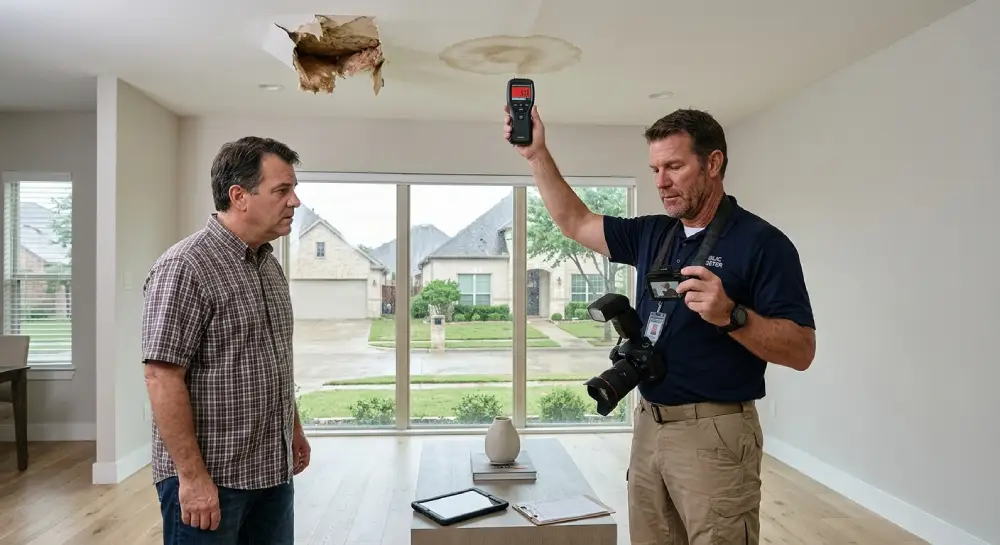
An underpaid claim does not always begin with an obvious denial. It may start with a narrow inspection, an incomplete estimate, or assumptions that were never tested.
Missed Damage
Some damage is concealed, elevated, scattered, or difficult to inspect. Moisture may be trapped under flooring. Roof impacts may be visible only at close range. Wind may affect one elevation more severely than another.
Scope Omissions
Carrier estimates may omit related work such as debris removal, protection, access, detach-and-reset labor, surface preparation, painting, insulation, code items, or repairs required to complete adjacent areas properly.
Depreciation Issues
Depreciation can affect the amount initially paid and the amount available after repairs. Errors may occur when depreciation is applied to the wrong items, calculated inconsistently, or withheld without clear explanation.
Low Unit Pricing
Even when a repair is included, the unit price may not reflect the actual labor, material, equipment, access, or contractor conditions required for that property.
Weak Documentation
Claims become harder to support when photographs are limited, damaged materials are discarded too early, inventories are incomplete, or repair estimates do not explain why work is necessary.
Cause-of-Loss Disputes
The insurer may attribute damage to age, deterioration, improper installation, prior damage, maintenance, or an excluded source. These disputes require careful review of the policy, physical evidence, weather information, repair history, and inspection findings.
Our Public Adjusting Process
1. Claim Review
We begin by reviewing the reported loss, available policy documents, carrier correspondence, estimates, photographs, contractor information, and payment history.
We also discuss the property owner’s concerns. The goal is to identify the main areas of disagreement before additional inspections or documentation are prepared.
2. Property Inspection
We inspect the accessible damaged areas and document conditions through photographs, measurements, notes, moisture readings when appropriate, and supporting observations.
For Corinth storm claims, the inspection may include roofing, elevations, gutters, fencing, windows, accessory structures, mechanical equipment, and interior areas affected by water intrusion.
3. Damage Documentation
We organize the evidence needed to explain the claim. Depending on the loss, documentation may include:
- Detailed repair estimates
- Photographs and measurements
- Contractor proposals
- Mitigation records
- Plumbing or roofing reports
- Contents inventories
- Receipts and invoices
- Temporary relocation costs
- Business-income records
- Weather documentation
- Code-related information
4. Claim Presentation and Negotiation
We communicate with the carrier, submit supporting materials, respond to claim questions, attend inspections when appropriate, and explain disputed scope or valuation items.
Negotiation is not simply asking for a larger payment. It involves showing why specific work is covered, necessary, and reasonably valued.
5. Resolution
We continue tracking the claim, reviewing revised estimates, and addressing unresolved items. The final outcome depends on the policy, evidence, facts of the loss, carrier position, and applicable claim procedures.
Mid-Claim Help for Corinth Property Owners
You do not necessarily need to hire a public adjuster on the first day of a claim. The timing depends on the status of the file, the policy, applicable deadlines, and whether the claim has been formally closed. Our guide explains when it is too late to hire a public adjuster and why an early review is usually preferable.
TX Public Adjusting may be able to help after:
- The first carrier inspection
- An initial payment
- A partial denial
- A denied roof claim
- A low estimate
- A failed supplement request
- Discovery of additional damage
- Delays or repeated requests for information
The sooner the file is reviewed, the easier it is to preserve evidence, understand deadlines, and identify documentation gaps.
Contact TX Public Adjusting for a Free Claim Review. No upfront fees.
Why Choose TX Public Adjusting
Licensed Texas Representation
TX Public Adjusting is operated by Rise Public Adjusting LLC, Texas License #3356839.
We Represent Policyholders
A public adjuster works for the insured property owner, not the insurance company. Our responsibility is to document and present the policyholder’s claim.
Texas Claim Experience
Our team has reviewed thousands of claims involving residential and commercial property. That experience helps us recognize common omissions, valuation problems, coverage questions, and documentation needs.
Residential and Commercial Expertise
We assist homeowners, landlords, investors, property managers, business owners, churches, associations, and commercial property owners.
Detailed Claim Preparation
We focus on the supporting details behind the loss: measurements, estimates, photographs, invoices, inventories, repair methods, policy provisions, and disputed scope items.
Independent Review
Our evaluation is not limited to the carrier’s first estimate. We independently review the property and available claim documents to determine what may have been overlooked.
Areas We Serve Near Corinth
TX Public Adjusting assists property owners throughout Corinth and nearby Denton County communities, including:
- Denton
- Lake Dallas
- Hickory Creek
- Shady Shores
- Highland Village
- Copper Canyon
- Double Oak
- Flower Mound
- Lewisville
- Little Elm
- Argyle
- Lantana
Corinth’s location south of Denton places it near both Lake Dallas ISD and Denton ISD service areas. We work with residential and commercial policyholders across the broader North Texas region.
Frequently Asked Questions
What does a public adjuster in Corinth do?
A public adjuster represents the policyholder during a property insurance claim. The work may include reviewing the policy, inspecting damage, preparing estimates, organizing evidence, communicating with the carrier, and negotiating disputed claim items.
TX Public Adjusting focuses on documenting the full scope of a Corinth property loss rather than relying only on the insurance company’s initial estimate. Property owners should also understand the difference between a public adjuster and an independent adjuster, because the two roles represent different parties during the claim.
When should I hire a public adjuster for a Corinth property claim?
Consider a public adjuster when the damage is extensive, the estimate appears low, important repairs were omitted, the claim was denied, or the process has become difficult to manage.
You may also seek help before filing when the loss involves multiple buildings, substantial contents damage, business interruption, fire, major water intrusion, or a complicated commercial policy.
Can a public adjuster help after the insurance company has already paid me?
Yes. An initial payment does not always mean every part of the claim has been resolved. Depending on the policy, deadlines, releases, and facts of the file, additional damage may still be documented and presented.
Bring the carrier estimate, payment information, photographs, repair proposals, and correspondence to the claim review.
Can you help with a denied hail or roof claim in Corinth?
Potentially. A denial should be reviewed alongside the policy language, inspection findings, weather information, roof condition, repair history, and the carrier’s stated reason.
Some claims remain denied because the evidence does not establish covered damage. Others may warrant additional inspection or documentation. A free review can help identify the next reasonable step.
How much does a Corinth public adjuster charge?
Public adjusters commonly work under a contingency-based fee agreement, meaning the fee is tied to the claim recovery as described in the contract.
TX Public Adjusting provides a free claim review and charges no upfront fee. The written agreement explains the fee structure before representation begins.
Will hiring a public adjuster delay my insurance claim?
Hiring qualified help does not automatically delay a claim. Detailed documentation may require time, especially for a large fire, water, roof, or commercial loss. Property owners experiencing slow communication can also review how long an insurance adjuster has to contact you after a claim is reported.
The purpose is to present the claim accurately and address disputed issues. Delays are often caused by missing information, inspection scheduling, expert review, disagreement over scope, or carrier response times.
What should I do immediately after storm damage in Corinth?
Protect people first. Then take reasonable steps to prevent additional damage, such as temporary roof covering or emergency water extraction, when it is safe to do so.
Photograph the property before major cleanup, keep damaged materials when practical, save receipts, record dates and communications, and avoid permanent repairs until the damage has been properly documented.
Do you handle claims in Lake Sharon Estates and nearby neighborhoods?
Yes. TX Public Adjusting assists policyholders throughout Corinth, including Lake Sharon Estates, Kensington Estates, Corinthian Palisades, Lake Bluff Estates, Northwood, Ashford Park, Valencia, Terrace Oaks, Crosspointe, and surrounding communities.
We also serve nearby Lake Dallas, Hickory Creek, Shady Shores, Denton, Highland Village, and other Denton County locations.
Do you handle commercial property claims in Corinth?
Yes. We assist with commercial roof damage, water losses, fire and smoke claims, storm damage, equipment damage, tenant improvements, business-income issues, and multi-building losses.
Commercial claims often require detailed estimates and coordination among owners, property managers, tenants, contractors, accountants, and carrier representatives.
Is TX Public Adjusting part of the insurance company?
No. TX Public Adjusting represents policyholders. We do not work for the insurance carrier.
The company is operated by Rise Public Adjusting LLC under Texas License #3356839.
Get a Free Corinth Insurance Claim Review
You paid for property insurance to protect your home, rental property, or business. When the estimate does not reflect the full damage, you deserve a careful review of the claim.
TX Public Adjusting helps Corinth property owners with hail, wind, roof, water, fire, smoke, freeze, and commercial property claims. We review the damage, examine the carrier’s estimate, organize supporting documentation, and represent the policyholder during the adjustment process.
Contact TX Public Adjusting today for a Free Claim Review.
- Licensed Texas Public Adjuster
- Residential and Commercial Claims
- Independent Policyholder Representation
- No Upfront Fees
- Rise Public Adjusting LLC
- Texas License #3356839