

Property damage in San Benito can develop quickly. A tropical system moving inland from the Gulf, a slow-moving thunderstorm over the Rio Grande Valley, or a sudden plumbing failure can leave a home or commercial building with roof damage, standing water, damaged contents, and repairs that cannot wait.
A public adjuster in San Benito represents the policyholder during the property insurance claim process. As a licensed Texas public adjuster, TX Public Adjusting reviews the loss, inspects the property, documents covered damage, prepares a detailed claim scope, and communicates with the insurance company regarding the amount needed to restore the property.
TX Public Adjusting is operated by Rise Public Adjusting LLC, a licensed Texas public adjusting firm under Texas License #3356839. We assist residential and commercial property owners with new, delayed, denied, and underpaid claims.
San Benito sits in Cameron County near Harlingen, Brownsville, Los Indios, and the Gulf Coast. Its location in the Lower Rio Grande Valley exposes local properties to tropical weather, wind-driven rain, drainage problems, hail, lightning, and occasional freeze damage. The city has also experienced serious rainfall and flooding events, including flooding that affected homes and streets in the Green Valley Acres area.
Dealing with an insurance claim in San Benito? Request a free claim review from TX Public Adjusting. There are no upfront fees.
Why Property Owners Hire a Public Adjuster in San Benito
An insurance company sends an adjuster to investigate a reported loss, but that adjuster is working within the carrier’s claim-handling system. A public adjuster works for the policyholder.
That distinction matters when the damage is extensive, the carrier’s estimate appears incomplete, or different parties disagree about what caused the loss.
A San Benito public adjuster may help by:
- Reviewing the insurance policy and applicable coverage
- Inspecting visible and potentially concealed property damage
- Comparing the carrier’s estimate with actual repair requirements
- Organizing photographs, measurements, inventories, and contractor information
- Identifying omitted rooms, materials, labor, or code-related work
- Preparing a detailed estimate and supporting claim documentation
- Communicating with the insurance carrier about the scope and valuation
- Assisting with supplemental, delayed, denied, or underpaid claims
Property owners often call after receiving an estimate that does not match what contractors are finding. Others seek help at the beginning because the loss involves multiple rooms, substantial roof damage, business interruption, or a detailed contents inventory.
Our team has reviewed thousands of property claims involving residential and commercial losses. That experience helps us recognize where estimates may be incomplete and what documentation may be needed to support a more accurate evaluation.
Property Damage Risks in San Benito
San Benito is located near the center of Cameron County, approximately five miles south of Harlingen and about twenty miles north of Brownsville. The city is also near the Los Indios International Bridge and the Gulf Coast portion of South Texas.
That geography creates a distinctive property-risk profile.
Tropical Storms and Hurricane Damage
Storms entering South Texas from the Gulf of Mexico can bring high winds, prolonged rain, falling limbs, airborne debris, and roof failures. A storm does not need to pass directly over San Benito to cause damage. Outer rain bands and feeder bands can produce repeated downpours and strong gusts far from a storm’s center. Property owners can also review our Texas hurricane property damage guide for steps to take after wind, rain, and tropical-storm damage.
Possible tropical-weather losses include:
- Missing, lifted, or creased shingles
- Damaged metal roofing and flashing
- Wind-driven rain entering attics and wall cavities
- Broken windows and exterior doors
- Damaged fences, signs, awnings, and detached structures
- Interior ceiling and drywall damage
- Electrical and mechanical equipment damage
- Commercial inventory losses
- Business interruption after a covered event
Wind and water often affect the same building during a tropical system. Determining where water entered and whether the opening was caused by wind can become a major issue in the claim.
Heavy Rain and Flooding
Drainage capacity can be overwhelmed when thunderstorms repeatedly cross the same part of Cameron County. Streets, yards, low areas, and drainage channels may fill quickly.
San Benito’s flood-damage prevention rules expressly recognize that parts of the city are subject to periodic inundation and resulting property hazards. The city has also issued local flood alerts during extended periods of heavy rainfall.
Coverage depends heavily on the source of the water. A standard property policy may cover water entering through storm-created roof damage while excluding rising surface water. Separate flood insurance may apply to water entering from the ground.
Because these distinctions are important, property owners should document:
- The earliest visible point of water entry
- Roof, window, door, and exterior damage
- Water lines on walls, cabinets, equipment, and contents
- The timing of rain, wind, and indoor water intrusion
- Emergency mitigation and extraction work
- Damaged materials removed from the property
Flood claims through the National Flood Insurance Program can have separate requirements and deadlines. The Texas Department of Insurance advises policyholders to report flood damage promptly and notes that NFIP claims generally require a proof of loss within 60 days, subject to any event-specific extension.
Hail, Wind, and Severe Thunderstorms
The Rio Grande Valley is known primarily for heat and tropical weather, but San Benito can also receive severe thunderstorms capable of producing hail, straight-line winds, lightning, and intense rainfall.
Hail damage is not always obvious from the ground. Asphalt shingles may show bruising, fractured mats, or granule displacement. Metal roofing may develop dents at panels, seams, vents, and flashings. Commercial systems can suffer damage to membranes, rooftop equipment, drainage components, and protective coatings.
Wind-related claims may involve:
- Lifted or detached shingles
- Bent roof-edge metal
- Damaged soffits and fascia
- Displaced tiles or panels
- Fence and gate damage
- Detached exterior fixtures
- Water intrusion at roof penetrations
- Damage from fallen trees or branches
Fire, Smoke, and Electrical Losses
Residential fires can begin in kitchens, garages, electrical systems, HVAC components, or outdoor areas. Commercial losses may involve machinery, restaurant equipment, overloaded circuits, inventory, or neighboring units.
The damage may extend far beyond the area burned by flames. Smoke residue, soot, heat, suppression water, and demolition can affect additional rooms and building systems.
A complete fire claim may need to address:
- Structural repairs
- Smoke and soot cleaning
- Odor treatment
- Personal property
- Debris removal
- Temporary housing
- Code-related repairs
- Electrical and HVAC systems
- Commercial stock and equipment
- Lost business income when covered
Plumbing and Interior Water Damage
Not every San Benito property claim begins with a storm. Broken supply lines, failed water heaters, appliance leaks, drain backups, and HVAC condensate problems can damage flooring, walls, cabinets, insulation, and contents.
Water can migrate beneath tile, laminate, baseboards, and built-in cabinetry. A carrier estimate that includes only visible staining may not account for all affected materials or the work needed to access and replace them.
Freeze Damage
South Texas freezes are less frequent than in North Texas, but local buildings may be less prepared for extended cold. Exposed plumbing, exterior lines, vacant properties, and commercial systems can be vulnerable when temperatures fall below freezing.
Burst pipes can release significant water before the building owner discovers the problem. The resulting claim may involve plumbing access, drying, demolition, flooring, drywall, cabinets, electrical components, and damaged contents.
Common Insurance Claims in San Benito
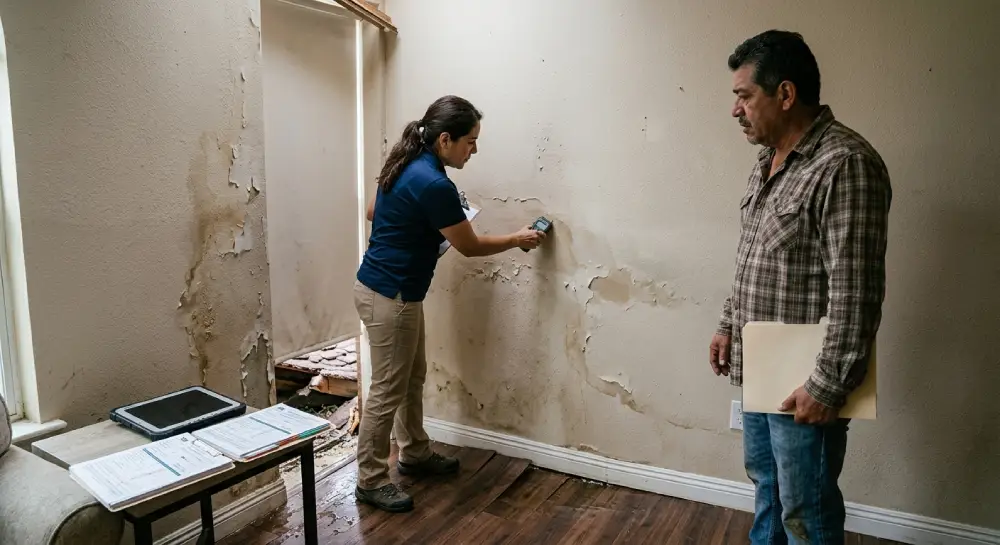
Hail Damage Claims
Hail can damage shingles, metal roofing, vents, gutters, air-conditioning fins, skylights, fences, and exterior finishes. Damage may be disputed when the carrier attributes the condition to age, normal wear, installation issues, or previous storms.
TX Public Adjusting documents the affected components, reviews the carrier’s findings, and evaluates whether the repair scope addresses the complete covered loss. Our hail damage roof insurance claim guide explains common roof issues, while this guide shows property owners how to document hail damage for an insurance claim.
Water Damage Claims
Water claims often become complicated because the cause of the water determines the available coverage. A sudden pipe break may be handled differently from long-term seepage, surface flooding, or wind-driven rain.
Our review considers the reported cause, affected materials, mitigation records, moisture documentation, and the carrier’s estimate. A water damage public adjuster can review the source of the loss, the affected materials, the drying documentation, and the insurer’s repair estimate.
Fire and Smoke Damage Claims
Fire claims may require separate evaluations for the structure, personal property, smoke contamination, debris, and additional living expenses. Commercial claims may also involve equipment, stock, tenant improvements, and business-income coverage.
A public adjuster can help organize these parts of the claim into a clear, documented presentation. For a closer look at how these losses are documented and presented, read our guide to working with a fire insurance adjuster.
Storm and Wind Damage Claims
Storm claims in San Benito may include roof openings, water intrusion, detached exterior materials, broken windows, fallen trees, and damaged outbuildings.
A thorough inspection should consider more than the most visible roof area. Interior rooms, attic spaces, exterior elevations, fences, mechanical equipment, and associated finishes may also need evaluation.
Roof Damage Claims
Roof claims are commonly under-scoped when an estimate includes a small repair but does not account for matching, access, damaged underlayment, flashing, ventilation, edge metal, steep charges, disposal, or related interior work.
TX Public Adjusting evaluates the roof as part of the entire property loss rather than treating it as an isolated surface. A public adjuster for a roof claim can also compare the carrier’s scope with roofing, flashing, ventilation, interior, and code-related repair requirements.
Commercial Property Claims
TX Public Adjusting evaluates the roof as part of the entire property loss rather than treating it as an isolated surface. A public adjuster for a roof claim can also compare the carrier’s scope with roofing, flashing, ventilation, interior, and code-related repair requirements.
Commercial claims can require documentation for:
- Building repairs
- Tenant improvements
- Machinery and equipment
- Inventory and stock
- Signs and awnings
- Refrigerated goods
- Extra expenses
- Lost business income
- Ordinance or law coverage
- Multiple tenants or affected units
Commercial property claims often involve more records, decision-makers, contractors, and coverage categories than residential claims. Early organization can help prevent important parts of the loss from being overlooked.
Claim Concerns Across San Benito Neighborhoods and Corridors
San Benito combines established central neighborhoods, newer residential developments, rural-edge properties, commercial corridors, and areas near resacas and drainage systems.
Our service area includes properties around:
- Downtown San Benito
- Green Valley Acres
- Hunter’s Crossing
- La Gallina
- Landrum Park
- Areas near Heavin Resaca Trail
- The Business 77 corridor
- Williams Road and Sam Houston Boulevard
- Properties toward El Ranchito and Los Indios
- Residential areas near Harlingen’s southern edge
Hunter’s Crossing is near Kennedy Park and the Heavin Resaca Trail, while Green Valley Acres has previously experienced serious flooding after prolonged rainfall.
The type of property can influence the claim. An older home near central San Benito may have layered roofing, previous repairs, or materials that are difficult to match. A newer subdivision home may have builder-grade finishes affected across several connected rooms. A commercial building along a major corridor may have rooftop equipment, signage, low-slope roofing, and business operations that must be evaluated separately.
Local landmarks such as the Freddy Fender Museum, San Benito Cultural Heritage Museum, Heavin Resaca Trail, and nearby Kennedy Park reflect the city’s history and connection to the resaca system. They also help illustrate how closely San Benito’s built environment is tied to waterways, drainage, and the broader Lower Rio Grande Valley landscape.
Why Insurance Claims Become Underpaid
An underpaid claim does not always result from one major error. It may result from many smaller omissions that add up to a substantial difference. Many underpayments begin with the same common property insurance claim mistakes, including incomplete documentation, missed damage, and assuming the first estimate is final.
Damage Was Missed
The first inspection may focus on the most visible area. Damage in attics, adjoining rooms, wall cavities, exterior elevations, mechanical systems, or detached structures may not appear in the initial estimate.
The Repair Scope Is Incomplete
An estimate may include replacement of a damaged material without including the labor and related work required to remove, access, protect, detach, reset, or finish surrounding components.
Quantities Are Too Low
Measurements may exclude waste, overlaps, slopes, height factors, multiple rooms, cabinetry, continuous flooring, or areas affected by water migration.
Depreciation Is Misapplied
Recoverable and nonrecoverable depreciation can have a major effect on the payment. Policy terms, material age, condition, replacement status, and claim documentation may all influence how depreciation is handled.
The Cause of Damage Is Disputed
Insurers may attribute roof, moisture, cracking, or interior damage to wear and tear, maintenance, deterioration, or an excluded cause rather than the reported event.
Documentation Is Insufficient
Photographs alone may not demonstrate the full repair requirement. The claim may also need measurements, estimates, moisture readings, inventories, invoices, reports, timelines, or expert input.
The Policyholder Accepts the First Estimate as Final
An insurance estimate is an evaluation, not necessarily the final cost of restoring the property. When covered damage or required work is missing, a supplemental claim may be appropriate.
Received a low estimate for a San Benito property? TX Public Adjusting offers a free claim review with no upfront fees.
Our Public Adjusting Process
Property owners who are unfamiliar with the role can first review what a public adjuster does during a Texas property claim.
1. Claim Review
We begin by discussing the event, the property, the status of the claim, and the concerns that prompted the review.
When available, we examine:
- The insurance policy
- Carrier correspondence
- The adjuster’s estimate
- Payment letters
- Denial or reservation-of-rights letters
- Contractor estimates
- Mitigation records
- Photographs and videos
2. Property Inspection
We inspect the reported damage and evaluate related areas that may have been omitted. The inspection depends on the type of loss and may include roofing, interiors, exterior elevations, contents, mechanical systems, and commercial operations.
3. Documentation and Scope Preparation
We organize the evidence needed to present the claim. This may include photographs, measurements, itemized estimates, damaged-property inventories, invoices, and supporting reports.
Our objective is to create a clear connection between the covered event, the resulting damage, and the work required to repair or replace affected property.
4. Claim Communication and Negotiation
TX Public Adjusting communicates with the carrier regarding the documented scope and valuation. We address questions, provide supporting information, and respond to differences between our findings and the insurance company’s estimate.
5. Settlement and Claim Resolution
We work to move the claim toward a supported resolution under the terms of the policy. No public adjuster can guarantee a particular payment, but professional documentation and organized claim presentation can give the carrier a clearer basis for evaluating the loss.
Why Choose TX Public Adjusting
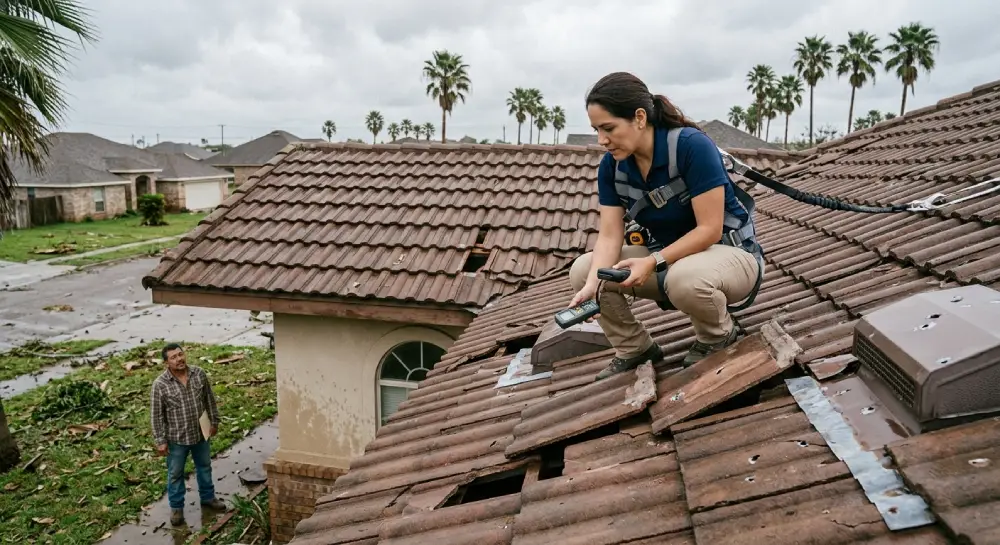
Licensed Texas Representation
TX Public Adjusting is operated by Rise Public Adjusting LLC, Texas License #3356839.
We Represent Policyholders
We do not work for the insurance company. Our responsibility is to the residential or commercial policyholder who hires us.
Texas-Focused Claim Experience
Texas properties face a combination of hail, wind, hurricanes, freezes, fires, and water losses. Our work is centered on Texas claims and the practical issues property owners encounter after damage.
Residential and Commercial Knowledge
We assist homeowners, landlords, business owners, property managers, investors, churches, and other insured property owners.
Detailed Claim Documentation
A claim is stronger when it is supported by organized evidence. We focus on the repair scope, measurements, pricing, photographs, inventories, and policy-related documentation needed to explain the loss.
Help With Claims at Different Stages
We may be able to assist when:
- The loss was recently reported
- The carrier has completed its first inspection
- The payment appears too low
- Important damage was omitted
- A supplemental claim is needed
- The claim has been delayed
- Part or all of the claim was denied
- The commercial loss has become difficult to manage
Free Initial Claim Review
Property owners can speak with TX Public Adjusting before deciding how to proceed. There are no upfront fees for the initial claim review.
Areas We Serve Near San Benito
TX Public Adjusting serves property owners throughout San Benito and surrounding Cameron County communities, including:
- Harlingen
- Brownsville
- Los Indios
- Rio Hondo
- La Feria
- Combes
- Primera
- Palm Valley
- Rancho Viejo
- Olmito
- Los Fresnos
- El Ranchito
- South Padre Island
- Port Isabel
- Laguna Vista
View all areas we serve across Texas to find additional local public-adjuster service pages. We also assist property owners elsewhere in the Rio Grande Valley and across Texas.
Frequently Asked Questions
What does a public adjuster in San Benito do?
A public adjuster represents the policyholder in a property insurance claim. The adjuster reviews the policy, inspects damage, prepares documentation, evaluates the repair scope, and communicates with the insurance company about the claim.
TX Public Adjusting assists with residential and commercial claims involving storms, water, fire, roofs, hail, and other covered losses. The key distinction is explained further in our comparison of a public adjuster vs. independent adjuster.
When should I call a San Benito public adjuster?
Consider calling when the damage is extensive, the claim involves several coverage categories, the carrier’s estimate appears too low, or the cause of damage is being disputed.
You may also seek help before the carrier’s inspection. Early involvement can make it easier to document conditions before repairs, drying, demolition, or cleanup changes the property.
Can a public adjuster help after the insurance company has paid?
Possibly. A payment does not always mean the claim is complete. Additional covered damage or omitted repair work may support a supplemental claim, depending on the policy, deadlines, and claim history.
Bring the carrier estimate, payment letter, policy, contractor documents, and photographs to the free claim review. You can also read more about when it is too late to hire a public adjuster.
Can you help with hurricane or tropical-storm claims in San Benito?
Yes. Tropical-weather claims may involve roofing, wind-driven rain, windows, doors, interiors, contents, detached structures, and commercial operations.
The source of water is especially important. Wind-related rain intrusion and rising floodwater may be handled under different policies or coverage provisions.
Does homeowners insurance cover flooding in San Benito?
Standard homeowners policies commonly exclude rising surface water or flooding. A separate flood policy may provide coverage for qualifying flood damage.
Water entering through a storm-created roof or wall opening may present a different coverage question. The facts of the loss and the policy language should be reviewed carefully.
Can you help with a denied roof claim?
We can review the denial, the carrier’s inspection findings, the roof condition, available storm information, and supporting documentation.
A denial does not automatically mean coverage exists, but the stated reason should be compared with the physical evidence and policy terms before the property owner decides what to do next. When hail is involved, this guide explains what to do if your hail claim was denied.
Why is my contractor’s estimate higher than the insurer’s estimate?
The estimates may use different measurements, repair methods, material assumptions, labor rates, or scopes of work. The carrier’s estimate may also omit access work, matching issues, related trades, or required finishing.
A public adjuster can compare the estimates line by line and document the basis for requested additions.
Do you handle commercial claims in San Benito?
Yes. We assist owners of retail buildings, restaurants, offices, warehouses, multifamily properties, churches, and other commercial facilities.
Commercial claims may include building damage, equipment, inventory, tenant improvements, extra expense, and business-income issues, depending on the policy.
How much does a public adjuster cost in Texas?
Public adjusters generally work under a written agreement that explains how the fee is calculated. The fee may be contingent on claim recovery and is subject to Texas law and the terms of the contract.
TX Public Adjusting provides a free initial claim review and charges no upfront fee.
How long does a San Benito insurance claim take?
The timeline depends on the severity of the loss, the type of coverage, the quality of documentation, inspection availability, repair estimates, and whether the carrier disputes any part of the claim.
A small water claim may progress differently from a hurricane loss affecting an entire commercial building. Our goal is to keep the documentation organized and move the claim forward efficiently. Property owners waiting for a response may also review how long an insurance adjuster has to contact you after a claim is reported.
Get a Free San Benito Insurance Claim Review
You paid for property insurance to protect your home, rental property, or business when serious damage occurs. When the estimate is incomplete or the claim becomes difficult to manage, you do not have to handle every inspection, document request, and scope dispute alone.
TX Public Adjusting represents policyholders—not insurance companies.
Contact us for help with:
- Hail and wind claims
- Hurricane and tropical-storm claims
- Roof damage
- Water damage
- Fire and smoke damage
- Residential property losses
- Commercial property claims
- Delayed, denied, and underpaid claims
Contact TX Public Adjusting to request your free claim review today. There are no upfront fees.
TX Public Adjusting
Operated by Rise Public Adjusting LLC
Texas Public Adjuster License #3356839