

Property damage can turn life upside down in a matter of minutes. Whether your home or commercial property in Longview has been impacted by a severe hailstorm, wind event, fire, burst pipe, or water intrusion, the insurance claim process often becomes just as stressful as the damage itself. A Public Adjuster in Longview, TX represents the policyholder—not the insurance company—and works to document the full extent of the loss, prepare the claim, and negotiate for a fair settlement.
At TX Public Adjusting, a division of Rise Public Adjusting LLC, we proudly help residential and commercial property owners throughout Longview and East Texas recover after covered property losses. As a licensed Texas public adjusting firm (License #3356839), we work exclusively for policyholders, providing independent claim representation from the initial inspection through final settlement.
Our team has reviewed thousands of insurance claims across Texas involving homes, apartment communities, office buildings, churches, retail centers, warehouses, industrial facilities, and other commercial properties. We understand how insurance policies are interpreted, how damage is documented, and how incomplete claim scopes can affect the final settlement.
If you’ve experienced property damage in Longview, you don’t have to face the insurance process alone. Our Texas Public Adjuster team offers a free claim review to help you understand your options before speaking with the insurance company.
Why Property Owners Hire a Public Adjuster in Longview
Longview sits in the heart of East Texas, primarily within Gregg County, with portions extending into Harrison County. The region experiences a unique combination of severe thunderstorms, hail, straight-line winds, tornadoes, flash flooding, and heavy seasonal rainfall. These weather events can create significant property damage that isn’t always fully reflected in an insurance company’s initial estimate.
Property owners in neighborhoods such as Spring Hill, Pine Tree, Judson, Wildwood, and Downtown Longview frequently encounter storm-related damage affecting roofs, siding, windows, fencing, HVAC systems, and interior finishes. Commercial properties near Longview Mall, the medical district, and industrial corridors can also experience business interruptions alongside structural damage.
A public adjuster helps ensure these losses are thoroughly documented rather than relying solely on an insurance carrier’s inspection.
Independent Representation
Unlike insurance company adjusters or independent adjusters hired by carriers, a public adjuster works exclusively for the policyholder. Our responsibility is to evaluate the full scope of covered damage and advocate for a settlement that accurately reflects the property’s condition.
Comprehensive Damage Documentation
Some damage is immediately visible after a storm, while other issues develop over time. Water intrusion behind walls, damaged roof underlayment, compromised flashing, moisture trapped within insulation, and structural movement may not be obvious during an initial inspection.
Our documentation process includes:
- Detailed property inspections
- High-resolution photographic evidence
- Room-by-room damage inventories
- Roof and exterior assessments
- Moisture evaluations when appropriate
- Review of contractor estimates
- Insurance policy analysis
Proper documentation often becomes one of the most important factors during claim negotiations.
Assistance Throughout the Entire Claim
Insurance claims involve much more than submitting photographs.
Our team assists with:
- Reviewing policy coverage
- Preparing claim documentation
- Organizing supporting evidence
- Meeting with insurance representatives
- Responding to requests for additional information
- Reviewing estimates
- Negotiating settlement amounts
- Helping resolve claim disputes when appropriate
Our goal is to allow property owners to focus on restoring their homes or businesses while we manage the claim process.
Common Insurance Claims in Longview
Longview’s weather patterns and growing residential and commercial development create a wide variety of property insurance claims each year. While every claim is different, several types of losses occur more frequently throughout East Texas.
Hail Damage Claims
Hailstorms are among the most common causes of roof damage in Longview. Even hailstones that appear relatively small can reduce the lifespan of roofing materials, damage gutters, dent metal roofing systems, crack skylights, and affect siding.
Residential properties throughout neighborhoods like Spring Hill and Pine Tree often experience:
- Asphalt shingle damage
- Granule loss
- Lifted shingles
- Damaged vents
- Broken skylights
- Gutter impacts
Commercial buildings with flat roofing systems may also sustain membrane punctures or seam damage requiring specialized inspection.
Because hail damage isn’t always obvious from the ground, many legitimate claims begin with a professional roof inspection. Learn more about our hail damage insurance claims services and how we help document storm-related losses throughout Texas. If your shingles have visible impacts, our guide to a hail damage roof insurance claim explains what insurers commonly look for during inspections.
Water Damage Claims
Water losses can result from several causes, including:
- Burst plumbing
- Appliance failures
- Roof leaks
- Storm-driven rain
- Overflowing fixtures
- HVAC failures
In East Texas’ humid climate, prompt documentation is particularly important because moisture can quickly contribute to secondary damage such as mold growth or deterioration of building materials.
Insurance carriers frequently distinguish between sudden accidental water damage and long-term maintenance issues, making proper investigation essential. For sudden pipe breaks, roof leaks, or storm-related water intrusion, a water damage public adjuster can help ensure all covered damage is properly documented before repairs begin.
Fire Damage Claims
Even relatively contained fires can affect much more than the immediate burn area.
Fire claims often include:
- Structural damage
- Smoke contamination
- Soot cleanup
- Electrical damage
- Water damage from firefighting efforts
- Odor remediation
- Contents inventory
- Temporary living expenses when applicable
Accurately documenting both visible and hidden fire damage helps establish the complete scope of loss. Our fire insurance adjuster guide explains how smoke, soot, structural damage, and contents losses are evaluated during the insurance claim process.
Storm Damage Claims
Strong thunderstorms regularly move across East Texas, bringing:
- Straight-line winds
- Fallen trees
- Flying debris
- Broken windows
- Roof damage
- Exterior siding damage
- Fence failures
- Water intrusion
Properties near Lear Park, the Paul Boorman Trail area, and surrounding residential communities are exposed to these weather patterns throughout much of the year.
Storm claims frequently involve multiple categories of damage that should be evaluated together rather than individually.
Roof Damage Claims
Roof systems are the first line of defense against Longview’s changing weather conditions.
Common roof-related claims involve:
- Wind-lifted shingles
- Missing roofing materials
- Flashing damage
- Ridge cap failures
- Impact damage
- Roof leaks
- Underlayment deterioration following storms
A roof that appears functional from the ground may still have substantial storm-related damage requiring repair or replacement. Learn how a public adjuster for roof claims can help identify overlooked storm damage and negotiate with the insurance carrier.
Commercial Property Claims
Longview’s economy includes manufacturing facilities, healthcare providers, retail businesses, warehouses, churches, office buildings, restaurants, and industrial operations.
Commercial claims may involve:
- Building damage
- Inventory losses
- Equipment damage
- Tenant improvements
- Business personal property
- Business interruption
- Extra expense coverage
- Roof systems
- Water intrusion
- Mechanical equipment
Commercial policies are often significantly more complex than residential policies, making detailed claim preparation especially valuable. Learn more about our commercial property insurance claims services for businesses throughout Texas.
Why Insurance Claims Become Underpaid
Many policyholders assume the insurance company’s first estimate represents the complete value of the claim. In reality, initial estimates may not include every covered item.
Several factors commonly contribute to underpaid claims.
Incomplete Inspections
Initial inspections are sometimes limited by weather conditions, accessibility, time constraints, or hidden damage that cannot be identified during a brief site visit.
Additional inspections often reveal damage that was not included in the original estimate.
Missing Scope Items
Insurance estimates may omit necessary repairs such as:
- Flashing replacement
- Code-required upgrades
- Interior repairs
- Painting
- Flooring transitions
- Moisture mitigation
- Trim work
- Insulation replacement
Small omissions can collectively represent a significant difference in the overall settlement. Many of these issues are discussed in our article on common property insurance claim mistakes.
Depreciation Issues
Insurance policies frequently apply depreciation to certain building components. Reviewing how depreciation has been calculated helps determine whether recoverable amounts are being handled appropriately under the policy.
Understanding the difference between actual cash value and replacement cost coverage is critical during settlement negotiations.
Documentation Gaps
Insurance companies evaluate claims based largely on the information available.
Without detailed documentation—including photographs, measurements, contractor estimates, inventories, and supporting evidence—legitimate damage may not be fully reflected in the settlement.
Our role is to assemble organized, comprehensive documentation that clearly supports the claim.
Policy Interpretation
Property insurance policies contain definitions, exclusions, endorsements, deductibles, and coverage provisions that can significantly affect claim outcomes.
Reviewing these provisions carefully helps identify available coverages and ensures the claim is prepared in accordance with the policy language rather than assumptions.
Our Public Adjusting Process
Every insurance claim presents its own challenges, but a structured approach helps ensure nothing is overlooked. At TX Public Adjusting, we guide Longview property owners through each stage of the claim while maintaining clear communication and thorough documentation. If you’re unfamiliar with claim representation, our guide explaining What is a Public Adjuster? provides a complete overview of the process.
Step 1: Free Claim Review
Every claim begins with a complimentary consultation. During this conversation, we discuss:
- The cause of the loss
- When the damage occurred
- The current status of the insurance claim
- Any inspections already completed
- Questions about your insurance policy
- Immediate concerns regarding repairs or mitigation
If we believe we can provide value, we’ll explain how the public adjusting process works before you decide whether to move forward.
Step 2: Comprehensive Property Inspection
Our inspection is designed to identify both obvious and less apparent damage.
Depending on the loss, we evaluate:
- Roofing systems
- Gutters and downspouts
- Siding and exterior finishes
- Windows and doors
- Interior ceilings and walls
- Flooring
- Cabinetry
- Mechanical systems
- Structural components
- Exterior structures such as fences, detached garages, and storage buildings
For commercial properties, we may also inspect production areas, office spaces, tenant improvements, inventory storage, equipment, and specialized building systems.
The objective is to develop a complete understanding of the property’s condition rather than focusing only on the most visible damage.
Step 3: Claim Documentation
After the inspection, our team prepares detailed documentation that supports the insurance claim.
This may include:
- Damage photographs
- Measurement reports
- Itemized repair scopes
- Contents inventories
- Contractor documentation
- Building code considerations
- Supporting estimates
- Policy review
- Claim summaries
Strong documentation creates a solid foundation for productive discussions with the insurance carrier.
Step 4: Communication and Negotiation
Once the claim package has been assembled, we communicate directly with the insurance company throughout the adjustment process.
Our responsibilities include:
- Coordinating inspections
- Answering carrier questions
- Reviewing insurance estimates
- Identifying omitted damage
- Requesting supplemental consideration when necessary
- Supporting the documented scope of loss
Insurance claims often evolve as additional damage is discovered during repairs. When appropriate, supplemental documentation can help ensure newly identified covered damage is considered.
Step 5: Settlement Review
Before a claim is finalized, we carefully review the carrier’s estimate and settlement documentation.
We compare the approved scope with the documented damage to identify discrepancies such as:
- Missing repair items
- Incorrect measurements
- Pricing inconsistencies
- Improper depreciation
- Building code omissions
- Overlooked interior damage
Our goal is to help policyholders understand how the settlement aligns with the documented loss before repairs move forward.
Why Choose TX Public Adjusting
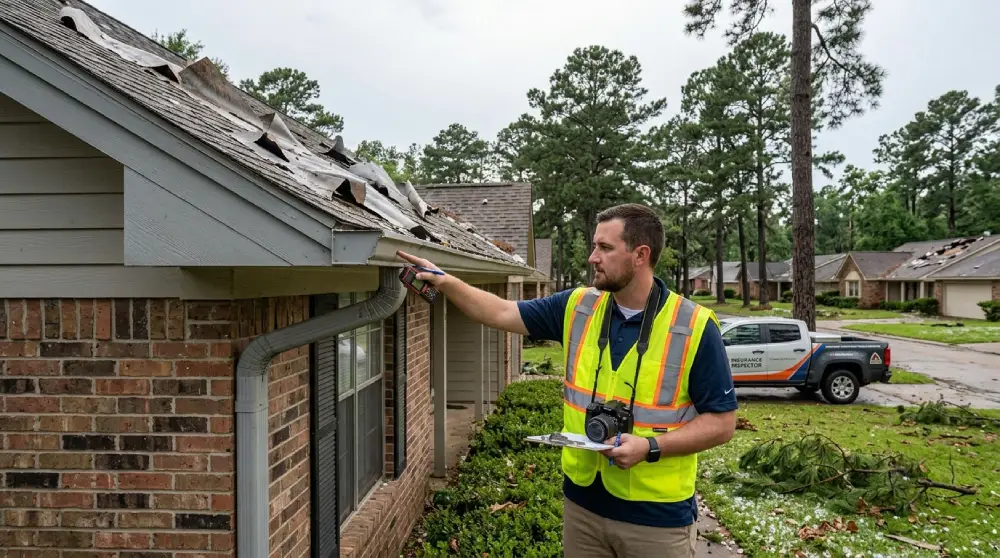
Selecting a public adjuster is an important decision. Experience, local knowledge, and independence all play a role in how a claim progresses.
Licensed Texas Public Adjuster
TX Public Adjusting operates under Rise Public Adjusting LLC and is licensed by the State of Texas (License #3356839).
Licensing demonstrates that public adjusters must meet state requirements and operate under regulations designed to protect consumers.
We Represent Policyholders
Insurance company adjusters work for insurance carriers.
Independent adjusters are hired by insurance carriers.
Public adjusters work for policyholders. If you’re wondering exactly what we do during a claim, read our guide on how public adjusters work.
That distinction matters because our responsibility is to advocate for our client’s interests throughout the claim process.
Residential Experience
We assist homeowners throughout Longview with claims involving:
- Storm damage
- Wind damage
- Hail damage
- Fire losses
- Water damage
- Roof damage
- Lightning damage
- Falling trees
- Smoke damage
Whether your property is located in Spring Hill, Pine Tree, Judson, Wildwood, Forest Hills, or another Longview neighborhood, we understand the types of property losses common throughout East Texas.
Commercial Property Expertise
Commercial claims often involve multiple buildings, specialized equipment, tenant improvements, business interruption, and complex policy provisions.
Our experience includes helping owners of:
- Office buildings
- Retail centers
- Restaurants
- Medical facilities
- Apartment communities
- Churches
- Industrial buildings
- Warehouses
- Self-storage facilities
- Mixed-use commercial properties
Commercial insurance claims require detailed documentation, careful policy review, and thorough negotiation.
Texas-Focused Knowledge
Texas weather is unlike anywhere else.
Longview property owners may experience:
- Spring hailstorms
- Tornadic thunderstorms
- Straight-line wind events
- Heavy rainfall
- Flash flooding
- Occasional ice storms
- Extreme summer heat affecting roofing systems
Understanding how these events affect different construction types helps us prepare stronger insurance claims.
Thousands of Claims Reviewed
Over the years, our team has reviewed thousands of residential and commercial property claims across Texas.
Every claim is different, but experience helps identify:
- Common scope omissions
- Frequently overlooked damage
- Documentation requirements
- Policy interpretation issues
- Negotiation opportunities
Our focus remains the same on every project: helping policyholders present the strongest documented claim possible.
Areas We Serve Near Longview
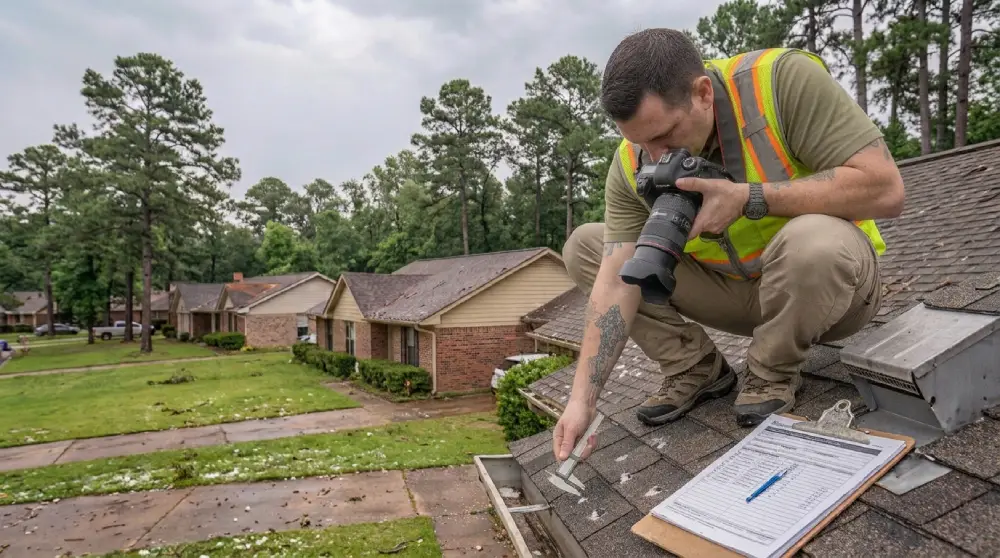
TX Public Adjusting proudly assists property owners throughout Longview and surrounding East Texas communities.
Nearby service areas include:
- Hallsville
- Kilgore
- White Oak
- Gladewater
- Gilmer
- Liberty City
- Lakeport
- East Mountain
- New London
- Tatum
- Marshall
- Henderson
- Diana
- Ore City
- Jefferson
Whether your property is located within the city limits or elsewhere in Gregg, Harrison, Rusk, Upshur, or surrounding counties, our team is available to assist with residential and commercial insurance claims.
Frequently Asked Questions
1. What does a public adjuster do?
A public adjuster represents the policyholder during the insurance claim process. Instead of working for the insurance company, a public adjuster evaluates property damage, prepares documentation, reviews policy provisions, and negotiates with the insurance carrier on the owner’s behalf.
This allows property owners to focus on recovery while having an experienced advocate manage the claim. You can also learn about the differences between a public adjuster vs independent adjuster before deciding which type of claim professional is right for your situation.
2. When should I contact a public adjuster?
The sooner professional assistance is involved, the easier it can be to properly document the loss.
However, many Longview property owners also hire a public adjuster after receiving an estimate they believe is incomplete or after encountering delays or disagreements during the claim. If your claim has already started, our article on when is it too late to hire a public adjuster explains when professional representation can still make a difference.
3. Can you help if my insurance company has already inspected the property?
Yes.
Many clients contact us after the carrier has already completed its inspection. We can independently evaluate the damage, review the estimate, and determine whether additional documentation may be appropriate.
4. Do you handle commercial insurance claims?
Absolutely.
We represent businesses of many sizes throughout East Texas, including retail properties, office buildings, churches, apartment communities, warehouses, industrial facilities, and other commercial properties.
5. How are public adjusters paid?
Public adjusters generally work on a contingency fee basis, meaning payment is typically tied to the successful resolution of the claim as outlined in the public adjusting agreement.
This allows many property owners to obtain professional representation without paying upfront consulting fees. You can also read our guide covering the truth about public adjuster fees to better understand how contingency fee agreements typically work.
6. Can you help with hail damage claims?
Yes.
Hail is one of the most common causes of insurance claims in Longview. We inspect roofing systems, exterior components, and interior damage to develop a complete understanding of the property’s condition following a storm. We also recommend reviewing our guides on document hail damage for an insurance claim and what to do if your hail claim was denied.
7. My roof isn’t leaking. Could it still have storm damage?
Yes.
Wind and hail damage often affect roofing materials without creating immediate leaks. Left unaddressed, that damage may shorten the roof’s lifespan or lead to future water intrusion.
A professional inspection can identify issues that may not be visible from ground level.
8. Can a business hire a public adjuster?
Yes.
Commercial property owners frequently retain public adjusters because business insurance policies often involve more complex coverages, multiple structures, equipment, inventory, and business interruption considerations.
9. Will hiring a public adjuster delay my insurance claim?
No.
In many situations, organized documentation and consistent communication actually help move the claim process forward more efficiently by reducing confusion and providing the information the insurance carrier needs to evaluate the loss.
10. Do you charge for a claim review?
No.
TX Public Adjusting offers a free claim review for Longview homeowners and business owners. We’ll discuss your situation, answer your questions, and explain how we may be able to assist before you make any commitment.
Get a Free Claim Review from a Longview Public Adjuster
Property damage can be overwhelming, but handling the insurance claim doesn’t have to be. Whether your home has suffered hail damage after an East Texas thunderstorm, your business has experienced water intrusion from heavy rainfall, or your property has been affected by fire, wind, or another covered loss, having an experienced advocate can make a meaningful difference throughout the claims process.
At TX Public Adjusting, we represent homeowners, business owners, property managers, churches, apartment owners, and commercial property owners throughout Longview and the surrounding East Texas communities. As Rise Public Adjusting LLC, we’re proud to be a Licensed Texas Public Adjuster (License #3356839) dedicated to representing policyholders—not insurance companies.
If you’re unsure whether your insurance estimate reflects the full extent of your damage, we’ll review your claim, answer your questions, and explain your options.
Why Contact TX Public Adjusting?
- Free claim review
- No upfront fees
- Residential and commercial claim representation
- Licensed Texas Public Adjuster
- Thousands of Texas property claims reviewed
- Independent representation focused solely on policyholders
- Assistance from initial inspection through claim resolution
Contact TX Public Adjusting today to schedule your free claim review and learn how we can help maximize your property insurance claim.