Property damage in Universal City can turn into a complicated insurance claim faster than many owners expect. A severe thunderstorm may damage shingles, flashing, gutters, fencing, windows, HVAC equipment, and interior finishes during the same event. A plumbing failure can affect several rooms before the moisture is discovered. Even when the loss appears straightforward, the carrier’s first estimate may not include every repair required to return the property to its pre-loss condition.
TX Public Adjusting provides insurance claim help to homeowners, landlords, business owners, property managers, and commercial policyholders throughout Universal City. As a licensed Texas public adjuster, we represent the policyholder—not the insurance company—during the documentation, estimating, and negotiation process.
TX Public Adjusting is operated by Rise Public Adjusting LLC, Texas License #3356839. We review residential and commercial property claims involving hail, wind, water, fire, roof damage, storm losses, and other covered events.
Concerned that your Universal City insurance claim was underpaid, delayed, denied, or poorly documented? Request a free claim review. There are no upfront fees.
Why Property Owners Hire a Public Adjuster in Universal City
Universal City occupies a compact but active part of the northeastern San Antonio metro. Properties near Pat Booker Road face different considerations than homes near the Olympia Hills area, older residential streets close to Randolph Air Force Base, or commercial buildings serving the Joint Base San Antonio–Randolph community.
A public adjuster helps the property owner understand the claim from the policyholder’s side. Property owners who are unfamiliar with the role can review our guide explaining what a public adjuster does during a Texas property insurance claim. The insurance company has adjusters, consultants, engineers, and claim systems protecting its financial interests. The policyholder is responsible for proving the loss, meeting policy requirements, documenting damage, presenting repair costs, and responding to requests from the carrier.
That imbalance can become costly when a claim involves:
- Damage to several building systems
- Disagreement over the cause of loss
- Hidden moisture behind walls or flooring
- Hail impacts that are difficult to see from ground level
- Roof repairs that require matching or code-related work
- Commercial interruption or loss-of-income concerns
- A carrier estimate that leaves out necessary labor or materials
- Prior repairs, aging materials, or pre-existing conditions
- Depreciation that is calculated incorrectly
- A denied claim that may deserve another review
A public insurance adjuster in Universal City can inspect the property, review the policy and carrier estimate, prepare a detailed scope of damage, organize supporting records, and communicate with the insurer regarding the value of the covered loss.
Property Damage Risks in Universal City
Universal City’s location northeast of San Antonio exposes homes and businesses to changing South Central Texas weather. Warm-season moisture, strong thunderstorms, passing fronts, and rapidly developing storm cells can produce several types of damage in a short period.
Hail and Severe Thunderstorms
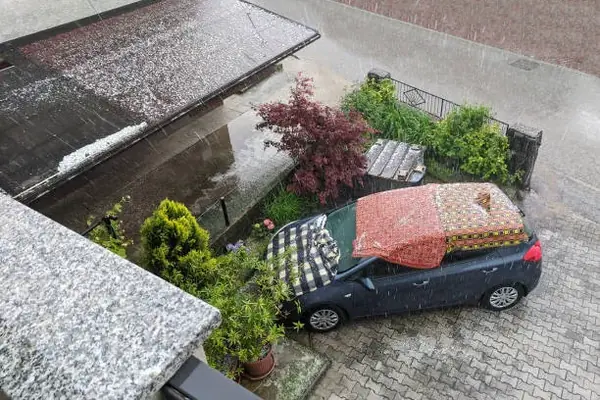
Hail is one of the most important property risks for Universal City owners. Even a brief hailstorm may affect asphalt shingles, metal roofing, roof vents, soft-metal components, gutters, downspouts, window screens, fencing, siding, and outdoor equipment.
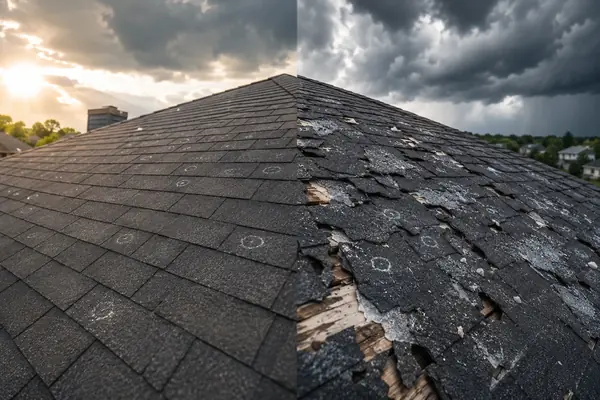
The damage is not always obvious. Shingles may remain in place while losing protective granules or suffering fractures beneath the surface. Metal vents and flashing may show dents that help establish the direction and intensity of the storm. HVAC fins can also be crushed, reducing efficiency or creating another repair item that should be evaluated.
A hail claim should consider the complete exterior—not just the roof.
High Winds and Wind-Driven Rain
Straight-line winds can lift shingles, loosen flashing, damage ridge caps, pull gutters away from fascia, break limbs, and send debris into the building envelope. Once an opening develops, wind-driven rain may enter the attic or wall system.
Interior stains may represent only a small part of the damage. Wet insulation, roof decking, drywall, trim, flooring, and electrical components may also require inspection. Drying equipment, moisture mapping, demolition, debris removal, and reconstruction should be evaluated as separate parts of the claim.
Localized Flooding and Drainage Problems
Universal City maintains floodplain information because flood risk can vary from one street or parcel to another. Heavy rain can overwhelm drainage systems, collect in low areas, enter garages, or contribute to water intrusion around doors, foundations, and exterior walls.
Property owners should understand that flood insurance and standard property insurance are not the same. The source of the water matters. Damage caused by rising surface water may be treated differently from rain entering through storm-created roof damage or a plumbing failure inside the building.
A careful cause-of-loss review can help determine which policy may apply.
Lightning and Electrical Damage
Severe storms may also produce lightning-related losses. Electrical surges can damage appliances, security systems, HVAC controls, office equipment, refrigeration, electronics, and other building systems.
These claims often require more than a list of visibly burned items. Diagnostic reports, electrician findings, equipment records, replacement specifications, and evidence connecting the failure to the storm may be needed.
Freeze and Plumbing Losses
Cold weather is less frequent than heat in the Universal City area, but hard freezes can still cause supply lines, exterior plumbing, irrigation components, and pipes in vulnerable spaces to rupture.
Plumbing losses can spread through walls, ceilings, cabinets, flooring, insulation, and personal property. When mitigation begins quickly, damaged materials may be removed before the carrier completes its inspection. Photos, moisture readings, invoices, samples, and a room-by-room record become essential.
Common Insurance Claims in Universal City

Hail Damage Claims
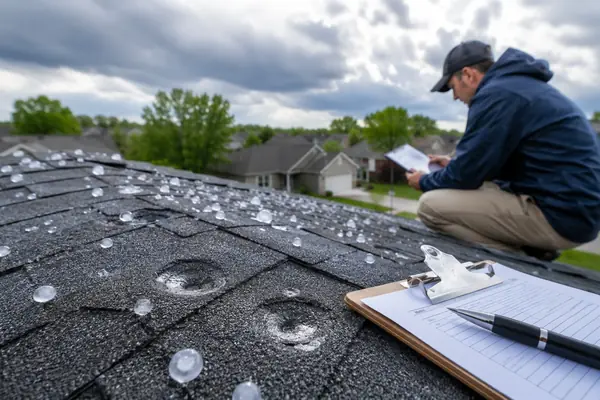
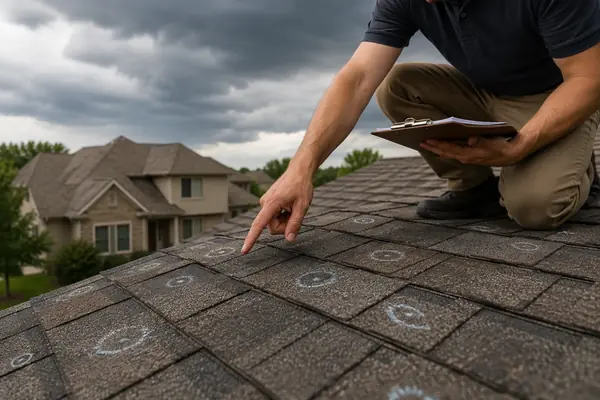
A proper hail damage claim should document the storm date, affected roof slopes, test areas, collateral impacts, roofing material, repairability, age, condition, and related exterior damage.
TX Public Adjusting reviews hail claims for omitted items, incomplete roofing scopes, questionable repair assumptions, depreciation problems, and disagreements about the extent of damage. Property owners can learn more about roof inspections, documentation, carrier estimates, and repair disputes in our hail damage roof insurance claim guide.
Water Damage Claims
Water damage may result from plumbing failures, appliance leaks, roof openings, overflowing fixtures, broken supply lines, HVAC drainage problems, or other covered events. Property owners can also review our guide to dealing with an insurance adjuster after water damage before giving recorded statements, approving demolition, or accepting the carrier’s initial estimate.
The visible water line does not always define the full loss. Moisture can travel beneath flooring, behind baseboards, inside cabinets, and through wall cavities. A complete water claim may require mitigation, testing, contents handling, demolition, drying, cleaning, reconstruction, and temporary relocation expenses when covered. A water damage public adjuster can help evaluate moisture-related damage, mitigation records, repair estimates, and missing items in the insurance company’s scope.
Fire and Smoke Damage Claims
Fire losses may involve structural damage, smoke residue, soot, odor, water from firefighting efforts, electrical damage, damaged contents, debris removal, temporary housing, and code-related repairs.
Smoke can move beyond the room where the fire started. Porous surfaces, insulation, ductwork, textiles, electronics, and personal property may require specialized evaluation. A fire insurance adjuster can document structural damage, smoke contamination, damaged contents, debris removal, and other parts of a fire claim that may be overlooked.
Storm and Wind Damage Claims
Storm claims in Universal City may involve roof coverings, flashing, windows, doors, fencing, exterior finishes, fallen trees, detached structures, interior water intrusion, and damaged mechanical systems.
A carrier may identify one visible repair while overlooking related work needed to complete the project correctly. Our review considers the entire affected area and the relationship between exterior and interior damage.
Roof Damage Claims
Roof claims commonly become disputed because the carrier and property owner disagree about repairability, cause, age, wear, matching, material availability, code requirements, or the number of slopes affected.
A small roof allowance may not account for access, steep charges, waste, flashing, ventilation, underlayment, drip edge, detach-and-reset work, or interior repairs caused by water entry. A fire insurance adjuster can document structural damage, smoke contamination, damaged contents, debris removal, and other parts of a fire claim that may be overlooked.
Commercial Property Claims
Commercial losses can create pressure beyond the physical repairs. Owners may face tenant concerns, damaged inventory, unusable areas, equipment failures, interrupted operations, temporary relocation expenses, and lost business income. Our commercial property claims services can include building damage, equipment, inventory, tenant improvements, mitigation expenses, and business interruption documentation when the policy provides applicable coverage.
Universal City businesses along Pat Booker Road and other commercial corridors may require a claim strategy that coordinates building damage, contents, equipment, mitigation, income records, and lease responsibilities.
TX Public Adjusting handles commercial and residential claims and can work with property owners, managers, contractors, accountants, mitigation providers, and other claim professionals as needed.
Why Universal City Insurance Claims Become Underpaid
An insurance payment is only as reliable as the investigation and scope behind it. When damage is missed or poorly explained, the estimate may appear precise while still being incomplete.
Damage Is Missed During the Initial Inspection
Carrier inspections may be brief. Some areas may be inaccessible, concealed, already undergoing emergency mitigation, or overlooked entirely.
Common omissions include:
- Additional roof slopes
- Flashing and roof penetrations
- Gutters and downspouts
- Window screens and glazing
- Fence staining or replacement
- HVAC components
- Attic insulation
- Wet wall cavities
- Flooring beneath cabinets
- Paint continuity
- Debris removal
- Contents manipulation
- Temporary protection
- Permit or code-related work
The Scope Does Not Reflect the Full Repair
An estimate may include a repair that is technically listed but cannot be completed as priced. The scope may omit setup, access, labor minimums, material waste, detach-and-reset operations, testing, supervision, or work needed to protect adjoining finishes.
The issue is not simply the price of one line item. It is whether the entire proposed repair can actually restore the damaged property.
Depreciation Is Applied Incorrectly
Recoverable depreciation, nonrecoverable depreciation, actual cash value, replacement cost, and policy limits can affect when and how claim funds are paid.
Property owners should understand what was depreciated, why it was depreciated, and what must be submitted to recover additional funds when the policy allows it.
Documentation Is Incomplete
Insurers make decisions based on the records in the claim file. Missing photographs, vague invoices, incomplete inventories, absent moisture readings, or estimates without supporting detail can weaken an otherwise valid claim.
Documentation may include:
- Date-stamped photographs and videos
- Measurements and diagrams
- Contractor estimates
- Mitigation records
- Moisture readings
- Expert reports
- Repair invoices
- Equipment diagnostics
- Contents inventories
- Receipts and proof of ownership
- Business income records
- Correspondence with the carrier
Many underpaid losses begin with preventable property insurance claim mistakes, including incomplete photographs, discarded materials, vague contractor estimates, and missing records.
The Carrier Uses a Limited Repair Assumption
A spot repair may be proposed even when the material cannot be matched, the affected component cannot be repaired without damaging surrounding areas, or the proposed method would not return the property to its pre-loss condition.
These issues require evidence and a clear explanation. Simply telling the insurer that the estimate is too low is rarely enough.
Received an estimate that does not match the real repair work? TX Public Adjusting offers a free claim review for Universal City residential and commercial property owners.
Our Public Adjusting Process
1. Claim Review
We begin by reviewing the loss, policy information, carrier correspondence, estimates, photographs, payments, and current claim status.
This helps identify missing information, deadlines, coverage questions, and the strongest next steps.
2. Property Inspection
We inspect the reported damage and document affected areas. Depending on the loss, this may include the roof, exterior elevations, interior rooms, detached structures, contents, equipment, and commercial spaces.
3. Damage Documentation
We organize the evidence needed to support the claim. The objective is to connect the covered event to a complete, defensible repair scope.
4. Estimate and Claim Presentation
We prepare or review the damage estimate and identify discrepancies in the carrier’s scope. Supporting photographs, reports, records, and explanations are assembled into a structured claim presentation.
5. Carrier Communication and Negotiation
We communicate with the insurance company regarding the documented loss, answer claim-related questions, participate in inspections when appropriate, and negotiate from the policyholder’s position.
6. Settlement Support
We help the property owner understand the settlement documents, payment categories, depreciation, supplements, and remaining claim requirements.
Every claim is different. No public adjuster can guarantee a particular result, but thorough documentation and informed representation can give the policyholder a stronger position.
Why Choose TX Public Adjusting

Licensed Texas Representation
TX Public Adjusting is operated by Rise Public Adjusting LLC, Texas License #3356839.
Licensing matters. Property owners should verify that the person representing them is properly authorized to handle public adjusting work in Texas.
We Work for Policyholders
The insurance company’s adjuster represents the carrier. A public adjuster represents the insured property owner.
Our role is to evaluate and present the claim from your side of the policy relationship.
Residential and Commercial Experience
We assist with houses, rental properties, multifamily buildings, offices, retail spaces, restaurants, warehouses, and other insured properties.
Residential claims often involve temporary living concerns and personal property. Commercial claims may involve operations, tenant responsibilities, equipment, inventory, and income-related documentation.
Texas-Focused Claim Knowledge
Texas property claims are shaped by hailstorms, high winds, heavy rain, freezes, fires, and other regional conditions. Our work focuses on Texas policyholders and the property losses they regularly face.
Detailed Claim Review
Our team has reviewed thousands of property claims. That experience helps us recognize common scope gaps, documentation problems, estimate inconsistencies, and claim issues that property owners may not notice on their own.
No Upfront Fees
You can request a free claim review without paying an upfront consultation fee. Any fee arrangement is explained before representation begins and documented in the required agreement.
Universal City Properties We Assist
TX Public Adjusting serves property owners throughout Universal City, including properties near:
- Pat Booker Road
- Kitty Hawk Road
- Olympia Hills
- Coronado Village
- Old Cimarron Trail
- Meadow Oaks
- Sunrise Canyon
- Universal City Boulevard
- Northeast Lakeview College
- Randolph Air Force Base
- Olympia Hills Golf Course
- Residential streets near Live Oak and Converse
- Commercial areas connecting Universal City and Schertz
Neighborhood and subdivision names may overlap with nearby municipal boundaries, but our focus remains the insured property and the terms of its policy.
Areas We Serve Near Universal City
We also assist policyholders in surrounding communities, including:
- Live Oak
- Schertz
- Selma
- Converse
- Cibolo
- Kirby
- Windcrest
- Garden Ridge
- New Braunfels
- Northeast San Antonio
- Other communities throughout Bexar and Guadalupe counties
Universal City’s location makes it closely connected to the broader northeast San Antonio corridor. A storm affecting Universal City may produce related claims across Live Oak, Schertz, Converse, and Cibolo during the same weather event.
Frequently Asked Questions
What does a public adjuster do for a Universal City property owner?
A public adjuster represents the policyholder during a property insurance claim. The work may include reviewing the policy, inspecting damage, documenting the loss, preparing an estimate, identifying omissions in the carrier’s scope, and negotiating with the insurance company.
The carrier’s adjuster works for the insurance company. A public adjuster works for the insured property owner. Our comparison of a public adjuster vs. independent adjuster explains who each professional represents and how their responsibilities differ during a claim.
When should I hire a public adjuster in Universal City?
Many property owners contact a public adjuster after receiving a low estimate, partial denial, full denial, delayed response, or confusing request from the carrier. Others seek help early because the loss is large, involves several structures, or affects business operations.
The best timing depends on the claim, policy deadlines, and work already completed. Earlier review often makes it easier to preserve evidence and organize documentation.
Can a public adjuster help after the insurance company has already paid?
Yes. An initial payment does not always mean the claim has been fully resolved. The carrier’s estimate may contain omissions, and some policies allow supplemental documentation to be submitted.
The claim status, deadlines, release language, prior repairs, and policy terms should be reviewed before deciding what options remain.
How much does a public adjuster charge in Texas?
Public adjusters generally work under a written fee agreement that explains how compensation is calculated. The fee may be contingent on the amount recovered, subject to Texas law and the terms of the contract.
TX Public Adjusting offers a free initial claim review and does not charge an upfront fee for that review.
Can you help with a denied hail or roof claim?
A denied claim can be reviewed to determine the carrier’s stated reason, the policy provisions cited, the available storm and damage evidence, and whether documentation may be missing.
A denial is not automatically incorrect, but it should be supported by a reasonable investigation and the applicable policy language.
Does homeowners insurance cover flooding in Universal City?
Standard homeowners policies commonly distinguish between rising surface water and water entering because of a covered opening or internal plumbing failure. Flood damage may require a separate flood policy.
Because the source and path of the water matter, the property should be inspected and both the policy and loss facts should be reviewed before drawing a conclusion about coverage.
What should I do immediately after storm damage?
Protect people first. Avoid unstable structures, standing water near electrical systems, downed lines, and unsafe roof access. Take photographs and videos from safe locations before temporary repairs begin.
Then prevent additional damage when reasonably possible, save receipts, preserve damaged materials when practical, and report the loss according to the policy. Avoid permanent repairs until the damage has been properly documented.
Can you help with a commercial claim near Pat Booker Road?
Yes. We assist commercial property owners and managers with building damage, contents, equipment, mitigation expenses, tenant-related issues, and business interruption documentation when applicable.
Commercial claims often require coordination among several professionals. Clear records and a unified scope can reduce confusion during the adjustment process.
How long does a Universal City property claim take?
The timeline depends on the severity of the loss, carrier responsiveness, investigation requirements, documentation quality, expert involvement, and whether coverage or scope is disputed.
A simple claim may move quickly. A large fire, extensive water loss, commercial interruption claim, or disputed roof claim may take longer.
Is TX Public Adjusting part of my insurance company?
No. TX Public Adjusting is not the insurance carrier’s adjusting company. We provide independent public adjusting services for policyholders.
TX Public Adjusting is operated by Rise Public Adjusting LLC, Texas License #3356839.
Get a Free Universal City Claim Review
You paid for property insurance to protect your home, rental property, or business. When a covered loss occurs, the claim should account for the complete documented damage—not just the easiest items to see during a brief inspection.
TX Public Adjusting helps Universal City policyholders review estimates, identify scope gaps, document losses, and communicate with insurance carriers from a stronger position.
Contact TX Public Adjusting for a free claim review.
- Licensed Texas public adjuster
- Residential and commercial property claims
- Hail, wind, water, fire, storm, and roof losses
- Independent representation for policyholders
- No upfront fees
- Rise Public Adjusting LLC
- Texas License #3356839