

Property damage in Lumberton can become complicated quickly. A severe thunderstorm can damage shingles and exterior components in minutes. A tropical system can push wind-driven rain through a roof or overwhelm drainage throughout parts of Hardin County. Plumbing failures, fires, fallen trees, and commercial building losses can create equally difficult insurance claims.
When the carrier’s estimate does not reflect the full damage, a licensed public adjuster in Lumberton can represent the policyholder during the claim process. Property owners who are unfamiliar with this type of representation can read our guide explaining what a public adjuster does.
TX Public Adjusting helps Lumberton homeowners, landlords, business owners, and commercial property managers document covered damage, review insurance estimates, identify scope omissions, and negotiate directly with the insurance company. We represent policyholders—not insurance carriers.
TX Public Adjusting operates through Rise Public Adjusting LLC, Texas License #3356839.
Dealing with a denied, delayed, or underpaid claim? Contact TX Public Adjusting for a free claim review. There are no upfront fees.
Why Property Owners Hire a Public Adjuster in Lumberton
Lumberton sits in Hardin County within the heavily wooded and storm-exposed region of Southeast Texas. The community is close enough to the Gulf Coast to experience the effects of hurricanes and tropical storms, while inland thunderstorms can bring damaging winds, lightning, hail, and intense rainfall.
Heavy rain and drainage problems are especially serious concerns. Lumberton and surrounding portions of Hardin County have experienced repeated flooding from tropical systems and prolonged rainfall. During major events, rising water can affect roads, residences, rental properties, contents, mechanical systems, and commercial buildings.
The city’s proximity to Village Creek, Pine Island Bayou, wooded acreage, and low-lying drainage areas can also create complex loss conditions. Recent flooding has affected areas near Cooks Lake Road, while local officials have continued pursuing drainage improvements intended to reduce hurricane-season flooding.
Insurance claims arising from these events are rarely limited to one obvious repair. A damaged roof may also result in:
- Wet attic insulation
- Ceiling and drywall damage
- Interior staining
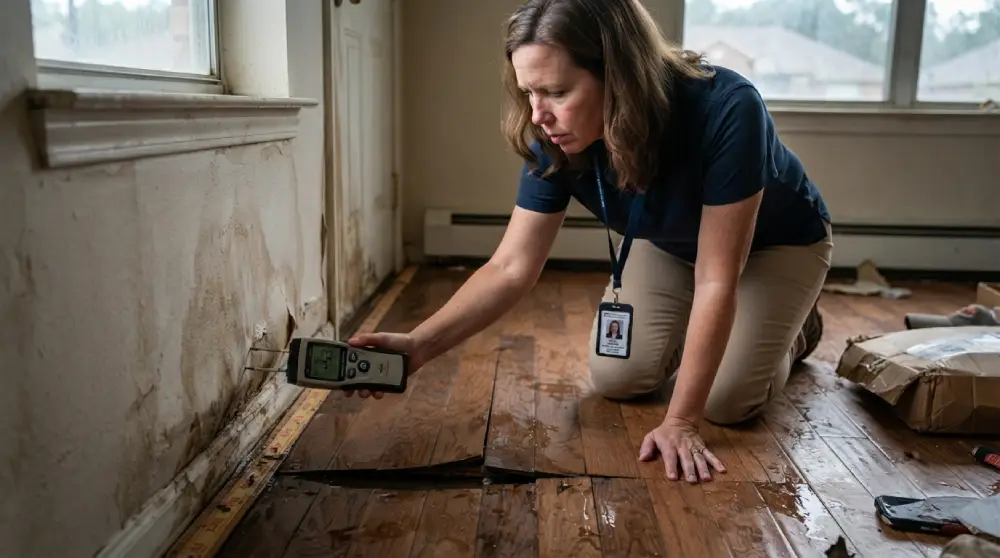
- Damaged flooring
- Electrical concerns
- Mold-related remediation
- Damaged contents
- Temporary repair costs
- Business interruption
- Additional living expenses
An insurance company adjuster evaluates the claim for the carrier. A public adjuster works for the policyholder and develops an independent assessment of the covered loss.
Property owners commonly contact TX Public Adjusting when:
- The insurance estimate appears too low
- Important damage was left out of the scope
- The claim was denied
- The carrier blamed the loss on wear and tear
- Depreciation was applied incorrectly
- Interior damage was acknowledged but the roof was not
- Repairs uncovered additional hidden damage
- The claim has stalled
- Multiple buildings or structures are involved
- The owner does not have time to manage a complicated claim
Our role is to organize the claim, document the damage, evaluate the carrier’s estimate, and present the policyholder’s position with supporting evidence.
Local Property Risks in Lumberton and Hardin County
Lumberton is known for its family-oriented community, pine forests, parks, and proximity to natural attractions such as Village Creek State Park and the Big Thicket region. Those same environmental features contribute to the types of property losses owners may face.
The City of Lumberton identifies Village Creek State Park, Freedom Park, and Lumberton City Park among its major recreational areas. Village Creek State Park is known for paddling, camping, hiking, fishing, swimming, and bird watching.
Hurricanes and Tropical Storms
Although Lumberton is inland, it can experience hurricane-force winds, tropical-storm gusts, prolonged rainfall, falling trees, and wind-driven water. Our guide to property damage after a hurricane explains how roof, structural, interior, utility, and contents damage can develop during a major Texas storm.
Hurricanes Rita, Ike, and Harvey all affected the Lumberton area, and Tropical Depression Imelda brought another major rainfall event to Southeast Texas. Local reporting notes that Harvey and Imelda each produced rainfall totals approaching 40 inches in parts of the region.
Hurricane-related insurance claims may involve:
- Missing or lifted shingles
- Roof decking damage
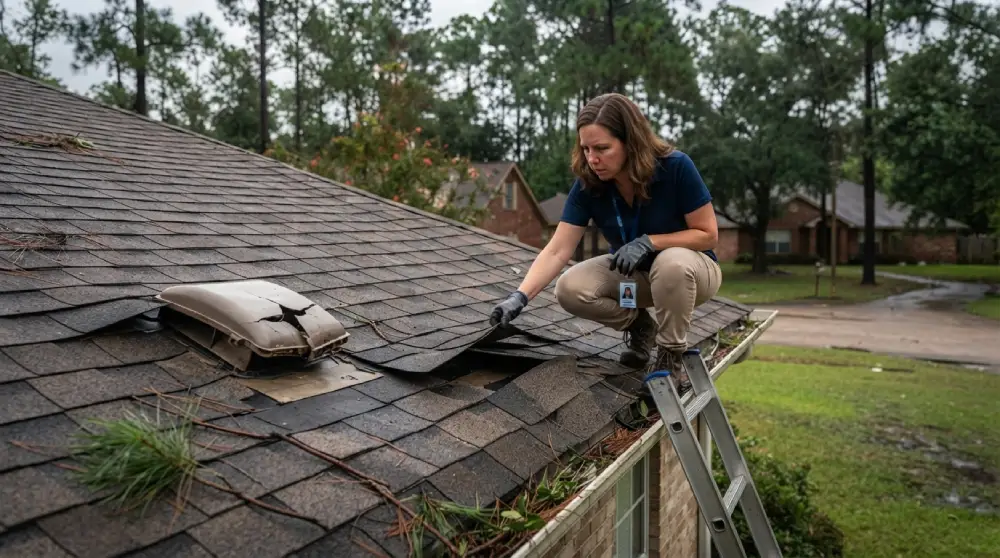
- Damaged flashing and vents
- Broken windows
- Exterior siding damage
- Fallen trees
- Water entering around doors and windows
- Interior ceiling damage
- Detached structure losses
- Spoiled inventory
- Power-surge damage
- Commercial interruption losses
Wind and flood damage may involve different policies, deductibles, exclusions, and documentation requirements. Standard homeowners insurance generally does not cover rising floodwater, so the source of the water must be carefully documented rather than treated as a minor detail.
Heavy Rain and Flood-Related Damage
Flooding is one of the most recognizable property threats in Lumberton.
Claims can become disputed when water enters through several pathways. When the source of moisture or the carrier’s repair scope is disputed, our guide to dealing with an insurance adjuster after water damage explains what property owners should document and review. A carrier may classify damage as excluded flooding, while a policyholder may believe that wind first damaged the roof or exterior envelope. Other losses may involve plumbing backups, overflow, roof leaks, or rain entering through storm-created openings.
A careful inspection should document:
- Where water first entered
- Whether the roof or walls were damaged by wind
- Water lines and moisture patterns
- Wet insulation and concealed cavities
- Damaged electrical components
- Flooring and cabinet damage
- Personal property losses
- Emergency drying and mitigation work
- Photographs taken before demolition
- Weather information for the date of loss
TX Public Adjusting reviews the physical evidence and policy language before developing the claim presentation.
Severe Thunderstorms and Wind Damage
Southeast Texas thunderstorms can produce straight-line winds strong enough to damage roofing, fences, siding, windows, sheds, carports, signs, and mature trees.
Wind damage is not always as visible as a missing section of roof. Shingles may be creased, loosened, lifted, or displaced without immediately falling to the ground. Flashing can separate around vents and roof penetrations. Tree limbs can puncture roof coverings or damage detached structures.
A surface-level inspection may overlook these conditions.
Hail Damage
Lumberton receives fewer headline-making hailstorms than parts of North Texas, but Southeast Texas properties are still exposed to severe thunderstorms capable of producing damaging hail.
Hail may affect:
- Asphalt shingles
- Metal roofing
- Gutters and downspouts
- Roof vents
- HVAC fins
- Window screens
- Siding
- Fences
- Commercial rooftop equipment
- Exterior lighting
- Soft metals and flashing
Hail damage claims are often disputed when the carrier identifies only cosmetic marks or concludes that the roof’s condition is due to age. Lumberton property owners can review our Texas hail damage insurance claim guide for additional information about inspections, documentation, roof damage, and claim disputes. A documented inspection helps separate storm-created damage from ordinary deterioration.
Fire, Smoke, and Electrical Damage
Residential and commercial fires can cause damage far beyond the area touched by flames. A fire insurance adjuster can evaluate structural damage, smoke contamination, contents losses, water used during firefighting, and other covered components of the claim.
Smoke particles can travel through attics, wall cavities, ductwork, adjoining rooms, and commercial ventilation systems. Heat may damage wiring, framing, roofing materials, equipment, and contents. Water used during firefighting can create additional damage that must be included in the claim.
Fire claims may also involve:
- Debris removal
- Structural engineering
- Contents inventory
- Cleaning and deodorization
- Code-required upgrades
- Temporary housing
- Lost rental income
- Business income losses
- Equipment replacement
- Demolition and reconstruction
Large fire losses may also require specialized cleanup and disposal. Our guide to house fire debris removal costs explains why demolition, hauling, testing, labor, and disposal requirements should be included in the claim evaluation. A thorough scope should address the full effect of the fire rather than focusing only on visibly burned materials.
Common Insurance Claims in Lumberton
Hail Damage Claims
Hail claims require more than photographs of a few roof impacts. The inspection should evaluate the roof covering, soft metals, gutters, vents, siding, fencing, outdoor equipment, and any related interior leakage.
TX Public Adjusting can review whether the carrier’s estimate includes all affected components and whether the proposed repair approach is realistic.
Water Damage Claims
Water losses may come from burst pipes, failed supply lines, appliance leaks, roof openings, HVAC condensation, overflowing fixtures, or storm-driven rain.
These claims can expand once damaged flooring, cabinets, insulation, or drywall are removed. We document the visible loss and evaluate whether concealed damage or necessary access work was omitted.
Fire Damage Claims
Fire insurance claims often involve structural damage, smoke contamination, water damage, contents losses, and temporary relocation. Our detailed guide to fire damage insurance claims covers several issues that can affect the scope and value of a residential or commercial fire loss.
Our team helps organize the claim and prepare a detailed presentation that accounts for the different categories of loss.
Storm Damage Claims
Storm claims in Lumberton may combine roof damage, fallen trees, exterior damage, water intrusion, power loss, and debris removal.
The claim should tell the complete story of the event. Treating each damaged component as an isolated repair can result in an estimate that does not reflect the actual work required.
Roof Damage Claims
Roof claims are among the most frequently disputed property claims. Our guide to hiring a public adjuster for a roof claim explains how estimate omissions, repair-versus-replacement disputes, depreciation, and overlooked storm damage can affect the claim.
Common disagreements include:
- Repair versus replacement
- Matching shingles or panels
- Number of damaged slopes
- Pre-existing wear
- Mechanical damage
- Code-required work
- Underlayment replacement
- Flashing and ventilation
- Interior water damage
- Contractor overhead and profit
We compare the insurer’s scope with the physical conditions at the property and identify missing or undervalued items.
Commercial Property Claims
Lumberton’s commercial properties include retail centers, medical and professional offices, restaurants, churches, warehouses, apartment communities, schools, service businesses, and properties along major routes such as U.S. Highway 69 and FM 421.
A commercial claim may involve more than building repairs. The policyholder may also face:
- Damaged inventory
- Equipment breakdown
- Spoilage
- Lost income
- Extra operating expenses
- Tenant-related issues
- Multiple roof systems
- Signage damage
- Code compliance
- Extended repair timelines
TX Public Adjusting works with commercial owners and property managers to document these interconnected losses.
Why Lumberton Insurance Claims Become Underpaid
An underpaid claim does not always result from one major error. More often, several smaller omissions reduce the total estimate. Reviewing the most common property insurance claim mistakes can help owners recognize documentation problems, incomplete estimates, and claim decisions that deserve closer examination.
Damage Is Missed During the First Inspection
Carrier inspections can be brief, especially after a regional storm creates a high volume of claims.
The adjuster may inspect the roof but miss interior moisture. An estimate may include drywall but omit insulation, texture, paint blending, flooring protection, or content manipulation.
The Scope Does Not Reflect the Full Repair
An estimate may list a damaged material without including the labor and access required to remove and replace it.
For example, repairing water-damaged cabinets may require countertop removal, plumbing work, appliance movement, disposal, finish matching, and adjacent wall repairs.
Depreciation Reduces the Initial Payment
Recoverable depreciation may be withheld until work is completed and documentation is submitted. Problems arise when depreciation is calculated incorrectly or when the owner does not understand the carrier’s requirements for recovering it.
The Estimate Uses Low Quantities or Incomplete Measurements
Incorrect roof measurements, missing rooms, omitted elevations, and underestimated material quantities can significantly reduce a claim.
The Cause of Loss Is Disputed
Lumberton claims may involve arguments over wind versus wear, rain intrusion versus floodwater, storm damage versus maintenance, or sudden damage versus long-term deterioration.
Photos, weather records, repair history, moisture patterns, and inspection findings can all become important.
Documentation Is Incomplete
Insurance companies evaluate what is presented in the claim file. Missing photographs, receipts, inventories, reports, measurements, and repair documentation can weaken an otherwise valid claim.
Concerned that your Lumberton insurance estimate is missing damage? Request a free claim review from TX Public Adjusting before accepting the carrier’s scope as final.
Our Public Adjusting Process
Step 1: Claim Review
We begin by reviewing the available claim documents, including the policy, carrier estimate, payment letters, photographs, contractor proposals, and correspondence.
We identify potential concerns such as exclusions, low measurements, missing scope items, unexplained reductions, or inconsistent claim decisions.
Step 2: Property Inspection
We inspect the damaged property and document the conditions related to the loss.
Depending on the claim, this may include the roof, exterior elevations, interior rooms, attic, detached structures, commercial equipment, contents, and areas where hidden damage may be present.
Step 3: Damage Documentation
We organize photographs, measurements, inventories, invoices, reports, and repair information into a detailed claim file.
The objective is to support each requested item with clear documentation.
Step 4: Estimate and Scope Development
We prepare or review the repair scope and compare it with the insurance carrier’s estimate.
We look for omissions involving materials, labor, access, demolition, disposal, code requirements, taxes, contractor overhead, and related repairs.
Step 5: Insurance Company Negotiation
TX Public Adjusting communicates with the insurance company and presents the policyholder’s documented claim position.
We address estimate differences, respond to carrier questions, coordinate reinspection when appropriate, and continue negotiating based on the available evidence and policy terms.
Step 6: Claim Resolution
Once an agreement or carrier decision is reached, we review the settlement documentation with the policyholder and explain the remaining steps, including recoverable depreciation or supplemental documentation that may still be required.
Why Choose TX Public Adjusting
Licensed Texas Public Adjuster
TX Public Adjusting operates through Rise Public Adjusting LLC, Texas License #3356839.
Licensing provides an important level of accountability and confirms that the adjuster is authorized to represent policyholders in Texas.
We Represent Policyholders
The insurance company has its own adjusters, consultants, engineers, and claim procedures.
We work for the residential or commercial policyholder. Our job is to evaluate the claim from the property owner’s side and support the requested amount with documentation.
Texas-Focused Claim Experience
Texas losses can involve hurricane deductibles, wind exclusions, flood questions, hail disputes, depreciation, code issues, appraisal provisions, and rapidly changing repair costs.
Our work is centered on Texas property claims and the conditions that affect Texas homeowners and businesses.
Residential and Commercial Knowledge
A single-family home claim differs from a church, apartment complex, retail center, restaurant, or warehouse loss.
Commercial claims may involve multiple buildings, specialized equipment, tenant improvements, business income, and extended restoration timelines. We adjust the claim strategy to the property and policy involved.
Detailed Claim Preparation
A strong claim requires more than a higher number on an estimate.
We focus on the support behind the number:
- Inspection findings
- Photographs
- Measurements
- Repair methodology
- Policy provisions
- Contractor information
- Contents documentation
- Business records
- Supporting reports
Experience Reviewing Thousands of Claims
Our team has reviewed thousands of residential and commercial claims involving storm, fire, water, roof, and other property losses.
That experience helps us identify scope gaps that may not be obvious to a policyholder seeing an insurance estimate for the first time.
Free Claim Review and No Upfront Fees
Property owners can request an initial claim review without paying an upfront fee.
We will review the situation, explain the potential concerns, and discuss whether public adjusting services may be appropriate.
Areas We Serve Near Lumberton
TX Public Adjusting assists policyholders throughout Lumberton, Hardin County, and surrounding Southeast Texas communities.
Service areas near Lumberton include:
- Beaumont
- Silsbee
- Kountze
- Pinewood Estates
- Rose Hill Acres
- Sour Lake
- Woodville
- Vidor
- Orange
- Nederland
- Port Neches
- Groves
- Mauriceville
- Evadale
- Buna
Within Lumberton, we assist owners near Village Creek State Park, the U.S. 69 corridor, FM 421, Chance Cut Off, Cooks Lake Road, Pine Island Bayou, and residential communities throughout the Lumberton Independent School District area.
Property conditions vary from established subdivisions to wooded acreage, newer developments, commercial corridors, rental properties, and buildings near drainage channels. Each claim should be evaluated based on its actual location and damage—not a generic regional estimate.
Frequently Asked Questions
What does a public adjuster in Lumberton do?
A public adjuster represents the policyholder during a property insurance claim. The adjuster inspects the damage, reviews the insurance policy and carrier estimate, prepares supporting documentation, and negotiates with the insurance company.
TX Public Adjusting does not work for the carrier. We work for the Lumberton homeowner, business owner, landlord, or property manager who hired us. Our comparison of a public adjuster versus an independent adjuster explains how their roles and responsibilities differ.
When should I hire a public adjuster after property damage?
You can hire a public adjuster soon after the loss, after receiving the carrier’s estimate, or when the claim becomes delayed, denied, or underpaid.
Early involvement can help preserve documentation and establish a complete scope. However, a claim may still be reviewable later, depending on the policy, deadlines, previous payments, and current claim status. Read our guide explaining when it may be too late to hire a public adjuster for a closer look at timing considerations.
Can you help if my Lumberton claim has already been denied?
Possibly. A denial should be reviewed alongside the policy, denial letter, photographs, inspection reports, repair history, and facts surrounding the loss.
Some denials are based on exclusions or lack of coverage. Others may involve disputed causation, incomplete documentation, or an inspection that did not identify all storm-related conditions.
Can a public adjuster help with a flood claim?
Public adjusters can assist with documented flood claims, but flood insurance is different from standard homeowners coverage.
The first step is determining which policy applies and how the water entered the property. Rising surface water may fall under a flood policy, while wind-driven rain, a storm-created roof opening, plumbing damage, or overflow may involve different coverage.
How much does a public adjuster cost in Texas?
Public adjusters commonly work for a percentage of the insurance recovery, subject to the written agreement and applicable Texas rules. Our article about public adjuster fees explains how contingency-based fee arrangements generally work and what property owners should review before signing an agreement.
TX Public Adjusting offers a free initial claim review and does not charge an upfront fee. The fee arrangement is explained before representation begins.
Can you help with hurricane or tropical-storm damage in Lumberton?
Yes. We assist with roof damage, wind-driven rain, interior water damage, fallen trees, detached structures, contents, commercial losses, and related storm damage.
Hurricane and tropical-storm claims in Lumberton may also involve wind deductibles and questions about whether damage was caused by wind or excluded floodwater. Careful documentation is essential.
What happens when the insurance company says my roof is too old?
Roof age alone does not automatically resolve whether a covered storm caused damage.
The policy, roof condition, maintenance history, storm evidence, and observed damage should all be evaluated. We review whether the carrier documented wear, storm-created damage, or both—and whether the proposed repair is practical.
Can you help with a commercial claim in Lumberton?
Yes. TX Public Adjusting handles residential and commercial property claims.
Commercial claims may include the building, inventory, equipment, signs, tenant improvements, business income, extra expenses, and multiple structures. We help organize those components into a documented claim presentation.
Will hiring a public adjuster delay my claim?
The goal is not to delay the claim. The goal is to make sure the claim is properly documented and evaluated.
A more detailed review may require additional inspections, estimates, or supporting records, but accepting an incomplete scope simply to close the claim quickly can leave the policyholder responsible for significant repair costs.
What should I do immediately after storm damage in Lumberton?
Protect people first, then take reasonable steps to prevent additional damage when it is safe to do so.
Photograph and video the property before removing damaged materials. Save receipts for emergency repairs, tarping, drying, temporary lodging, and other loss-related expenses. Avoid permanent repairs until the damage has been documented and the carrier has had an opportunity to inspect.
Get a Free Lumberton Insurance Claim Review
A property insurance claim should account for the real damage and the work required to restore the property.
When the carrier’s estimate is too low, the scope is incomplete, or the claim has become difficult to manage, TX Public Adjusting can review the file and explain the available options.
We assist Lumberton homeowners and commercial property owners with:
- Hurricane and tropical-storm claims
- Wind damage
- Hail damage
- Roof claims
- Water damage
- Fire and smoke claims
- Commercial property damage
- Denied claims
- Underpaid claims
- Supplemental claims
TX Public Adjusting is operated by Rise Public Adjusting LLC, Texas License #3356839.
Contact TX Public Adjusting today for a free claim review. There are no upfront fees, and our licensed Texas public adjusters work for policyholders—not insurance companies.