

If your home or commercial property in North Richland Hills, Texas has suffered storm, hail, fire, water, or wind damage, navigating the insurance claims process can quickly become overwhelming. Insurance companies send adjusters to evaluate losses, but their estimates don’t always capture the full scope of damage. That’s where a licensed Public Adjuster North Richland Hills property owners can trust makes a meaningful difference.
At TX Public Adjusting, a division of Rise Public Adjusting LLC, we represent policyholders—not insurance companies. As a licensed Texas Public Adjuster (License #3356839), our job is to document every covered loss, prepare detailed claim documentation, negotiate directly with the insurance carrier, and pursue the maximum settlement supported by your policy.
North Richland Hills sits in the heart of Tarrant County, making it vulnerable to many of the severe weather events that impact North Texas. Spring hailstorms, straight-line winds, tornado-producing storm systems, flash flooding, and occasional winter freezes can all leave behind costly property damage. Whether your property is near NRH2O Family Water Park, Iron Horse Golf Course, North East Mall, or within neighborhoods like HomeTown, Forest Glenn, Smithfield, Fossil Creek, or Briarwood Estates, our team understands the unique claim challenges property owners face throughout the area.
Free Claim Review. No upfront fees. We only succeed when you do.
Why Property Owners Hire a Public Adjuster in North Richland Hills
After significant property damage, most owners expect the insurance process to be straightforward. Unfortunately, many claims become more complicated after the initial inspection.
Insurance company adjusters often work under tight schedules and may only spend a limited amount of time inspecting your property. Hidden moisture, structural movement, code-required upgrades, roofing components, insulation damage, or interior finishes can easily be overlooked during a brief inspection.
A licensed public adjuster works exclusively for the policyholder.
Instead of relying solely on the insurance company’s estimate, we perform our own comprehensive evaluation that includes:
- Detailed property inspections
- Complete photographic documentation
- Building code research
- Xactimate-based estimating
- Policy coverage review
- Scope comparison
- Engineering coordination when necessary
- Direct negotiation with the carrier
Our objective is simple: present the strongest documented claim possible.
Thousands of residential and commercial property claims have demonstrated that proper documentation often determines whether damage is fully compensated or partially overlooked.
Why North Richland Hills Presents Unique Insurance Claim Challenges
Unlike many Texas communities, North Richland Hills combines older established neighborhoods with newer residential developments and expanding commercial districts.
This creates a wide variety of claim scenarios, including:
Older Homes
Properties built decades ago often contain:
- Aging roofing systems
- Older plumbing
- Original electrical components
- Hidden moisture issues
- Previous repairs that complicate new claims
Storm damage may expose conditions that require careful documentation to distinguish covered damage from normal wear.
Newer Communities
Neighborhoods such as HomeTown feature newer construction built under more recent building codes.
Insurance claims involving these homes frequently require:
- Matching materials
- Code upgrade considerations
- Manufacturer-specific roofing products
- Modern HVAC systems
- Energy-efficient building components
Commercial Growth
Businesses throughout Davis Boulevard, Precinct Line Road, Boulevard 26, and Loop 820 rely on fast claim resolution after storms.
Commercial claims often involve:
- Business interruption
- Tenant improvements
- Inventory
- Equipment
- Roof systems
- Mechanical systems
- Water intrusion
These losses typically require substantially more documentation than residential claims.
Common Insurance Claims in North Richland Hills
Hail Damage Claims
North Texas experiences some of the highest hail frequencies in the country.
Large hail can damage:
- Asphalt shingles
- Metal roofs
- Skylights
- HVAC units
- Gutters
- Window screens
- Exterior paint
- Siding
Many hail losses appear minor from ground level while significant functional roof damage remains hidden.
Proper roof inspections are essential before accepting an insurance company’s estimate. Learn more about documenting a hail damage roof insurance claim before repairs begin.
Wind Damage Claims
Straight-line winds frequently accompany severe thunderstorms moving through Tarrant County.
Wind damage may include:
- Missing shingles
- Lifted roofing materials
- Fence damage
- Fallen trees
- Detached siding
- Broken windows
- Structural impacts
Wind damage also creates pathways for future water intrusion if repairs are delayed.
Water Damage Claims
Water losses are among the most complicated insurance claims.
Common causes include:
- Pipe failures
- Appliance leaks
- Roof leaks
- Storm intrusion
- Overflow events
- HVAC failures
Hidden moisture behind drywall or beneath flooring may continue causing deterioration long after visible water disappears.
Thorough moisture documentation is critical. Our guide to working with a water damage public adjuster explains how hidden moisture can affect insurance settlements.
Fire Damage Claims
Even relatively contained fires generate extensive secondary damage from:
- Smoke
- Soot
- Corrosive residues
- Water used during firefighting
- Odor contamination
Recovering after a fire often involves rebuilding, contents documentation, debris removal, temporary housing, and contractor coordination.
These claims frequently become some of the largest insurance settlements a property owner ever files. Learn how a fire insurance adjuster helps document smoke, soot, structural, and contents damage after a loss.
Roof Damage Claims
Roof systems involve much more than shingles.
Complete roof claims may include:
- Flashing
- Ridge vents
- Starter strips
- Underlayment
- Ice and water barriers
- Drip edge
- Gutters
- Ventilation
- Roof decking
Missing components frequently result in underpaid claims. See how a public adjuster for roof claim can identify roofing components frequently omitted from carrier estimates.
Commercial Property Claims
North Richland Hills supports a diverse business community that includes:
- Retail centers
- Medical offices
- Restaurants
- Warehouses
- Churches
- Office buildings
- Industrial facilities
- Multifamily properties
Businesses with larger losses can also benefit from experienced assistance handling commercial property insurance claims involving multiple buildings and business interruption.
Commercial losses often involve:
- Multiple buildings
- Business income
- Equipment
- Inventory
- Tenant improvements
- Complex policy language
Proper claim management minimizes operational disruption while supporting recovery.
Why Insurance Claims Become Underpaid
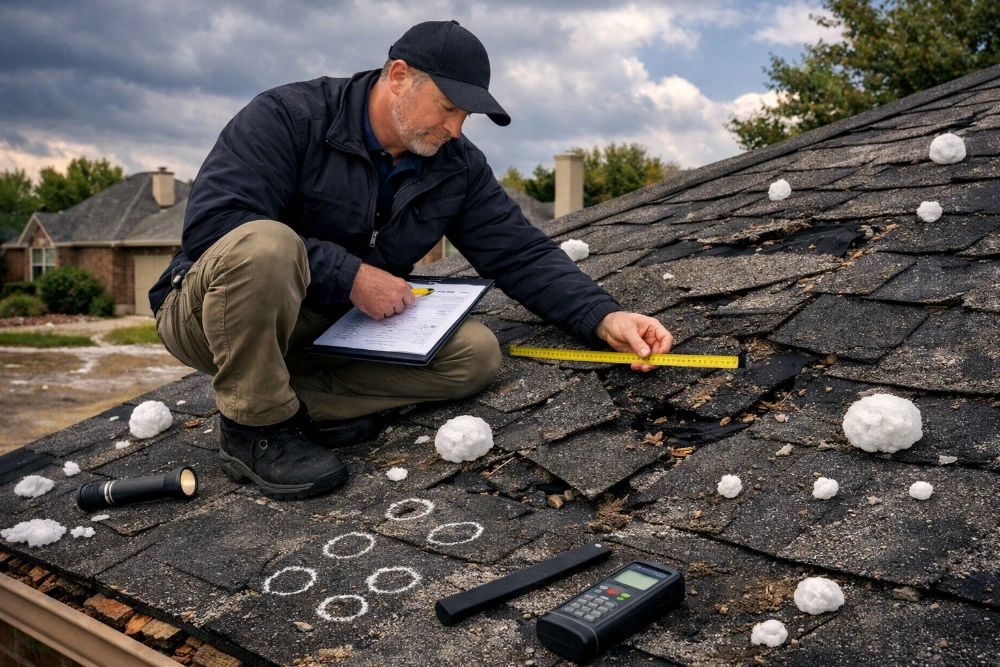
Many property owners assume an insurance estimate reflects the full amount owed under the policy. Understanding what a public adjuster does helps explain why independent documentation often uncovers overlooked damage.
Unfortunately, underpayments can occur for several reasons.
Incomplete Damage Identification
Visible damage is only part of the claim.
Additional losses may include:
- Wet insulation
- Structural movement
- Electrical damage
- HVAC impacts
- Interior moisture
- Hidden framing damage
Without comprehensive inspections, these items may never appear in the estimate.
Scope Omissions
Insurance estimates occasionally omit necessary repairs entirely.
Examples include:
- Painting
- Flooring transitions
- Trim replacement
- Roofing accessories
- Debris removal
- Code-required upgrades
Small omissions accumulate into significant differences in settlement value.
Depreciation Issues
Actual Cash Value policies and recoverable depreciation calculations require careful review.
Incorrect depreciation calculations may reduce payments beyond what the policy actually requires.
Understanding these calculations is an important part of evaluating whether an offer is accurate.
Insufficient Documentation
Insurance companies rely heavily on documentation.
Claims supported with:
- Professional photographs
- Detailed measurements
- Moisture readings
- Repair estimates
- Building code references
- Manufacturer documentation
typically present a stronger foundation during negotiations than claims supported by limited evidence.
Policy Interpretation
Insurance policies contain exclusions, endorsements, limits, deductibles, and conditions that influence settlement.
Understanding how those provisions apply to a specific loss helps ensure covered damages are evaluated appropriately.
Our Public Adjusting Process
At TX Public Adjusting, we believe every successful insurance claim starts with a methodical, well-documented approach. Rather than relying solely on the insurance company’s inspection, we perform an independent evaluation designed to identify the full extent of covered damage.
Step 1: Free Claim Review
Every claim begins with a complimentary consultation.
During this review, we discuss:
- The cause of the loss
- The current status of your insurance claim
- Damage you’ve already identified
- Deadlines that may affect your policy
- Whether additional documentation is needed
We’ll explain how the claims process works and answer your questions so you can make an informed decision before moving forward.
Step 2: Comprehensive Property Inspection
Our inspection goes far beyond a quick visual walkthrough.
Depending on the type of loss, we may evaluate:
- Roofing systems
- Exterior elevations
- Windows and doors
- Structural components
- Interior finishes
- Flooring
- Insulation
- HVAC systems
- Electrical components
- Moisture intrusion
- Commercial equipment
North Richland Hills properties often experience hail and wind events that leave subtle damage which may not be immediately obvious. Our goal is to identify all covered damage before negotiations begin.
Step 3: Detailed Documentation
Insurance companies rely heavily on documentation when evaluating claims.
We prepare detailed claim packages that may include:
- High-resolution photographs
- Room-by-room damage inventories
- Measurements
- Repair scopes
- Xactimate estimates
- Supporting invoices
- Building code considerations
- Policy analysis
- Supplemental documentation when necessary
If you’re unfamiliar with the claims process, here’s a detailed explanation of how public adjusters work from inspection through settlement.
Well-organized documentation creates a stronger foundation for productive negotiations.
Step 4: Negotiation With the Insurance Carrier
Once documentation is complete, we communicate directly with the insurance company on your behalf.
Our responsibilities include:
- Responding to adjuster questions
- Reviewing carrier estimates
- Requesting supplemental inspections
- Addressing scope discrepancies
- Discussing policy provisions
- Negotiating settlement values supported by documented damage
Our objective is to help ensure the claim reflects the full extent of covered losses under your policy.
Step 5: Settlement Support
Negotiations don’t necessarily end after the initial payment.
Additional damage is sometimes discovered during repairs, particularly following hail, wind, water, or fire losses.
When appropriate, we assist with:
- Supplemental claims
- Additional documentation
- Scope revisions
- Ongoing communication with the carrier
Our involvement continues until the claim reaches its conclusion. Even if your claim has already started, it may not be too late to hire a public adjuster, depending on your circumstances.
Why Choose TX Public Adjusting
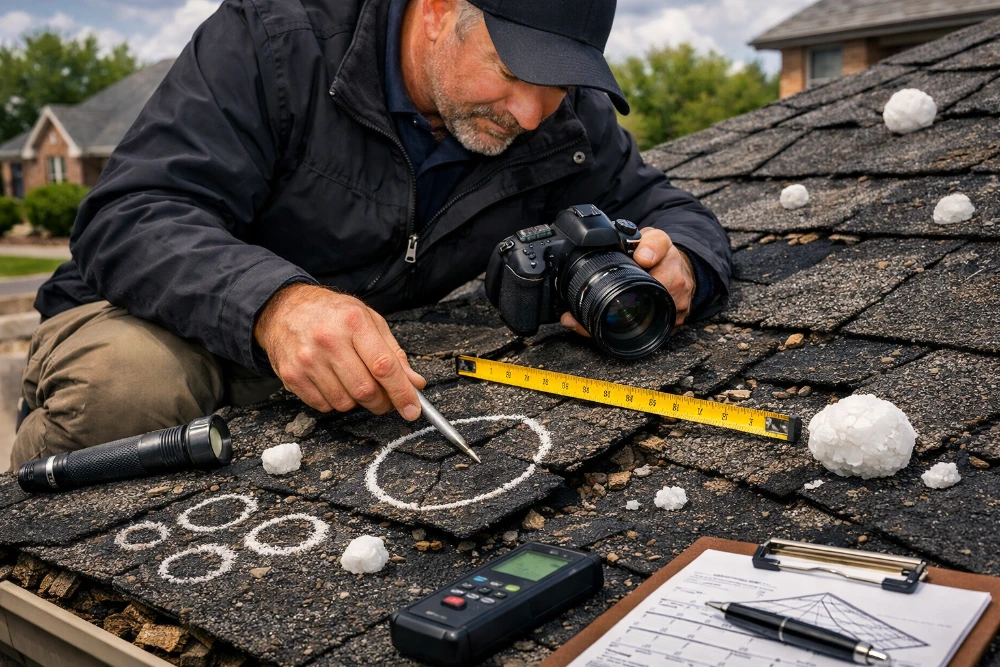
Property owners throughout Texas choose TX Public Adjusting because we work exclusively for policyholders—not insurance companies.
As Rise Public Adjusting LLC, we are licensed by the State of Texas (License #3356839) and focus on helping residential and commercial property owners present well-supported insurance claims.
Texas-Focused Experience
Texas weather presents unique claim challenges.
From destructive hailstorms across Tarrant County to wind-driven rain, severe thunderstorms, winter freezes, and water losses, we understand the types of damage Texas properties experience throughout the year.
Independent Representation
Unlike insurance company adjusters, our responsibility is to represent your interests.
Our work centers on:
- Accurate documentation
- Thorough inspections
- Policy review
- Fair claim presentation
- Professional negotiations
Our recommendations are based on the documented damage and the terms of your policy.
Residential and Commercial Expertise
We assist with claims involving:
- Single-family homes
- Townhomes
- Condominiums
- Apartment communities
- Retail centers
- Office buildings
- Warehouses
- Churches
- Restaurants
- Industrial facilities
- Multi-property commercial portfolios
Each type of property presents different documentation and valuation challenges, and our approach is tailored accordingly.
Local Knowledge Matters
North Richland Hills is one of the fastest-growing communities in northeast Tarrant County.
We understand the area’s diverse housing stock—from established neighborhoods like Smithfield and Forest Glenn to newer communities such as HomeTown—as well as the commercial corridors along Davis Boulevard, Precinct Line Road, and Boulevard 26.
This familiarity helps us recognize local construction methods, common storm damage patterns, and regional repair costs.
Areas We Serve Near North Richland Hills
While this page focuses on North Richland Hills, our team assists property owners throughout the surrounding communities, including:
- Richland Hills
- Hurst
- Bedford
- Colleyville
- Keller
- Watauga
- Haltom City
- Southlake
- Grapevine
- Fort Worth
- Saginaw
- Euless
- North Fort Worth
- Trophy Club
- Arlington
- Haslet
Whether your property is located in a residential neighborhood or a commercial district, we can assist with insurance claim documentation and negotiations throughout the region.
Frequently Asked Questions
1. What does a public adjuster do?
A public adjuster represents the policyholder during an insurance claim. We inspect the property, document damage, prepare detailed estimates, review policy provisions, and negotiate directly with the insurance company on your behalf.
Unlike insurance company adjusters, we work exclusively for the property owner. Many property owners also wonder about the difference between a public adjuster vs. independent adjuster before deciding who should represent their claim.
2. When should I hire a public adjuster?
The earlier documentation begins, the better. Many property owners contact us immediately after discovering damage, while others seek assistance after receiving an estimate they believe does not fully reflect their loss.
We can often assist whether your claim has just started or is already in progress. If you’re still deciding, our guide on should I use a public adjuster explains when professional representation is most beneficial.
3. Can you help if my insurance company already inspected my property?
Yes.
An initial insurance inspection does not necessarily conclude the claim. Additional documentation, supplemental estimates, or previously overlooked damage may still be presented when supported by appropriate evidence.
4. What types of insurance claims do you handle?
We assist with:
- Hail damage
- Wind damage
- Fire and smoke damage
- Water damage
- Roof damage
- Commercial property losses
- Storm damage
- Large residential losses
Every claim receives an individualized review.
5. Do you only work on large claims?
No.
While many of our projects involve substantial property damage, we evaluate claims of varying sizes.
The most important consideration is whether professional representation may improve documentation and claim management.
6. How are public adjusters paid?
Public adjusters generally work on a contingency-fee basis.
That means our fee is typically tied to the claim outcome rather than requiring significant upfront payments. You can also read our guide covering the truth about public adjuster fees to better understand contingency-based representation.
7. Can businesses hire a public adjuster?
Absolutely.
Commercial claims often involve complex policy provisions, business interruption, equipment, inventory, and multiple buildings.
Professional documentation can be especially valuable for commercial property owners navigating large or complicated losses.
8. Why are hail claims so common in North Richland Hills?
North Richland Hills lies within one of Texas’ most active hail corridors.
Severe spring thunderstorms regularly produce damaging hail capable of affecting roofing systems, gutters, siding, skylights, HVAC equipment, and windows—even when damage isn’t immediately visible from the ground.
9. What if hidden damage is discovered after repairs begin?
This is not uncommon.
Opening walls, removing roofing materials, or beginning reconstruction sometimes reveals additional covered damage.
When appropriate, supplemental documentation may be submitted so the carrier can evaluate newly discovered damage.
10. Why choose TX Public Adjusting?
TX Public Adjusting combines Texas-specific experience with detailed claim preparation, independent representation, and professional negotiation.
As Rise Public Adjusting LLC (Texas License #3356839), we are committed to helping North Richland Hills property owners present well-documented insurance claims while keeping them informed throughout the process.
Get a Free Claim Review
Property damage can disrupt your home, your business, and your daily routine. You don’t have to navigate the insurance claims process alone.
If your property in North Richland Hills has experienced hail, wind, fire, water, roof, or storm damage, TX Public Adjusting is ready to help you understand your options.
Our team will:
- Review your insurance claim
- Perform a thorough property inspection
- Document covered damage
- Communicate with your insurance company
- Negotiate on your behalf
- Support you throughout the claims process
Schedule your free claim review today and let our licensed Texas public adjusters evaluate your North Richland Hills property damage.