

Property damage in Wells Branch can turn into a complicated insurance claim quickly. A severe thunderstorm can damage shingles, gutters, siding, windows, fencing, HVAC equipment, and interior finishes during the same event. A plumbing leak can spread through walls or flooring before the full extent of the damage is visible. When the insurance company’s estimate leaves out part of the loss, a licensed public adjuster in Wells Branch can help document the damage and present the policyholder’s claim.
TX Public Adjusting represents residential and commercial property owners—not insurance companies. Our team reviews policies, inspects damage, prepares detailed claim documentation, identifies omissions, and communicates with the carrier throughout the adjustment process.
TX Public Adjusting operates through Rise Public Adjusting LLC, Texas License #3356839.
Need help with an open, delayed, denied, or underpaid claim? Contact TX Public Adjusting for a free claim review. There are no upfront fees.
Why Property Owners Hire a Public Adjuster in Wells Branch
Wells Branch sits in Travis County along the fast-growing North Austin corridor. The community is close to Interstate 35, MoPac, Howard Lane, Round Rock, Pflugerville, and several major residential and commercial districts. Wells Branch is officially a census-designated place in Travis County, with ZIP Code 78728.
That location brings a wide range of property risks. Strong Central Texas thunderstorms can arrive with hail, sudden wind gusts, heavy rain, lightning, and occasional tornado activity. Wells Branch was directly affected by a tornado in March 2022, demonstrating that rotating storms are not only a distant regional concern.
After a loss, the insurance carrier normally assigns an adjuster to investigate the claim. Understanding the difference between a public adjuster vs. independent adjuster is important: an independent adjuster is hired by the carrier, while a public adjuster is hired to represent the policyholder.
Property owners may hire a Wells Branch public adjuster when:
- The carrier’s estimate appears too low
- Important rooms, elevations, or building components were omitted
- Roof damage was labeled cosmetic or attributed to wear and tear
- Water damage extends beyond the visible stain or wet flooring
- The claim includes structural, mechanical, electrical, or code-related issues
- The property owner does not have time to manage repeated inspections and requests
- A commercial claim includes inventory, equipment, business interruption, or tenant damage
- The carrier has delayed, partially denied, or closed the claim
- The loss involves several trades and a complicated repair scope
- The policyholder wants an independent review before accepting a settlement
A public adjuster cannot create coverage that the policy does not provide. The role is to identify covered damage, prepare an accurate scope, organize supporting evidence, and advocate for a fair claim evaluation under the policy.
Property Damage Risks in Wells Branch
Hailstorms and Impact Damage
Hail is one of the most important claim risks for Wells Branch property owners. After a severe storm, understanding how to document a hail damage insurance claim can help prevent roof, gutter, siding, and mechanical damage from being overlooked. Central Texas storms can develop rapidly and produce damaging hail along the Interstate 35 corridor. One severe thunderstorm affecting the Wells Branch area in September 2023 was reported with radar-indicated hail as large as three inches and wind gusts near 60 mph.
Hail damage may affect:
- Asphalt shingles
- Metal roofing
- Tile roof systems
- Roof vents and flashing
- Gutters and downspouts
- Window screens
- Exterior paint and stucco
- Siding
- Garage doors
- Fences
- Condenser fins on HVAC equipment
- Skylights
- Solar panels
- Commercial membrane roofs
The damage is not always obvious from the ground. A roof can remain watertight immediately after a storm while still having fractured shingle mats, loosened seals, damaged flashing, punctured membranes, or impact marks that shorten the life of the system.
A carrier inspection may focus on a small test square or a limited roof area. A thorough claim review should also consider soft metals, gutters, accessories, exterior elevations, mechanical equipment, interior moisture, and other storm-created openings.
Tornado and Straight-Line Wind Damage
Wells Branch is exposed to both tornadic winds and severe thunderstorm winds. The 2022 tornado that moved through the Wells Branch area is a local example of how quickly rotating storms can affect homes and businesses.
Wind losses may involve more than missing shingles. They can include:
- Lifted or creased shingles
- Damaged roof decking
- Displaced flashing
- Broken windows
- Water intrusion through storm-created openings
- Damaged siding and trim
- Fence and gate damage
- Fallen limbs
- Detached gutters
- Damaged rooftop equipment
- Interior ceiling and wall damage
- Structural movement
- Debris impact
Insurance estimates sometimes address the most visible exterior damage while overlooking resulting interior repairs, access requirements, matching concerns, temporary protection, permits, debris removal, and work needed to return the property to its pre-loss condition.
Heavy Rain and Water Intrusion
Wells Branch has creeks, drainage channels, greenbelts, trails, low crossings, and developed areas where intense rainfall can place pressure on drainage systems. The Wells Branch community includes a substantial parks and trail network managed by the local municipal utility district.
Heavy rain can contribute to:
- Roof leaks
- Window and door intrusion
- Overflowing gutters
- Water entering through damaged flashing
- Interior drywall and insulation damage
- Flooring damage
- Cabinet damage
- Mold-related concerns
- Electrical damage
- Commercial inventory loss
- Drainage backups
Coverage for rainwater, plumbing water, backup, seepage, and flood is not always the same. The cause and path of the water matter. Flood damage caused by rising surface water is generally handled differently from wind-driven rain entering through a storm-created opening.
Dense developed areas can also experience flash-flood problems when heavy rainfall overwhelms storm drains, low spots, underpasses, and drainage systems.
Roof Damage from Heat, Hail, Wind, and Age Disputes
Wells Branch roofs face prolonged heat, ultraviolet exposure, sudden temperature changes, high wind, and hail. A property owner may consult a public adjuster for a roof claim when the carrier disputes causation, repairability, matching, or the extent of storm damage. After a storm, insurers may argue that observed roof conditions are caused by age, installation, manufacturing defects, maintenance, or long-term deterioration.
These causation disputes can decide whether a claim is paid, partially paid, or denied.
A public adjuster can review:
- The reported date of loss
- Storm data
- Roof age and material
- Impact patterns
- Wind creasing and lifted components
- Collateral damage
- Prior repair records
- Interior leak locations
- The insurer’s photographs
- The carrier’s scope and estimate
- Policy exclusions and endorsements
The objective is not simply to request a new roof. The objective is to document what happened, separate storm damage from unrelated conditions, and present the covered repair scope accurately.
Freeze and Plumbing Losses
Central Texas properties can also experience frozen pipes, failed supply lines, appliance leaks, water-heater failures, drain problems, and air-conditioning condensate losses.
Water can travel behind baseboards, under floating floors, through wall cavities, and between levels. The visible wet area may be only a small portion of the actual loss.
A complete water claim may require evaluation of:
- Moisture mapping
- Drywall and insulation
- Flooring continuity
- Cabinets and vanities
- Tile assemblies
- Electrical components
- Detachment and reset of fixtures
- Temporary drying equipment
- Mold prevention
- Contents manipulation
- Plumbing access
- Painting and finish matching
Coverage and repair disputes are common when dealing with an insurance adjuster after water damage, especially when moisture has spread behind walls, under flooring, or into insulation.
Common Insurance Claims in Wells Branch
Hail Damage Claims
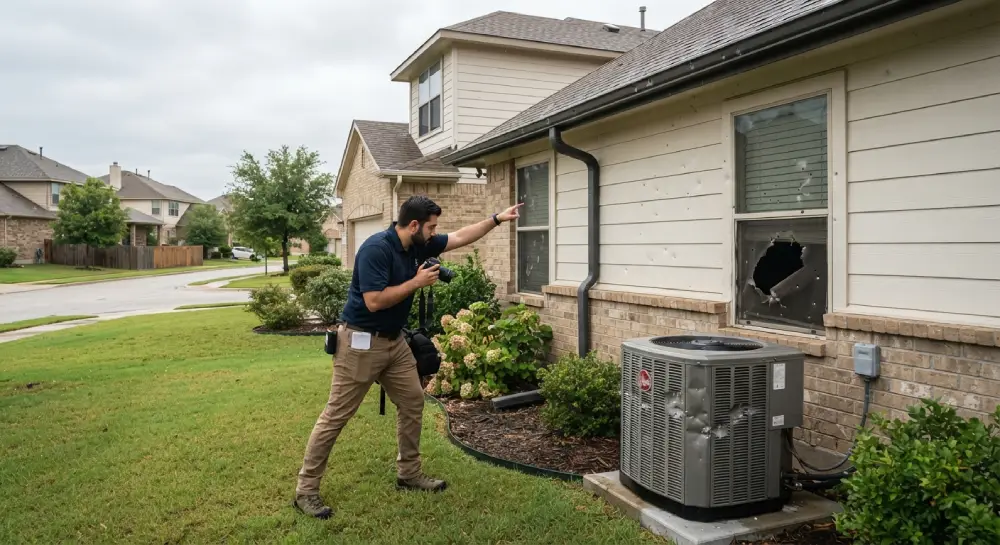
Hail claims often involve disputes over whether the roof has functional damage, how many slopes are affected, whether individual repairs are feasible, and which accessories must be replaced.
TX Public Adjusting can inspect the roof and exterior, compare the observed damage with the carrier’s scope, document affected components, and prepare a detailed estimate when the original adjustment is incomplete.
Water Damage Claims
A water claim may begin with a plumbing leak, appliance failure, roof opening, broken drain, or HVAC issue. A water damage public adjuster can evaluate whether the carrier’s scope accounts for demolition, drying, access, flooring continuity, cabinetry, and related repairs. Problems arise when the insurer pays only for the visible surface damage and excludes access, demolition, drying, matching, cabinetry, flooring continuity, or related repairs.
We review the source, affected materials, moisture documentation, mitigation invoices, photographs, repair estimates, and policy language relevant to the loss.
Fire and Smoke Damage Claims
Fire losses are among the most demanding property claims. A policyholder may hire a fire insurance adjuster to organize structural damage, smoke contamination, contents, additional living expenses, and other parts of the loss. Even a contained kitchen or electrical fire may affect finishes, framing, insulation, wiring, HVAC systems, personal property, and adjacent rooms through smoke migration.
A fire claim may include:
- Structural repairs
- Smoke and soot cleaning
- Odor remediation
- Personal property inventory
- Debris removal
- Temporary housing
- Code upgrades
- Electrical testing
- HVAC cleaning or replacement
- Business interruption
- Additional living expenses
Public adjuster involvement can help organize the many separate parts of the claim and reduce the chance that a major category is left undocumented.
Storm Damage Claims
A single Wells Branch storm can produce hail, wind, rain, falling branches, power interruption, and debris impact. Treating each damaged item as an isolated issue can result in a fragmented estimate.
A coordinated storm claim should connect the cause of loss with all related exterior, interior, structural, and mechanical damage.
Roof Damage Claims
Roof claim disagreements commonly involve repairability, matching, causation, depreciation, material availability, code requirements, and the number of slopes included in the estimate.
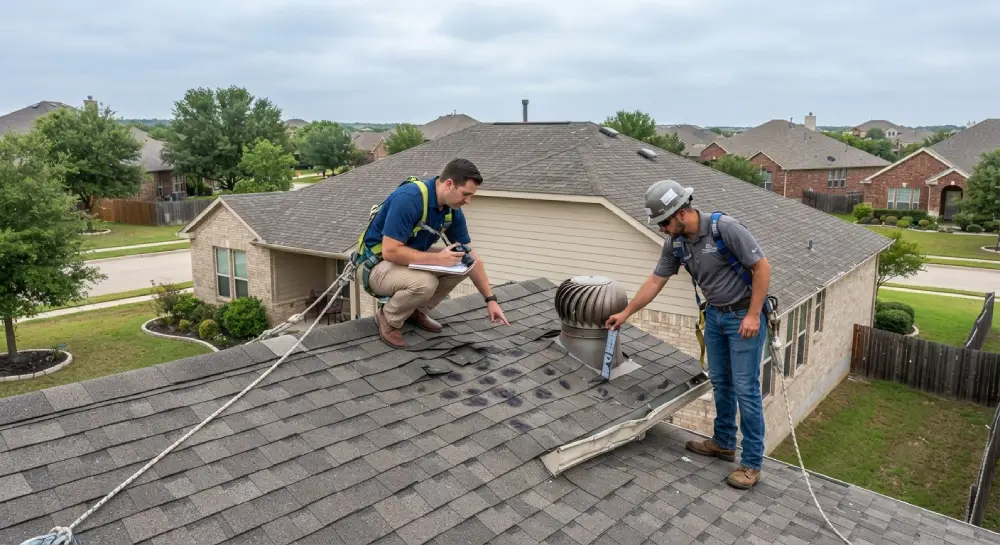
TX Public Adjusting reviews the entire roof system—not just the most obvious damaged shingle. That may include flashing, vents, underlayment, valleys, decking, drip edge, gutters, penetrations, adjacent exterior finishes, and interior damage.
Commercial Property Claims
Wells Branch is located near major employment, retail, multifamily, office, medical, warehouse, and technology corridors in North Austin and southern Williamson County. A commercial public adjuster can help document building damage, equipment losses, inventory, tenant improvements, extra expenses, and business-income issues. Commercial losses can affect cash flow, tenants, inventory, operations, and customer access as well as the physical building.
Commercial claims may include:
- Office buildings
- Retail centers
- Restaurants
- Apartments and multifamily properties
- Warehouses
- Light industrial properties
- Medical and professional offices
- Churches
- Self-storage facilities
- Condominium associations
Commercial policies can include business income, extra expense, equipment, inventory, tenant improvements, ordinance and law, and other coverages that require separate documentation.
Why Insurance Claims Become Underpaid
An underpaid claim is not always the result of one large mistake. More often, several smaller omissions reduce the total settlement.
Missed Damage
The carrier may inspect only the roof and overlook gutters, screens, fences, siding, windows, HVAC fins, attic moisture, interior staining, or detached structures.
Scope Omissions
An estimate may include the main repair material but omit labor, access, demolition, disposal, protection, detach-and-reset work, painting, permits, scaffolding, or code-required items.
Depreciation Issues
Some policies initially pay actual cash value and hold back recoverable depreciation until work is completed. Disputes can arise over depreciation percentages, nonrecoverable depreciation, deadlines, and the documents required to recover the withheld amount.
Low Repair Estimates
Pricing may not reflect the actual labor and material requirements of the loss. Estimates can also use incorrect measurements, quantities, trades, or repair methods.
Documentation Problems
A claim becomes harder to support when photographs are incomplete, damaged items are discarded too soon, invoices are missing, repairs begin before inspection, or the property owner cannot establish what was damaged during the covered event.
Causation Disputes
The carrier may attribute damage to wear, prior loss, construction defects, maintenance, settlement, or long-term leakage rather than the reported event.
Policy Interpretation
Deductibles, exclusions, endorsements, cosmetic-damage provisions, water limitations, roof schedules, and replacement-cost requirements can materially change the claim.
A public adjuster reviews the policy and claim together. The estimate should be consistent with both the physical evidence and the available coverage.
Our Public Adjusting Process
Step 1: Claim Review
We begin by reviewing the policy, carrier correspondence, payment letters, inspection reports, photographs, estimates, and other available records.
We identify questions such as:
- What caused the loss?
- When was it reported?
- What coverage has the insurer accepted?
- What damage was included or excluded?
- Has any payment been issued?
- Are deadlines approaching?
- Does the claim require additional experts?
Step 2: Property Inspection
We inspect the property to document visible and reasonably accessible damage. Depending on the loss, this may include roofing, exterior elevations, interior rooms, mechanical systems, contents, and commercial areas.
Step 3: Documentation and Estimating
We assemble claim support that may include:
- Photographs
- Measurements
- Damage narratives
- Repair estimates
- Moisture records
- Contractor documentation
- Invoices
- Inventory records
- Business-loss information
- Expert reports when appropriate
The goal is to create a claim package that explains what was damaged, why it is related to the loss, and what is required to repair or replace it.
Step 4: Carrier Communication and Negotiation
TX Public Adjusting communicates with the insurance company regarding the policyholder’s claim, responds to requests, presents documentation, discusses disputed items, and seeks correction of unsupported omissions.
Step 5: Settlement and Claim Guidance
When the carrier issues a revised determination, we review the scope and payment breakdown with the policyholder. We also help the client understand depreciation, deductibles, supplemental documentation, and other claim requirements.
No public adjuster can guarantee a particular settlement. The purpose of representation is to give the policyholder an experienced, independent advocate who can prepare and present the claim thoroughly.
Why Choose TX Public Adjusting
Licensed Texas Public Adjuster
TX Public Adjusting operates through Rise Public Adjusting LLC, Texas License #3356839.
We Represent Policyholders
We do not work for the insurance company. Our duty is to the residential or commercial policyholder who hires us.
Texas-Focused Claim Experience
Texas claims involve hail, wind, tornadoes, hurricanes, freezes, plumbing failures, fire, smoke, and commercial interruption. Our work is focused on the property-loss issues Texas owners regularly face.
Residential and Commercial Expertise
A homeowner’s roof claim and a commercial property loss require different documentation, but both benefit from a complete scope and organized claim presentation.
Thousands of Claims Reviewed
Our team brings experience developed through reviewing thousands of residential and commercial claims. That experience helps us recognize missing trades, overlooked components, documentation weaknesses, and disputed claim issues.
Detailed Claim Preparation
We do more than forward a contractor’s estimate. We review the policy, inspect the loss, document the conditions, prepare the scope, and communicate with the carrier.
No Upfront Fees
TX Public Adjusting offers a free claim review and does not charge an upfront fee for the initial evaluation.
Your carrier has its own adjuster. You have the right to hire a licensed public adjuster to represent your interests. Request a free Wells Branch claim review from TX Public Adjusting.
Wells Branch Neighborhoods and Local Service Areas
Wells Branch is a compact community, but its housing includes established subdivisions, apartment communities, duplexes, rental properties, commercial buildings, and properties near greenbelts and drainage features.
Our Wells Branch service area includes properties near:
- Wells Branch Parkway
- Katherine Fleischer Park
- Mills Pond
- Willow Bend Park
- Wells Branch Community Center
- Wells Branch MUD Recreation Center
- Wells Branch Homestead
- Wells Branch Community Garden
- Wells Branch Disc Golf Course
- Howard Lane
- MoPac Expressway
- Interstate 35
- Shoreline Drive
- Bratton Lane
- Merrilltown Drive
Katherine Fleischer Park, Wells Branch trails, the community garden, and nearby Wells Creek and Walnut Creek greenbelt areas are among the recognizable recreational features around the community.
Properties near mature trees and greenbelt corridors may face additional branch-impact, roof, drainage, and access issues during severe weather. Properties closer to major road and commercial corridors may have flat-roof systems, rooftop equipment, signage, glass, tenant improvements, or operational losses that require a commercial claim approach.
Areas We Serve Near Wells Branch
TX Public Adjusting assists property owners throughout Wells Branch and neighboring North Austin communities, including:
- North Austin
- Pflugerville
- Round Rock
- Jollyville
- McNeil
- Windermere
- Scofield Farms
- Tech Ridge
- Copperfield
- Dessau
- Brushy Creek
- Cedar Park
- Georgetown
- Hutto
- Manor
- Leander
Because Wells Branch sits near the Travis–Williamson County line, a severe storm may generate claims throughout several nearby communities during the same weather event. Property owners outside the immediate North Austin area can view additional public adjusters serving Texas communities.
Frequently Asked Questions
What does a public adjuster in Wells Branch do?
A public adjuster represents the policyholder during a property insurance claim. Property owners unfamiliar with the role can learn more about what a public adjuster does, including policy review, inspection, estimating, documentation, and carrier communication. The adjuster reviews the policy, inspects damage, prepares documentation, estimates repairs, communicates with the insurer, and negotiates disputed claim items.
The insurance company’s adjuster works for the carrier. A Wells Branch public adjuster hired by the property owner works for the property owner.
When should I hire a public adjuster after Wells Branch storm damage?
You can hire a public adjuster shortly after the loss, during the adjustment, after receiving a low estimate, or after a partial denial. However, policy deadlines and prior claim decisions can affect when it may be too late to hire a public adjuster. Hiring early may help preserve evidence and improve documentation before damaged materials are removed.
You should not ignore claim deadlines while deciding. Requesting a review promptly gives the public adjuster more time to evaluate the damage, policy, and carrier documents.
Can a public adjuster help with a hail-damaged roof?
Yes. A public adjuster can document roof impacts, collateral damage, affected accessories, gutters, exterior elevations, and resulting interior damage. The adjuster can also compare the insurer’s estimate with the actual repair requirements.
Coverage still depends on the policy, the date and cause of loss, exclusions, deductibles, and the evidence available.
What if the insurance company says my roof damage is only wear and tear?
Wear-and-tear disputes are common in roof claims. Age-related deterioration and storm damage can exist on the same roof, so the issue requires careful documentation.
A public adjuster may review impact patterns, wind damage, collateral evidence, repairability, storm records, photographs, prior condition, and the carrier’s inspection findings before presenting a response.
Can you reopen an underpaid Wells Branch insurance claim?
Some claims can be supplemented or reopened, depending on the policy, claim status, deadlines, prior releases, and Texas law. A closed file does not always mean the policyholder has no options.
TX Public Adjusting can review the carrier’s payment, estimate, correspondence, photographs, and policy to determine whether additional covered damage may be presented.
Do I need a public adjuster for a small claim?
Not every property loss requires representation. A straightforward claim with a complete estimate and fair payment may be manageable without a public adjuster.
A free review can still help you understand whether important damage or claim items appear to be missing. The value of representation depends on the size, complexity, documentation, and disputed issues in the claim.
Can a Wells Branch public adjuster help with water damage?
Yes. Water losses often require documentation of the source, affected materials, moisture spread, access requirements, drying, flooring continuity, cabinetry, contents, and related repairs.
Coverage varies significantly depending on whether the water came from a plumbing system, roof opening, drain backup, repeated seepage, or rising surface water.
How much does a public adjuster cost in Texas?
Public adjusters commonly work under a written fee agreement tied to the claim recovery, subject to Texas law and the terms of the contract. The fee structure should be explained before you sign.
TX Public Adjusting offers a free initial claim review and does not charge upfront fees for that review.
Can you help with commercial claims in Wells Branch?
Yes. We assist with commercial building damage, roofing, inventory, equipment, tenant improvements, contents, business income issues, and other covered claim categories.
Commercial claims often require coordinated documentation from owners, tenants, accountants, contractors, mitigation companies, and other professionals.
How long does a property insurance claim take?
The timeline depends on the severity of the damage, the insurer’s response, the quality of the documentation, the number of disputed items, expert involvement, and whether supplemental inspections are required.
A simple residential loss may move faster than a fire, large water loss, or commercial storm claim. A public adjuster helps keep documentation and communication organized but cannot control every carrier deadline or guarantee a completion date.
Get a Free Wells Branch Insurance Claim Review
You do not have to accept an incomplete estimate without asking questions. If your Wells Branch home, rental property, apartment building, office, retail space, or commercial property has suffered damage, TX Public Adjusting can review the claim and explain the available next steps.
We assist with:
- Hail damage
- Roof damage
- Wind and tornado damage
- Water damage
- Fire and smoke damage
- Commercial property losses
- Underpaid claims
- Delayed claims
- Partial denials
- Supplemental claims
TX Public Adjusting represents policyholders throughout Texas.
Rise Public Adjusting LLC
Texas License #3356839
Free Claim Review
No Upfront Fees
Contact TX Public Adjusting today for a free review of your Wells Branch property insurance claim.