

Property damage in Whitehouse can turn into a complicated insurance claim faster than many property owners expect. A severe thunderstorm may leave hail marks on a roof, wind damage around flashing and gutters, fallen limbs against a structure, and water intrusion inside the same property. When the insurance company’s estimate does not account for the complete loss, a Public Adjuster in Whitehouse, TX can represent the policyholder and build the claim around documented damage rather than a rushed inspection.
Whitehouse is a growing Smith County community in East Texas, with a projected 2026 population of approximately 9,394. The city combines established areas near its historic center with newer residential development and properties extending toward Lake Tyler. That mix creates different insurance claim challenges from property to property.
TX Public Adjusting helps Whitehouse homeowners, commercial property owners, landlords, and other policyholders evaluate property damage claims. We are operated by Rise Public Adjusting LLC, Texas License #3356839, and our team has reviewed thousands of property damage claims across Texas.
If your insurance settlement seems too low, important damage was left out of the estimate, or you simply want an experienced second look at the claim, request a Free Claim Review from TX Public Adjusting. There are no upfront fees.
Why Property Owners Hire a Public Adjuster in Whitehouse
The adjuster sent by an insurance company works as part of the insurer’s claim process. A public adjuster has a different role: the policyholder hires the public adjuster to help evaluate, document, present, and negotiate the property claim. That distinction becomes especially relevant after severe weather. Our guide comparing a public adjuster vs. insurance adjuster for hail claims explains how the roles differ when a Texas property owner is dealing with storm damage.
The Texas Department of Insurance explains that public insurance adjusters are licensed professionals who may be hired by policyholders to help negotiate with their insurance company.
That distinction matters when a Whitehouse property claim involves a disagreement over the scope or cost of repairs.
Property owners commonly contact us when:
- A roof or storm claim appears underpaid.
- Significant damage is missing from the insurer’s estimate.
- The claim involves several affected areas of the property.
- A carrier has denied part or all of the claim.
- Repair estimates differ substantially from the insurance estimate.
- Additional damage is discovered after the initial inspection.
- A commercial property owner does not have time to manage inspections, documentation, and carrier communication.
A public adjuster does not guarantee a particular settlement. The objective is to make sure the claim is properly investigated, supported, and presented according to the damage and applicable insurance policy.
Whitehouse Property Damage Risks Require an East Texas Approach
Whitehouse is not simply a smaller version of Dallas or Houston. The local claim environment reflects East Texas weather, wooded residential areas, lake-adjacent development, established homes, growing subdivisions, and commercial activity along the community’s primary roads.
National Weather Service records for the region document severe weather affecting Smith County and surrounding East Texas, including a Smith County tornado event in 2019, widespread hail and wind damage in the region in 2021, and the February 2021 Arctic outbreak that produced snow, ice, and extreme cold.
Hail and Severe Thunderstorms
Hail can create damage that is easy to overlook from ground level. On asphalt shingles, impacts may cause bruising, cracking, or granule loss. Metal vents, gutters, downspouts, flashing, and other soft metals may provide additional evidence that a property was affected by the storm.
A claim should account for the complete storm pattern, not simply the most obvious shingle marks. That can mean inspecting roofing components, exterior elevations, fencing, windows, screens, gutters, HVAC components, and interior areas where water entered after the storm.
Straight-Line Wind and Tornado Damage
Wind losses can range from a few missing shingles to major structural damage. In wooded areas around Whitehouse and Lake Tyler, storms can also bring falling limbs and wind-driven debris into the claim.
After a strong storm, the visible roof damage may be only part of the loss. Lifted materials, damaged flashing, compromised exterior components, broken openings, and resulting interior water damage may need separate documentation.
Heavy Rain and Water Intrusion
East Texas storms can produce heavy rain at the same time a roof or exterior wall is being affected by wind.
Determining how water entered the structure is critical. Wind-created openings, roof damage, plumbing failures, appliance leaks, and other sources can involve very different policy questions. We document the observed damage and circumstances so the claim can be evaluated according to the actual cause of loss and policy terms.
Winter Freeze Damage
The February 2021 freeze demonstrated that East Texas properties can also face prolonged cold, frozen plumbing, water damage, and related building problems.
A burst-pipe claim can extend far beyond the failed pipe. Water may affect drywall, flooring, cabinetry, insulation, contents, baseboards, and concealed building cavities. A detailed scope becomes especially important when several rooms or construction materials are involved.
Common Insurance Claims in Whitehouse
Hail Damage Claims
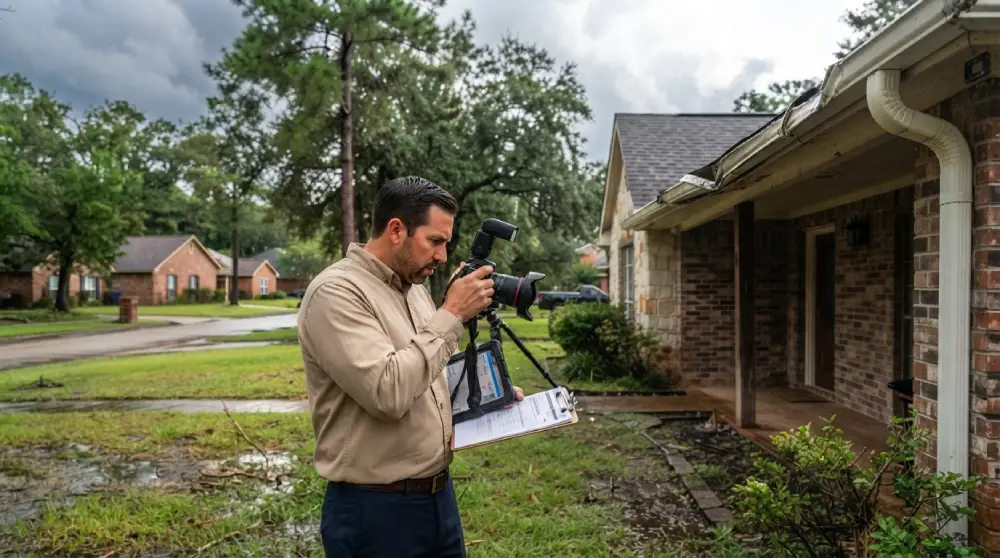
Hail claims are among the property losses where a detailed inspection can make a substantial difference in understanding the scope. Property owners dealing with a hail damage roof insurance claim should document not only the shingles but also gutters, flashing, vents, siding, windows, and other exterior components that may have been affected.
We look beyond individual roof impacts and document related damage to roofing accessories and exterior components. If an insurer has already inspected the roof, we can review the existing estimate against the documented condition of the property.
This can be especially useful when an estimate allows for isolated repairs but contractors identify broader storm damage.
Water Damage Claims
A water loss may begin with a failed pipe, roof opening, appliance line, plumbing fixture, or storm-related intrusion. When several rooms or building materials are affected, working with a water damage public adjuster can help the policyholder document the full extent of the loss and compare it with the insurance company’s estimate. The resulting damage can spread through walls, ceilings, floors, insulation, cabinets, and personal property.
The visible stain is rarely the entire scope.
For Whitehouse water damage claims, we review what was affected, available mitigation records, photographs, repair estimates, and the insurer’s scope to identify areas that may require further evaluation.
Fire and Smoke Damage Claims
Fire losses involve more than burned materials. For a substantial residential or commercial loss, a fire insurance adjuster working for the policyholder can help document structural damage, smoke and soot effects, contents, demolition, cleaning, and other components of the claim.
A significant claim may include structural damage, smoke residue, soot contamination, contents, demolition, cleaning, temporary repairs, and other expenses addressed by the policy. Smoke can migrate far beyond the room where a fire began, making detailed inspection and documentation important.
TX Public Adjusting assists with residential and commercial fire claims in Whitehouse when owners need independent help preparing and presenting the loss.
Storm Damage Claims
A single severe storm can cause several categories of damage at once.
For example, a Whitehouse property may have:
- Wind-damaged shingles.
- Hail impacts to gutters and metal components.
- Tree or debris damage.
- Broken exterior materials.
- Water intrusion.
- Interior ceiling or wall damage.
Treating each symptom as an unrelated repair can result in an incomplete claim. Our job is to document how the pieces of the loss fit together.
Roof Damage Claims
Roof claims regularly become disputed because the parties disagree over repairability, the number of damaged components, measurements, materials, or the extent of the storm damage. A property owner may consider bringing in a public adjuster for a roof claim when the carrier’s inspection or estimate does not appear to account for the complete documented damage.
We review roof slopes, ridge and hip components, flashing, vents, penetrations, gutters, and other relevant items along with photographs and estimates.
If the insurer has already issued an estimate, we compare its scope with the documented property conditions and identify material differences that deserve attention.
Commercial Property Claims
Whitehouse also has businesses, offices, retail properties, churches, restaurants, rental properties, and other commercial buildings that can suffer storm, water, fire, or roof damage.
Commercial claims can become complicated because a loss may affect multiple building systems, business contents, equipment, tenant areas, and operations at the same time.
Businesses dealing with a significant property loss may benefit from working with a commercial public adjuster who can organize building damage, equipment, inventory, tenant-area damage, repair estimates, and other documentation involved in the claim.
Concerned that important damage was left out of your estimate? Request a Free Claim Review from TX Public Adjusting before accepting the claim as complete.
Why Insurance Claims Become Underpaid
An insurance estimate is a scope of work. If that scope does not contain all of the covered damage, the final numbers can be affected before pricing is even discussed.
Missed Damage
Some conditions are difficult to see during a short inspection.
Roof accessories, flashing, exterior elevations, interior moisture damage, insulation, flooring transitions, cabinetry, or adjacent rooms may require a closer review.
A second inspection can help determine whether the carrier’s original assessment captured the complete loss. A low estimate is not the only problem Whitehouse property owners encounter. Some storm claims are denied entirely. If that happens after a hail loss, review what to do if your hail claim was denied before assuming the carrier’s initial decision is the end of the process.
Scope Omissions
A repair estimate can contain the correct main item while still leave out necessary associated work.
Roofing is a good example. Shingles are only one component of a roofing system. Depending on the loss, the scope may also need to address ridge materials, flashing, vents, underlayment, gutters, penetrations, or related exterior work.
Interior claims can involve the same problem when an estimate recognizes damaged drywall but overlooks insulation, texture, paint transitions, trim, flooring, or other affected finishes.
Depreciation and Valuation Questions
Property claim estimates may involve replacement cost, depreciation, actual cash value, deductibles, and recoverable amounts depending on the policy and circumstances.
Those numbers can be difficult to understand when the owner is looking at several estimates and payment summaries.
We review the claim documents with the policyholder so they can see what the insurer included, what was withheld, and what additional documentation may be required.
Low or Incomplete Estimates
Two estimates can differ substantially because the scopes are different rather than because one contractor simply charges more.
Measurements, material assumptions, quantities, labor operations, disposal, access, and necessary repair steps can all affect the total.
We focus first on getting the physical scope right. Pricing only becomes meaningful after the actual work required has been identified.
Documentation Problems
Photographs taken days or weeks after a storm may not tell the complete story by themselves.
A strong claim file can include dated photographs, measurements, inspection notes, estimates, invoices, mitigation records, inventories, correspondence, and other relevant information. Good organization makes it easier to explain the loss and respond when the insurer asks for support.
Our Public Adjusting Process
1. Claim Review
We begin by reviewing the situation, existing insurance claim documents, carrier estimates, correspondence, photographs, and other information available from the property owner.
If the claim is already open, that does not automatically mean it is too late to review it. Property owners with an existing, underpaid, delayed, or disputed claim can read more about when it is too late to hire a public adjuster and why the claim’s status and applicable deadlines matter.
2. Property Inspection
We inspect the reported damage and look for areas that may not appear in the insurer’s existing scope.
The inspection is tailored to the loss. A hail claim requires a different approach from a kitchen water loss or commercial fire.
3. Documentation and Scope Development
We organize photographs, measurements, damage observations, repair information, estimates, inventories, and other supporting records relevant to the claim.
The objective is a clear, defensible presentation of the property damage.
4. Claim Presentation and Negotiation
TX Public Adjusting communicates with the insurance company regarding the documented claim and addresses differences between the carrier’s evaluation and the policyholder’s supported scope.
The Texas Department of Insurance recognizes negotiating a policyholder’s property claim as part of the role of a licensed public adjuster.
5. Claim Resolution
We continue working through the claim process until the applicable issues have been addressed and the insurer reaches its claim decision.
The timeline varies based on the size of the loss, documentation required, inspections, disagreements, policy provisions, and carrier response.
Whitehouse Neighborhoods and Property Areas We Serve
Local neighborhood names around Whitehouse are not always rigidly defined, and some residential areas extend beyond municipal boundaries. Local area guides nevertheless identify several recognizable Whitehouse and Whitehouse-area communities.
| Whitehouse Area | Local Property Context | Claims We Commonly Review |
| City Center and Windsor Park | Established residential area near the community center | Roof, wind, hail, water and fire claims |
| West Lake Estates and Lake Tyler side | Residential properties toward Lake Tyler | Wind, roof, tree/debris and water losses |
| Country Gardens / Blackhawk Creek corridor | Residential area near the trail and park system | Hail, storm, roof and interior water damage |
| Lost Creek Estates | Whitehouse-area single-family residential properties | Roof, hail, plumbing and storm claims |
| Rosebrook | Residential development in the Whitehouse area | Hail, roof, wind and water claims |
| Shadowwood Acres | Residential area west of the city center | Wind, hail, tree and roof damage |
We also assist property owners in nearby areas such as Copeland, Antioch, Walnut Grove, and other communities around the Whitehouse and Tyler area when the property falls within our Texas service territory.
Local Landmarks That Define Whitehouse
Whitehouse has a local identity that is easy to miss if a city page is written from a statewide template.
The community traces its name to 1845 and was incorporated in 1953. City historical material notes the role of agriculture in early development and identifies Works Progress Administration-era sandstone rockwork throughout the historic Town Center.
The Blackhawk Creek Hike & Bike Trail, maintained by the City of Whitehouse, is another recognizable community feature.
Other familiar points of reference include Whitehouse City Park and Lake Tyler, which lies immediately east of the community and shapes much of the surrounding residential geography.
These distinctions matter because property claims are local. A home near Lake Tyler, an established property near the historic center, and a commercial building near a major road can have very different construction details, exposures, and claim documentation needs.
Why Choose TX Public Adjusting in Whitehouse
Texas-Focused Claim Experience
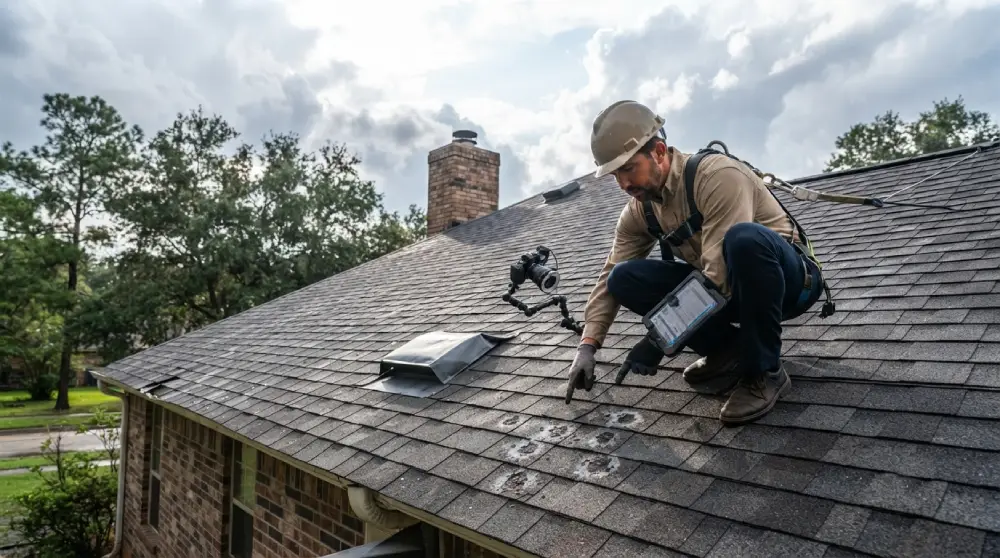
TX Public Adjusting works with property owners across Texas and understands the types of losses common to the state, including hail, wind, roof, water, fire, freeze, and commercial property damage.
Our team has reviewed thousands of Texas property damage claims.
Licensed Public Adjusting
TX Public Adjusting is operated by Rise Public Adjusting LLC, Texas License #3356839.
Texas requires public adjusters to be licensed, and the Texas Department of Insurance regulates the profession.
Independent Representation for Policyholders
We are hired by the policyholder, not the insurance company.
That allows us to focus on documenting the property owner’s loss and presenting the claim based on the policyholder’s interests.
Residential and Commercial Experience
We handle claims involving homes as well as commercial buildings, rental properties, multifamily properties, churches, retail locations, warehouses, restaurants, and other insured properties.
Free Claim Review and No Upfront Fees
You can have us review the claim before deciding whether public adjusting representation makes sense for your situation.
Free Claim Review. No upfront fees. Residential and commercial claims.
Areas We Serve Near Whitehouse
Our service extends beyond the Whitehouse city limits and into surrounding East Texas communities.
Nearby areas include Tyler, Bullard, Troup, Arp, New Chapel Hill, and Flint, along with other communities in Smith County and the surrounding region.
If your property is outside Whitehouse but you are dealing with an underpaid, disputed, or complicated property claim, contact TX Public Adjusting to confirm service availability.
Frequently Asked Questions About Public Adjusters in Whitehouse
What does a public adjuster in Whitehouse do?
A public adjuster represents the policyholder during a property insurance claim. The work can include reviewing the loss, inspecting damage, preparing documentation, evaluating the insurer’s estimate, communicating with the carrier, and negotiating issues involving the claim.
Texas requires public adjusters to be licensed, and the Texas Department of Insurance explains that policyholders may hire them to help negotiate property claims with an insurance company.
When should I contact a public adjuster after a Whitehouse storm?
Contacting a public adjuster early can be useful when the property has significant hail, wind, roof, or interior damage, especially if several areas are affected.
You can also contact one later if the insurer has already inspected the property and the estimate appears incomplete. The earlier the condition of the property is documented, however, the easier it may be to preserve clear evidence of the loss before repairs or additional weather change the scene.
Can TX Public Adjusting help if I already filed my claim?
Yes. Many property owners contact a public adjuster after the claim has already been opened.
We can review the insurance estimate, photographs, correspondence, payments, contractor information, and remaining damage to determine what issues may still need to be addressed.
What if my Whitehouse insurance claim was denied or underpaid?
A denial or low payment should be reviewed together with the insurer’s written explanation, policy, estimate, inspection information, and your documentation of the damage.
A public adjuster can help identify disagreements involving the damage scope or claim documentation and present additional support when appropriate. Some disputes may involve legal or coverage questions beyond a public adjuster’s role; those situations may require an attorney.
Do you handle hail-damaged roof claims in Whitehouse?
Yes. Hail and roof claims are a major part of Texas property adjusting.
We can inspect the roof and related exterior components, review the carrier’s estimate, document additional observed storm damage, and help present the claim when the existing scope does not match the condition of the property.
Can a public adjuster help with water damage?
Yes. Water claims can involve plumbing failures, appliance leaks, storm-created openings, roof damage, and other causes.
Because insurance coverage can depend heavily on how the water entered the property, we focus on documenting the physical evidence and reported cause rather than treating every water loss the same way.
Do you work on commercial property claims in Whitehouse?
Yes. TX Public Adjusting represents both residential and commercial policyholders.
Commercial claims may involve buildings, roofing systems, equipment, inventory, tenant areas, and other insured property. Larger losses often require more extensive inspection and documentation than a typical residential claim.
How much can a public adjuster charge in Texas?
The Texas Department of Insurance states that a public adjuster may charge up to 10% of the total amount the insurance company pays on the claim. The actual fee and representation terms should be stated in the written contract.
TX Public Adjusting offers a Free Claim Review with no upfront fees, so you can discuss the loss before deciding how to proceed.
How long does a public adjuster claim take?
There is no single timeline that applies to every property claim.
A straightforward roof scope disagreement can move differently from a major fire, multi-room water loss, or commercial storm claim. Inspection scheduling, documentation, additional estimates, carrier responses, policy questions, and the extent of disagreement can all affect timing.
Do you serve Lake Tyler and communities around Whitehouse?
Yes. We assist policyholders in Whitehouse and the surrounding East Texas area, including properties toward Lake Tyler and nearby communities such as Tyler, Bullard, Troup, Arp, New Chapel Hill, and Flint.
Contact us with the property location and claim details, and we can confirm service availability.
Get a Free Claim Review in Whitehouse, TX
A property insurance claim should be based on the actual documented loss.
If your roof was damaged by hail, a storm caused wind and water damage, a pipe flooded part of your home, fire damaged your building, or the insurance estimate simply does not account for what you see at the property, TX Public Adjusting can review the situation.
We help Whitehouse homeowners and commercial property owners understand what has been included in the claim, identify documented damage that may require additional attention, and communicate those issues to the insurance company.
Contact TX Public Adjusting for a Free Claim Review.
No upfront fees. Residential and commercial property claims.
TX Public Adjusting
Operated by Rise Public Adjusting LLC
Texas License #3356839