

Hailstorms don’t just dent your roof they can wreck your finances if your claim isn’t handled correctly. And that’s exactly where the debate around public adjuster vs. insurance adjuster for hail claims in Texas becomes critical. One works for the insurance company. The other works for you. That difference? It can mean thousands sometimes tens of thousands of dollars. I’ve seen homeowners assume their insurance adjuster is “on their side.” It feels that way at first. Friendly inspection. Quick estimate. Clean paperwork. But once repairs start? Gaps show up. Costs climb. And suddenly, you’re paying out of pocket for damage you thought was covered. Let’s break this down clearly, practically, and without fluff.
What Is a Hail Damage Insurance Claim in Texas?
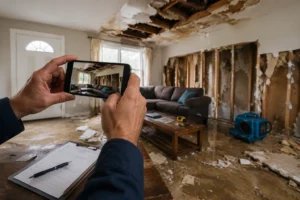
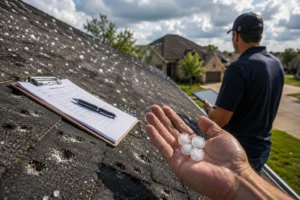
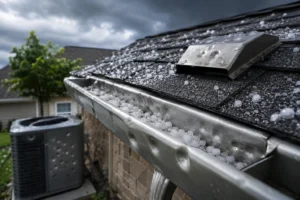
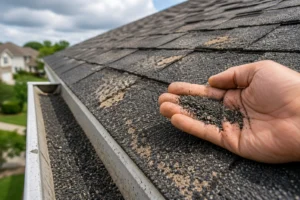
A hail damage claim is your formal request to your insurer to cover storm-related damage. Simple in theory. Messy in reality. In Texas, hail doesn’t just hit it punishes. Roofs, gutters, siding, windows, HVAC units, and even interior ceilings can take a beating in minutes. Typical damage includes:
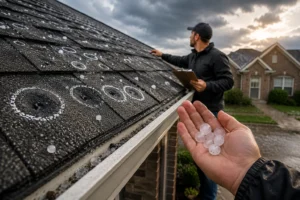
- Shingle bruising or granule loss
- Dents in metal vents, flashing, and gutters
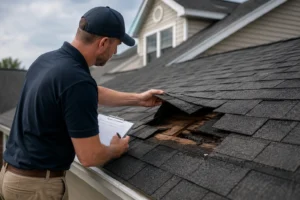
- Cracked tiles or lifted shingles
- Water intrusion that shows up days later
Here’s something most homeowners don’t realize. Early-stage hail damage can be subtle sometimes even mistaken due to visual misinterpretation, similar to how the brain experiences patterns like Pareidolia. In roofing, that means real damage may be overlooked or worse, dismissed. If it’s missed early, it becomes expensive later.
Who Is an Insurance Adjuster?
An insurance adjuster is assigned by your carrier to evaluate your claim. They inspect the damage, write the estimate, and determine what gets paid, are not independent, represent the insurance company. There are three common types:
- Staff adjusters – full-time employees of the insurer
- Independent adjusters – contractors hired during busy periods
- CAT adjusters – deployed after major storms, often handling high volumes
Their job is to:
- Inspect your property
- Document visible damage
- Create a scope of repairs
- Apply policy terms and limits
- Issue an estimate
They follow guidelines. They follow internal processes. And yes they follow cost controls.
Who Is a Public Adjuster?
A public adjuster flips the equation. They work for you. Not the insurance company. Licensed by the state, a public adjuster represents the policyholder throughout the claim process. Their job is to ensure nothing gets missed and nothing gets underpaid. They typically:
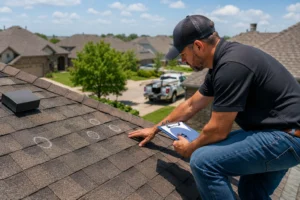
- Perform detailed property inspections
- Document all damage (including hidden issues)
- Prepare accurate estimates
- Handle communication with the insurer
- Negotiate for a higher, fair settlement
- Manage supplements and disputes
Think of them as your claim advocate.
Public Adjuster vs. Insurance Adjuster for Hail Claims in Texas: The Core Differences
| Factor | Insurance Adjuster | Public Adjuster |
| Who they represent | Insurance company | Homeowner |
| Primary goal | Control payout within policy | Maximize fair settlement |
| Payment | Paid by insurer | Paid via % of claim |
| Inspection depth | Often surface-level | Detailed and comprehensive |
| Negotiation | Limited | Active and strategic |
When comparing public adjuster vs. insurance adjuster for hail claims in Texas, it comes down to alignment.
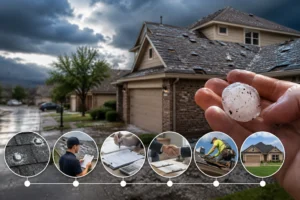
How Hail Claims Are Actually Handled (Step-by-Step)
- Storm hits
- Claim is filed
- Insurance adjuster inspects
- Initial estimate issued
- Gaps discovered
- Supplements begin
- Claim settles
Without representation, most homeowners stay within the insurer’s process. With a public adjuster, the process becomes more balanced and often more complete.
Where Insurance Adjusters Commonly Fall Short

- Missed soft metal damage
- Incomplete roofing scope
- Ignored code upgrades
- Underpriced labor/materials
- Rushed inspections during storm surges
Speed becomes the priority. Detail takes a hit.
How Public Adjusters Improve Hail Claim Outcomes
This is where things shift. Dramatically. A public adjuster approaches the same property differently.
They:
- Spend more time inspecting every component
- Use detailed documentation photos, measurements, reports
- Build estimates using tools like Xactimate
- Identify hidden or future damage risks
- Push for code-compliant repairs
- Handle back-and-forth negotiations
And they don’t stop at the first estimate. They push. Then push again. In fact, one of the biggest advantages they bring is their deep understanding of Hail Damage Claim Supplements: What Carriers Miss in Their Scope, which allows them to identify overlooked line items and recover additional funds that homeowners would otherwise never see. That persistence is often the difference between partial coverage and full recovery.
Pros and Cons of Insurance Adjusters
Pros
- No cost
- Faster inspections
- Direct carrier connection
Cons
- Not your advocate
- May under-scope damage
- Limited negotiation
Pros and Cons of Public Adjusters
Pros
- Advocate for you
- Often increase payouts
- Manage entire process
Cons
- Percentage fee
- Not needed for small claims
- Quality varies
When Should You Hire a Public Adjuster in Texas?
Consider it when:
- Claim is large ($15K+)
- Damage is complex
- Claim is denied or underpaid
- You lack time or expertise
When an Insurance Adjuster Alone May Be Enough
- Minor damage
- Clear coverage
- No disputes
Real Cost Comparison
| Scenario | Insurance Payout | Fee | Net |
| No PA | $18,000 | $0 | $18,000 |
| With PA | $28,000 | $2,800 | $25,200 |
Higher gross often outweighs the fee.
Common Mistakes Homeowners Make
- Accepting first offer
- Poor documentation
- Blind trust in insurer scope
- Hiring inexperienced contractors
Texas Laws and Regulations
- Public adjusters must be licensed
- Fees typically capped
- Contracts regulated
- Homeowners have dispute rights
How to Choose the Right Public Adjuster
Look for:
- License verification
- Hail claim experience
- Transparent fees
- Strong documentation process
Avoid:
- Pressure tactics
- Unrealistic guarantees
Key Takeaways

When evaluating public adjuster vs. insurance adjuster for hail claims in Texas, ask:
- Who represents you?
- Who benefits from higher payouts?
- Who is doing the detailed work?
Conclusion
Hail damage is unpredictable. Your claim outcome doesn’t have to be. Understanding the difference between adjusters gives you leverage. Real leverage. And in Texas, where hail claims are common and costly, that advantage matters more than most homeowners realize. If something feels off in your claim, trust that instinct. Get clarity. Get a second look. Because once you fully understand public adjuster vs. insurance adjuster for hail claims in Texas, you’re no longer guessing. You’re making informed decisions.
FAQs
A public adjuster works for the homeowner, while an insurance adjuster represents the insurance company.
No, insurance adjusters are paid by the insurance company, not the policyholder.
Public adjusters typically charge a percentage of the final claim settlement, often around 5%–10%.
In many cases, yes public adjusters often identify additional damage and negotiate higher settlements.
You should consider hiring one if your claim is large, complex, denied, or underpaid.
Yes, you can bring in a public adjuster at almost any stage of the claim process.
Yes, public adjusters must be licensed and regulated by the state of Texas.
No, hiring a public adjuster does not give your insurer a valid reason to deny your claim.
Not always smaller, straightforward claims can often be handled without one.
It varies, but most claims take a few weeks to a few months depending on complexity and negotiations.