

Property damage in Selma can develop quickly after a severe thunderstorm, hail event, plumbing failure, fire, or sudden roof leak. Once the immediate emergency is under control, the insurance claim often becomes a second problem. Estimates may leave out damaged materials, repairs may be priced too low, and the carrier’s scope may not reflect what the property actually needs.
TX Public Adjusting provides public adjuster services in Selma for residential and commercial property owners who need experienced help with an insurance claim. We inspect the damage, review the policy and carrier estimate, document the full scope of covered loss, and negotiate with the insurance company on behalf of the policyholder. Property owners who are unfamiliar with the process can also review our guide explaining what a Texas public adjuster does during a residential or commercial insurance claim.
TX Public Adjusting is operated by Rise Public Adjusting LLC, Texas License #3356839. We represent property owners—not insurance companies.
Request a free claim review. There are no upfront fees.
Insurance Claim Help for Selma Property Owners
Selma sits along the fast-growing Interstate 35 corridor northeast of San Antonio. Although the city covers only about five square miles, it crosses portions of Bexar, Guadalupe, and Comal counties. That unusual three-county footprint places Selma properties within a busy mix of residential subdivisions, shopping centers, restaurants, medical facilities, warehouses, offices, and other commercial development.
A storm that moves across northeastern Bexar County can also affect nearby sections of Guadalupe and Comal counties within a relatively short period. Roof damage, exterior impact marks, lifted flashing, broken windows, water intrusion, and damage to rooftop mechanical equipment may appear across several parts of Selma during the same weather event.
Some damage is immediately visible. Other problems are discovered days or weeks later when moisture reaches insulation, ceilings, walls, flooring, electrical components, or inventory.
A public adjuster in Selma helps the policyholder evaluate the claim from the property owner’s side. That is different from the insurance company’s adjuster, whose assignment comes from the carrier. Understanding the difference between a public adjuster vs. insurance company adjuster can help Selma property owners understand who each professional represents during the claim.
Our role may include:
- Reviewing the policy and applicable coverage
- Inspecting the damaged property
- Photographing and documenting visible and concealed damage
- Comparing the carrier’s estimate with the actual repair scope
- Preparing a detailed claim presentation
- Organizing supporting records
- Communicating with the insurance company
- Negotiating disputed or omitted claim items
The purpose is not to create damage or inflate a claim. It is to identify, document, and present the covered loss accurately.
Why Property Owners Hire a Public Adjuster in Selma
Insurance claims can involve far more than submitting photographs and waiting for a payment. A significant residential or commercial loss may require measurements, repair estimates, inventories, contractor input, moisture documentation, equipment records, lease information, business interruption details, and repeated communication with the carrier.
Many Selma property owners contact a public adjuster when:
- The insurance payment appears too low
- The carrier’s estimate omits visible damage
- A roof claim includes only limited repairs
- Interior water damage is not fully addressed
- The claim has become delayed or difficult to manage
- The insurer attributes damage to wear and tear
- A commercial claim interrupts normal operations
- Multiple contractors disagree with the carrier’s scope
- The owner does not have time to manage a complex claim
- A denied claim needs a professional second review
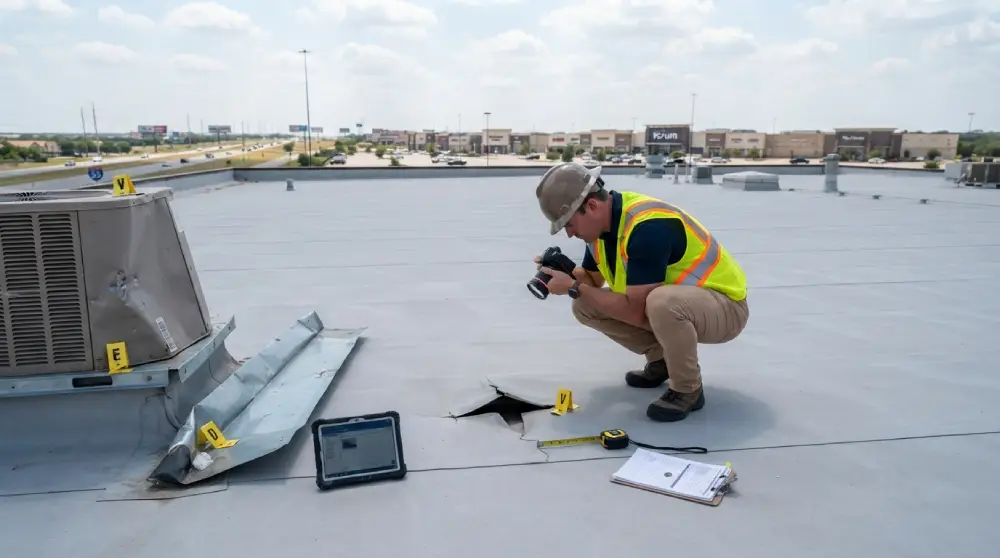
Properties near The Forum at Olympia Parkway face different claim considerations than a single-family home in Retama Ridge or Olympia Hills. Large retail and commercial sites may involve flat roofing systems, membrane damage, HVAC units, signage, glass, inventory, tenant improvements, and loss-of-income issues. Residential claims may involve roofing, siding, fences, garages, interior finishes, personal property, and temporary living expenses.
The claim must reflect the actual property and policy—not a generic estimate.
Selma’s Most Common Weather and Property Risks
Selma is part of the broader San Antonio–New Braunfels region, but its location along the I-35 corridor creates its own property-loss concerns. The city’s primary severe-weather exposures include hail, damaging thunderstorm winds, lightning, heavy rainfall, localized flooding, and occasional tornado conditions.
Recent National Weather Service alerts covering Bexar, Comal, and Guadalupe counties have included threats involving large hail, damaging winds, intense lightning, and wind gusts near 50 to 60 miles per hour.
Hail Damage in Selma
Hail is one of the most common reasons property owners seek help with a hail damage insurance claim in Selma.
Hail damage may affect:
- Asphalt shingles
- Metal roofing panels
- Roof vents and flashing
- Gutters and downspouts
- Window screens
- Siding and exterior finishes
- Air-conditioning equipment
- Skylights
- Commercial roof membranes
- Signs and exterior lighting
The size of the hailstone is only one factor. Wind speed, direction, roof age, material type, previous repairs, and storm duration can all influence the extent of damage.
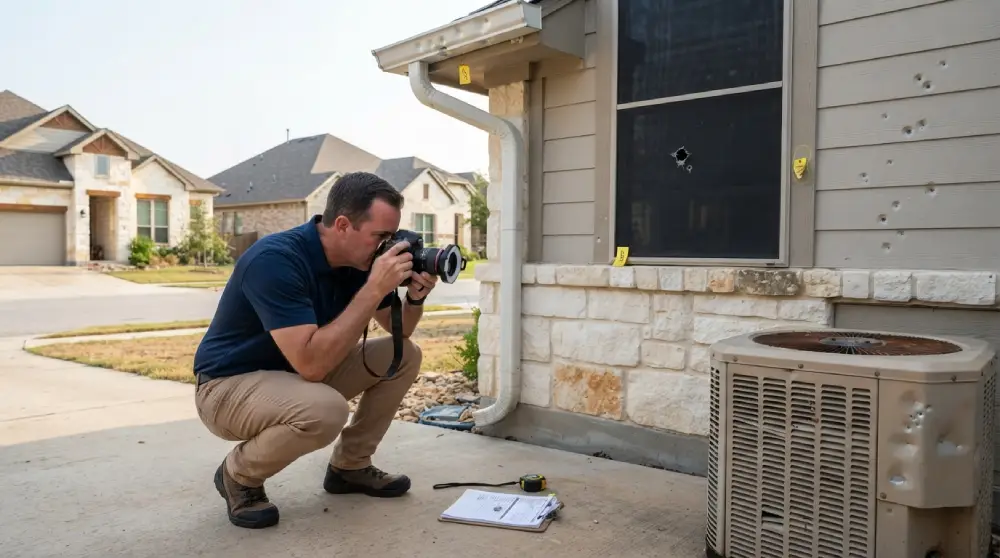
Hail impacts may bruise or fracture shingles without creating an immediate leak. On metal surfaces, impacts may leave dents or affect seams and coatings. Commercial roofs can sustain punctures, displaced components, damaged insulation, or harm to rooftop equipment.
A complete hail claim should consider more than the most visible roof surface.
Wind and Severe Thunderstorm Claims
Straight-line winds can lift shingles, loosen roof edges, damage soffits, displace flashing, topple trees, break fences, and push rain beneath roofing materials.
Selma’s mix of newer subdivisions, established homes, highway-facing businesses, retail centers, and open commercial corridors means wind damage can look different from property to property.
A home in Chelsea Crossing may experience lifted shingles and fence damage. A commercial building near I-35 or The Forum may experience membrane uplift, damaged rooftop units, exterior sign damage, broken glazing, or water entering through roof penetrations.
Wind-driven rain can also create disputes. The carrier may focus on the amount of visible exterior damage while giving less attention to the interior moisture path.
Heavy Rain and Water Intrusion
Heavy rainfall can expose weaknesses in roofs, windows, doors, drainage systems, flashing, and exterior wall assemblies.
Water may enter through:
- Missing or lifted shingles
- Damaged roof penetrations
- Failed flashing
- Broken windows
- Overflowing drainage systems
- Wind-damaged siding
- Openings created by fallen limbs
- Commercial roof seams
- Mechanical curbs and vents
Our guide to dealing with an insurance adjuster after water damage explains what property owners should document and what may happen during the carrier’s inspection. Water damage often spreads beyond the original entry point. Moisture may travel along decking, rafters, framing, insulation, ductwork, or wall cavities before becoming visible.
Prompt documentation matters because wet materials can change quickly, and emergency mitigation may remove evidence needed to explain the original condition.
Flash Flooding and Drainage Problems
Selma developed around the Cibolo Creek area, and its local identity still reflects that connection. Heavy rainfall can create drainage problems, roadway flooding, ponding, and water accumulation around homes or commercial buildings.
Flooding and interior water intrusion must be evaluated carefully because standard property policies often treat floodwater differently from rain entering through storm-created openings. The source and path of the water can affect which policy may respond.
Property owners should avoid assuming that every type of water damage is covered—or excluded—without reviewing the actual policy and facts.
Lightning and Fire Losses
Severe thunderstorms can also produce lightning-related claims. Lightning may damage:
- Electrical panels
- Wiring
- Appliances
- Security systems
- Computers and servers
- HVAC controls
- Commercial equipment
- Roofing or structural components
A lightning strike can also start a fire or create smoke damage that extends beyond the immediate burn area.
When lightning causes a structure fire, electrical failure, or smoke contamination, the resulting fire damage insurance claim may involve several separate categories of covered property. Fire claims frequently involve separate categories of loss, including structural damage, smoke residue, odor, water from firefighting efforts, debris removal, contents damage, code-related repairs, and temporary relocation or business interruption.
Common Insurance Claims in Selma
Hail Damage Claims
A hail claim should account for all affected elevations and components, not just a small number of roof impacts. We review roofing, soft metals, gutters, vents, exterior surfaces, HVAC equipment, windows, and related interior damage.
Roof Damage Claims
A public adjuster for a roof claim can review whether the carrier’s estimate addresses matching, access, damaged underlayment, flashing, code requirements, steep charges, waste, and associated interior repairs.
We compare the proposed scope with the conditions observed at the property.
Water Damage Claims
Water losses may come from burst pipes, plumbing failures, appliance leaks, roof openings, HVAC systems, or storm-related intrusion.
The visible stain is rarely the entire loss. Wet drywall, insulation, flooring, cabinets, framing, baseboards, paint, electrical materials, and personal property may also require evaluation.
Fire and Smoke Damage Claims
Fire claims can involve far more than the area touched by flames. Smoke and soot may spread through adjoining rooms, concealed spaces, duct systems, contents, equipment, and porous building materials. A fire insurance adjuster working for the policyholder can help document damage that extends beyond the visibly burned area.
We help document structural repairs, cleaning, replacement needs, contents, debris removal, and related covered costs.
Storm Damage Claims
Severe storms can create several types of damage at once. A single event may involve wind, hail, falling trees, water intrusion, power interruption, broken windows, fencing, roof damage, and exterior debris impact.
A fragmented inspection may miss how these conditions relate to one another.
Commercial Property Claims
Commercial property claims in Selma may involve retail space, restaurants, offices, warehouses, medical facilities, multifamily properties, industrial buildings, and leased commercial units.
Potential claim components include:
- Building damage
- Tenant improvements
- Machinery and equipment
- Inventory
- Furniture and fixtures
- Electronic systems
- Signage
- Debris removal
- Extra expenses
- Business interruption
- Loss of rental income
Commercial losses may also involve low-slope or built-up roofing systems. When storm damage affects these assemblies, the scope may need to address membrane layers, insulation, flashing, penetrations, drainage components, and the requirements of a proper built-up roof repair. Commercial policies can contain different limits, deductibles, exclusions, valuation provisions, and reporting requirements. Early organization is especially important when operations are disrupted.
Claim Considerations in Selma Neighborhoods
The City of Selma identifies subdivisions including Chelsea Crossing, Forrest Creek, Live Oak Hills, Olympia Hills, and Retama Ridge.
Each area has different construction patterns, roof ages, drainage conditions, exterior materials, and exposure to nearby development.
Olympia Hills
Olympia Hills is located off Olympia Parkway behind The Forum Shopping Center. Homes in this area may experience hail and wind damage associated with storms moving across the northeastern San Antonio corridor.
Because the neighborhood sits near a large commercial district, storm losses may affect residences and nearby businesses during the same event.
Retama Ridge and Retama Springs
Properties near Retama Parkway and Lookout Road may be exposed to hail, wind-driven rain, and runoff during intense storms.
A proper inspection should evaluate roofing, flashing, exterior surfaces, attic conditions, and any interior signs of water movement.
Chelsea Crossing and Forrest Creek
These communities near Interstate 35 can experience strong crosswinds, wind-driven debris, hail, and noise that may make storm impacts difficult to identify from inside the home.
After a severe storm, owners should inspect accessible areas safely and document visible changes without climbing onto a damaged roof.
Live Oak Hills
Homes near Wiederstein Road may have different roof ages and construction details. Older repairs, previous storm impacts, additions, and drainage modifications can complicate the adjustment process.
The issue is not simply whether a roof is older. The key question is whether a covered event caused new, identifiable damage.
Why Insurance Claims Become Underpaid
An underpaid claim does not always begin with an outright denial. More often, the carrier accepts that damage occurred but prepares a scope that is too narrow. Many underpayments begin with avoidable documentation, estimating, or communication problems. Reviewing the most common property insurance claim mistakes can help property owners protect the claim before important evidence is lost.
Missed Damage
Some damage is difficult to see from the ground or during a short inspection. Roof edges, flashing, vents, underlayment, decking, mechanical systems, insulation, and concealed moisture may not be fully documented.
Scope Omissions
An estimate may include replacing one material while omitting the labor and related components needed to complete the repair properly.
Common omissions may involve:
- Tear-off and disposal
- Detaching and resetting components
- Flashing
- Underlayment
- Roof accessories
- Painting adjoining surfaces
- Drywall texture
- Insulation
- Contents manipulation
- Equipment access
- General contractor coordination
- Code-related work
Low Repair Pricing
Insurance estimates often rely on estimating software, but the result depends on the selected line items, quantities, labor assumptions, material grade, taxes, market conditions, and job complexity.
Software does not replace judgment or a complete inspection.
Depreciation Issues
Depreciation can significantly reduce the initial payment. Some policies allow recoverable depreciation after repairs are completed, while other provisions may limit recovery.
Property owners should understand how actual cash value, replacement cost, deductibles, and depreciation affect the amount issued.
Documentation Problems
A legitimate claim can become difficult when photographs are incomplete, damaged materials are discarded too early, inventories lack detail, receipts are missing, or communication with the carrier is not organized.
The Texas Department of Insurance advises property owners to photograph or record damage as soon as it is safe and avoid discarding damaged items before speaking with the adjuster.
Our Public Adjusting Process
1. Free Claim Review
We begin by discussing what happened, when the loss occurred, the condition of the claim, and the concerns you have about the carrier’s response.
We may review:
- The insurance policy
- Claim correspondence
- Payment letters
- Coverage decisions
- Carrier estimates
- Contractor estimates
- Photographs
- Repair invoices
- Engineering or inspection reports
2. Property Inspection
We inspect accessible areas related to the reported loss. The scope depends on the property and claim type.
For a Selma hail claim, this may include the roof, gutters, vents, flashing, siding, windows, exterior metals, HVAC equipment, attic, ceilings, and interior water damage.
For a commercial loss, the inspection may also involve roof systems, mechanical equipment, tenant spaces, inventory, common areas, and operational impacts.
3. Damage Documentation
We organize photographs, measurements, repair requirements, inventories, estimates, and other supporting evidence.
Detailed documentation helps connect each requested claim item to the reported event and policy.
4. Claim Presentation
We prepare and submit the claim materials in a structured form. This may include a detailed repair estimate, supporting photographs, documentation of contents, invoices, reports, and explanations of disputed items.
5. Negotiation and Claim Resolution
We communicate with the insurer, respond to questions, attend additional inspections when appropriate, and negotiate the documented claim.
The time required depends on the size of the loss, policy, carrier, complexity of the damage, availability of documentation, and whether experts are needed.
A Mid-Claim Review Can Reveal What Was Missed
You do not always have to hire a public adjuster on the first day of the loss. Our guide on when it is too late to hire a public adjuster explains why the available options may depend on the claim status, policy deadlines, prior payments, and remaining documentation.
Many Selma property owners contact us after:
- Receiving the first estimate
- Discovering that repairs will cost more
- Learning that the roof scope is incomplete
- Finding hidden water damage
- Experiencing repeated delays
- Receiving a partial denial
- Becoming overwhelmed by a commercial claim
A professional review can help determine whether the carrier’s scope appears consistent with the documented conditions.
Contact TX Public Adjusting for a free claim review. There are no upfront fees.
Why Choose TX Public Adjusting
Licensed in Texas
TX Public Adjusting is operated by Rise Public Adjusting LLC, Texas License #3356839.
We Represent Policyholders
Insurance company adjusters work for or receive their assignments from the insurer. Public adjusters are hired by policyholders to represent the policyholder’s interests during the claim.
Residential and Commercial Experience
We assist with homes, retail buildings, offices, warehouses, multifamily properties, restaurants, and other insured properties.
Our team has reviewed thousands of claim files involving residential and commercial losses across Texas.
Texas-Focused Claim Knowledge
Texas claims may involve hail, wind, hurricanes, freeze events, fires, plumbing failures, and severe convective storms.
A Texas-focused public adjuster understands how local weather, regional construction methods, roofing systems, and repair conditions affect claim documentation.
Detailed Scope Review
We look beyond the first estimate. Our review may involve measurements, repair methods, material requirements, related components, interior damage, code considerations, and the full sequence of work needed to restore the property.
No Upfront Fees
The initial claim review is free, and there are no upfront public adjusting fees. Any fee arrangement is explained before representation begins and documented in the agreement.
Areas We Serve Near Selma
TX Public Adjusting assists property owners in Selma and surrounding communities throughout the northeast San Antonio corridor, including:
- Live Oak
- Universal City
- Schertz
- Cibolo
- Garden Ridge
- Converse
- Windcrest
- New Braunfels
- Northeast San Antonio
- Nearby areas of Bexar County
- Nearby areas of Guadalupe County
- Nearby areas of Comal County
Selma is closely connected to these communities through Interstate 35, Loop 1604, Lookout Road, Retama Parkway, and Olympia Parkway.
Local landmarks such as Retama Park, Stage Stop Park, and The Forum at Olympia Parkway help define the city’s mix of residential, recreational, historic, and commercial properties. The historic Stage Stop reflects Selma’s origins as a transportation stop, while Retama Park continues the horse-related identity represented in the city’s history.
Frequently Asked Questions
How can a public adjuster help with a Selma insurance claim?
A public adjuster represents the property owner during the claim. The adjuster can inspect the damage, review the policy and carrier estimate, document omitted items, prepare a repair scope, organize supporting evidence, and negotiate with the insurance company.
This can be especially useful when the claim is large, underpaid, delayed, denied, or difficult to manage.
How much does a public adjuster cost in Selma?
Public adjusters generally work under a written fee agreement that explains how the fee is calculated. The fee structure may depend on the claim and applicable Texas requirements.
TX Public Adjusting offers a free claim review and does not charge upfront fees. The compensation terms are explained before you decide whether to proceed.
Can I hire a public adjuster after receiving an insurance payment?
Yes. Receiving an initial payment does not always mean the claim is complete.
Property owners frequently request a review after discovering omitted damage, receiving contractor estimates above the insurer’s estimate, or learning that the proposed repairs are incomplete. The timing and available options depend on the policy, claim status, deadlines, and prior communications.
What should I do after hail damages my Selma property?
Document visible damage as soon as it is safe. Photograph gutters, vents, siding, windows, fencing, air-conditioning units, interior leaks, and fallen debris. Save storm notices, repair invoices, and emergency mitigation records.
Avoid signing rushed repair agreements or allowing damaged materials to be discarded before they are documented. Do not climb onto a wet, steep, or damaged roof.
Does homeowners insurance cover flood damage in Selma?
Standard homeowners policies generally treat rising floodwater differently from water entering through a storm-created opening or failed plumbing system. Flood damage may require a separate flood insurance policy.
The source of the water matters. Review the policy and document where the water entered before assuming the loss is covered or excluded.
Can a public adjuster help with a denied roof claim?
A public adjuster can review the denial letter, policy language, inspection findings, photographs, carrier estimate, engineering reports, and available evidence.
A review does not guarantee that the denial will be reversed, but it can help determine whether damage or policy considerations were overlooked.
What if the insurance company says my roof damage is wear and tear?
Age-related deterioration and storm damage can exist on the same roof. The relevant issue is whether the reported storm caused new physical damage covered by the policy.
A detailed inspection may help distinguish long-term conditions from recent hail impacts, wind displacement, punctures, creases, damaged accessories, or storm-created openings.
Do you handle commercial claims near The Forum and I-35?
Yes. TX Public Adjusting handles commercial property claims involving retail spaces, offices, warehouses, restaurants, multifamily properties, equipment, inventory, tenant improvements, and business interruption issues.
Commercial losses often require more documentation than residential claims because several coverage categories may apply.
How long does a property insurance claim take?
There is no single timeline. A straightforward claim may move relatively quickly, while a major fire, widespread hail event, commercial loss, or disputed claim may take longer.
The timeline depends on the insurer, policy, damage complexity, inspection scheduling, documentation, expert involvement, and the number of disputed items. Property owners waiting for the carrier’s first response can also review how long an insurance adjuster has to contact you after a claim is reported.
Is TX Public Adjusting part of an insurance company?
No. TX Public Adjusting is operated by Rise Public Adjusting LLC and represents policyholders.
We are not the insurance carrier’s adjuster and do not work for the insurance company. Texas License #3356839.
Get a Free Selma Insurance Claim Review
A low estimate does not always reflect the full cost of repairing your property.
Missing roof components, incomplete interior scopes, overlooked water damage, incorrect quantities, depreciation issues, and inadequate documentation can reduce a claim payment substantially.
TX Public Adjusting helps Selma homeowners, business owners, landlords, and commercial property owners understand what was included, what may have been missed, and what steps may still be available.
Free Claim Review
No Upfront Fees
Residential and Commercial Claims
Licensed Texas Public Adjuster
Property owners who need a broader overview of documentation, inspections, estimates, and disputed damage can review our property loss recovery guide before requesting a claim evaluation.
Contact TX Public Adjusting to discuss your Selma property damage claim.
Rise Public Adjusting LLC
Texas License #3356839