

Property damage in El Campo can develop quickly and affect far more than the first visible area. A Gulf Coast storm can lift shingles, drive rain through roof openings, damage metal buildings, interrupt business operations, and leave moisture inside walls or insulation. When the insurance company’s estimate does not reflect the full scope of that loss, a licensed public adjuster in El Campo can help the property owner document the damage and pursue a properly supported claim.
TX Public Adjusting represents residential and commercial policyholders—not insurance companies. Our team reviews policies, inspects damaged property, prepares detailed claim documentation, identifies missing or undervalued items, and communicates with the carrier throughout the adjustment process. Property owners who are unfamiliar with the role can also review our guide explaining what a public adjuster does during a Texas property insurance claim.
TX Public Adjusting operates through Rise Public Adjusting LLC, Texas License #3356839. El Campo property owners can request a free claim review with no upfront fees to learn whether their claim may need additional attention.
Need help with an El Campo property damage claim? Contact TX Public Adjusting for a free claim review.
Why Property Owners Hire a Public Adjuster in El Campo
El Campo is the largest city in Wharton County and sits along the U.S. 59 and State Highway 71 corridors between the Houston metropolitan area and Victoria. The community includes historic downtown properties, established residential streets, agricultural operations, metal buildings, warehouses, retail locations, churches, restaurants, multifamily properties, and other commercial facilities.
That mix of property types creates different insurance-claim challenges. Damage to an older home near the central part of El Campo may require careful matching of roofing, siding, flooring, trim, or interior finishes. A commercial building near a major highway may involve roof systems, mechanical equipment, inventory, signage, business interruption, and code-related repairs. Agricultural and light-industrial properties may include large roof surfaces, detached structures, machinery, and specialized materials.
The insurance company assigns an adjuster to investigate the loss on its behalf. A public adjuster performs a different role. We work for the policyholder and focus on presenting the property owner’s claim accurately and thoroughly. Understanding the difference between a carrier-appointed adjuster and policyholder representation is easier when comparing a public adjuster vs. independent adjuster.
An El Campo public adjuster may be especially helpful when:
- The insurance estimate appears lower than contractor proposals.
- Important rooms, elevations, structures, or materials were omitted.
- The carrier attributed storm damage to age or wear.
- Water traveled farther than the initial inspection identified.
- The claim involves a large roof, metal building, or commercial property.
- The insurer applied substantial depreciation.
- The property owner is overwhelmed by documentation requests.
- A claim was delayed, partially denied, or underpaid.
- Additional damage appeared after repairs began.
- The carrier’s scope does not restore the property to its pre-loss condition.
Hiring a public adjuster does not guarantee a particular settlement. It gives the policyholder an experienced representative who can evaluate the claim, develop the supporting documentation, and address legitimate differences in scope or valuation.
Property Damage Risks in El Campo
El Campo has a hot, humid climate and is located roughly 65 miles from the Houston metropolitan area in the south-central portion of Wharton County. Its Gulf Coast proximity exposes local properties to severe thunderstorms, tropical weather, heavy rain, high wind, hail, and moisture-related damage.
Tropical Storm and Hurricane Damage
El Campo is inland, but it is still close enough to the Texas Gulf Coast to experience damaging effects from tropical systems. A hurricane does not need to pass directly over the city to produce a covered property loss. Our Texas guide to hurricane property damage claims explains how wind, rain, structural damage, interior damage, and damaged equipment may affect the scope of a claim.
Outer bands can bring:
- Wind-driven rain
- Torn or displaced roofing materials
- Damaged flashing and vents
- Broken windows
- Fallen limbs and debris impact
- Water intrusion
- Electrical damage
- Damage to fences, awnings, signs, and detached structures
Tropical-weather claims can become complicated when wind and water affect the same building. Policy language, the source of water, the sequence of damage, and the available evidence may all influence the claim.
A thorough inspection should look beyond the obvious roof opening. Wind-driven water can migrate into decking, insulation, wall cavities, ceilings, flooring, cabinetry, electrical components, and stored contents.
Hail Damage Claims
Hail can affect asphalt shingles, metal roofing, gutters, vents, HVAC equipment, siding, windows, skylights, fences, and exterior finishes. For a closer look at inspection, documentation, and carrier disputes, review our guide to Texas hail damage insurance claims. Large commercial and agricultural roofs are particularly vulnerable because a single storm can affect thousands of square feet.
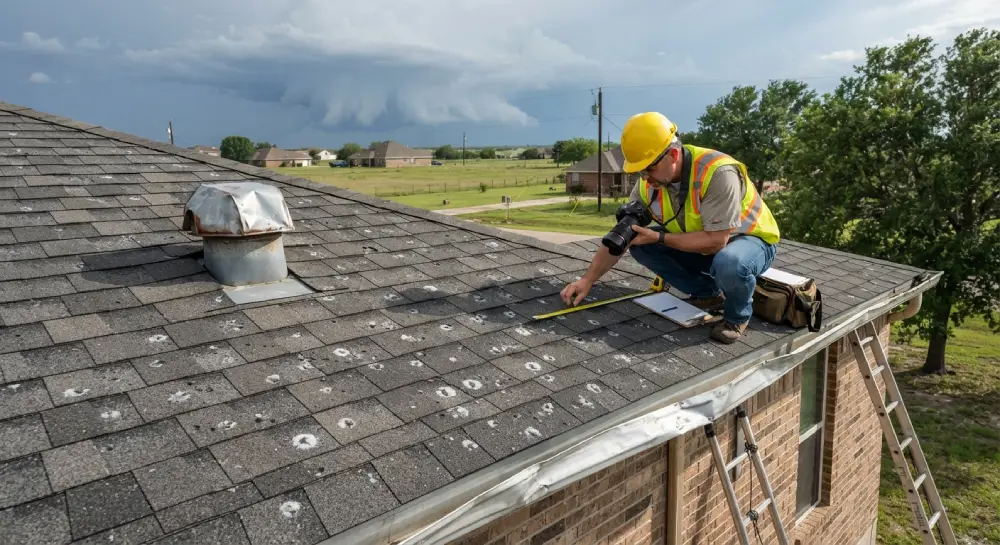
Some hail damage is easy to see. Other indicators are subtle and require a methodical inspection. On shingles, hail may fracture the mat, loosen protective granules, or create impact marks. On metal surfaces, it can leave dents, damage seams, affect coatings, or reduce the appearance and serviceability of the system.
A carrier’s initial inspection may focus on a small test area or only one roof surface. TX Public Adjusting evaluates the broader damage pattern, roof accessories, elevations, collateral indicators, and interior evidence when relevant.
Windstorm and Tornado Damage
Severe thunderstorms can produce straight-line winds strong enough to damage roofing systems, exterior cladding, garage doors, windows, fences, signs, and trees. Wind can also create openings that allow rain to enter the property.
Common wind-related issues include:
- Creased or missing shingles
- Lifted roofing components
- Detached flashing
- Membrane displacement
- Damaged edge metal
- Broken seals around openings
- Wind-driven rain intrusion
- Debris impact
- Structural movement
- Damage to exterior equipment
Even when a roof remains largely intact, lifted materials and failed seals can create future leakage. Prompt documentation helps establish the condition of the property close to the date of loss.
Heavy Rain and Water Intrusion
Several creeks run near El Campo, and the region’s flat terrain and intense rainfall can contribute to drainage problems and localized water accumulation.
Property insurance and flood insurance are not interchangeable. Water entering through a storm-created roof opening may be handled differently from rising surface water. Plumbing leaks, appliance failures, drain backups, and HVAC leaks can also involve different policy provisions.
For that reason, the cause and path of the water should be documented carefully. Property owners can also review our guidance on dealing with an insurance adjuster after water damage before accepting a limited scope or beginning permanent repairs. The inspection may need to address:
- Roof or exterior openings
- Ceiling and wall staining
- Moisture behind finishes
- Wet insulation
- Damaged flooring
- Cabinet and millwork swelling
- Mold-related concerns
- Electrical components
- Personal property
- Emergency mitigation work
Freeze and Pipe Damage
Although El Campo winters are usually mild, hard freezes can still damage plumbing and mechanical systems. A frozen or ruptured pipe can release significant water before anyone discovers it, especially in an unoccupied building, attic, exterior wall, or commercial space.
The visible puddle is rarely the full scope. Water can travel beneath flooring, behind cabinets, through wall cavities, and into adjacent rooms. Claim documentation should account for access, removal, drying, repair, replacement, and finish work—not just the failed pipe.
Common Insurance Claims in El Campo
Hail Damage Claims
Hail claims often involve more than roofing shingles. A complete El Campo hail inspection may include roof coverings, soft metals, gutters, downspouts, vents, flashing, screens, windows, siding, exterior lighting, HVAC equipment, fencing, and detached structures.
For commercial properties, the assessment may also involve membrane roofing, metal panels, rooftop units, coatings, drainage components, signage, and interior leaks.
Water Damage Claims
Water losses may result from plumbing failures, appliance leaks, roof openings, damaged supply lines, HVAC systems, or storm-related intrusion.
The key questions include:
- What caused the water release?
- Which materials became wet?
- How far did the moisture travel?
- What was removed during mitigation?
- Can affected materials be dried safely?
- Which finishes must be replaced or matched?
- Does the carrier’s estimate include all necessary labor?
TX Public Adjusting reviews the carrier’s scope against the physical damage and supporting records.
Fire and Smoke Damage Claims
Fire claims can involve structural damage, smoke residue, soot, heat exposure, water from firefighting efforts, debris removal, code requirements, temporary repairs, contents, and additional living expenses. A fire insurance adjuster can evaluate whether the carrier’s inspection and estimate account for the full extent of fire, smoke, soot, and suppression-related damage.
Smoke can travel into rooms that were not touched by flames. HVAC systems, attic spaces, insulation, cabinetry, textiles, electronics, and porous materials may require specialized evaluation.
Commercial fire claims may also involve inventory, equipment, lost income, continuing expenses, and extended restoration timelines.
Storm Damage Claims
Storm claims can combine wind, hail, rain, debris impact, fallen trees, electrical problems, and interior water damage. When multiple causes are involved, the documentation should clearly connect each damaged component to the event.
Photos of the exterior alone may not establish the complete scope. Interior moisture readings, repair records, meteorological information, contractor observations, and a detailed estimate may all be relevant.
Roof Damage Claims
Roof claims are among the most disputed property claims in Texas. Hiring a public adjuster for a roof claim may be appropriate when the insurance estimate omits components, limits repairs to a small area, or attributes storm damage to age and wear. Insurance companies may characterize damage as:
- Normal aging
- Maintenance-related deterioration
- Installation defects
- Foot traffic
- Mechanical damage
- Cosmetic damage
- Long-term leakage
A roof claim should be evaluated in context. The inspection may include the storm direction, damage pattern, roof age, material type, collateral evidence, repairability, matching concerns, and interior symptoms.
El Campo properties include asphalt-shingle roofs, standing-seam and exposed-fastener metal systems, low-slope commercial roofs, and roofing on detached agricultural structures. Each system requires a different inspection approach.
Commercial Property Claims
Commercial claims often involve more categories of loss than residential claims. Along the U.S. 59 and Highway 71 corridors, El Campo businesses may face damage to roofing, exterior systems, equipment, inventory, tenant improvements, signage, and interior finishes.
A commercial claim may include:
- Building damage
- Business personal property
- Inventory
- Machinery and equipment
- Electronic systems
- Business interruption
- Extra expenses
- Temporary relocation
- Debris removal
- Code upgrades
- Professional fees
A missed roof component or underestimated repair method can materially affect a large commercial claim. Documentation must be detailed enough to account for the scale and operational needs of the property.
Why El Campo Insurance Claims Become Underpaid
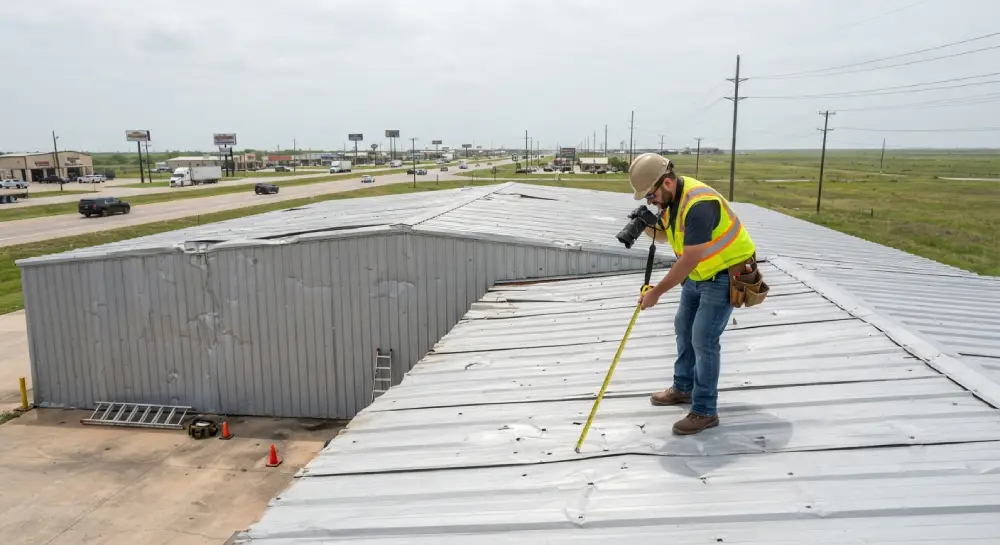
An underpaid claim does not always result from one major error. Many claims fall short because several smaller items are omitted, undervalued, or misunderstood. Several of these issues are also covered in our guide to common property insurance claim mistakes, including incomplete documentation and accepting an estimate before the full damage scope is understood.
Damage Was Missed During the Initial Inspection
Carrier inspections may be brief, especially after widespread storms when adjusters are handling many files. The inspection may not include every roof surface, room, elevation, detached structure, or item of equipment.
Damage can also remain hidden behind drywall, flooring, insulation, cabinetry, roofing materials, or exterior cladding.
The Estimate Contains Scope Omissions
An estimate may include the main damaged material but omit work needed to complete the repair properly.
Common omissions include:
- Roofing accessories
- Flashing and edge metal
- Underlayment
- Detach-and-reset labor
- Interior protection
- Debris handling
- Moisture remediation
- Texture and paint blending
- Access-related demolition
- Code-required work
- Equipment manipulation
- Contractor overhead and profit when warranted
Small omissions can add up across multiple rooms or a large roof.
Depreciation Was Applied Incorrectly or Aggressively
Insurance estimates may apply depreciation based on age, condition, life expectancy, or material category. Property owners may not understand which depreciation is recoverable, what documentation is required, or when supplemental payment can be requested.
TX Public Adjusting reviews how depreciation was applied and whether the estimate reflects the policy and actual damaged property.
The Carrier Used a Repair When Replacement May Be Necessary
A spot repair may not be practical when materials are discontinued, brittle, mechanically damaged, unsafe to manipulate, or impossible to match reasonably.
Repairability questions often arise with:
- Older shingles
- Metal roof panels
- Siding
- Tile
- Flooring
- Cabinets
- Textured finishes
- Specialty commercial materials
The claim presentation should explain why the proposed repair method will or will not restore the property properly.
Documentation Was Incomplete
Property owners often begin emergency work before they understand what records may be needed. Damaged materials may be discarded, wet areas may be demolished, and temporary repairs may cover the original conditions.
Helpful claim records can include:
- Date-stamped photographs
- Videos
- Moisture readings
- Contractor estimates
- Invoices and receipts
- Emergency-service reports
- Inventories
- Weather information
- Communications with the carrier
- Prior maintenance records
A public adjuster can organize available evidence and identify additional documentation that may support the claim.
Our Public Adjusting Process
1. Claim Review
We begin by discussing what happened, when the damage was discovered, what the carrier has done, and what concerns the property owner has about the claim.
We may review:
- The insurance policy
- Claim correspondence
- Carrier estimates
- Payment summaries
- Denial or reservation-of-rights letters
- Contractor proposals
- Mitigation invoices
- Photographs
- Repair records
This review helps determine whether the claim may benefit from professional representation.
2. Property Inspection
Our team inspects the reported damage and looks for related conditions that may not appear in the carrier’s scope. The inspection is tailored to the property type and cause of loss.
For an El Campo storm claim, that may include roofing, exterior elevations, interior moisture damage, detached structures, equipment, and commercial components.
3. Damage Documentation
We organize the evidence needed to present the loss. Depending on the claim, documentation may include photographs, measurements, inventories, estimates, invoices, reports, and written explanations of disputed items.
The goal is to create a clear connection between the covered event, the resulting damage, and the work reasonably required.
4. Estimate and Scope Review
We compare the insurance company’s estimate with observed damage and available repair information. When justified, we prepare or coordinate a detailed scope identifying missing quantities, materials, labor operations, and other claim components.
5. Carrier Communication and Negotiation
TX Public Adjusting communicates with the insurance company concerning the documented claim. We address scope differences, respond to reasonable requests, attend additional inspections when appropriate, and present supplemental information.
We do not control the carrier’s decisions or promise a specific outcome. We provide independent policyholder representation and support the claim with evidence.
6. Settlement Review
When the insurance company issues a revised estimate or payment decision, we review it with the property owner. We explain the carrier’s position, outstanding differences, depreciation considerations, and any remaining claim requirements.
Concerned that your El Campo claim is missing damage or repair costs? Request a free claim review before accepting the carrier’s scope as final.
Why Choose TX Public Adjusting
Licensed Texas Public Adjuster
TX Public Adjusting operates through Rise Public Adjusting LLC, Texas License #3356839. Licensing provides an important trust signal for property owners deciding who should handle a significant insurance claim.
We Represent Policyholders
Insurance-company adjusters work for the carrier. Independent adjusters are also assigned by and report to the carrier. A public adjuster works for the policyholder.
Our responsibility is to help the insured document and present the claim—not to protect the insurance company’s financial interests.
Texas-Focused Claim Experience
Texas property claims are shaped by hail, wind, hurricanes, tropical rain, freeze events, fires, plumbing failures, and large commercial losses. Our work is focused on the conditions, policies, construction practices, and claim disputes Texas property owners encounter.
Residential and Commercial Expertise
We assist with homes, rental properties, retail buildings, offices, warehouses, restaurants, churches, multifamily properties, and other insured structures.
Commercial claims may require extensive documentation involving roof systems, equipment, contents, tenant improvements, operations, and lost income. Residential claims may involve matching, additional living expenses, contents, interior finishes, and family displacement.
Experience Reviewing Thousands of Claims
Our team brings experience developed through the review of thousands of residential and commercial claim files. That experience helps us recognize common estimate omissions, documentation weaknesses, scope disputes, and valuation issues.
No two losses are identical. We apply that broader experience to the specific facts of each El Campo claim.
Free Claim Review and No Upfront Fees
Property owners can speak with TX Public Adjusting before deciding whether representation makes sense. We offer a free initial claim review and do not charge an upfront fee.
Any fee arrangement is explained in writing before services begin.
Areas We Serve in and Near El Campo
TX Public Adjusting assists policyholders throughout El Campo and surrounding Wharton County communities.
Within El Campo, that includes properties around:
- Historic downtown and the Monseratte Street business district
- The U.S. 59 commercial corridor
- The State Highway 71 corridor
- North Wharton Street and South Wharton Street
- Established residential areas near central El Campo
- Properties near Willie Bell Memorial Park
- Areas around Legacy Park at Legacy Fields
- Properties near Rotary Park
- Rural and agricultural locations outside the city limits
El Campo is better described through its local corridors, central residential areas, subdivisions, and surrounding rural properties than through a long list of formally defined neighborhoods. The city’s parks plan identifies Willie Bell Memorial Park, Legacy Park at Legacy Fields, and Rotary Park as community parks.
Nearby service areas include:
- Wharton
- Louise
- Pierce
- Danevang
- East Bernard
- Hungerford
- Glen Flora
- Eagle Lake
- Ganado
- Edna
- Bay City
- Rosenberg
- Needville
- Victoria-area communities
We also assist eligible residential and commercial policyholders elsewhere in Texas.
El Campo Property Types We Assist
Homes and Rental Properties
We help homeowners and residential investors with wind, hail, water, fire, roof, and freeze claims. The review may include the dwelling, detached structures, personal property, loss-of-use expenses, and code-related items.
Agricultural and Rural Properties
Properties outside central El Campo may include barns, shops, metal buildings, equipment storage, detached offices, fencing, and other insured structures. Large roof areas can sustain widespread hail or wind damage even when the main residence appears less affected.
Coverage depends on the policy and scheduled property, so each structure and claimed item must be reviewed carefully.
Retail and Restaurant Properties
A storm, fire, or water loss can affect the building and the ability to continue operating. Commercial documentation may include damaged improvements, equipment, inventory, cleanup, temporary protection, and business interruption records.
Warehouses and Metal Buildings
Metal buildings can experience panel dents, seam damage, fastener issues, coating damage, water intrusion, and damage to insulation or stored property. Large surfaces require organized measurements and a clear repair methodology.
Churches and Community Facilities
Churches and community properties may include large assembly spaces, specialized audio equipment, commercial kitchens, classrooms, offices, and broad roofing systems. A loss may affect multiple coverage categories and require phased repairs.
Frequently Asked Questions
What does a public adjuster in El Campo do?
A public adjuster represents the policyholder during a property insurance claim. The adjuster reviews the policy and carrier estimate, inspects the damage, prepares supporting documentation, identifies legitimate scope or valuation differences, and communicates with the insurance company.
TX Public Adjusting works for El Campo homeowners and business owners—not for their insurance carriers.
When should I call a public adjuster after property damage?
Contacting a public adjuster early can help preserve evidence and establish an organized claim process. However, you may also seek help after the carrier has inspected the property, issued an estimate, made a partial payment, or denied part of the claim.
The best time depends on the claim status, policy deadlines, and condition of the property. Property owners who have already received a decision can review our guide explaining when it is too late to hire a public adjuster. A free review can then help determine what options may still be available.
Can TX Public Adjusting help with an underpaid El Campo claim?
Yes. We can review the carrier’s estimate, inspection findings, payments, photographs, and related records to determine whether legitimate damage or repair operations may be missing.
An underpaid claim may be supplemented when additional covered damage or costs can be supported. Results depend on the policy, evidence, cause of loss, claim history, and carrier decision.
Can a public adjuster reopen a closed claim?
A closed file is not always beyond review. In some situations, the policyholder may be able to submit supplemental documentation or ask the carrier to reconsider unresolved damage.
Deadlines and policy requirements matter. The fact that a carrier labels a claim “closed” does not by itself establish that every issue has been resolved, but it is wise to request a review promptly.
Does homeowners insurance cover hurricane damage in El Campo?
Homeowners policies may cover certain forms of hurricane-related damage, especially direct wind damage and rain entering through a storm-created opening. Flooding, storm surge, and rising surface water are commonly addressed under separate flood coverage rather than a standard homeowners policy.
Coverage depends on the policy language and cause of loss. Wind and water evidence should be documented carefully when both may have contributed.
How do I know whether my El Campo roof has hail damage?
Possible signs include missing granules, fractured shingles, impact marks, dented vents, damaged gutters, dents in metal panels, broken screens, or leaks after a storm. Some damage is not visible from the ground.
Avoid climbing onto a wet, steep, or unstable roof. A qualified inspection can evaluate the roofing system and collateral storm indicators safely.
What should I do immediately after water damage?
Stop the water source when it is safe, protect the property from further damage, photograph affected areas, retain damaged materials when practical, and keep receipts for emergency expenses. Contact the insurance carrier and arrange appropriate mitigation.
Do not allow permanent reconstruction to erase important evidence before the loss has been documented. Emergency drying and safety work should not be delayed when delay would worsen the property.
How long does an El Campo property claim take?
The timeline varies. A limited roof claim may move faster than a major fire, hurricane, or commercial loss. Inspection scheduling, document requests, expert evaluations, repair estimates, supplements, and disputes can extend the process.
A public adjuster cannot control the carrier’s response time, but organized documentation and consistent communication can help keep the claim moving. Texas property owners may also review how long an insurance adjuster has to contact you after a claim is reported.
Can you help with commercial property claims in El Campo?
Yes. TX Public Adjusting assists with commercial roof, hail, wind, water, fire, equipment, inventory, and business-interruption claims.
Commercial losses require careful attention to building systems, operational impacts, lease responsibilities, temporary expenses, and financial documentation. We tailor the claim process to the property and available coverage.
How much does it cost to hire TX Public Adjusting?
We offer a free initial claim review and charge no upfront fees. Public-adjusting fees are typically based on an agreed percentage of the insurance recovery handled through the firm, subject to the written agreement and applicable Texas requirements.
The fee and scope of representation are explained before a contract is signed. Property owners should understand the terms before hiring any public adjuster.
Get a Free El Campo Insurance Claim Review
A low estimate does not always tell the full story of a property loss. Missing roof components, hidden moisture, incomplete measurements, omitted labor, excessive depreciation, and overlooked commercial expenses can materially affect the amount available for repairs.
TX Public Adjusting helps El Campo property owners understand what the insurance company included, what may be missing, and what documentation may support further consideration.
Rise Public Adjusting LLC is a licensed Texas public adjusting firm, License #3356839. We provide independent representation for residential and commercial policyholders throughout El Campo, Wharton County, and Texas.
Contact TX Public Adjusting today for a free claim review. There are no upfront fees.