

Property damage in Brownwood can become complicated quickly. A spring thunderstorm may leave hail strikes across a roof, wind-driven rain can enter through lifted shingles, and a plumbing failure can spread water into walls and flooring before the source is found. When the resulting insurance estimate does not account for the full scope of repairs, a public adjuster in Brownwood can help the property owner document the loss and present the claim more thoroughly.
TX Public Adjusting is a licensed Texas public adjuster representing residential and commercial policyholders—not insurance companies. We inspect damaged property, review policy provisions, prepare detailed claim documentation, identify omitted items, and negotiate with the carrier based on the evidence. Our firm operates as Rise Public Adjusting LLC under Texas License #3356839.
Brownwood is the county seat of Brown County and serves as an important commercial center for surrounding communities in west-central Texas. Properties near Downtown Brownwood, Austin Avenue, Woodland Heights, Coggin Park, Pecan Bayou, and the roads leading toward Lake Brownwood can face different construction, drainage, roofing, and exposure concerns. Our approach is built around the specific property and loss rather than a generic claim checklist.
Dealing with a denied, delayed, or underpaid property claim? Contact TX Public Adjusting for a free claim review. There are no upfront fees.
Why Property Owners Hire a Public Adjuster in Brownwood
The insurance company assigns an adjuster to investigate a reported loss. That adjuster works for the carrier or performs services on the carrier’s behalf. A public adjuster serves a different role: representing the policyholder’s financial interests during the property claim.
This distinction matters when the visible damage is only part of the loss. A few missing shingles may indicate broader wind uplift. A ceiling stain may trace back to damaged flashing, decking, insulation, or another concealed component. Smoke from a localized fire can affect rooms far beyond the point of origin. Commercial losses can also involve equipment, inventory, tenant improvements, code requirements, and business interruption concerns. Property owners who are unsure about the roles of different claim professionals can review our guide to a public adjuster vs. independent adjuster.
Brownwood property owners often hire a public adjuster when:
- The carrier’s estimate appears too low for the necessary repairs.
- Important rooms, materials, or building components were omitted.
- The cause of damage is being questioned.
- The claim has stalled or communication has become difficult.
- Depreciation has been applied incorrectly or is poorly explained.
- The policyholder is overwhelmed by inspections, estimates, and paperwork.
- A supplemental claim needs stronger supporting documentation.
- A commercial loss requires detailed coordination across several damage categories.
- The claim was denied and the property owner wants an independent review.
- Repair costs exceed the amount allowed by the insurance estimate.
A public adjuster does not guarantee coverage or a particular payment. The job is to investigate the loss carefully, apply the available policy provisions, prepare a defensible scope, and advocate for a fair evaluation of covered damage.
Brownwood Storm Risks and Property Damage Patterns
Brownwood sits in a part of Texas where weather can shift rapidly. Severe thunderstorms can bring hail, damaging wind, intense rainfall, and lightning. National Weather Service notices for Brown County regularly identify Brownwood, Early, Blanket, Lake Brownwood, Camp Bowie, and nearby communities as locations exposed to strong winds, hail, and flooding conditions.
Hail and Severe Thunderstorms
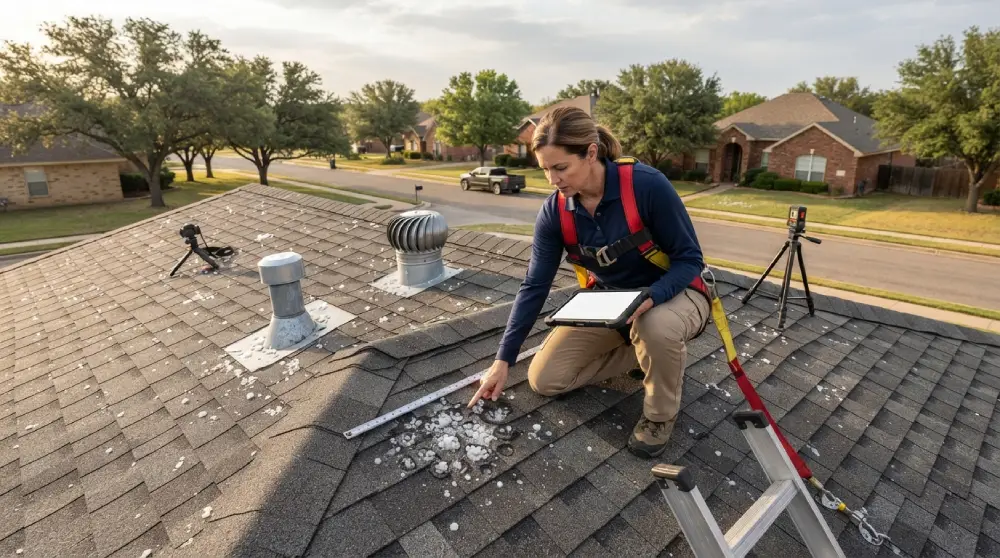
Hail is one of the most important property claim risks in Brownwood. Even when a storm lasts only a few minutes, hail can damage asphalt shingles, metal roofing, gutters, vents, window screens, siding, HVAC fins, fencing, and exterior finishes. Our Texas hail damage insurance claim resource explains how hail can affect roofing, siding, gutters, windows, and other exterior components.
Roof damage is not always visible from the ground. Hail can fracture the mat beneath an asphalt shingle, loosen protective granules, dent soft-metal components, or compromise coatings on a metal roof. The National Weather Service has documented hail in and around Brownwood, including a recent local storm report north-northwest of the city. Historical records also describe exceptionally large hail north of Brownwood during the April 10, 1979 severe-weather outbreak. Property owners should also review how to document hail damage for an insurance claim before damaged materials are removed or repaired.
A proper hail claim inspection should consider the roof surface, roof accessories, elevations, detached structures, mechanical systems, and resulting interior leaks—not just the most obvious impact marks.
Straight-Line Wind and Tornado Damage
Strong thunderstorm winds can lift shingles, tear roofing membranes, damage flashing, break tree limbs, and push rain beneath the roof covering. Wind may also damage fences, carports, signage, exterior lighting, metal panels, and outbuildings.
Some wind losses are under-scoped because the initial inspection focuses only on missing materials. Repairs may also require attention to adjoining roof sections, underlayment, decking, discontinued products, or construction details needed to complete a reasonable repair.
Tornado activity is another concern across west-central Texas. Even when a tornado does not directly cross a property, nearby circulation and severe outflow winds can cause substantial damage. Policyholders should photograph affected areas, preserve damaged materials when practical, and avoid authorizing permanent repairs before the loss is properly documented.
Heavy Rain and Water Intrusion
Brownwood’s relationship with Pecan Bayou and nearby Lake Brownwood is part of the area’s identity. Riverside Park, for example, occupies more than 46 acres beside Pecan Bayou, while Lake Brownwood State Park sits on the shore of a 7,300-surface-acre lake.
Heavy rainfall can create drainage problems, roof leaks, wind-driven rain, and water intrusion around openings. Policy language matters because damage from a covered roof opening, plumbing release, surface water, and rising floodwater may be treated differently. A public adjuster can review the facts and policy without automatically assuming that every type of water damage is covered in the same way.
Freeze and Plumbing Losses
Cold-weather events can produce frozen pipes, cracked supply lines, damaged exterior plumbing, and interior water releases. Once water escapes, the loss may affect drywall, insulation, cabinets, flooring, electrical components, and personal property.
Prompt mitigation is important, but so is documenting the condition before damaged materials are removed. Moisture readings, photographs, repair records, plumber reports, and drying documentation can all become important parts of the claim file.
Fire, Smoke, and Electrical Damage
Fire claims frequently extend beyond burned materials. Heat, smoke, soot, water used during suppression, and firefighting access can affect multiple parts of a home or commercial building.
A complete fire claim may need to address:
- Structural repairs
- Smoke and soot cleaning
- Odor treatment
- Electrical systems
- HVAC contamination
- Contents and inventory
- Demolition and debris removal
- Temporary repairs
- Additional living expenses
- Business interruption
- Code-related work when covered
The full extent of a fire loss is often difficult to determine during the first inspection. Careful documentation and specialist reports may be required.
Common Insurance Claims in Brownwood
Hail Damage Claims
Hail claims are common across Brown County because severe thunderstorms can produce damaging hail with little warning. Our hail damage roof insurance claim guide explains how roof impacts may affect shingles, flashing, vents, gutters, and related building components. We inspect these areas along with siding, windows, fences, detached structures, and mechanical equipment.
A hail claim can become disputed when the carrier attributes damage to age, wear, installation issues, or prior storms. Date-of-loss evidence, weather documentation, photographs, repair history, and damage patterns may help clarify the claim.
Water Damage Claims
A water damage public adjuster can help evaluate losses caused by broken pipes, appliance connections, roof leaks, failed supply lines, overflowing fixtures, or storm-created openings. The source and sequence of events are critical because they can affect coverage.
We review mitigation records, plumbing reports, moisture data, photographs, and repair estimates to determine whether the carrier’s scope addresses all affected materials. Damage beneath flooring, behind cabinets, and inside wall assemblies is easy to overlook.
Fire Damage Claims
A fire insurance adjuster working for the policyholder can help coordinate documentation for structural damage, smoke contamination, personal property, debris removal, and temporary living expenses. Structural components, smoke contamination, personal property, temporary housing, debris removal, and code issues may all need separate documentation.
TX Public Adjusting helps organize the claim so the carrier receives a clear presentation of the damage and supporting costs. We also review the insurance estimate for missing quantities, incomplete cleaning allowances, and overlooked rooms or systems.
Storm and Wind Damage Claims
Wind can damage a property without removing an entire roof section. Lifted shingles, loosened fasteners, displaced flashing, bent metal, punctured membranes, and wind-driven rain may all contribute to the loss.
We inspect the building as a connected system rather than treating each visible mark in isolation. That is especially important for Brownwood homes with additions, mixed roofing materials, detached garages, workshops, barns, or older construction.
Roof Damage Claims
Roof claims often involve disagreements over repairability, matching, age, maintenance, and the number of damaged slopes. A public adjuster for a roof claim can compare the carrier’s estimate with the observed roof condition, repair requirements, and supporting contractor information.
Our role is to document the roof condition, review the policy and carrier estimate, and present support for the work reasonably required by covered damage. This may include roofing materials, underlayment, flashing, vents, decking, edge metal, gutters, and related interior repairs.
Commercial Property Claims
Brownwood supports retail stores, offices, restaurants, churches, medical facilities, warehouses, multifamily properties, agricultural operations, and other businesses that may require help with complex commercial property claims. A commercial loss can disrupt revenue while creating immediate repair and safety concerns.
Commercial claims may include:
- Building damage
- Tenant improvements
- Equipment and machinery
- Business personal property
- Inventory
- Signs and exterior fixtures
- Loss of income
- Extra expenses
- Temporary relocation
- Ordinance or law expenses when covered
Commercial policies can be complex. Our team works with owners and their contractors, accountants, restoration professionals, and other specialists to build an organized claim presentation.
Why Brownwood Insurance Claims Become Underpaid
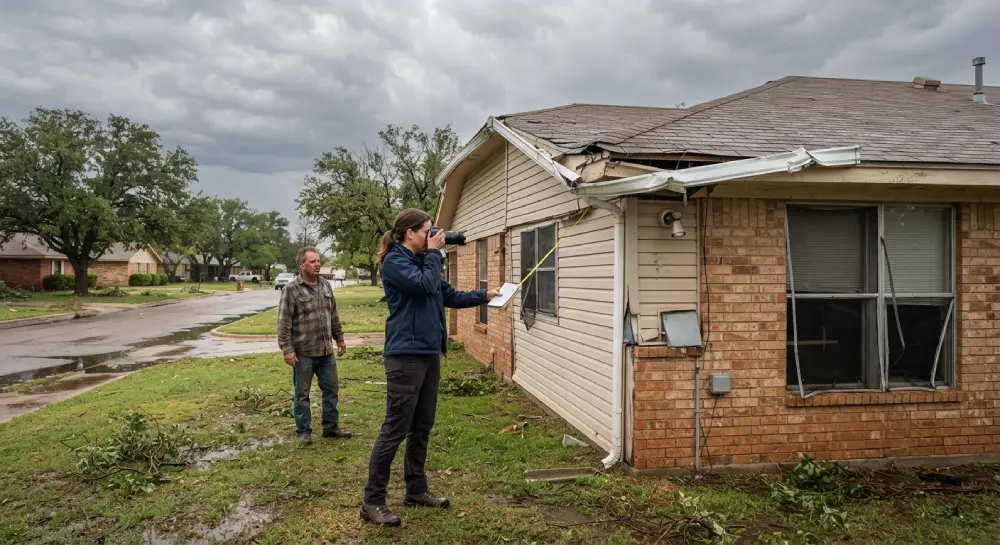
A low claim payment does not always result from one dramatic disagreement. More often, the difference comes from numerous omissions and assumptions spread throughout the estimate.
Missed or Concealed Damage
A brief inspection may not identify water behind walls, roof damage across multiple slopes, contaminated insulation, damage beneath flooring, or smoke migration through an HVAC system.
Incomplete Scope of Work
An estimate may include the main damaged material but omit removal, disposal, access, underlayment, flashing, texture blending, painting, detach-and-reset labor, permits, or protection of adjacent finishes.
Low Measurements or Quantities
Small differences in roof area, wall dimensions, flooring square footage, or linear measurements can create a substantial gap when repeated across the property.
Depreciation Disputes
Depreciation can significantly reduce an initial payment. The policyholder should understand what was depreciated, whether depreciation is recoverable, and what documentation is needed to request withheld amounts after repairs.
Repairability and Matching Problems
Some materials cannot be repaired without disturbing surrounding areas. Others may be discontinued or impossible to match reasonably. The carrier’s estimate may not fully address these practical repair conditions.
Weak Documentation
Photographs alone may not demonstrate the complete scope. Strong claims often rely on measurements, estimates, moisture readings, inventories, expert opinions, invoices, timelines, and policy references.
Cause-of-Loss Disputes
The carrier may attribute damage to wear, deterioration, maintenance, installation, or a prior event. A clear timeline and evidence-based analysis can help distinguish storm-created damage from pre-existing conditions.
Concerned that your Brownwood property claim is missing damage or priced too low? Request a free claim review from TX Public Adjusting before accepting the estimate as complete.
Our Public Adjusting Process
1. Claim and Policy Review
We begin by discussing the property, reported cause of loss, claim status, carrier communications, and concerns about the estimate or decision. We review available policy documents, estimates, photographs, correspondence, and contractor information. Timing can affect documentation options, so property owners with an older or disputed claim should review when it is too late to hire a public adjuster.
2. Detailed Property Inspection
We inspect accessible damaged areas and document conditions through photographs, measurements, notes, and other appropriate methods. The inspection is tailored to the type of property and loss.
3. Damage Documentation and Scope Preparation
We organize the evidence and prepare a detailed account of the covered damage being claimed. Depending on the loss, this may include a repair estimate, contents documentation, mitigation records, specialist findings, and supporting invoices.
4. Claim Presentation
We submit the documented claim position to the insurance carrier and respond to requests for relevant information. A clear presentation helps reduce confusion and establishes the basis for requested revisions or supplemental payment.
5. Negotiation and Resolution
We communicate with the carrier’s representatives, discuss disputed items, attend additional inspections when needed, and work toward a settlement supported by the policy and documented loss.
The timeline varies by claim. Property size, severity, policy provisions, expert involvement, carrier responsiveness, and disputes over cause or scope can all affect how long the process takes.
Why Choose TX Public Adjusting
Licensed Texas Representation
TX Public Adjusting is operated by Rise Public Adjusting LLC under Texas License #3356839. Property owners should verify that anyone offering public adjusting services is properly licensed.
Representation for Policyholders
We work for residential and commercial policyholders. We do not represent the insurance company and do not prepare the carrier’s estimate.
Texas Claim Experience
Our team focuses on Texas property claims, including hail, wind, water, roof, fire, freeze, and commercial losses. That experience helps us recognize recurring scope and documentation issues.
Residential and Commercial Capabilities
A single-family roof claim requires a different approach from a warehouse, apartment property, church, restaurant, or retail loss. We adapt the investigation and documentation to the building and policy involved.
Thorough Claim Reviews
We have reviewed thousands of property claims. Our process looks beyond the total at the bottom of the estimate and examines measurements, quantities, repair methods, pricing, depreciation, omitted components, and supporting evidence.
No Upfront Fees
Brownwood property owners can request an initial claim review without an upfront fee. Any compensation arrangement is explained in the written agreement before representation begins.
Local Awareness
Brownwood is more than a location name on a template. The community includes established homes near Coggin Park and Austin Avenue, properties around Woodland Heights and Bluffview, commercial buildings in Downtown Brownwood, areas near Howard Payne University, and recreational or second-home properties toward Lake Brownwood.
Howard Payne University is located in Brownwood, while the city’s local landmarks and gathering places include the historic Santa Fe Depot area, the Lehnis Railroad Museum, Camp Bowie Memorial Park, Riverside Park, and Coggin Park. Understanding the local building mix and weather exposures helps make the claim review more relevant.
Brownwood Neighborhoods and Areas We Serve
TX Public Adjusting assists property owners throughout Brownwood and surrounding Brown County communities, including:
- Downtown Brownwood
- Austin Avenue
- Woodland Heights
- Bluffview
- Coggin Park area
- Camp Bowie area
- Southside Brownwood
- West Brownwood
- Properties near Pecan Bayou
- Lake Brownwood
- Early
- Bangs
- Blanket
- Brookesmith
- Zephyr
- May
- Cross Cut
- Thrifty
- Indian Creek
- Owens
Property owners outside Brown County can view our broader Texas service areas to find assistance in other communities. We also assist qualifying property owners throughout Texas. The City of Brownwood maintains 19 parks covering more than 317 acres, reflecting the city’s mix of established residential areas, recreation corridors, and community facilities.
Frequently Asked Questions
What does a public adjuster in Brownwood do?
A public adjuster represents the policyholder during a property insurance claim. Our guide explaining what a public adjuster does covers claim inspections, policy review, damage documentation, estimate preparation, and negotiations with the insurance company.
TX Public Adjusting works for the Brownwood property owner—not the carrier. Our objective is to help ensure that covered damage is properly identified, documented, and valued.
When should I hire a Brownwood public adjuster?
You may benefit from hiring a public adjuster when a claim is large, complicated, delayed, denied, or underpaid. It may also make sense when the carrier’s estimate leaves out damage or when managing the paperwork has become overwhelming.
A public adjuster can become involved before the claim is filed or after the carrier has issued an estimate. Earlier involvement often makes it easier to preserve evidence and organize the claim from the beginning.
Can you help after my insurance company has already inspected the property?
Yes. An initial carrier inspection does not prevent a policyholder from obtaining an independent review. We can compare the insurer’s estimate with the observed damage and identify items that may warrant additional documentation.
Do not assume the first estimate is necessarily the final word. Many claims require supplements as concealed damage is discovered or repair requirements become clearer.
Can a public adjuster help with a denied Brownwood claim?
A public adjuster can review the denial letter, policy language, reported facts, photographs, and available evidence. The review may identify missing information, disputed facts, or documentation that should be presented to the carrier.
Not every denial can be reversed, and no ethical adjuster should promise a particular outcome. The purpose of the review is to determine whether there is a reasonable, supportable basis for further claim activity.
How much does a public adjuster cost in Texas?
Public adjusters commonly work under a contingency-based fee arrangement calculated as an agreed percentage of the claim recovery addressed by the contract. Texas law regulates public adjuster agreements and fees.
TX Public Adjusting explains the fee structure in writing before work begins. There are no upfront fees for the initial claim review.
How long does a Brownwood property insurance claim take?
The timeline depends on the severity of damage, complexity of the policy, amount of documentation required, carrier response times, and whether the parties disagree over coverage or scope. Texas property owners may also find it helpful to understand how long an insurance adjuster has to contact you after a claim is reported.
A straightforward residential supplement may move more quickly than a major commercial fire or water loss. We keep the policyholder informed as inspections, documentation, and negotiations progress.
What should I do immediately after hail or wind damage?
Protect people first. After the property is safe, take photographs and videos, prevent additional damage when reasonably possible, save receipts, and report the loss according to the policy.
Avoid unnecessary permanent repairs until the damage has been documented. Emergency work may be necessary, but damaged materials and pre-repair conditions should be photographed whenever possible.
Can you help with commercial claims in Brownwood?
Yes. We assist with commercial building damage, inventory, equipment, business personal property, tenant improvements, and potentially covered income-related losses.
Commercial claims often require input from contractors, accountants, engineers, restoration firms, or equipment specialists. We help coordinate the property claim documentation and communicate the supported position to the carrier.
Does homeowners insurance cover flooding near Pecan Bayou or Lake Brownwood?
Standard property policies often treat rising surface water or flooding differently from water entering through a storm-created opening or a sudden plumbing release. Flood coverage may require a separate policy.
Coverage depends on the actual source of water and the wording of the policy. The loss should be investigated before conclusions are made based only on the fact that water entered the property.
What documents should I provide for a free claim review?
Useful documents include the insurance policy, carrier estimate, payment letter, denial or reservation-of-rights letter, photographs, contractor estimates, invoices, mitigation records, and relevant emails.
Do not delay requesting a review simply because some documents are missing. We can begin with the information available and identify what else may be helpful.
Get a Free Brownwood Insurance Claim Review
A damaged property is stressful enough without having to determine whether every measurement, repair item, and policy benefit has been addressed correctly. TX Public Adjusting gives Brownwood homeowners, business owners, landlords, churches, and commercial property owners an independent review of the claim.
Rise Public Adjusting LLC is a licensed Texas public adjusting firm operating as TX Public Adjusting under License #3356839. We represent policyholders in hail, wind, roof, water, fire, freeze, and commercial property claims.
Contact TX Public Adjusting today for a free Brownwood claim review. There are no upfront fees, and you will receive a straightforward assessment of the claim, available documentation, and potential next steps.