

Property damage in Bonham can turn into a difficult insurance claim with little warning. A spring thunderstorm can send hail across a roof, straight-line winds can tear away shingles and metal panels, and a plumbing failure can spread water through several rooms before anyone notices. When the insurer’s estimate does not reflect the full loss, a licensed public adjuster in Bonham can help document the damage and represent the policyholder during the claim.
TX Public Adjusting provides residential and commercial insurance claim assistance throughout Bonham and Fannin County. We work for property owners—not insurance companies—and help identify covered damage, prepare a detailed claim presentation, review carrier estimates, and negotiate disputed or underpaid property claims.
TX Public Adjusting is operated by Rise Public Adjusting LLC, Texas License #3356839.
Need help with a new, delayed, denied, or underpaid claim? Contact TX Public Adjusting for a free claim review. There are no upfront fees.
Why Property Owners Hire a Public Adjuster in Bonham
Insurance claims can become complicated even when the cause of damage appears straightforward. A homeowner may see missing shingles after a storm, but the visible roof damage may be only one part of the loss. Wind-driven rain may have reached decking, insulation, ceilings, drywall, flooring, electrical components, or personal property.
Commercial losses can be even more involved. A storm affecting a retail building, office, warehouse, church, apartment property, or agricultural structure may involve multiple roofing systems, exterior elevations, mechanical equipment, interior finishes, inventory, and business operations.
An insurance company sends an adjuster to inspect the loss on behalf of the carrier. A public adjuster represents the policyholder’s financial interests. Property owners who are unfamiliar with the role can learn more about what a public adjuster does and how a public adjuster differs from an independent adjuster. That distinction matters when there is disagreement over:
- The cause of damage
- The date of loss
- The number of damaged components
- Repair versus replacement
- Material matching
- Depreciation
- Code-related work
- Interior water intrusion
- Commercial equipment or contents
- The reasonable cost of restoring the property
A Bonham public adjuster can also reduce the administrative burden placed on the property owner. Instead of trying to interpret estimates, photograph every affected area, answer repeated carrier requests, and argue over omitted repairs, the policyholder has a licensed claim professional organizing the loss.
Property Damage Risks in Bonham and Fannin County
Bonham is the county seat of Fannin County in North Texas. The city includes historic properties near downtown, established residential streets, newer homes around the edges of town, commercial buildings along major roads, rural acreage, agricultural improvements, and lake-area properties. This mix creates claim issues that cannot always be handled with a one-size-fits-all inspection.
Hail Damage
Hail is one of the most significant property risks in North Texas. Depending on its size, density, and wind speed, hail can damage:
- Asphalt shingles
- Metal roofing
- Tile roofing
- Gutters and downspouts
- Siding
- Window screens
- Exterior paint
- HVAC condenser fins
- Skylights
- Fencing
- Commercial roof membranes
- Vehicles and outdoor equipment
Hail damage is not always obvious from the ground. A roof may remain in place while losing protective granules or suffering fractures that shorten its service life. Metal panels may show cosmetic or functional damage. Flat commercial roofs may have punctures, bruising, damaged seams, or compromised flashing.
The most effective hail claim inspections look at the property as a complete system rather than focusing only on a few test squares on the roof.
Tornadoes and Straight-Line Wind
Bonham and the surrounding Fannin County area are exposed to severe thunderstorms, tornadoes, and destructive straight-line winds. In June 2025, storms caused power outages, downed trees, and damage to homes and businesses in Bonham. NOAA’s event reporting for the broader North Texas outbreak documented widespread wind damage, large hail, and tornado activity.
Wind losses can affect much more than shingles. Common damage includes:
- Lifted or creased roofing
- Detached ridge caps
- Damaged flashing
- Displaced metal panels
- Broken windows
- Water entry around openings
- Fallen-tree impacts
- Fence and gate damage
- Detached gutters
- Damaged awnings and signs
- Outbuilding damage
- Utility and electrical damage
After a major wind event, emergency repairs may be necessary. Tarps, temporary board-up work, tree removal, water extraction, and debris removal should be documented carefully because those expenses may become part of the insurance claim.
Heavy Rain and Interior Water Intrusion
Severe storms can push rain beneath damaged shingles, flashing, roof vents, windows, doors, and exterior wall systems. Water may travel along rafters or framing before appearing far from the original entry point.
A small ceiling stain can therefore represent a broader moisture problem involving:
- Attic insulation
- Roof decking
- Wall cavities
- Drywall
- Trim
- Flooring
- Electrical fixtures
- Cabinets
- Personal property
Water claims can become disputed when the carrier attributes interior damage to maintenance, long-term leakage, or an excluded condition. Clear documentation of the storm-created opening, moisture path, and affected materials can be critical.
Winter Freeze Damage
North Texas properties can also experience frozen pipes and plumbing failures during hard freezes. Damage may occur in attics, exterior walls, vacant buildings, detached structures, and poorly insulated plumbing runs.
A freeze claim may involve plumbing repairs, water mitigation, demolition, drying, flooring, cabinetry, drywall, painting, contents, and temporary relocation expenses. Commercial buildings may also face equipment damage or interruption to normal operations.
Fire and Smoke Damage
Residential and commercial fires create some of the most complex claims handled by public adjusters. The visible burn area is only one part of the loss. Smoke, soot, heat, water from firefighting efforts, and airborne contaminants can affect rooms and contents far from the source.
A fire claim may require evaluation of:
- Structural framing
- Roofing and exterior openings
- Electrical systems
- HVAC systems and ductwork
- Plumbing
- Cabinets and millwork
- Flooring
- Insulation
- Appliances
- Furniture
- Clothing
- Electronics
- Inventory and equipment
- Smoke odor remediation
- Debris removal
Fire claims frequently involve several vendors and multiple estimates. Without one coordinated scope, important work can be missed or priced inconsistently.
Common Insurance Claims in Bonham
Hail Damage Claims
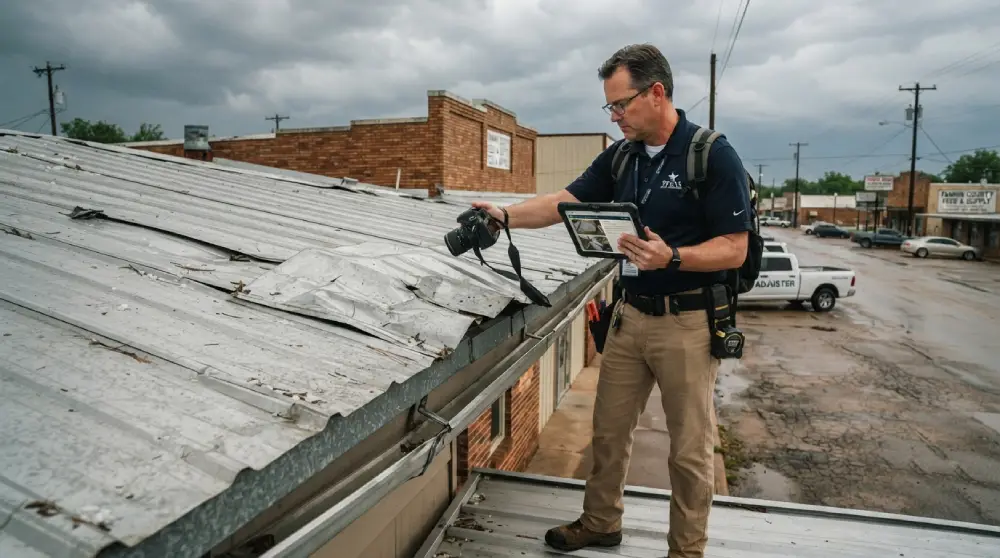
Hail damage insurance claims often begin with a roofing inspection, but the full claim should include all storm-damaged property. TX Public Adjusting reviews roofing, exterior components, detached structures, mechanical equipment, interiors, and commercial improvements when applicable.
We also compare the insurance company’s estimate against the observed damage and reasonable repair requirements.
Water Damage Claims
Water damage may result from a burst pipe, appliance failure, supply-line leak, roof opening, storm-created damage, or another covered event. A water damage public adjuster can help review the cause of loss, affected materials, mitigation records, and repair scope when the carrier’s estimate appears incomplete.
Our review may include the cause of loss, affected rooms, moisture documentation, mitigation records, demolition needs, repair scopes, damaged contents, and additional living expenses.
Fire and Smoke Damage Claims
Fire claims require detailed inventories, repair scopes, cleaning assessments, and coordination among restoration professionals. A fire insurance adjuster working for the policyholder can help organize the building and contents portions of the loss and present the claim from the insured’s perspective.
Storm and Wind Damage Claims
Wind may damage roofing even when the structure is not completely exposed. Lifted shingles, loosened fasteners, detached flashing, damaged vents, and displaced metal components may be overlooked during a brief carrier inspection.
A detailed claim review can help identify the difference between a limited spot repair and a larger covered restoration.
Roof Damage Claims
Roof claims can become disputed over age, wear, installation, repairability, matching, depreciation, and the number of damaged slopes. A public adjuster for a roof claim can compare field conditions with the carrier’s scope and identify related exterior or interior damage that may have been omitted.
Commercial Property Claims
Bonham serves as a commercial center for Fannin County, with businesses, offices, retail properties, industrial facilities, churches, rental properties, and agricultural operations throughout the area. A commercial public adjuster can coordinate the documentation of building damage, business personal property, equipment, inventory, emergency expenses, and other covered portions of a commercial loss.
Commercial claims may involve:
- Low-slope and metal roofing systems
- Multiple buildings
- Tenant improvements
- Signs and awnings
- Mechanical equipment
- Inventory
- Business personal property
- Commercial contents
- Loss of income documentation
- Emergency mitigation
- Code requirements
- Specialized repair costs
A commercial claim should reflect the actual construction, operations, and restoration needs of the property—not a generic residential estimate applied to a more complicated loss.
Why Bonham Insurance Claims Become Underpaid
An underpaid claim does not always begin with an outright denial. In many cases, the insurer acknowledges coverage but issues an estimate that leaves out part of the damage. Many underpayments begin with familiar documentation and estimating problems. Reviewing these common property insurance claim mistakes can help property owners avoid weakening the claim before the damage has been fully evaluated.
Missed Damage
Carrier inspections may be brief, especially after a regional storm when adjusters are handling a high volume of claims. Damage to secondary structures, interior rooms, elevations, fencing, HVAC equipment, or commercial components may be missed.
Scope Omissions
An estimate may include roofing material but omit flashing, ventilation, gutters, decking, interior repairs, protection, access, debris handling, or other work required to complete the project.
Depreciation Problems
Some policies allow recoverable depreciation after repairs are completed. Disputes may arise over the amount withheld, the condition assigned to materials, or the documents required for release.
Low Labor or Material Pricing
The carrier’s estimate may not reflect actual local contractor pricing, specialty trades, material availability, project complexity, or the cost of completing work in a safe and code-compliant manner.
Repairability and Matching Disputes
An insurer may propose replacing only part of a roof, wall, floor, cabinet run, or exterior finish. That approach may not account for discontinued products, brittle materials, installation requirements, or the inability to produce a reasonably consistent repair.
Incomplete Documentation
Photographs without labels, invoices without explanation, and contractor estimates without measurements may not be enough to support a disputed amount. Strong claim documentation connects the observed condition to the requested repair and the policyholder’s claimed cost.
Cause-of-Loss Disagreements
The insurer may attribute damage to age, wear, deterioration, workmanship, prior damage, or an excluded source. A public adjuster can review the loss facts, policy language, inspection findings, and carrier explanation to identify where the disagreement exists.
Our Public Adjusting Process
1. Claim Review
We begin by discussing what happened, when the damage occurred, what the insurer has done, and what concerns the property owner has about the claim.
When available, we review:
- The insurance policy
- Carrier letters
- The insurer’s estimate
- Payment documents
- Photographs
- Contractor estimates
- Mitigation invoices
- Repair proposals
- Proof-of-loss documents
2. Property Inspection
We inspect the reported damage and related areas of the property. The inspection is tailored to the loss, building type, and claim history.
For a Bonham hail claim, that may include roof surfaces, exterior elevations, metal components, HVAC equipment, fencing, detached buildings, and interior water damage. For a commercial fire loss, the inspection may involve the building, contents, equipment, debris, and business operations.
3. Damage Documentation
We organize photographs, measurements, notes, supporting records, inventories, estimates, and other evidence needed to explain the claim.
The goal is not simply to collect more paperwork. The goal is to create a clear and supportable presentation of what was damaged and what it should reasonably take to restore the property.
4. Scope and Estimate Review
We compare the insurer’s estimate with the observed damage. Missing items, questionable quantities, pricing issues, depreciation, and disputed repairs are identified.
Where appropriate, we prepare or coordinate a detailed scope that reflects the full claimed loss.
5. Claim Presentation and Negotiation
TX Public Adjusting communicates with the insurance company, presents supporting documentation, responds to claim questions, and negotiates disputed items on behalf of the policyholder.
The carrier remains responsible for making coverage decisions under the policy. Our role is to document and advocate for the policyholder’s claim.
6. Settlement Review
When the insurer issues a revised estimate or settlement position, we review it with the client and explain remaining differences, applicable depreciation, deductibles, and other claim considerations.
When to Contact a Public Adjuster
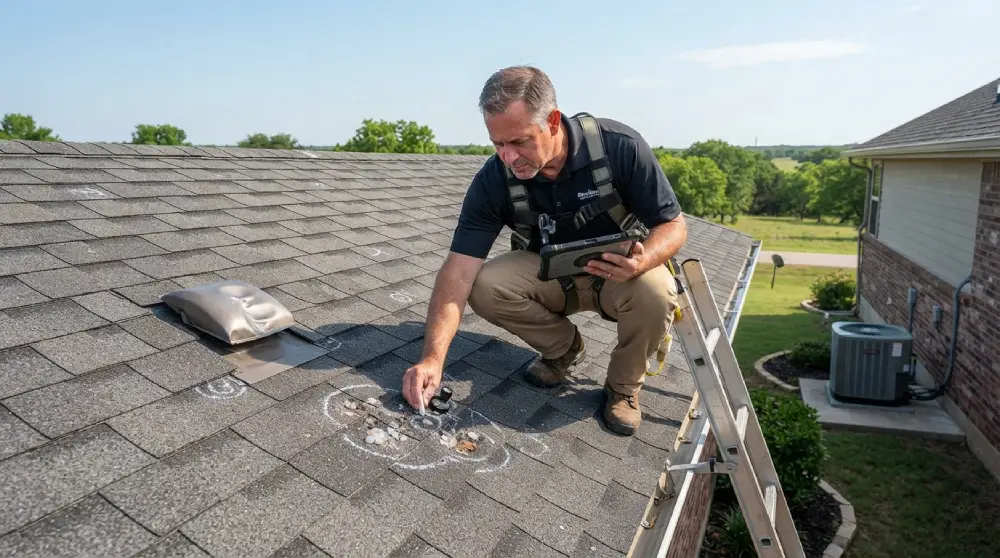
Property owners do not have to wait for a complete denial before seeking help. The available options depend on the policy, claim history, deadlines, and work already completed. Our guide explains when it may be too late to hire a public adjuster and why an earlier review is usually preferable.
Consider requesting a claim review when:
- The insurer’s estimate appears too low
- Important rooms or structures were omitted
- The carrier says the damage is wear and tear
- Your roofer or contractor identifies more damage than the carrier
- The claim has stalled
- You are receiving repeated document requests
- You do not understand the insurer’s estimate
- The property has extensive commercial damage
- You are dealing with fire, smoke, or major water loss
- You need help reopening or supplementing a prior claim
- The insurer has issued a partial denial
- The cost of repairs exceeds the available insurance payment
Already received an estimate? Contact TX Public Adjusting for a free claim review. No upfront fees are required.
Why Choose TX Public Adjusting
Licensed Texas Public Adjuster
TX Public Adjusting is operated by Rise Public Adjusting LLC, Texas License #3356839.
We Represent Policyholders
Public adjusters work for insured property owners. We do not represent the insurance company and do not have a financial duty to protect the carrier’s claim costs.
Texas-Focused Claim Experience
Texas property claims involve hail, tornadoes, wind, freeze damage, hurricanes, fire, and water losses. Our work is focused on the types of damage Texas homeowners and businesses regularly face.
Residential and Commercial Experience
We assist with houses, rental properties, retail buildings, offices, churches, warehouses, multifamily properties, and other insured structures.
Detailed Claim Documentation
A claim is stronger when the facts, measurements, photographs, repair requirements, and supporting costs are organized into a coherent presentation.
Thousands of Claims Reviewed
Our team has reviewed thousands of property claims involving a broad range of residential and commercial losses. That experience helps us recognize common estimating omissions and claim-handling problems without relying on invented settlement promises or one-size-fits-all assumptions.
No Upfront Fees
There is no upfront fee for the claim review. Public adjusting fees are explained before representation begins and are governed by the written agreement and applicable Texas requirements.
Local Knowledge Matters in a Bonham Claim
Bonham is not simply another name on a statewide service-area list. Its property mix is shaped by historic downtown buildings, older residential construction, lake-area homes, rural land, agricultural structures, and commercial corridors serving the surrounding county.
Local landmarks such as the Sam Rayburn Library and Museum, Fort Inglish Village, Bonham State Park, and Lake Bonham reflect the city’s history and connection to the broader Fannin County community.
Claims near downtown may involve older roofing, masonry, plaster, custom trim, or materials that require specialized repair. Properties toward Lake Bonham may have detached structures, docks, metal buildings, trees, and greater exposure to wind-driven rain. Rural properties outside the city may include barns, workshops, fencing, equipment, and multiple insured structures spread across the same parcel.
These differences affect the inspection, documentation, and repair scope.
Areas We Serve Near Bonham
TX Public Adjusting assists property owners throughout Bonham and nearby Fannin County communities, including:
- Dodd City
- Ector
- Ravenna
- Savoy
- Honey Grove
- Bailey
- Leonard
- Trenton
- Ladonia
- Windom
- Rural areas surrounding Lake Bonham
- Unincorporated communities throughout Fannin County
Fannin County’s incorporated communities include Bonham, Bailey, Dodd City, Ector, Honey Grove, Ladonia, Leonard, Ravenna, Savoy, Trenton, and Windom.
We assist with residential and commercial property claims across North Texas, subject to claim type, policy conditions, and availability.
Frequently Asked Questions
What does a public adjuster in Bonham do?
A public adjuster represents the policyholder during a property insurance claim. The adjuster reviews the loss, documents damage, evaluates the insurer’s estimate, prepares supporting claim materials, and negotiates disputed items.
Unlike the insurance company’s adjuster, a public adjuster does not work for the carrier. The public adjuster’s client is the insured property owner.
When should I hire a Bonham public adjuster?
You may hire a public adjuster soon after the loss or later if the claim becomes delayed, denied, or underpaid. Early involvement can be useful on large or complicated losses because documentation begins before repairs and cleanup change the property.
It may also make sense to request help after receiving the carrier’s estimate, especially when contractor pricing is substantially higher or significant damage appears to be missing.
Can a public adjuster help with an underpaid hail claim?
Yes. A public adjuster can inspect the property, compare the insurer’s estimate with the observed damage, document omitted items, and prepare a supplement or revised claim presentation.
The review may include roofing, gutters, siding, screens, paint, fencing, HVAC equipment, detached structures, and interior water intrusion.
What if the insurance company says my roof damage is old?
Age alone does not determine whether a particular condition resulted from a covered storm. The relevant questions include what happened, when it happened, what physical evidence exists, and what the policy covers.
A public adjuster can review the carrier’s explanation, inspect the property, and identify the specific cause-of-loss dispute. Coverage decisions remain with the insurance company under the policy.
Can you help with a commercial property claim in Bonham?
Yes. TX Public Adjusting assists with commercial claims involving roofing, fire, water, hail, wind, equipment, inventory, tenant improvements, and other covered property.
Commercial claims often require more detailed documentation because several buildings, occupants, trades, and income-related records may be involved.
Can you reopen a closed insurance claim?
Some claims may be reopened or supplemented, depending on the policy, the reason the file was closed, applicable deadlines, prior payments, repairs, and available evidence.
A free claim review can help determine whether unresolved covered damage may still be presented to the carrier. No result can be guaranteed.
How much does a public adjuster charge in Texas?
Public adjusters typically work under a written fee agreement tied to the insurance recovery, subject to Texas law and the terms of the contract.
TX Public Adjusting explains the fee before representation begins. There are no upfront fees for the initial claim review.
How long does a property insurance claim take?
The timeline depends on the extent of damage, responsiveness of the parties, inspections, requested documents, coverage questions, contractor information, and whether the claim is disputed.
A straightforward roof claim may move faster than a major fire, commercial water loss, or multi-building storm claim. A public adjuster helps keep documentation organized and communications moving, but cannot control the carrier’s final timing.
Should I repair the damage before the insurance inspection?
Property owners should take reasonable emergency steps to protect the property from further damage. That may include tarping, boarding openings, shutting off water, removing standing water, or arranging emergency drying.
Whenever possible, photograph and video the condition before cleanup. Keep damaged materials when practical, save receipts, and avoid permanent repairs that could eliminate evidence until the insurer has had an opportunity to inspect.
What should I bring to a free claim review?
Helpful documents include your policy, insurance estimate, payment letter, denial or reservation-of-rights letter, contractor estimates, photographs, invoices, and claim correspondence.
Do not delay contacting us because a document is missing. We can begin by discussing the loss and identifying what records may be useful.
Get a Free Bonham Insurance Claim Review
A low estimate does not necessarily mean the claim is finished. Missing damage, incomplete measurements, disputed repair methods, depreciation errors, and unsupported pricing can often be identified through a detailed review.
TX Public Adjusting helps Bonham homeowners, landlords, business owners, churches, investors, and commercial property owners understand what has been included in the claim—and what may have been left out.
Contact TX Public Adjusting for a free claim review and an initial discussion about your Bonham property claim.
- Licensed Texas Public Adjuster
- Residential and commercial claims
- New, delayed, denied, and underpaid losses
- No upfront fees
- Independent representation for policyholders
- Rise Public Adjusting LLC
- Texas License #3356839