

Property damage in Mount Pleasant can create a difficult insurance claim long after the storm, fire, or water leak has passed. A damaged roof may look repairable from the ground while hidden moisture spreads through insulation and decking. A commercial building may reopen quickly but still have overlooked damage to equipment, ceilings, electrical components, or exterior systems. When the carrier’s estimate does not reflect the full loss, a public adjuster in Mount Pleasant can help document the damage and present the policyholder’s claim.
TX Public Adjusting is a licensed Texas public adjuster representing residential and commercial property owners—not insurance companies. Our team reviews policies, inspects damaged property, prepares detailed claim documentation, and communicates with the carrier about covered losses. TX Public Adjusting is operated by Rise Public Adjusting LLC, Texas License #3356839.
Concerned that your Mount Pleasant insurance claim is delayed, denied, or underpaid? Request a free claim review. There are no upfront fees.
Insurance Claim Help for Mount Pleasant Property Owners
Mount Pleasant sits in Titus County at an important crossroads for Northeast Texas. Interstate 30, US Highway 67, and several regional routes connect local homes, farms, retailers, warehouses, restaurants, schools, churches, and industrial properties to communities across East Texas.
That mix of property creates a wide range of insurance losses. A windstorm can damage an older home near downtown, a newer residence along the city’s outer residential corridors, and a commercial roof near Interstate 30 during the same weather event. A water loss can affect one room in a house or interrupt an entire business operation.
A public adjuster helps the policyholder manage the property-damage portion of the insurance claim. The insurance company assigns its own adjuster to investigate the loss for the carrier. A public adjuster works on the policyholder’s side, developing the claim and identifying damage that may not have been included in the carrier’s initial estimate.
Property owners often contact TX Public Adjusting when:
- The carrier’s estimate appears too low.
- Important areas of damage were left out.
- The claim has stalled without a clear explanation.
- The insurer attributes storm damage to age or maintenance.
- Depreciation has been applied incorrectly or is poorly explained.
- The property owner needs help organizing photographs, estimates, invoices, and inventories.
- A commercial loss involves business equipment, specialized construction, or multiple damaged areas.
- Additional damage is discovered after the first inspection.
- The carrier has denied part or all of the claim.
Our role is to evaluate the available information, inspect the loss, and help the property owner understand the difference between the visible damage and the complete repair scope.
Why Property Owners Hire a Public Adjuster in Mount Pleasant
Insurance claims require more than reporting that damage occurred. The policyholder may need to establish the cause of loss, identify all affected materials, comply with policy conditions, document damaged personal property, support repair costs, and respond to the carrier’s requests.
That can be difficult for a Mount Pleasant homeowner who is also arranging emergency repairs, protecting the property from further damage, and trying to keep family life moving. It can be even more demanding for a business owner dealing with damaged inventory, interrupted operations, tenant concerns, or a building that cannot be used normally.
TX Public Adjusting helps organize the property claim around the actual loss.
Independent Representation for the Policyholder
The insurance company’s adjuster works for the insurer. Contractors may estimate repairs, but they do not necessarily prepare or negotiate the full insurance claim. A licensed public adjuster represents the policyholder’s financial interest in the claim.
We examine the loss from the property owner’s perspective. That means looking beyond the most obvious damaged item and considering related materials, access requirements, matching concerns, code-related work when applicable, debris removal, equipment, contents, and other covered components of the loss.
Detailed Damage Documentation
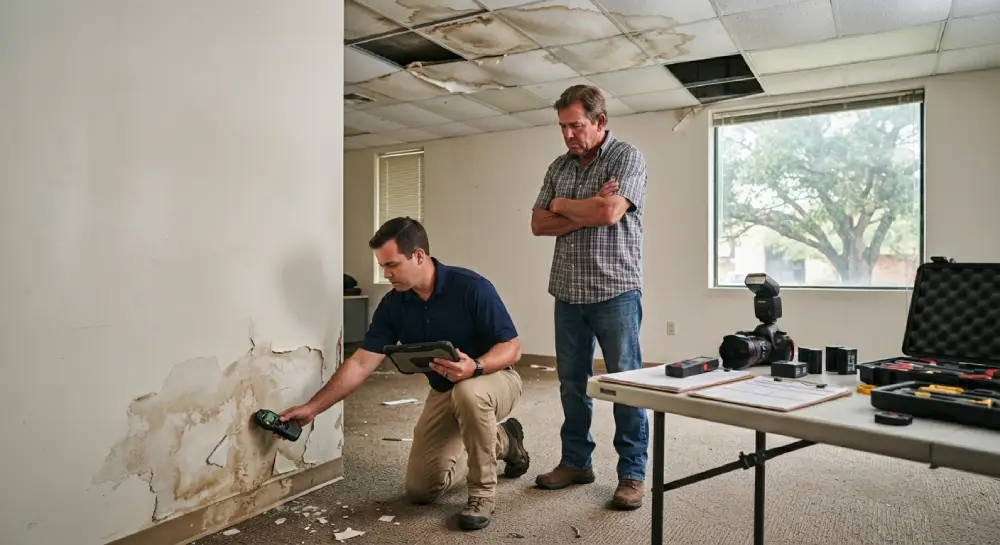
A claim can become underpaid when the documentation does not show the full extent of the damage. A few exterior photographs may not establish moisture migration, damage beneath roof coverings, affected insulation, or the relationship between several damaged building components.
Our documentation process may include:
- Property and roof inspections
- Interior and exterior photographs
- Measurements
- Damage descriptions
- Repair-scope review
- Estimate comparison
- Personal-property inventory assistance
- Supporting invoices and reports
- Communication records
- Identification of omitted claim items
The goal is to present a clear, organized claim file that connects the observed damage with the requested scope of work.
Help With Complicated or Underpaid Claims
Some Mount Pleasant insurance claims begin simply but become more complicated after the carrier’s inspection. The insurer may agree that a storm occurred yet dispute the amount of damage. It may approve a small roof repair while the contractor identifies broader impact damage. It may pay for visible water cleanup but omit damaged cabinets, flooring, insulation, or adjacent rooms.
A public adjuster can review what the insurer included, compare it with the property conditions, and prepare a request for additional consideration when the evidence supports it.
Mount Pleasant Storm Risks and Property Damage
Mount Pleasant’s location in Northeast Texas exposes local property to severe thunderstorms, hail, straight-line winds, tornado-producing systems, heavy rain, lightning, and occasional winter freezes. Storm damage is not limited to one section of town. Properties near the historic downtown district, residential areas surrounding Mount Pleasant High School, homes toward Greenhill and Chapel Hill, rural properties outside the city limits, and commercial buildings along Interstate 30 can experience different damage from the same system.
Hail Damage in Mount Pleasant
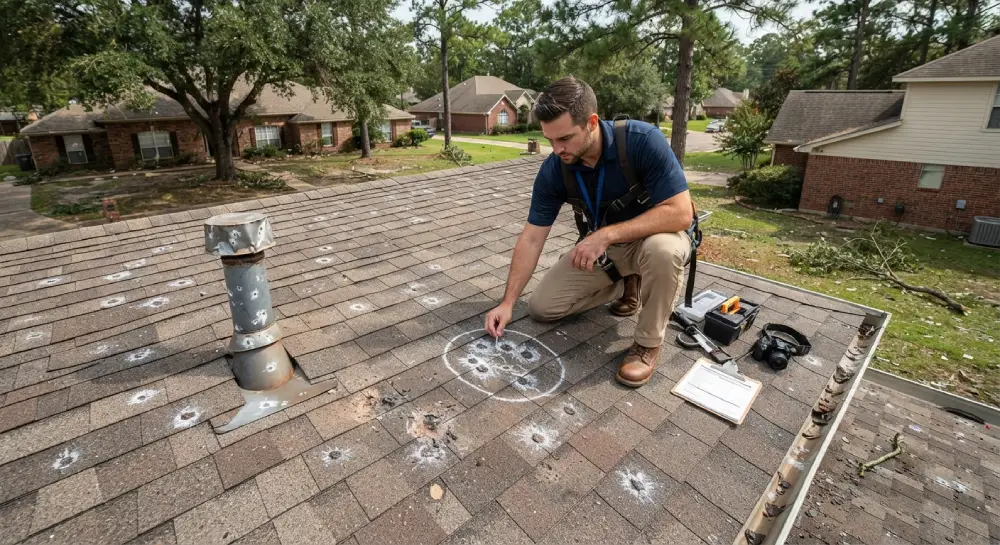
Spring and early-summer thunderstorms can produce hail capable of damaging asphalt shingles, metal roofing, roof vents, gutters, siding, windows, screens, fencing, HVAC fins, and vehicles. Hail damage is not always obvious from ground level.
On asphalt roofs, impacts may loosen or remove protective granules and expose the shingle mat. Metal systems may show dents or coating damage. Soft-metal components such as vents, flashing, and gutters can provide useful evidence of storm impact, but each roof must be evaluated individually.
Carriers sometimes characterize roof conditions as ordinary wear, installation problems, or long-term deterioration. That makes timely inspection and careful documentation especially important. The date of loss, storm conditions, roof materials, impact patterns, and interior symptoms should be considered together. Property owners can also review our guide to filing a hail damage insurance claim in Texas for more information about inspections, documentation, and commonly disputed roof damage.
High-Wind and Tornado-Related Damage
Severe thunderstorms can produce strong straight-line winds even when no tornado touches down. Wind can lift shingles, loosen metal panels, damage ridge caps, pull flashing away from walls, break tree limbs, and drive rain into openings.
Wind damage may also affect:
- Fences and gates
- Detached garages
- Awnings and canopies
- Commercial signage
- Exterior lighting
- Roof-mounted equipment
- Windows and doors
- Siding and trim
- Agricultural structures
- Trees and landscaping
After a windstorm, temporary repairs may be necessary to protect the property. Property owners should photograph the damage before materials are removed whenever it is safe to do so and keep receipts for emergency work.
Heavy Rain and Water Intrusion
Mount Pleasant can receive intense rainfall during slow-moving thunderstorms. Water may enter through storm-damaged roofs, failed flashing, broken windows, exterior openings, or damaged drainage components.
Water can travel farther than expected. A roof opening above one room may allow moisture to spread across decking, insulation, framing, ceilings, and wall cavities. Commercial flat roofs can hold water or develop membrane damage that is not visible from the occupied space below.
The source of water matters because insurance policies treat different causes differently. A public adjuster can document the physical damage and help the property owner organize information about how the water entered the structure. Our guide to dealing with an insurance adjuster after water damage explains what property owners should document and what may happen during the carrier’s investigation. Questions about flood insurance or surface-water exclusions may require separate review of the applicable policy.
Lightning, Fire, and Electrical Losses
Thunderstorms may cause direct lightning strikes, power surges, electrical failures, or fires. A lightning-related claim can involve more than one burned component. Damage may extend to appliances, HVAC controls, security systems, computers, wiring, production equipment, or other electronics.
Fire losses may include structural damage, smoke residue, soot, water used during firefighting, debris removal, damaged contents, and temporary relocation or business-interruption concerns where the policy provides applicable coverage. Learn more about documenting and presenting fire damage insurance claims before damaged materials are cleaned, removed, or discarded.
Freeze and Pipe Damage
Northeast Texas is not immune to hard freezes. When temperatures remain below freezing, exposed or insufficiently protected plumbing can burst. The resulting water loss may damage ceilings, drywall, cabinets, floors, insulation, and personal property.
Freeze claims can become disputed when the insurer raises questions about heat, occupancy, maintenance, or whether reasonable steps were taken to protect the building. Preserve maintenance records, utility information, photographs, and plumber reports that may help establish the cause and timeline.
Common Insurance Claims in Mount Pleasant
Hail Damage Claims
A hail claim may involve more than the roof covering. We inspect associated exterior components and compare the physical evidence with the carrier’s scope. For commercial properties, the review may include membrane roofing, metal panels, rooftop equipment, skylights, drainage systems, and exterior finishes.
Water Damage Claims
Water claims can result from broken pipes, plumbing failures, appliance leaks, storm-created openings, HVAC drain problems, or fire-suppression efforts. We help document affected rooms, materials, contents, and the work reasonably required to access and repair damaged areas.
Fire and Smoke Damage Claims
Fire damage can affect framing, roofing, wiring, finishes, fixtures, contents, and mechanical systems. Smoke and soot can spread to areas that were not directly burned. A careful claim review considers demolition, cleaning, deodorization, repair, replacement, debris removal, and damaged personal or business property.
Storm and Wind Damage Claims
Wind-driven rain, fallen limbs, damaged shingles, lifted metal panels, broken windows, and exterior damage are common elements of storm claims. We evaluate whether the insurer’s estimate addresses all affected components and the work needed to complete repairs properly.
Roof Damage Claims
Roof claims frequently become disputed over repairability, age, previous wear, matching, material availability, and the number of damaged slopes or sections. Roof claims frequently become disputed over repairability, age, previous wear, matching, material availability, and the number of damaged slopes or sections. A public adjuster for a roof claim can compare the carrier’s estimate with the observed damage and necessary repair scope. Our team reviews the roof conditions, the carrier’s estimate, and related damage to determine whether items appear to be missing.
Commercial Property Claims
Mount Pleasant serves as a commercial center for Titus County and surrounding East Texas communities, creating a need for experienced commercial public adjusting after major property losses. Businesses along Interstate 30, Jefferson Avenue, Ferguson Road, the downtown Main Street district, and other commercial corridors may face losses involving:
- Retail buildings
- Restaurants
- Offices
- Warehouses
- Churches
- Multifamily properties
- Manufacturing or industrial facilities
- Agricultural buildings
- Hotels and lodging properties
- Professional-service buildings
Commercial claims may involve building damage, stock, equipment, tenant improvements, exterior systems, debris removal, and business-income issues when applicable under the policy.
Why Mount Pleasant Insurance Claims Become Underpaid
An underpaid claim does not always begin with an outright denial. It may begin with an estimate that includes only a portion of the necessary work.
Damage Was Missed During the First Inspection
A short inspection may not reveal damage beneath roofing materials, behind walls, above ceilings, or inside mechanical equipment. Some conditions become visible only after temporary work begins or materials are removed.
The Estimate Contains Scope Omissions
An estimate may pay for a primary damaged material while omitting related labor and components. Roof estimates, for example, may leave out flashing, vents, edge metal, gutters, underlayment, access requirements, or necessary interior repairs.
Depreciation Reduces the Initial Payment
Many policies calculate an initial actual-cash-value payment and hold back recoverable depreciation until repairs are completed and required documentation is submitted. Disputes can arise over which items are depreciated, how depreciation is calculated, and whether the policy allows recovery.
Repair Pricing Is Too Low
Material, labor, equipment, and trade costs can vary. An estimate based on incomplete quantities or outdated assumptions may not reflect the reasonable cost of performing the work in the Mount Pleasant area.
Damage Is Attributed to Wear and Tear
Insurers may distinguish between sudden storm damage and long-term deterioration. Because many properties have both age-related conditions and recent damage, the quality of the inspection and documentation matters.
The Claim File Is Disorganized
Missing receipts, incomplete photographs, inconsistent descriptions, and undocumented conversations can weaken an otherwise valid claim. We help organize the file so the carrier can clearly review the policyholder’s position and supporting evidence.
Received a low estimate for a Mount Pleasant property claim? TX Public Adjusting offers a free claim review with no upfront fees.
Our Public Adjusting Process
Every loss is different, but understanding what a public adjuster does can help property owners know what to expect. Our work generally follows five stages.
1. Claim Review
We begin by discussing what happened, when the damage occurred, what the carrier has done, and what concerns the property owner has. We review available policy documents, estimates, letters, photographs, reports, and payment information.
2. Property Inspection
We inspect accessible damaged areas and document relevant conditions. Depending on the loss, that may include the roof, exterior elevations, interior rooms, commercial spaces, equipment, contents, or detached structures.
3. Documentation and Scope Preparation
We organize photographs, measurements, damage notes, inventories, invoices, and estimates. We compare our findings with the carrier’s scope and identify apparent omissions or differences.
4. Claim Presentation and Negotiation
We submit supporting claim information and communicate with the insurer about the documented loss. When appropriate, we request additional inspections, explain disputed scope items, and respond to questions concerning the claimed damage.
5. Settlement and Claim Follow-Through
We monitor the claim as the carrier reviews the submitted information. We also help the policyholder understand requests for documents, revised estimates, depreciation issues, and other property-claim developments.
No public adjuster can guarantee a particular outcome. The objective is to give the policyholder a well-documented, professionally presented claim based on the policy and physical evidence.
Why Choose TX Public Adjusting
Licensed Texas Public Adjuster
TX Public Adjusting is operated by Rise Public Adjusting LLC, Texas License #3356839. Licensing provides an important starting point for property owners evaluating who should represent them.
Texas-Focused Claim Experience
Texas claims often involve hail, wind, fire, water, hurricane, freeze, and commercial-property losses. Our work is focused on the conditions, policies, estimating issues, and claim practices Texas property owners regularly encounter.
Residential and Commercial Experience
We assist homeowners, landlords, building owners, investors, business operators, and other policyholders. Residential claims require careful attention to living spaces and personal property. Commercial claims may require evaluation of larger roofs, specialized systems, tenant improvements, equipment, stock, and operational impacts.
Independent Policyholder Representation
We do not work for the insurance company. Our responsibility is to the policyholder who hires us. We evaluate the loss, prepare the claim, and communicate from the property owner’s position.
Thorough Claim Review
Our team has reviewed thousands of residential and commercial insurance claims. That experience helps us recognize common scope omissions, documentation gaps, estimating differences, and claim issues that may otherwise go unaddressed.
No Upfront Fees
Mount Pleasant property owners can request a free claim review. Public adjusting services are generally provided under a written agreement that explains the fee and terms before representation begins.
Property Claims Across Mount Pleasant and Titus County
Our service area includes properties throughout Mount Pleasant and nearby communities. We assist policyholders in and around:
- Downtown Mount Pleasant
- The Mount Pleasant Main Street district
- Greenhill
- Chapel Hill
- Harts Bluff
- Cookville
- Winfield
- Talco
- Pittsburg
- Omaha
- Naples
- Rural Titus County
- Nearby areas of Camp, Morris, and Franklin counties
Local properties range from historic buildings near the downtown square to newer homes outside the central city, commercial facilities near Interstate 30, rural residences, agricultural structures, churches, apartments, and regional businesses.
Mount Pleasant landmarks such as the Mid America Flight Museum, the Whatley Center for the Performing Arts, the Titus County Museum, and the historic downtown district reflect the variety of public, commercial, and community buildings found throughout the area. Each type of structure creates different inspection and repair considerations after a covered loss.
Frequently Asked Questions
What does a public adjuster in Mount Pleasant do?
A public adjuster represents the policyholder during a property insurance claim. The work may include reviewing the policy and carrier estimate, inspecting the damaged property, documenting the loss, preparing a repair scope, and communicating with the insurance company.
TX Public Adjusting works for the Mount Pleasant property owner—not the carrier. Our focus is the property-damage claim and the evidence needed to support it.
When should I hire a public adjuster after property damage?
The strongest time to involve a public adjuster is often early, before important evidence is lost or the claim becomes disorganized. Early involvement can help establish a clear inspection record and complete documentation.
You may also seek help after receiving a low estimate, partial denial, delayed response, or settlement offer. The available options will depend on the claim status, policy terms, deadlines, and evidence. Our detailed guide explains when it is too late to hire a public adjuster and which claim stages may still allow additional review.
Can you help with an underpaid Mount Pleasant roof claim?
Yes. We can review the insurer’s estimate, inspect accessible roof and exterior conditions, and compare the approved scope with the documented damage.
Roof claims may involve disputed storm impact, repairability, omitted components, depreciation, interior leakage, or disagreement over whether a repair can reasonably restore the property.
Can a public adjuster reopen a closed claim?
A closed claim may still be reviewable in some situations, but closing a claim does not automatically mean the insurer must reconsider it. The answer depends on the policy, the reason for closure, applicable deadlines, prior communications, and whether new or previously unaddressed evidence exists.
Bring the carrier’s letters, estimate, payment documents, policy, photographs, and repair records to the free claim review.
How much does a public adjuster cost in Texas?
Public adjusting fees are explained in a written agreement. The fee structure may depend on the type, size, and status of the claim and must comply with applicable Texas requirements.
TX Public Adjusting offers a free initial claim review and does not charge an upfront fee. The agreement should be read carefully before representation begins.
Can you help with hail damage that was blamed on an old roof?
Potentially. Roof age and storm damage can exist at the same time. The relevant question is whether a covered event caused identifiable damage and whether the evidence supports the claimed repairs.
We review the physical conditions, storm-related indicators, carrier findings, photographs, estimates, and other available information. No result can be guaranteed, but a detailed review may clarify whether the claim was fully evaluated.
Do I still need a contractor if I hire a public adjuster?
A public adjuster and a contractor serve different roles. The public adjuster prepares and negotiates the insurance claim for the policyholder. The contractor performs or estimates construction and repair work.
Property owners often need both. The roles should remain clear so the insurance claim and repair process are handled appropriately. Property owners who are unsure about the different claim roles can review our comparison of a public adjuster vs. independent adjuster.
Can TX Public Adjusting assist Mount Pleasant businesses?
Yes. We assist with commercial property claims involving storm, hail, wind, fire, water, roof, and other covered property damage. Commercial claims may require documentation of large building areas, equipment, contents, stock, tenant improvements, and operational effects.
Business owners should preserve leases, equipment records, inventory information, repair proposals, photographs, and financial documents that may be relevant to the policy and claim.
What should I do immediately after storm damage?
Protect people first. Avoid unstable roofs, fallen power lines, standing water near electrical systems, and other unsafe conditions. Take reasonable steps to prevent additional damage when it is safe, such as arranging temporary tarping or boarding.
Photograph the property before cleanup, keep damaged materials when practical, save receipts, record the date and time of the storm, and notify the insurer according to the policy. Avoid permanent repairs until the damage has been documented unless emergency conditions require immediate action.
What documents should I provide for a free claim review?
Useful documents include the insurance policy, declarations page, carrier estimate, payment summary, denial or reservation-of-rights letters, photographs, contractor estimates, invoices, receipts, personal-property lists, and relevant email or text communications.
Do not delay contacting us simply because some documents are missing. We can begin by reviewing what is available and identify additional information that may be helpful.
Get a Free Mount Pleasant Insurance Claim Review
A property claim should reflect the full documented loss—not only the damage that was easiest to see during the first inspection.
TX Public Adjusting helps Mount Pleasant homeowners, commercial property owners, landlords, investors, and business operators evaluate delayed, denied, disputed, and underpaid claims. We inspect the loss, review the carrier’s estimate, organize supporting documentation, and represent the policyholder during the property-claim process.
TX Public Adjusting is operated by Rise Public Adjusting LLC, Texas License #3356839.
Request your free claim review today. There are no upfront fees. Contact TX Public Adjusting to discuss your Mount Pleasant property damage claim and request a free initial review.