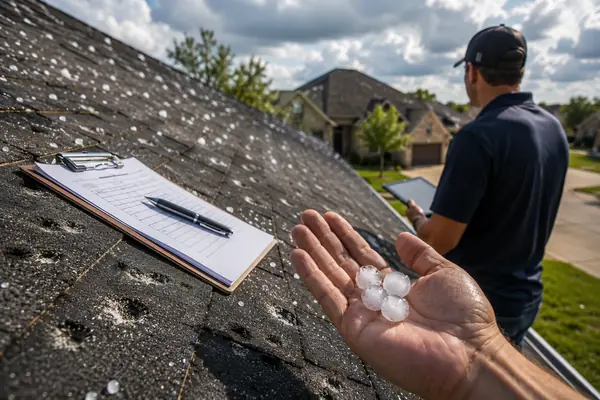
If a storm damaged your home or rental property in Waco or elsewhere in McLennan County, we can usually get there quickly: our office in Belton is a short drive north on I-35. We review the claim for free, inspect the property, write a line-by-line Xactimate estimate, and handle the back-and-forth with your insurer, including showing up in person for every re-inspection.
Why being close matters on a Waco claim
Most of the work on a property claim happens after the first inspection. The insurer sends its adjuster, sometimes an engineer, sometimes a second adjuster. A contractor finds hidden damage once the tear-off starts. An appraisal panel wants to walk the roof. Each of those is a visit, and being close means we can attend them instead of reviewing them from photos.
- Early inspection. We can document damage while it is fresh, before temporary repairs or a second storm muddy the picture.
- Joint re-inspections. We meet the carrier's adjuster on the roof and walk through our estimate line by line.
- Supplements during repairs. When rotted decking or a second shingle layer turns up, we document it before it is covered. See how hail damage supplements work.
Storms along the I-35 corridor
Lines of severe storms often track along the I-35 corridor through Central Texas, bringing hail, strong straight-line wind and heavy rain together. That combination produces two-part claims: an exterior claim for the roof, siding, gutters and windows, and an interior claim for the ceilings, insulation and walls that got wet when the roof was opened. Both belong on the same claim, and the interior side needs moisture readings to show how far the water went. Our roof and hail damage claims service covers the exterior, and the water damage claims service covers what happens inside.
Older homes: what the first estimate tends to miss
Waco has plenty of older houses, and older houses cost more to repair than a carrier's standard line items suggest. When we review an estimate on an older home, we check for:
- Removal of every shingle layer, not just the top one
- Plank or spaced decking that needs added sheathing before new shingles can go on, and whether ordinance or law coverage pays for it
- Plaster walls and ceilings priced as plaster, not drywall
- Wood siding and trim in the existing profile
- Whether an ACV roof schedule or endorsement applies, and how the depreciation was calculated
Rental properties around Waco
A lot of McLennan County housing is rented, from single-family homes in Hewitt and Robinson to student rentals near Baylor. Landlord claims work differently from owner-occupied claims:
- The policy form is different. Rentals are often insured on a dwelling policy rather than a homeowners policy. Some dwelling forms cover fewer causes of loss or pay roofs at actual cash value. Read the form before assuming coverage.
- Lost rent may be covered. Fair rental value or loss of rents coverage can pay rent you lose while the unit can't be lived in. Keep the lease and rent records.
- Tenant belongings are the tenant's claim. Your policy covers the building and any property you own there, such as appliances you supply. Tenants' furniture and clothing go on their renters policy.
- Vacancy terms matter. Many policies limit coverage when a building has been vacant for a set period. If a unit sat empty between tenants, check the vacancy wording.
- Access takes planning. Inspections need tenant notice and cooperation. Schedule early so the insurer can't point to delays on your side.
If you own several rentals hit by the same storm, each property is usually a separate claim with its own deductible. For larger multifamily buildings, see our page on apartment complex claims.
The deadlines your insurer has to meet
Texas sets deadlines for how insurers handle claims, and they apply in Waco the same as anywhere in the state.
to acknowledge your claim, start investigating and request what it needs
to accept or reject after receiving everything it requested
to pay after notifying you it accepted the claim
Texas law: These deadlines come from Tex. Ins. Code §§542.055–542.057. If the insurer needs more time to decide, it must tell you why and decide within 45 days of that notice. After a declared weather catastrophe, the deadlines are extended by 15 days (§542.059).
What to do after a storm in McLennan County
- Photograph the roof from the ground, any ceiling stains, and the soft metals (gutters, vents, AC fins) on every side of the house.
- Tarp any opening and set out buckets or move belongings away from leaks; keep the receipts.
- If it's a rental, tell your tenants what's happening, document their unit, and remind them to contact their renters insurer.
- Report the claim and write down the date, the claim number and the adjuster's name.
- Call or text us for a free review before the insurer's inspection if you can, or right after if you already have an estimate.
Our fee is a percentage of what the insurer pays, capped by Texas law at 10%, and there's nothing to pay upfront.
Free toolTexas claim deadline calculatorTurn your claim dates into the insurer's Chapter 542 deadlines to acknowledge, decide and pay.Communities covered from this page
Don't see your town? We serve every Texas county. Ask us about your property.
Frequently asked questions
How quickly can you inspect a property in Waco?
Our office in Belton is a short drive from Waco, so we can usually schedule an inspection soon after you call. After a large storm, timing depends on how many owners are calling at once.
Does my landlord policy cover lost rent after storm damage?
Only if it includes fair rental value or loss of rents coverage. Check the declarations page, and keep the lease and rent records to prove what you lost.
My tenant's belongings were ruined. Does my policy pay for them?
Usually not. A landlord policy covers the building and property the landlord owns. The tenant's belongings are covered by the tenant's renters policy, if they have one.
How long does my insurer have to pay after approving my claim?
Five business days after notifying you it accepted the claim, under Tex. Ins. Code §542.057. Our guide to insurer deadlines covers the full timeline.