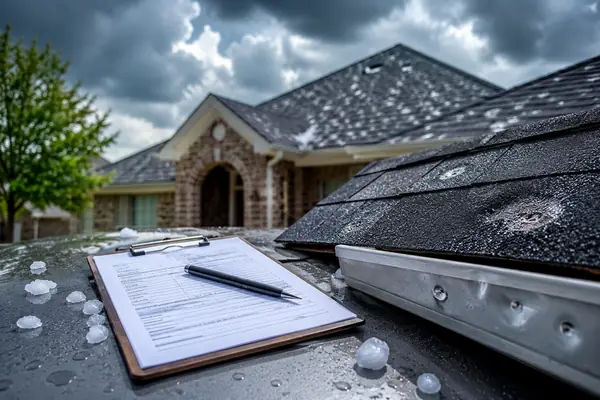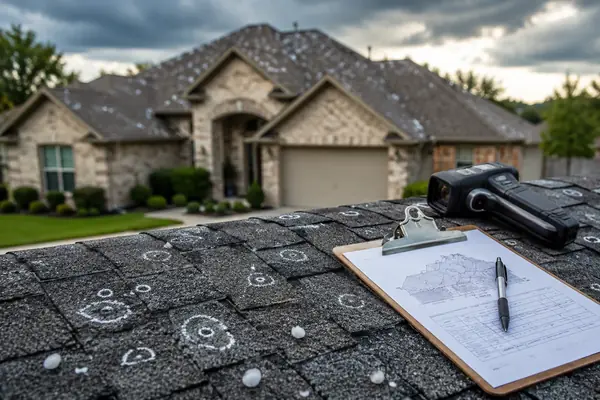
The Panhandle sees some of the most frequent hail in Texas, and that changes how claims here are argued. On a roof that has been through several storms, the insurer's first question is often not whether there's hail damage but when it happened. Proving the date of loss, and separating new damage from old, is the core of many Amarillo claims. We inspect the property, tie the damage to a specific storm, and write a line-by-line Xactimate estimate.
Our office is in Belton. We travel to Amarillo, Canyon and the rest of the Panhandle to inspect property in person.
The repeat-hail problem: new damage vs. old
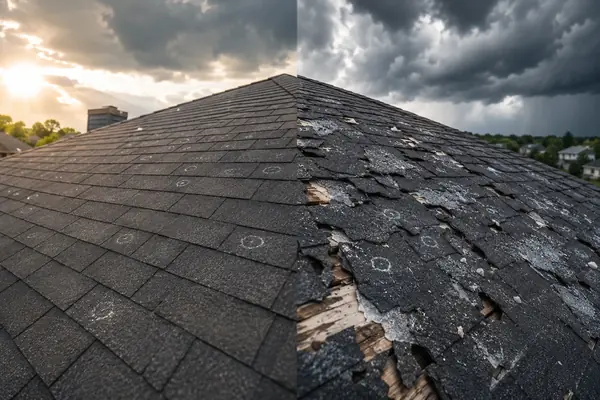
When a roof has been hit more than once, an adjuster may find hail marks and still deny or reduce the claim, saying the damage is from a storm before your policy started, or from one you didn't report within the policy's deadline. Here is what helps prove the damage is from the storm you're claiming:
- Storm reports showing hail at or near your address on the date of loss
- Fresh-looking hits: exposed asphalt or bright mat on shingles, clean dents in metal without oxidation or dirt in them
- Damage to items that were new or replaced recently, such as a new AC unit, fence or gutters
- Earlier photos of the roof, an inspection report from when you bought the house, or a prior claim file showing what was repaired
- Damage on neighbors' roofs and vehicles from the same storm
Tip: Photograph your roof and soft metals each spring before storm season. A dated set of "before" photos is the simplest way to answer an old-damage denial.
Also check your policy's deadline for reporting wind and hail damage. Many Texas policies set one, and it varies. Our guide on how long you have to file a hail claim explains where to find it.
Metal roofs and cosmetic damage exclusions
Metal roofing is common on Panhandle homes, shops and barns because it holds up well in hail. Many policies covering metal roofs include a cosmetic damage exclusion, which means dents that don't affect how the roof works may not be paid. That puts the claim on the question of function:
Often treated as cosmetic
- Shallow dents in flat areas of panels
- Paint marks without cracking or chipping
- Dents in trim that still sheds water
Often treated as functional
- Cracked, chipped or crazed paint that exposes metal to rust
- Damaged, loosened or backed-out fasteners and washers
- Dented ribs or seams that let water pond or leak
- Punctures and broken skylight panels
Read the exclusion's exact wording; some versions are broader than others. More detail in cosmetic vs. functional hail damage.
Blizzards, wind and cold
Panhandle winters bring heavy snow, drifting, high wind and hard freezes. The claims that follow look different from spring hail claims:
- Snow load. Heavy or drifted snow can bend purlins and collapse carports, porches and outbuilding roofs. Photograph the snow on the structure before it melts, if it's safe.
- Wind-driven snow. High wind can push fine snow through roof vents and gaps into the attic. When it melts, it soaks insulation and stains ceilings. Whether that is covered can depend on whether the wind first created an opening.
- Frozen pipes. Burst lines in exterior walls and crawl spaces are common after a hard freeze, as Winter Storm Uri showed across Texas in February 2021. Many policies limit freeze coverage if heat wasn't maintained in a vacant building. See our water damage claims page.
- Ice dams. Melting and refreezing at the eaves can force water under shingles. Coverage depends on the policy wording.
Farm and ranch structures
Around Hereford, Dumas and the rest of the Panhandle, many claims include barns, equipment shops, hay sheds, pens and fencing. These are often insured on a farm and ranch policy or scheduled one by one, with separate limits and sometimes actual cash value terms. List every damaged structure on the claim, not just the house, and pull the schedule so each one is valued under the right section. Livestock, crops and equipment are separate questions under their own coverages, if any.
After a storm in the Panhandle
- Record the date and look up the storm. Use NOAA storm reports to confirm hail or wind near your property on that date.
- Photograph fresh damage now. New dents and bright exposed mat fade with weather. Close-ups with a coin or ruler for scale help.
- Find your "before" evidence. Old photos, inspection reports and any prior claim paperwork.
- Check your endorsements. Look for a cosmetic damage exclusion, an ACV roof schedule and the wind and hail deductible.
- Report the claim within your policy's deadline and list every structure.
If the claim has already been denied as old damage, our denied and underpaid claims service is where we start. Our fee is a percentage of the claim payment, capped at 10% by Texas law, with nothing upfront.
Free toolStorm report lookupFind NOAA hail and wind reports for a date and place to pin down your date of loss.Communities covered from this page
Don't see your town? We serve every Texas county. Ask us about your property.
Frequently asked questions
The insurer says my hail damage is from an old storm. How do I prove it's new?
Storm reports for your date of loss, close-up photos of fresh damage, earlier photos of the roof, and damage to recently replaced items all help. Our storm report lookup finds NOAA reports for a date and place.
Does insurance cover dents in a metal roof?
If your policy has a cosmetic damage exclusion, dents that do not affect function may not be paid. Damage to paint, fasteners, seams or panels that lets water in or leads to rust is often treated as functional.
Is a barn collapse from snow covered?
Weight of snow or ice is a covered cause of loss on many policies, but outbuildings may be covered under a separate limit or a farm policy. Check how the barn is listed and valued.
Do you have an office in Amarillo?
No. Our office is in Belton, and we travel to Amarillo and the Panhandle to inspect property in person. The free claim review can start by phone or text.