

Property damage in Portland can become complicated quickly. A tropical system moving through the Coastal Bend can lift shingles, drive rain behind exterior walls, damage fences and siding, and interrupt business operations within a matter of hours. Even a severe thunderstorm can leave roof, window, interior, and equipment damage that is not fully reflected in the insurance company’s first estimate.
TX Public Adjusting provides insurance claim help for Portland homeowners, landlords, business owners, and commercial property managers. As a licensed Texas public adjuster, we represent the policyholder—not the insurance company. Our role is to inspect the loss, document covered damage, review the policy and carrier estimate, prepare a detailed claim scope, and negotiate for the amount owed under the policy.
TX Public Adjusting is operated by Rise Public Adjusting LLC, Texas License #3356839. We offer a free claim review with no upfront fees, giving Portland property owners an opportunity to understand the condition of their claim before deciding what to do next.
Need help with a denied, delayed, or underpaid Portland property claim? Contact TX Public Adjusting for a free claim review.
Why Property Owners Hire a Public Adjuster in Portland
Portland sits along Corpus Christi Bay in San Patricio County, immediately across the Harbor Bridge from Corpus Christi. Its coastal location is part of what makes the community appealing, but it also places homes and businesses in the path of Gulf Coast wind, wind-driven rain, tropical weather, salt air, and water-related property risks.
Local properties range from established homes in East Cliff and Northshore to newer construction in Bay Ridge, apartment communities, retail centers, offices, restaurants, and industrial properties serving the Corpus Christi metropolitan area. A loss affecting a one-story residence will not be documented the same way as damage to a waterfront property, multifamily building, retail space, or commercial roof.
A Portland public adjuster may be valuable when:
- The insurance company’s estimate is lower than the contractor’s repair estimate
- Roof damage was described as wear, age, or maintenance instead of storm damage
- The carrier paid for spot repairs rather than a complete repair scope
- Wind-driven rain damaged insulation, drywall, flooring, or electrical components
- The claim includes several buildings, units, tenants, or business departments
- Important line items were omitted from the estimate
- The property owner is being asked to repeatedly submit new documentation
- The claim has been delayed, denied, or closed before all damage was addressed
- A previous payment does not appear sufficient to complete covered repairs
Insurance companies assign adjusters to investigate claims on behalf of the carrier. Understanding the difference between a public adjuster and an independent adjuster can help property owners identify who each professional represents during the claim. TX Public Adjusting works on the other side of the claim. We represent the policyholder and prepare the loss from the property owner’s perspective.
Portland’s Coastal Storm and Property-Damage Risks
Portland is positioned between Nueces Bay and Corpus Christi Bay, with local destinations such as Indian Point Pier, Sunset Lake Park, and Violet Andrews Park reflecting the city’s close connection to the water. The city promotes fishing, birding, trails, kiteboarding, and other coastal activities at these locations.
That same setting creates a distinct insurance-claim environment.
Hurricanes and Tropical Storms
Portland properties can be affected by hurricane-force winds, tropical-storm gusts, wind-driven rain, flying debris, power outages, and prolonged moisture exposure. Damage is not always limited to missing shingles.
A tropical-weather claim may involve:
- Lifted, creased, torn, or missing roofing materials
- Damage to roof vents, flashing, gutters, and edge metal
- Broken windows or damaged exterior doors
- Water entering around roof penetrations and wall openings
- Wet attic insulation
- Ceiling stains and damaged drywall
- Flooring and baseboard damage
- Fence, patio, awning, and outbuilding damage
- Damage to rooftop commercial equipment
- Business-income losses following a covered shutdown
Property owners can also review our guide to hurricane property damage claims for a closer look at roof, interior, structural, equipment, and water-related losses after a major coastal storm. After a major coastal storm, insurers and contractors may be handling a high volume of claims. Property owners can feel pressure to accept an early estimate so repairs can begin. That estimate should still be reviewed carefully. A fast payment is not necessarily a complete payment.
Wind and Wind-Driven Rain
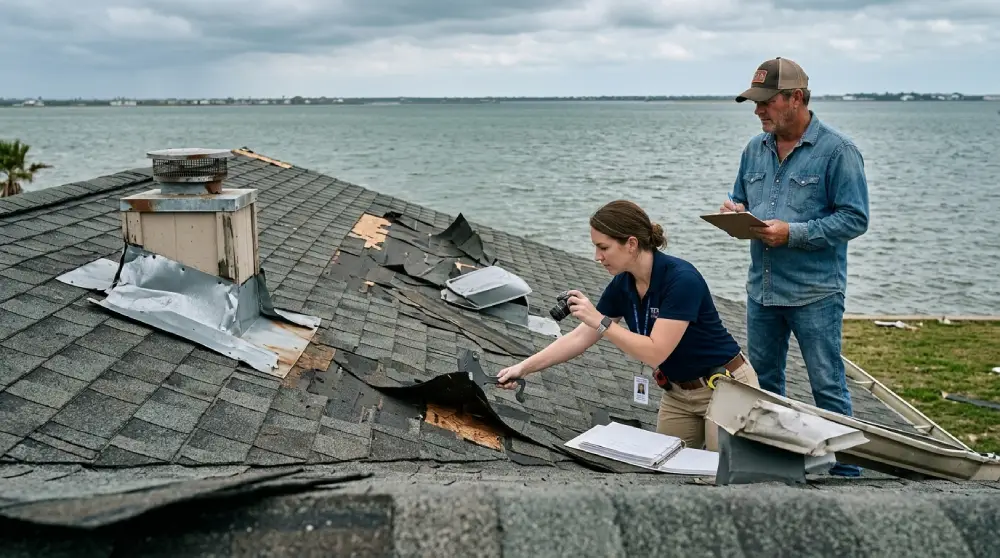
Strong coastal winds can affect properties even when a named hurricane does not make a direct landfall. Wind may loosen shingles, damage ridge caps, displace flashing, crack exterior components, or create openings that allow rain to enter.
These losses often become disputed when the roof appears intact from the ground. Water may have traveled from the entry point into a different room or wall cavity, and the visible ceiling stain may represent only part of the damage.
A proper Portland storm-damage inspection should evaluate the roof surface, roof accessories, attic, insulation, ceilings, exterior elevations, windows, doors, fences, detached structures, and interior finishes.
Coastal Water and Moisture Damage
Portland’s humid coastal conditions can make prompt drying and moisture documentation especially important. Water from a roof opening, failed plumbing line, appliance leak, air-conditioning drain, or storm-related breach can migrate beneath flooring and behind walls.
A water claim may involve more than removing visible standing water. Depending on the loss, the scope may need to address:
- Moisture mapping
- Controlled demolition
- Drying equipment
- Damaged insulation
- Drywall and texture
- Cabinets and vanities
- Flooring and underlayment
- Baseboards and trim
- Paint matching
- Contents manipulation
- Mold-related investigation when applicable
Floodwater and storm surge are not handled the same way as wind-driven rain under every policy. Coverage depends on the cause of loss, policy language, endorsements, exclusions, and whether separate flood coverage applies. We review the available policy and claim documents to help identify how the reported damage has been categorized.
Hail and Severe Thunderstorms
Coastal communities can also experience hail, lightning, and damaging thunderstorm winds. Hail can bruise asphalt shingles, fracture tile, dent metal roofing, damage soft metals, crack skylights, and affect gutters, screens, siding, and rooftop equipment.
The extent of hail damage can be underestimated when the inspection focuses only on whether the roof is leaking. A roof does not need to leak immediately for hail impacts to affect its condition or service life. Our hail damage roof insurance claim guide explains how hail can affect shingles, metal roofing, tile, soft metals, vents, gutters, and other exterior components.
Fire, Smoke, and Electrical Losses
House fires, kitchen fires, electrical failures, lightning, and equipment malfunctions can create complex claims. Smoke residue may spread into rooms that were not directly touched by flames. Heat can affect wiring, appliances, framing, windows, and finishes. Fire suppression efforts may also cause water damage.
A complete fire claim may need separate documentation for the structure, personal property, debris removal, temporary repairs, additional living expenses, code-related work, and smoke remediation.
Common Insurance Claims in Portland
Hail Damage Claims
Hail claims can become underpaid when the estimate includes only a small repair area or fails to account for collateral damage to vents, flashing, gutters, siding, windows, fencing, and exterior finishes. After a storm, photographs, dates, repair records, and detailed inspection notes can become important evidence. Review how to document hail damage for an insurance claim before damaged materials are removed or permanent repairs begin.
We review the storm date, reported damage, roof materials, carrier photographs, estimate line items, repairability, and contractor findings. When covered damage was missed, we prepare supporting documentation and present the additional scope to the carrier. When the first estimate leaves out damaged components or required repair steps, a properly supported request for hail damage claim supplements may help address omissions in the carrier’s scope.
Water Damage Claims
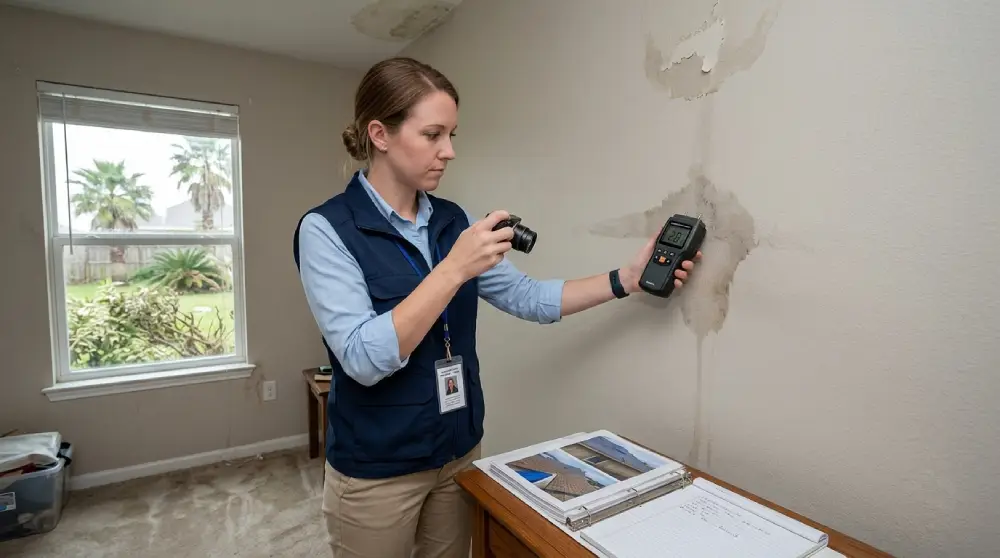
Water can move far beyond the point where it first becomes visible. A water damage public adjuster can evaluate whether the carrier’s scope addresses the affected materials, drying work, demolition, and repairs associated with a covered loss. A leak above one room may affect insulation, framing, drywall, flooring, cabinetry, and an adjoining space.
Our review considers the source, migration path, emergency mitigation records, moisture readings, demolition requirements, damaged materials, and the work needed to return the property to its pre-loss condition.
Fire and Smoke Damage Claims
Fire losses require careful organization. A fire insurance adjuster working for the policyholder can help document structural damage, smoke contamination, damaged contents, debris removal, temporary housing, and related coverage issues. Structural repairs, cleaning, contents, temporary housing, debris removal, and code issues may be handled under different policy provisions.
TX Public Adjusting helps Portland property owners build an organized claim file, document visible and non-visible damage, review carrier estimates, and communicate disputed scope items.
Storm and Hurricane Damage Claims
Storm claims commonly involve a combination of roof, exterior, interior, fence, window, and water damage. Commercial losses may also include signage, inventory, equipment, tenant spaces, and lost income.
We inspect the property as a complete loss rather than treating each visible symptom as an isolated repair.
Roof Damage Claims
Roof claims are frequently disputed because insurers may attribute damage to age, installation, deterioration, or maintenance. The question is not simply whether the roof is old. The claim must evaluate what happened during the reported event and whether covered damage occurred.
Our review may include roofing materials, slopes, penetrations, flashing, vents, edge components, matching concerns, repair feasibility, interior leaks, and the carrier’s measurement and pricing assumptions. Learn more about hiring a public adjuster for a roof claim when the carrier’s estimate appears incomplete or the loss has been denied.
Commercial Property Claims
Portland serves as a residential community and an important part of the broader Corpus Christi business area. Commercial claims may affect offices, retail centers, restaurants, warehouses, multifamily properties, churches, medical spaces, and industrial operations.
Commercial losses often involve:
- Flat or low-slope roofing systems
- Mechanical and electrical equipment
- Multiple tenants or units
- Inventory and business personal property
- Code compliance
- Temporary protection
- Business-interruption documentation
- Complex ownership or management responsibilities
A commercial public adjuster helps coordinate the building, contents, operational, and financial portions of the claim.
How Insurance Claims Become Underpaid
An underpaid claim does not always result from one obvious error. It often develops through a series of small omissions.
| Claim issue | How it affects the settlement |
| Missed damage | Affected rooms, elevations, structures, or components are left out |
| Narrow repair scope | The estimate includes patching when broader work may be required |
| Measurement errors | Roof, wall, flooring, or painting quantities are understated |
| Missing labor steps | Removal, setup, access, protection, disposal, and finishing work are omitted |
| Depreciation problems | Excessive or nonrecoverable depreciation reduces available funds |
| Pricing differences | Carrier pricing does not reflect the actual repair scope or local conditions |
| Weak documentation | Photos, inventories, moisture records, and contractor findings are incomplete |
| Coverage categorization | Damage is assigned to an exclusion or limitation without sufficient analysis |
| Code omissions | Required code-related work is not addressed where coverage may apply |
| Contents omissions | Personal or business property is undervalued, grouped, or missed |
A carrier estimate is not the same thing as a final construction plan. It is the insurance company’s initial assessment of the covered loss. When that estimate leaves out necessary work, the policyholder may need to submit additional evidence and request reconsideration.
Received an estimate that does not cover the work? Request a free Portland insurance claim review from TX Public Adjusting.
Our Public Adjusting Process
1. Claim Review
We begin by reviewing the information available, including the policy, claim correspondence, payment letters, estimates, photographs, contractor proposals, mitigation documents, and denial or reservation-of-rights letters.
We also discuss what happened, what damage has been observed, what work has already been performed, and what concerns remain unresolved.
2. Property Inspection
We inspect accessible damaged areas and document the loss. Depending on the claim, this may include the roof, exterior elevations, attic, ceilings, walls, floors, windows, doors, equipment, contents, and detached structures.
For larger residential and commercial claims, additional specialists may be appropriate. The specific needs depend on the property and cause of loss.
3. Damage Documentation and Scope Preparation
We organize photographs, measurements, inventories, reports, repair requirements, and estimate line items. The goal is to build a clear connection between the event, the resulting damage, and the work reasonably required to repair or replace covered property.
A well-prepared claim should be understandable to someone who was not present at the loss.
4. Carrier Communication and Negotiation
We present the documented claim to the insurance company, respond to requests, discuss disputed items, and compare the carrier’s position with the available evidence and policy provisions.
Public adjusting does not guarantee a particular outcome. It gives the policyholder professional representation and a more organized basis for pursuing the benefits available under the policy.
5. Settlement Review
When the carrier issues a revised estimate or payment decision, we review the changes and explain what has been addressed. We also identify remaining differences that may require additional documentation, negotiation, appraisal, or other options available under the policy and Texas law.
Why Choose TX Public Adjusting
Licensed Texas Representation
TX Public Adjusting is operated by Rise Public Adjusting LLC, Texas License #3356839. We handle Texas property claims and understand the documentation, estimating, and communication issues that frequently arise after hail, wind, water, roof, fire, hurricane, and commercial losses.
We Represent Policyholders
An insurance-company adjuster works for the carrier. A public adjuster works for the insured property owner.
Our responsibility is to help document and present your claim—not to protect the insurance company’s financial interests.
Residential and Commercial Experience
We assist with houses, rental properties, multifamily buildings, offices, retail properties, restaurants, warehouses, churches, and other commercial structures.
The company’s broader claim experience includes the review of thousands of residential and commercial files. That experience helps us recognize common omissions, documentation gaps, estimating disputes, and scope issues that may otherwise be overlooked.
Detailed Claim Preparation
A strong claim is supported by facts. We focus on measurements, photographs, damaged materials, policy documents, repair requirements, inventories, and written communication.
Free Claim Review
A property owner should be able to understand whether professional claim assistance may be useful before making a commitment. TX Public Adjusting offers a free initial claim review and does not charge an upfront fee.
Areas We Serve Near Portland
TX Public Adjusting assists policyholders throughout Portland and surrounding Coastal Bend communities, including:
- East Cliff
- Northshore
- Bay Ridge
- Oak Ridge
- Portland Bay
- Westwood Estates
- Gregory
- Ingleside
- Ingleside on the Bay
- Taft
- Aransas Pass
- Rockport
- Corpus Christi
- Port Aransas
- Sinton
- Odem
Established Portland neighborhoods such as East Cliff and Northshore may include older roofing systems, previous repairs, mature landscaping, and additions that require careful documentation after a storm. Newer homes around Bay Ridge can present different issues involving modern roofing assemblies, exterior finishes, windows, and builder-grade materials.
Portland’s proximity to U.S. Highway 181 and the Harbor Bridge also makes it closely connected to Corpus Christi’s residential, commercial, and industrial property market. A damaging weather event may affect properties on both sides of the bay, creating high claim volume throughout the area.
Frequently Asked Questions
What does a public adjuster in Portland do?
A Portland public adjuster represents the property owner during an insurance claim. The adjuster reviews the policy and existing claim documents, inspects the damage, prepares supporting documentation, evaluates the insurance company’s estimate, and negotiates disputed claim items.
Unlike the carrier’s adjuster, a public adjuster does not represent the insurance company. TX Public Adjusting works for the policyholder.
When should I hire a public adjuster after Portland property damage?
Many property owners contact a public adjuster soon after a significant loss, before important evidence is removed or permanent repairs begin. Others seek help after receiving a low estimate, partial denial, delayed decision, or payment that is not sufficient for the documented repair scope.
The earlier the claim is reviewed, the easier it may be to preserve photographs, damaged materials, mitigation records, contractor findings, and other evidence. However, an existing or previously paid claim may still be reviewable depending on its status and applicable deadlines.
Can you help with a hurricane or tropical-storm claim?
Yes. We assist with wind, roof, exterior, interior, water, contents, and commercial losses associated with hurricanes and tropical storms.
Coverage can depend on the reported cause of damage, windstorm provisions, deductibles, exclusions, endorsements, and any separate flood coverage. We review the available documents before advising how we may be able to assist.
Can a public adjuster help when the roof claim was denied?
A denied roof claim can be reviewed to determine why the carrier denied coverage and what evidence was considered. We compare the denial letter, policy language, photographs, inspection findings, storm information, and repair documentation.
A public adjuster cannot promise that every denial will be reversed. We can identify documentation gaps, estimate differences, and factual issues that may support a request for reconsideration. Property owners can also review what to do after a denied hail damage claim.
What if the insurance company already issued a payment?
Receiving a payment does not always mean every issue has been resolved. Many claims remain open for supplements, recoverable depreciation, additional documentation, or reconsideration of omitted damage.
We review the payment letter and estimate to determine what was included, what was excluded, what depreciation was applied, and whether additional covered work may need to be presented.
How much does a public adjuster cost in Texas?
Public-adjuster compensation is explained in a written agreement and is generally based on a percentage of the insurance recovery, subject to Texas law and the terms of the contract.
TX Public Adjusting offers a free claim review and charges no upfront fee. The fee structure will be explained before representation begins.
Do you handle commercial insurance claims in Portland?
Yes. We assist owners and managers of retail properties, offices, restaurants, warehouses, multifamily properties, churches, and other commercial buildings.
Commercial claims may involve building damage, roofing, equipment, inventory, tenant improvements, temporary repairs, business income, and operational disruption. We organize these components into a documented claim presentation.
Can you help with water damage that appeared after a storm?
Potentially. The first step is determining the likely source and path of the water. Wind-driven rain, a roof opening, damaged flashing, a failed window, plumbing, drainage, and floodwater may be treated differently under the policy.
We review the damage pattern, mitigation records, photographs, weather event, and policy documents to understand how the loss was reported and adjusted.
How long does a Portland property claim take?
The timeline depends on the size of the loss, policy requirements, carrier response times, inspection availability, documentation needs, and whether coverage or scope is disputed. Property owners concerned about an unanswered claim can review how long an insurance adjuster has to contact you for additional guidance.
A straightforward residential claim may move faster than a large commercial, fire, hurricane, or contents claim. Our focus is on maintaining organized communication and moving each documented issue toward a decision.
Is it too late to hire a public adjuster after my claim was closed?
Not necessarily. Some closed claims may still be reviewed, supplemented, reopened, or pursued through another policy process. The answer depends on the loss date, policy, prior payments, correspondence, release language, and applicable deadlines. Our guide explains when it may be too late to hire a public adjuster and why prompt review matters.
Because time limits matter, it is better to request a review promptly rather than assume that a closed file cannot be addressed.
Get a Free Portland Insurance Claim Review
Property damage is disruptive enough without having to determine whether every roof component, damaged room, repair step, and policy benefit has been included in the carrier’s estimate.
TX Public Adjusting helps Portland property owners document losses, evaluate insurance estimates, communicate with carriers, and pursue covered benefits. We handle residential and commercial property claims involving hail, hurricanes, wind, water, fire, smoke, roofs, and other covered causes of loss.
TX Public Adjusting is operated by Rise Public Adjusting LLC, Texas License #3356839. We represent policyholders throughout Portland, San Patricio County, Corpus Christi, and the Texas Coastal Bend.
Contact TX Public Adjusting today for a free claim review. There are no upfront fees.