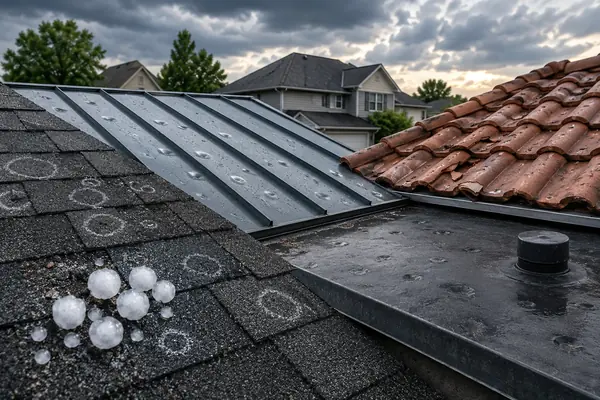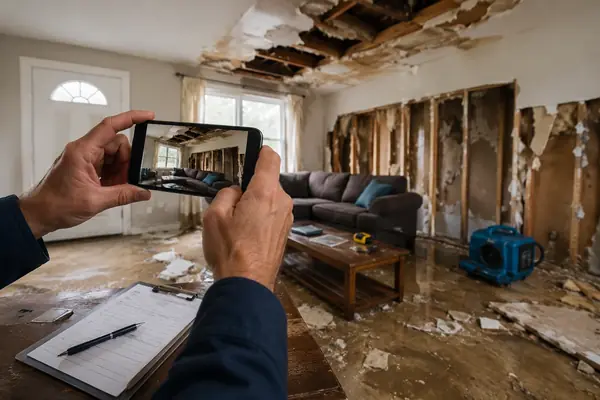
A Fort Worth property claim depends less on the city than on two facts: what kind of storm hit, and what kind of building it hit. Hail, straight-line wind and tornadoes each leave different evidence, and a 1920s bungalow, a new Keller two-story and a metal shop in Parker County each get estimated in different ways. We sort out which situation you are in, document it, and write an Xactimate estimate that reflects the actual building.
We are based in Belton and travel to Fort Worth, Arlington, Weatherford and the surrounding cities to inspect property in person.
Three storms, three kinds of claims
Hail
Hail claims are about counting and classifying damage: bruised or fractured shingles, dented metal, cracked skylights and siding. The insurer usually concedes the storm happened and argues about how much of the roof it hurt. See how to identify hail damage by roof type for what to look for on your roof.
Straight-line wind
Thunderstorm winds can be as destructive as a weak tornado, but the damage is quieter. Shingles crease at the nail line and lose their seal without blowing off. Ridge caps lift. Fences lean in one direction. Because nothing is missing, the carrier's adjuster may call the roof worn or poorly installed. What wins these claims is consistency: creased tabs on the windward slopes, debris spread in the storm's direction, and fences and trees down the same way.
Tornado
A direct hit is a different kind of claim entirely. When most of a building is damaged, the questions become whether your dwelling limit covers rebuilding, how much the policy pays for debris removal, whether you have ordinance or law coverage for code upgrades, and how long additional living expense (loss of use) will pay while you're out of the house. Contents claims also grow large quickly, and a room-by-room inventory matters.
On a near-total loss, start the contents list early, while you still remember what was in each room and before debris is hauled off. Our contents inventory builder lets you work room by room and export the list. Keep track of every night in a hotel or rental and every extra meal and mile driven; those are the records additional living expense claims are paid on.
Older central Fort Worth homes vs. newer suburbs
Tarrant County has a wide spread of building ages, and the same storm produces very different estimates depending on the house.
Older homes near the center of the city
- Plaster walls and ceilings that cost more to repair than drywall
- Pier-and-beam floors and wood siding with profiles that are hard to match
- Roofs with more than one layer of shingles, or plank decking, that change the tear-off scope
- Code upgrades on repair, which depend on ordinance or law coverage
- Older roofs that may fall under an ACV payment schedule
Newer homes in Keller, Mansfield, Burleson and Parker County
- Architectural shingles still under the original install
- Large roof areas with many slopes, valleys and penetrations
- Percentage wind and hail deductibles on high dwelling limits
- HOA rules on roof color and style
- Disputes over repair versus replacement of a younger roof
On an older home, ask whether the estimate prices plaster as plaster, lists every roof layer for removal, and includes code-required items. On a newer home, ask whether every slope was inspected. Texas has no matching statute; whether mismatched repairs are paid depends on policy wording and the facts.
Metal buildings, shops and commercial property
Western Tarrant County and Parker County have a lot of metal buildings: shops, barns, equipment sheds, and light commercial and industrial buildings. Hail dents metal panels easily, and many policies on these structures carry a cosmetic damage exclusion. Under that wording, dents that don't let water in or reduce the panel's life may not be paid, so the inspection has to look for functional damage: cracked or displaced fasteners, damaged seams and ridge caps, broken skylight panels, and dented gutters and trim that now hold water.
For businesses, the claim is often larger than the roof. Rooftop HVAC units, signage, overhead doors, and the income lost while the building can't be used all belong in the estimate if the policy covers them. Our pages for warehouses, churches and retail stores go through what to document for each.
After a storm in Tarrant or Parker County
- Note whether the damage looks like hail (dents, bruises), wind (creases, lifted tabs, fences down one direction) or both
- Photograph the building, fences, trees and debris before cleanup, including which way things fell
- Tarp or board up openings and keep every receipt for temporary repairs
- If you can't live in the house, keep hotel, meal and mileage receipts for additional living expenses
- Start a contents list room by room before debris is hauled away
- Find your declarations page and look for the wind and hail deductible, ordinance or law coverage, and any roof or cosmetic endorsements
- Report the claim promptly and write down the claim number and the date
We handle these losses through our windstorm claims and roof and hail claims services. The fee is a percentage of the claim payment, capped at 10% by Texas law, with no upfront cost.
Free toolClaim documentation checklistAn interactive, printable checklist for hail, water, fire and wind claims. Progress saves in your browser.Communities covered from this page
Don't see your town? We serve every Texas county. Ask us about your property.
Frequently asked questions
My roof wasn't torn off, but the adjuster says there is no wind damage. Can I dispute that?
Yes. Creased shingles, broken seals and lifted ridge caps are wind damage even when nothing is missing. Photos showing the pattern across windward slopes, plus storm data for the date, support the claim.
Does homeowners insurance cover a tornado?
Wind, including tornado wind, is a covered cause of loss on most Texas homeowners policies, subject to the wind and hail deductible. How much is paid depends on your limits, debris removal, ordinance or law coverage and loss of use.
Will insurance pay for dents in my metal shop building?
It depends on whether the policy has a cosmetic damage exclusion. If it does, the claim needs evidence of functional damage, such as damaged fasteners, seams or panels that let water in.
Do you have an office in Fort Worth?
No. Our office is in Belton, and we travel to Tarrant and Parker counties to inspect property. The free claim review can start by phone or text.