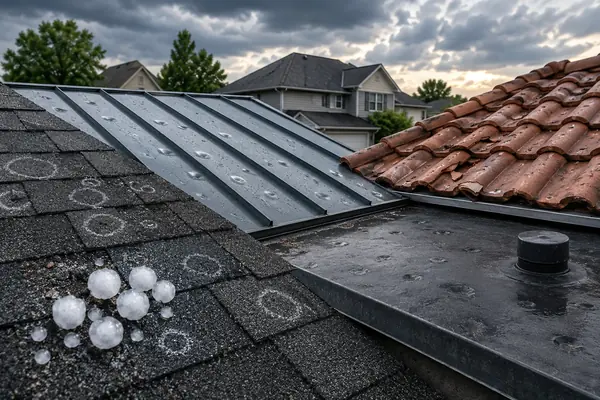
A warehouse claim is usually a roof claim first. One building can have several acres of low-slope roof, and the carrier's adjuster may walk a small part of it, find limited damage, and price spot repairs. Meanwhile, water is finding its way onto racking and pallets below. Getting a fair settlement means inspecting the whole roof systematically, tying interior damage to roof openings, and documenting what the shutdown cost the operation.
Large low-slope roofs
Texas warehouses are typically roofed with one of three systems, and each shows storm damage differently.
| Roof system | What hail and wind do | What adjusters tend to miss |
|---|---|---|
| TPO or PVC single-ply | Fractures in the membrane, often over hard insulation board; seam and flashing damage from wind | Cracks that are hard to see without close inspection, and crushed or fractured cover board under the membrane |
| Modified bitumen | Granule loss, bruising, and cracked cap sheets | Bruising that only shows when the surface is probed, and damage at base flashings and curbs |
| Metal panel (standing seam or R-panel) | Dented panels and ribs, damaged trim, lifted panels at eaves and ridges | Fastener and seam damage that affects water-tightness, and whether a cosmetic damage exclusion applies |
On a roof this size, we lay out a grid and document representative test areas in every section, along with every curb, drain, and penetration. Core samples can show whether insulation is wet or crushed, which changes the repair from patching to tear-off. For more on spotting damage by roof type, see how to identify hail damage by roof type.
Skylights, drains, and ponding
Plastic skylights and smoke vents are often the first thing hail breaks on a warehouse, and they let water straight onto the floor. They're also easy to leave off an estimate because they're counted, not measured. We count and photograph each one.
Roof drains and scuppers matter in two ways. Storm debris can block them and cause ponding that overloads the deck or forces water through seams, which supports a claim. But insurers often argue that ponding is long-term wear or a design problem, which is generally excluded. Photos of drains and water lines taken soon after the storm, and any maintenance records showing the roof drained normally before, help separate a storm event from an old condition.
Racking, inventory, and stored goods
Interior damage in a warehouse is mostly about what's on the racks. Wet cardboard fails, product gets contaminated, and forklifts can't safely pick from racking that's been wetted or struck. Whether stored goods are covered under your policy depends on who owns them:
- Your own inventory is generally claimed as business personal property, valued as the policy states.
- Goods you store for customers may fall under a separate coverage, such as personal property of others or a warehouse legal liability policy, or under the customer's own insurance.
- Pallet racking itself may be treated as building or as business personal property depending on the policy and how it's installed.
Before damaged stock is thrown out, photograph it on the rack, keep the location labels visible, and export the inventory records for those locations. Our contents inventory builder can help you organize the list.
Dock doors, sprinkler leaks, and other building damage
Wind pushes overhead dock doors out of their tracks and bends panels, especially when a door is open or partly open during a storm. Damaged dock doors also affect security and climate control. Dock seals, levelers, bumpers, and the door operators are separate line items and should be listed separately.
Fire sprinkler leaks are a common non-storm warehouse claim, from freeze damage during events like Winter Storm Uri, impact by a forklift, or a failed fitting. Sudden discharge is often covered, while slow leaks and wear may be excluded. The policy's causes-of-loss form and any freeze-related conditions (such as requirements to maintain heat) decide the outcome.
Downtime and business income
A warehouse that can't receive or ship loses money quickly, and the loss isn't always obvious from the building itself. Business income and extra expense claims for a distribution operation can include:
- Lost net income from orders you couldn't fill
- Overtime and temporary labor to move and re-stack product
- Rental of temporary storage space or trailers
- Expedited freight to keep customers supplied
- Continuing payroll and fixed costs while operations are reduced
These claims rely on shipping records, payroll, and financial statements, and they depend on the business income limits and terms in your policy. If you lease the building, your landlord's policy may cover the roof while your own policy covers inventory and income, so both claims should move together.
How we handle warehouse claims
We use drone and roof-level photos to cover the full roof, write the Xactimate estimate roof section by roof section, and keep the interior and contents claim tied to the specific roof openings that caused it. Joseph attends re-inspections with the carrier's adjuster and engineer so the test areas are reviewed on the roof, not argued over from a report. If the insurer has already offered spot repairs on a roof that needs replacement, see our roof and hail damage claims page and the commercial claims overview for the policy terms that apply.
Frequently asked questions
Will insurance pay for ponding water on a flat warehouse roof?
Ponding caused by a storm, such as debris blocking drains, may be covered. Ponding from long-term deflection, poor drainage design, or wear is often excluded. Drain photos taken right after the storm and maintenance records help show the difference.
Is customer inventory stored in my warehouse covered by my property policy?
Not always. Goods you hold for others may fall under personal property of others coverage, a warehouse legal liability policy, or the owner's own insurance, depending on your policy and contracts.
Can hail damage a TPO roof without visible dents?
Yes. Hail can fracture the membrane or crush the cover board underneath without obvious marks from a distance. Close inspection and core samples can show damage that a walk-over misses.
Are broken warehouse skylights covered after a hailstorm?
Usually, as part of the building, subject to the deductible and policy terms. Count and photograph every damaged skylight and any water damage below it, because they are often left off the first estimate.