

Property damage on the Bolivar Peninsula can become complicated quickly. Homes and businesses sit on a narrow stretch of the upper Texas Gulf Coast where hurricane winds, wind-driven rain, storm surge, coastal flooding, roof damage, and saltwater exposure can affect the same property during a single storm. If you need a Public Adjuster in Bolivar Peninsula, TX, TX Public Adjusting provides independent insurance claim assistance for residential and commercial property owners throughout the peninsula.
TX Public Adjusting is operated by Rise Public Adjusting LLC, Texas License #3356839. We represent policyholders—not insurance companies—and help document covered damage, identify scope issues, review estimates, and negotiate property insurance claims.
From elevated beach houses in Crystal Beach to properties around Port Bolivar, Caplen, Gilchrist, and High Island, coastal claims require careful attention to what happened, where the damage occurred, and which policy may respond. Bolivar Peninsula is a 27-mile coastal region in Galveston County containing those five primary communities.
Free Claim Review • No Upfront Fees • Residential & Commercial Claims
If your Bolivar Peninsula insurance claim was denied, delayed, or paid for less damage than you believe occurred, contact TX Public Adjusting for a free claim review.
Why Property Owners Hire a Public Adjuster in Bolivar Peninsula
A major property claim is more than submitting photographs and waiting for an insurance check. The amount ultimately considered by the carrier can depend heavily on the documented scope of damage, repair methodology, measurements, pricing, contents records, supporting estimates, and the way the cause of loss is presented.
Those issues can be especially important on Bolivar Peninsula because one coastal storm may create several different types of damage.
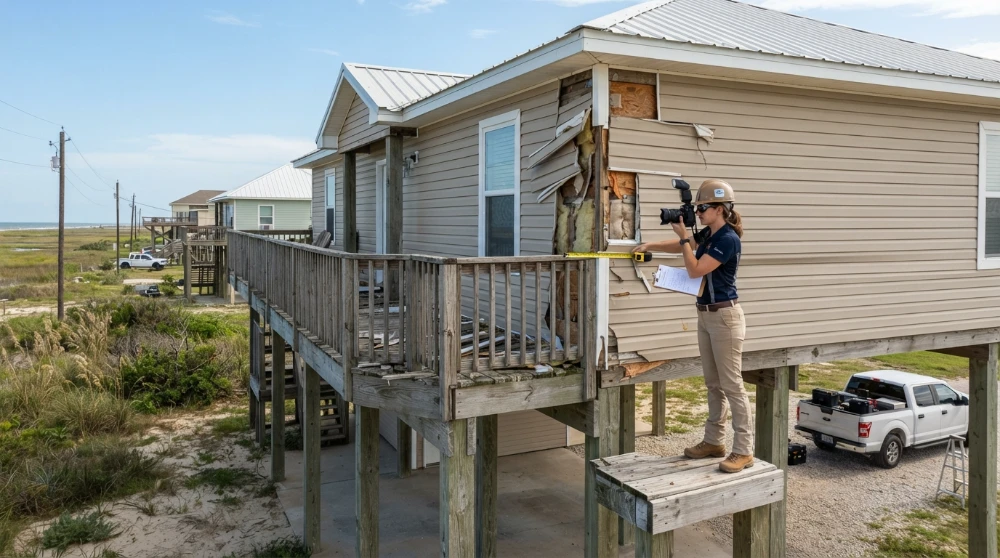
A hurricane can tear shingles or metal roofing loose, allow rain into an elevated home, damage siding and windows, destroy exterior stairs and decks, and expose lower structural components to water. A carrier’s initial inspection may identify the obvious damage without accounting for every affected component.
A public adjuster works for the policyholder. Our role may include:
- Reviewing the insurance claim and available policy documents.
- Inspecting the property from the policyholder’s perspective.
- Creating detailed photographic and written documentation.
- Comparing carrier estimates with observed damage.
- Identifying potentially omitted or undervalued items.
- Preparing supporting claim documentation.
- Communicating and negotiating with the insurance carrier regarding the amount of covered loss.
For owners of vacation rentals, beach houses, restaurants, retail properties, RV-related businesses, and other commercial property on the peninsula, the time required to manage a complicated claim can be significant. Independent representation allows the property owner to have someone focused specifically on documenting and presenting the claim.
Coastal Property Risks on Bolivar Peninsula
Bolivar Peninsula is not simply another Texas service area. Its geography changes the nature of property-loss exposure.
The peninsula is a narrow barrier landform separating the Gulf of Mexico from Galveston Bay. In places it is only about a quarter-mile wide. That means Gulf-facing and bay-side properties can both be exposed to severe coastal weather.
Property owners preparing for coastal storms can also review our guide to property damage after a hurricane, which explains common types of hurricane-related damage and insurance claim issues Texas property owners may encounter.
Hurricanes, Storm Surge, and Severe Wind
Hurricane Ike remains one of the clearest examples of the peninsula’s exposure. The National Weather Service reported that the highest storm surge associated with Ike occurred on Bolivar Peninsula and portions of Chambers County, with storm-surge assessments generally ranging from approximately 15 to 20 feet in the hardest-hit area.
Research following Ike documented strong winds, large waves, widespread inundation, and severe building damage across the peninsula. Building elevation was a major factor in whether structures survived areas exposed to large waves and surge.
For today’s property owners, hurricane claims may involve damage to:
- Roof systems and roof coverings
- Siding and exterior cladding
- Windows and doors
- Decks, stairs, railings, and exterior structures
- Interior ceilings and walls after wind-driven rain
- Electrical and mechanical components
- Commercial signs and equipment
- Contents inside homes or businesses
Wind Coverage and Flood Coverage Can Be Different
This distinction matters greatly on the Texas coast.
A property can suffer wind damage and flood or storm-surge damage during the same event, while those causes may be insured under different policies. Coverage always depends on the actual policy language and facts of the loss.
Galveston County is within the coastal territory where eligible property owners may obtain wind and hail insurance through the Texas Windstorm Insurance Association when private-market requirements are met. TDI notes that TWIA provides wind and hail coverage in designated coastal areas, including Galveston County.
That makes accurate documentation particularly important. A roof opening caused by wind and subsequent interior water intrusion may involve very different coverage questions from water entering a structure because of rising coastal floodwater.
Common Insurance Claims in Bolivar Peninsula
| Claim Type | Damage We Commonly Review |
| Hurricane & Wind | Roofing, siding, windows, doors, exterior components, wind-driven rain |
| Hail | Shingles, metal roofing, vents, gutters, flashing, siding |
| Water | Ceilings, drywall, flooring, cabinetry, insulation, contents |
| Roof | Missing materials, lifted components, punctures, flashing and membrane damage |
| Fire | Structure, smoke, contents, electrical systems, cleanup |
| Commercial | Building damage, inventory, equipment and covered business-property losses |
Hail Damage Claims
Hurricanes receive much of the attention on the Gulf Coast, but hail and severe thunderstorms can also damage Bolivar Peninsula roofs.
screens, and exterior HVAC components. Property owners dealing with significant roof damage can review our hail damage roof insurance claim guide for a deeper explanation of roof inspections, documentation, carrier estimates, and common claim issues. On metal roofs, the difference between cosmetic and functional damage can become an important claim issue. On shingles, damage may be subtle enough that a quick ground-level inspection does not reveal the full extent.
TX Public Adjusting can review a hail loss, document observed damage, and compare the carrier’s scope with conditions at the property. carrier has already rejected the loss, our guide explains what to do if your hail claim was denied and what documentation may be worth reviewing before deciding on your next step.
Water Damage Claims
Water damage claims on Bolivar Peninsula require careful investigation of the source. A water damage public adjuster can help review the documented cause of loss, damaged building components, carrier estimate, and areas that may have been omitted from the original scope.
Water may enter through storm-damaged roofing or windows, plumbing failures may occur inside the building, or water may rise from a coastal flooding event. Those scenarios should not automatically be treated as interchangeable because insurance coverage can differ.
For covered water losses, overlooked items may include wet insulation, damaged wall cavities, cabinetry, flooring transitions, electrical components, paint, baseboards, contents, and necessary access for repairs.
Fire Damage Claims
flames. For larger losses, a fire insurance adjuster can help document structural damage, smoke and soot contamination, affected contents, cleanup costs, and other covered portions of the loss.
Claims may involve structural components, smoke residue, soot, odor, electrical systems, HVAC components, contents, debris removal, and temporary living or operating expenses when covered by the policy.
Beach properties can also contain extensive furnishings and personal property accumulated for rental or recreational use. Proper contents documentation can therefore become a major part of the claim.
Storm Damage Claims
Storm damage on Bolivar Peninsula can involve several building elevations and exterior components at once.
Elevated coastal homes frequently have stair systems, decks, pilings, lower enclosures, exterior utility components, and exposed areas underneath the main living space. Commercial structures can add signs, awnings, equipment, fencing, parking-area improvements, and other property.
A complete storm inspection should look beyond the most visible roof damage.
Roof Damage Claims
The roof is one of the most important components of any coastal property.
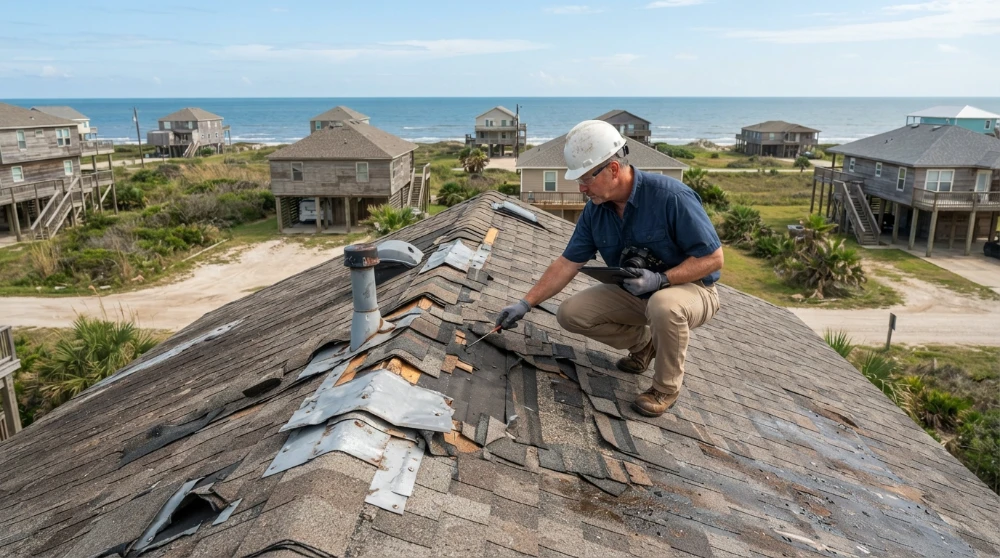
High wind can lift roof coverings, damage flashing, loosen ridge materials, compromise penetrations, or create openings that permit interior water intrusion. Even when only a small section appears visibly damaged, repairs may require consideration of adjoining materials and the overall roofing system.
TX Public Adjusting reviews roof claim estimates for measurements, materials, labor, accessories, flashing, vents, underlayment, and other items supported by the observed loss and applicable policy. If the carrier’s roof estimate appears incomplete, learn how a public adjuster for a roof claim can review missed damage, scope differences, and supporting documentation.
Commercial Property Claims
Bolivar Peninsula has a significant tourism and seasonal economy alongside its year-round community. That means commercial losses may affect restaurants, lodging properties, retail operations, rental-management businesses, marinas, RV-related properties, and other coastal businesses.
Commercial claims may involve more than the building itself. Depending on coverage, the claim can include business personal property, equipment, inventory, tenant improvements, and other insured interests. Our commercial public adjuster services are designed for Texas businesses facing substantial or complicated property losses.
When a commercial loss affects multiple building systems, detailed documentation becomes especially valuable.
Have a storm, roof, water, fire, or commercial claim on Bolivar Peninsula? Contact TX Public Adjusting for a free claim review before accepting an amount you believe does not reflect the documented covered damage.
Why Bolivar Peninsula Insurance Claims Become Underpaid
An insurance company estimate is not necessarily a complete repair plan. Initial inspections often occur soon after a loss, sometimes while carriers are handling large numbers of claims from the same storm.
Several issues can create a gap between the carrier’s initial estimate and the actual documented scope.
Missed Damage
Roof accessories, flashing, interior moisture, insulation, exterior elevations, contents, decks, stairs, and related components may not all appear in the first estimate.
Scope Omissions
An estimate may recognize a damaged component without including all work reasonably necessary to access, remove, replace, reinstall, or finish surrounding materials.
Depreciation Questions
Property claims may include depreciation depending on the policy and item involved. Owners should understand what has been withheld, whether any amount may be recoverable, and what documentation may be required.
Low or Incomplete Estimates
Differences can arise over measurements, quantities, labor operations, material selection, pricing, and repair methodology.
Documentation Problems
After a major coastal storm, damaged materials may need to be removed quickly for safety or mitigation. If conditions are not documented before demolition, proving the original scope can become more difficult.
Photographs, measurements, contractor information, inventories, invoices, mitigation records, and written communications can all become important parts of the claim file. For storm-related roof losses, see how to document hail damage for an insurance claim before repairs, cleanup, or material removal eliminates useful evidence.
Our Public Adjusting Process
1. Claim Review
We begin by reviewing the status of your Bolivar Peninsula insurance claim.
That includes understanding the reported cause of loss, carrier communications, estimates, payments already issued, and the issues creating concern. If the property owner has policy documents available, those can also help identify applicable coverages, deductibles, limits, and claim conditions.
2. Property Inspection
We inspect the damaged property and document visible conditions.
For a coastal claim, that may mean evaluating the roof, exterior elevations, doors, windows, interiors, decks, stairs, and other affected property rather than concentrating solely on the most obvious damage.
3. Documentation and Scope Development
We organize evidence supporting the claim.
Depending on the loss, this can include:
- Photographs and videos
- Measurements
- Damage descriptions
- Estimate review
- Contents information
- Supporting invoices and contractor documents
- Comparison with the carrier’s estimate
The objective is to establish a clear, supportable picture of the covered property damage.
4. Insurance Company Communication and Negotiation
TX Public Adjusting communicates with the carrier regarding documented differences in scope or valuation.
We explain what we believe should be reconsidered and provide supporting information. A public adjuster cannot guarantee a particular outcome, but professional documentation can give the policyholder a more organized basis for presenting the claim.
5. Claim Resolution
We continue working through the adjusting process until the documented claim issues have been addressed or the available adjusting process has reached its conclusion.
If another professional—such as an attorney, engineer, contractor, accountant, or restoration specialist—is appropriate for an issue outside the public adjuster’s role, the property owner may need separate advice from that professional.
Why Choose TX Public Adjusting
TX Public Adjusting combines Texas claim experience with independent representation for policyholders.
Licensed in Texas
TX Public Adjusting operates through Rise Public Adjusting LLC, Texas License #3356839.
We Represent Policyholders
The insurance company’s adjuster works for the carrier. A public adjuster is retained by the policyholder.
That distinction matters when the scope or value of a property claim is disputed.
Residential and Commercial Experience
Our experience includes residential and commercial losses across Texas. We have reviewed thousands of claims involving storm, hail, water, roof, fire, and commercial property damage.
Texas-Focused Claim Knowledge
Texas property claims can involve hail deductibles, hurricane deductibles, coastal windstorm coverage, roof issues, depreciation, supplements, and significant differences between residential and commercial policies.
On the coast, there is another layer: TWIA provides wind and hail policies to eligible properties in designated coastal areas, while flood losses may involve separate coverage.
Free Claim Review
You can speak with TX Public Adjusting about your situation before deciding how to proceed.
Licensed Texas Public Adjuster • Free Claim Review • No Upfront Fees
Areas We Serve Across Bolivar Peninsula
Bolivar Peninsula is better understood as a series of coastal communities than conventional city neighborhoods. We assist property owners throughout:
- Port Bolivar, including properties near the Galveston–Port Bolivar ferry landing and Fort Travis Park.
- Crystal Beach, the peninsula’s best-known beach community and a major concentration of homes, rentals, and businesses.
- Caplen, along the central-eastern portion of the peninsula.
- Gilchrist, one of the peninsula’s narrowest coastal stretches.
- High Island, at the northeastern end of the peninsula.
The Galveston–Port Bolivar Ferry connects State Highway 87 between Galveston Island and Port Bolivar, while Fort Travis Park and the historic Point Bolivar Lighthouse remain recognizable landmarks near the western end of the peninsula.
Frequently Asked Questions
Do I need a public adjuster for a Bolivar Peninsula hurricane claim?
A public adjuster can be useful when a hurricane claim is substantial, involves several types of damage, or the carrier’s estimate appears incomplete. Bolivar Peninsula losses can involve roofing, wind-driven rain, exterior damage, interior damage, and sometimes separate wind and flood issues.
The earlier the property is thoroughly documented, the easier it can be to preserve evidence of the storm’s effects.
Can you help if my Bolivar Peninsula claim has already been paid?
Potentially. Receiving an initial payment does not automatically mean every claim issue has been resolved. If you believe damage was omitted or undervalued, we can review the estimate, payment information, and documented property conditions to determine whether there are issues worth addressing.
Policy deadlines and claim status matter, so waiting unnecessarily can reduce available options.
Can a public adjuster help with a TWIA claim?
Public adjusters can represent policyholders in covered windstorm claims, subject to applicable Texas requirements and the terms of the policy.
TWIA provides wind and hail coverage to eligible properties in designated Texas coastal areas, including Galveston County. TDI also advises policyholders to review TWIA’s estimate carefully and provide information about omitted or newly discovered damage when disputing an amount.
Does homeowners insurance cover storm surge on Bolivar Peninsula?
You should not assume that a standard homeowners policy covers storm surge or rising floodwater. Flood coverage is commonly handled separately from homeowners or windstorm coverage.
Because one hurricane can produce both wind and flood damage, determining the cause of individual damage components can become particularly important on Bolivar Peninsula.
What if wind damaged my roof and rain entered afterward?
That type of claim should be evaluated using the actual policy language and documented facts. The sequence of events matters.
Photographs of damaged roofing, openings, interior water paths, ceilings, walls, insulation, and contents can help document the relationship between exterior storm damage and subsequent interior damage.
How soon after a storm should I contact a public adjuster?
As soon as you realize the loss is significant, difficult to document, disputed, or potentially underpaid. Early involvement can help preserve photographs, damaged materials, measurements, and other evidence.
You can also hire a public adjuster later in a claim, but policies and certain claim processes may contain deadlines. If your claim has already been open for some time, read our explanation of when it is too late to hire a public adjuster for additional guidance on timing.
Do you handle Crystal Beach rental-property claims?
Yes. TX Public Adjusting handles residential and commercial property claims, including situations involving rental properties.
A Crystal Beach loss can involve the structure, furnishings, appliances, exterior amenities, and other insured property. Coverage for rental operations or lost income depends on the specific policy.
Can you help with roof claims on elevated beach houses?
Yes. Elevated homes are common across Bolivar Peninsula, and roof losses may involve more than the roof covering itself.
We review related components such as flashing, vents, penetrations, gutters, exterior elevations, and interior areas affected by water intrusion when those items are relevant to the documented claim.
Why would an insurance estimate miss damage?
Carrier inspections may be performed quickly, and some damage is difficult to see without a detailed inspection. Estimates can also differ because of measurements, repair methods, material assumptions, pricing, or omitted components.
Our job is to identify those differences and support requested claim adjustments with documentation rather than simply asserting that the estimate is too low.
How much does it cost to have TX Public Adjusting review my claim?
The initial claim review is free, and there are no upfront fees for the review. If representation makes sense, the agreement and applicable fee structure are explained before you hire us.
The goal is to give Bolivar Peninsula property owners enough information to make an informed decision about whether professional claim representation fits their situation.
Get Insurance Claim Help in Bolivar Peninsula
If your home, beach house, rental property, or business has suffered hurricane, hail, wind, roof, water, fire, or other covered property damage, you do not have to rely solely on the insurance company’s estimate.
TX Public Adjusting represents policyholders throughout Bolivar Peninsula and across Texas. We inspect damage, review estimates, organize documentation, and negotiate property insurance claims on behalf of our clients.
Contact TX Public Adjusting for a Free Claim Review.
Rise Public Adjusting LLC
Texas License #3356839
No Upfront Fees
Residential & Commercial Property Claims