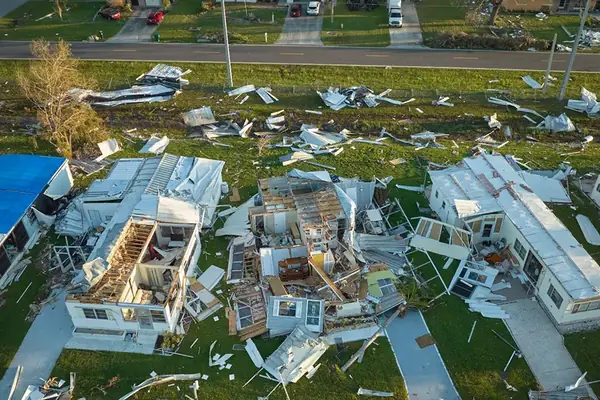
If your Houston-area home or building was damaged in a storm, the claim usually turns on causation: did wind (and rain coming through a storm-created opening) do the damage, or did rising floodwater? That one finding decides which policy pays, which deductible applies, and how much you recover. We inspect the property, document the cause, write a line-by-line Xactimate estimate, and negotiate with the carrier on your behalf.
We're based in Belton and travel to the Houston area to inspect property in person. Before a visit, we can review your policy and the carrier's estimate by phone or text at no cost.
Why Houston claims get split between policies
Houston has been through Hurricane Ike (2008), Hurricane Harvey (2017) and Hurricane Beryl (2024). Each storm damaged property in a different way. Ike pushed storm surge onto Galveston and the bay communities. Harvey stalled and dropped days of rain, so most of its damage was flooding. Beryl was a wind event for much of the metro, with trees on roofs and long power outages.
When wind and water both hit a building, the carriers each look for reasons the damage belongs to someone else. A standard homeowners policy excludes flood. A flood policy (NFIP or private) covers rising water but not wind. Many homeowners policies also contain wording that excludes flood damage even when another cause contributed at the same time, so the evidence of what happened first, and where, matters.
Points toward wind coverage
- Missing shingles, lifted flashing or a punctured roof deck
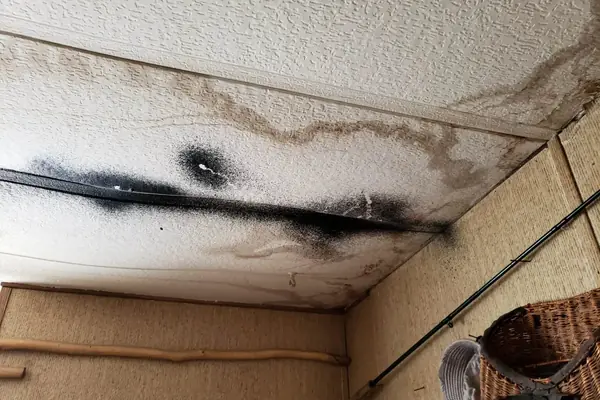
- Ceiling and upper-wall staining below a roof or window opening
- Broken windows or doors that let rain in
- Damage above the high-water line inside the house
Points toward flood coverage
- A consistent waterline on walls throughout the floor
- Silt or debris left by water that came in at ground level
- Water entering under doors and through weep holes
- Damage limited to flooring, base cabinets and lower drywall
Most Houston homes are slab-on-grade, so even a few inches of water can ruin flooring, baseboards, lower cabinets and the bottom of every interior wall. If the roof was also damaged, the two losses need to be separated room by room. We photograph the waterline, the roof openings and the interior staining before anything is torn out, so the record survives demolition.
TWIA covers only part of the region
The Texas Windstorm Insurance Association writes wind and hail coverage only in the 14 first-tier coastal counties and in parts of Harris County east of Highway 146. Around Houston, that means Galveston, Brazoria and Chambers counties and that slice of eastern Harris County. If your property is in Katy, Cypress, The Woodlands or most of Houston itself, your wind coverage is in your regular homeowners or commercial policy, not TWIA.
| Where the property is | Wind and hail | Flood |
|---|---|---|
| Galveston, Brazoria or Chambers County | TWIA or a private carrier | Separate NFIP or private flood policy |
| Harris County east of Highway 146 | TWIA or a private carrier | Separate NFIP or private flood policy |
| Rest of Harris, Fort Bend and Montgomery counties | Homeowners or commercial policy | Separate NFIP or private flood policy |
Texas law: TWIA claims must be filed within one year of the date of damage, and TWIA generally has 60 days to accept or deny after it receives the claim and the information it requested (Tex. Ins. Code §2210.573). Private policies set their own reporting terms, so read your policy's "Duties after loss" section.
Deductibles on a Houston wind claim
Coastal and hurricane-exposed policies often carry a wind or named-storm deductible written as a percentage of dwelling coverage, commonly 1–2%. On a home insured for a high dwelling limit, that can mean the first several thousand dollars of wind damage is yours. A carrier estimate that lands just under the deductible is a common Houston outcome, and it's often because items were left off: drip edge, starter strip, ridge vents, interior paint to the nearest corner, or contents. The claim settlement calculator shows how the deductible and depreciation change what you're paid.
What to do after a Houston storm
- Photograph before you tear out. Shoot the waterline on every wall, the roof from the ground, ceiling stains, and every damaged item. Wet drywall must come out quickly to stop mold, but the record has to exist first.
- Report to every carrier that may owe. File with your homeowners or TWIA carrier for wind and with your flood carrier for rising water. Write down each claim number and the date you reported.
- Dry the structure and keep the receipts. Mitigation companies use moisture meters and drying logs. Keep their reports; they show what was wet and for how long.
- Tarp roof openings. Reasonable temporary repairs are part of your duty to protect the property, and the cost is usually part of the claim.
- Don't accept the first causation finding as final. If the adjuster calls everything flood, ask what evidence supports that and request the engineer's report if one was used.
After a declared catastrophe, the insurer's Chapter 542 deadlines to accept, reject and pay are extended by 15 days. Our Texas claim deadline calculator works out the dates from your own claim timeline.
Freeze and water claims between hurricanes
Not every Houston claim is a hurricane. Winter Storm Uri in 2021 burst pipes in attics and exterior walls across the metro, and summer storms bring hail and wind to the northern and western suburbs. Water claims from a burst line are handled differently from flood: the question is whether the discharge was sudden and accidental, and whether the policy limits mold or long-term seepage. Our guide to dealing with the adjuster after water damage covers what to say and what to document.
How we work a Houston-area claim
- Review your homeowners, TWIA and flood declarations to see which policy should respond to which damage
- Inspect in person with roof-level and drone photos and moisture readings
- Write a room-by-room Xactimate estimate that separates wind and water damage
- Attend re-inspections and respond to engineer reports
- Advise on appraisal when the dispute is about the amount of loss
Our fee is a percentage of what the insurer pays, capped by Texas law at 10%, with no upfront charge. See our hurricane and windstorm claims page for how we handle wind losses in more detail.
Free toolStorm report lookupFind NOAA hail and wind reports for a date and place to pin down your date of loss.Communities covered from this page
Don't see your town? We serve every Texas county. Ask us about your property.
Frequently asked questions
Does my Houston homeowners policy cover flood damage from a hurricane?
No. Standard homeowners policies exclude flood, which needs an NFIP or private flood policy. Wind damage and rain entering through a storm-created opening are usually handled under the homeowners or TWIA policy.
Is my Houston home eligible for TWIA?
Only if it is in one of the 14 first-tier coastal counties, such as Galveston, Brazoria or Chambers, or in the part of Harris County east of Highway 146. Most of Houston, Katy, Cypress and The Woodlands are outside the TWIA area.
How long do I have to file a TWIA claim after a hurricane?
Within one year of the date of damage. The commissioner may extend that by up to 180 days for good cause, but you should not rely on an extension.
The adjuster said all my interior damage was flood. Can I dispute that?
Yes. Ask for the basis of the finding and any engineer report, then document roof openings, ceiling staining and damage above the waterline. Our denied and underpaid claims service covers how we challenge causation findings.
Do you have an office in Houston?
No. Our office is in Belton, and we travel to the Houston area to inspect property. Policy and estimate reviews can start by phone or text.