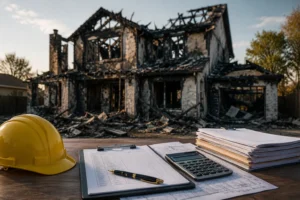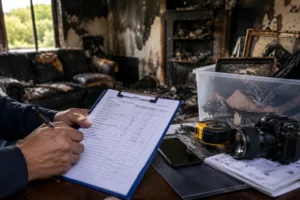

A house fire can turn life upside down in an instant. Beyond the emotional impact, homeowners are often left wondering how much their house fire insurance payout will be and whether it will cover the full cost of recovery. Unfortunately, fire claims are rarely as simple as filing paperwork and receiving a check. Instead, settlements are influenced by policy limits, damage assessments, documentation, and negotiation. Therefore, understanding how the process works can help you avoid costly mistakes and pursue the compensation you deserve.
What Is a House Fire Insurance Payout?
A house fire insurance payout is the amount an insurance company pays after a covered fire loss. These funds are designed to help restore the property, replace damaged belongings, and cover certain expenses that arise while the home is being repaired or rebuilt. However, many homeowners assume a payout comes as one lump sum. In reality, most claims involve several categories of compensation. Depending on the policy, a fire insurance claim payout may cover:
- Structural repairs
- Personal property replacement
- Additional living expenses
- Detached structures
- Debris removal
- Emergency mitigation services
As a result, understanding each category can help homeowners better evaluate their settlement offers.
How Insurance Companies Calculate a House Fire Insurance Payout
Insurance companies use inspections, documentation, policy language, and estimating software to determine settlement values. Although the process appears straightforward, several factors can significantly influence the final number.
Evaluating Structural Damage
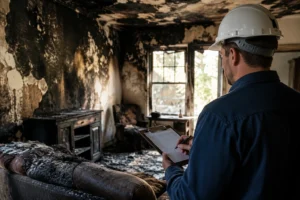
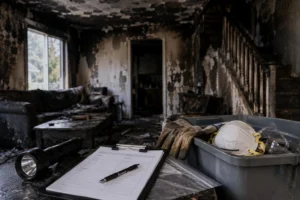
First, insurance adjusters inspect the damaged structure. They typically evaluate:
- Roofing systems
- Walls and ceilings
- Flooring materials
- Electrical systems
- Plumbing systems
- HVAC components
Afterward, they create a repair estimate based on observed damage. However, fire damage often extends beyond what is immediately visible. Smoke contamination, hidden structural damage, and water intrusion from firefighting efforts may increase repair costs substantially once additional inspections occur. Consequently, an initial estimate may not reflect the full scope of loss.
Calculating Personal Property Losses
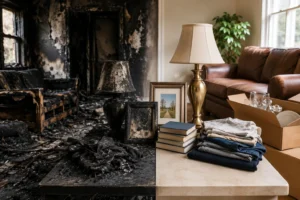
Personal belongings frequently represent a large portion of a house fire insurance payout. To evaluate these losses, insurance companies often request a detailed inventory that includes:
| Required Information | Example |
|---|---|
| Item Description | Leather Sofa |
| Purchase Date | March 2021 |
| Original Cost | $1,800 |
| Condition | Good |
| Replacement Cost | $2,300 |
The more documentation homeowners provide, the stronger their claim becomes. Furthermore, detailed inventories help reduce disputes regarding valuation and ownership.
Reviewing Additional Living Expenses
If a home becomes temporarily uninhabitable, many policies provide Additional Living Expense (ALE) coverage. This coverage may reimburse:
- Hotel accommodations
- Rental housing
- Increased meal expenses
- Laundry services
- Storage fees
- Transportation costs
For example, a family displaced for six months may incur thousands of dollars in temporary living expenses. Therefore, maintaining organized records and receipts is essential.
Applying Policy Limits
Even when damages are extensive, payouts remain subject to policy limitations. Insurance companies review:
- Dwelling coverage limits
- Personal property limits
- ALE limits
- Deductibles
- Endorsements
- Exclusions
Therefore, homeowners should understand their coverage before a disaster occurs whenever possible.
Key Factors That Affect Your House Fire Insurance Payout
Every claim is unique. Nevertheless, several common factors directly influence settlement values.
Severity of Fire Damage
Naturally, the extent of damage plays a major role. A fire limited to one room will typically produce a smaller payout than a fire that affects the entire property. Insurance carriers often categorize losses as:
- Minor damage
- Partial loss
- Major loss
- Total loss
As damage severity increases, so does the complexity of the claim.
Age and Condition of the Property
Older homes often present additional challenges. For instance, aging electrical systems, outdated plumbing, and obsolete building materials may complicate repair estimates. As a result, disagreements sometimes arise regarding pre-existing conditions versus fire-related damage.
Local Construction Costs
Construction costs vary significantly by location. Labor rates, material prices, permit requirements, and contractor availability can all affect rebuilding expenses. Moreover, following widespread disasters, local demand frequently drives costs even higher.
Building Code Upgrades
In many cases, rebuilding requires compliance with current building codes rather than the standards in place when the home was originally built. Examples include:
- Electrical upgrades
- Roofing improvements
- Structural enhancements
- Energy-efficiency requirements
Consequently, rebuilding costs may increase substantially. Whether those upgrades are covered often depends on ordinance and law provisions within the policy.
Policy Type and Coverage Options
Not all insurance policies provide the same level of protection. In fact, the valuation method used by the policy can dramatically affect the final house fire insurance payout.
Understanding Replacement Cost vs. Actual Cash Value
One of the most important concepts in property insurance involves how losses are valued.
What Is Replacement Cost Coverage?
Replacement cost coverage pays the amount necessary to replace damaged property with comparable new materials or items. Unlike actual cash value policies, depreciation is generally recoverable after replacement occurs. As a result, replacement cost policies often produce larger settlements.
What Is Actual Cash Value Coverage?
Actual cash value coverage deducts depreciation based on age, wear, and condition. In other words, the insurer calculates what the property was worth immediately before the loss occurred. Consequently, homeowners often receive less compensation compared to replacement cost coverage.
Why the Difference Matters
Insurance policies are legal contracts, and interpreting policy language can sometimes resemble hermeneutics, where small wording differences may significantly affect coverage outcomes. Consider the following example:
| Coverage Type | Value of Five-Year-Old Refrigerator |
|---|---|
| Replacement Cost | $2,000 |
| Actual Cash Value | $1,100 |
| Difference | $900 |
When depreciation applies to dozens of damaged items, the difference can become substantial.
The House Fire Insurance Claim Process
Although every claim follows its own path, most fire losses involve several common steps.
Step 1: Report the Fire Immediately
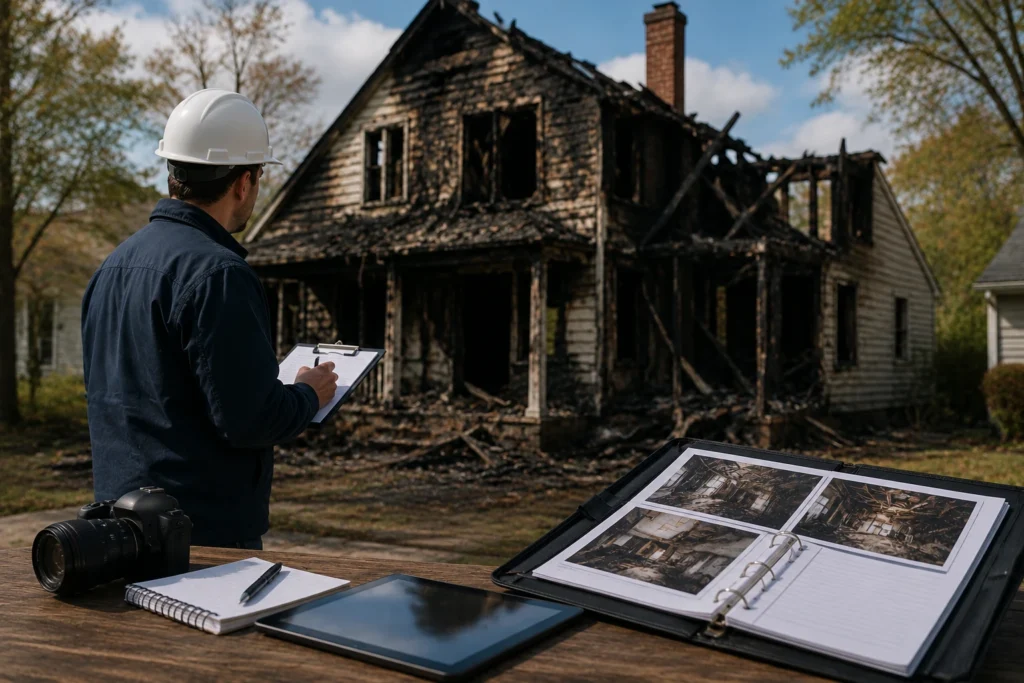
First, notify the insurance company as soon as possible. Prompt reporting helps establish a timeline and initiates the claims process.
Step 2: Secure the Property
Next, take reasonable measures to prevent additional damage. This may include:
- Boarding broken windows
- Installing temporary roof coverings
- Restricting unauthorized access
- Removing standing water
Step 3: Document All Damage
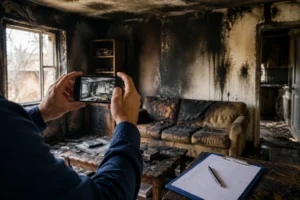
Meanwhile, thorough documentation remains one of the most important parts of the claim. Capture:
- Wide-angle photographs
- Close-up photographs
- Videos
- Written observations
The more evidence available, the easier it becomes to support your loss.
Step 4: Meet With the Insurance Adjuster
Afterward, the insurance company will typically assign an adjuster to inspect the property. During the inspection, identify all visible damage and keep records of conversations and findings.
Step 5: Review the Initial Estimate
Finally, carefully review the insurer’s estimate. Reviewing a fire claim often requires careful evaluation of facts, documentation, and competing interpretations of damage. In some ways, the process resembles epistemology, the study of knowledge and how conclusions are formed from available evidence. Most importantly, never assume the first estimate captures every loss. Many fire claims reveal additional damage after demolition, cleaning, or specialized inspections begin. Therefore, independent contractor assessments can be extremely valuable before accepting a settlement offer.
Common Reasons Fire Insurance Payouts Are Lower Than Expected
Many homeowners are surprised when the initial settlement offer arrives. After all, the damage may appear obvious. However, insurance estimates do not always capture every cost associated with recovery.
Incomplete Damage Assessments
First, some inspections focus primarily on visible damage. While charred framing and burned materials are easy to identify, hidden issues may remain undetected during the initial evaluation. Examples include:
- Smoke contamination behind walls
- Damaged insulation
- Structural weakening
- Electrical system damage
- Water damage from firefighting efforts
Consequently, the first estimate may fall short of the actual repair cost.
Missing Personal Property Documentation
Likewise, personal property claims often become a challenge when documentation is limited. Many homeowners cannot immediately recall every item they owned before the fire. As a result, belongings may be omitted from inventories, reducing the overall settlement.
Undervalued Construction Costs
In some cases, insurance estimates rely on pricing that does not fully reflect current market conditions. Labor shortages, material price increases, and permit expenses can all influence rebuilding costs. Therefore, obtaining independent contractor estimates often provides valuable perspective.
Hidden Smoke and Soot Damage
Smoke travels far beyond the visible burn area. Even rooms untouched by flames may require:
- Specialized cleaning
- Odor removal
- HVAC decontamination
- Surface restoration
Unfortunately, these costs are sometimes underestimated.
Depreciation Disputes
Furthermore, actual cash value policies can create disagreements regarding depreciation calculations. If depreciation is excessive, the resulting house fire insurance payout may be significantly lower than expected.
What Fire Damage Is Often Missed During Initial Inspections?
Fire claims frequently evolve as cleanup and reconstruction begin. Therefore, additional damage often emerges after the first inspection.
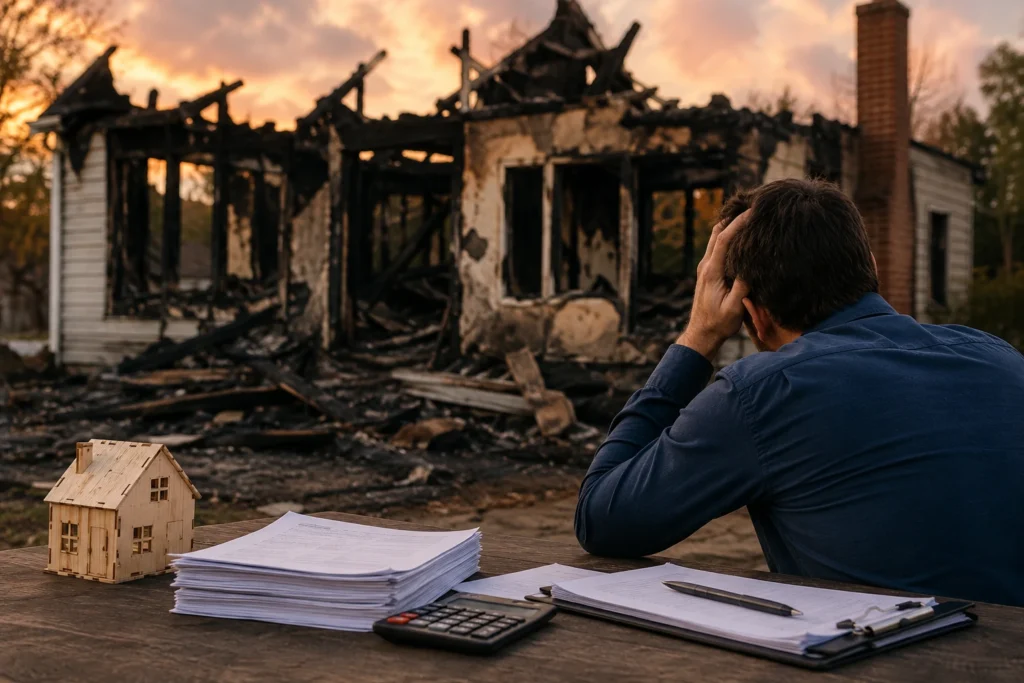
Smoke Damage Throughout the Home
Smoke particles can migrate into:
- Cabinets
- Closets
- Upholstery
- Electronics
- Attics
Even areas far from the fire may require professional restoration.
HVAC Contamination
Heating and cooling systems can distribute smoke residue throughout the home. Consequently, ductwork cleaning and equipment replacement may become necessary.
Odor Removal Requirements
Persistent smoke odors often require:
- Thermal fogging
- Ozone treatments
- Surface sealing
- Material replacement
Without proper remediation, odors may continue for months.
Electrical System Damage
Heat exposure can damage wiring hidden behind walls. Although the system may appear functional, safety concerns often justify further inspection.
Water Damage From Firefighting Efforts
Ironically, extinguishing the fire may create additional damage. Water intrusion can lead to:
- Warped flooring
- Mold growth
- Damaged drywall
- Structural deterioration
Therefore, both fire and water damage should be evaluated carefully.
Structural Concerns Behind Walls
Load-bearing components may experience weakening that remains hidden until demolition begins. As a result, supplemental claims are common during major fire losses.
House Fire Insurance Payout Examples
Every claim is different. Nevertheless, examples can help homeowners understand how settlements are typically structured.
Minor Fire Loss Example
A kitchen fire damages cabinets, appliances, and portions of the ceiling. Potential settlement components may include:
- Structural repairs
- Appliance replacement
- Smoke remediation
- Temporary housing
Estimated loss: $30,000–$75,000
Moderate Fire Damage Example
A fire spreads through several rooms before being extinguished. Potential settlement components may include:
- Interior reconstruction
- Flooring replacement
- HVAC cleaning
- Personal property replacement
- Additional living expenses
Estimated loss: $100,000–$350,000
Total Loss Fire Example
The structure is largely destroyed and requires complete rebuilding. Potential settlement components may include:
- Full reconstruction
- Personal property replacement
- Debris removal
- Extended ALE benefits
- Code upgrades
Estimated loss: $400,000 to well over $1 million depending on the property.
| Loss Type | Estimated Damage | Potential Settlement Components |
|---|---|---|
| Minor Loss | One room affected | Repairs, contents, cleanup |
| Moderate Loss | Multiple rooms affected | Repairs, contents, ALE |
| Total Loss | Home destroyed | Rebuild, contents, ALE, debris removal |
How Long Does It Take to Receive a House Fire Insurance Payout?
One of the most common questions homeowners ask is how long the process will take. Unfortunately, there is no universal answer.
Factors That Influence Timing
Several variables affect claim duration:
- Severity of damage
- Documentation quality
- Contractor availability
- Coverage disputes
- Policy complexity
- Supplemental claims
As claim complexity increases, settlement timelines often extend.
Typical Settlement Timeframes
Although every situation differs, many claims follow a general pattern:
| Stage | Typical Timeframe |
|---|---|
| Initial Inspection | Days to Weeks |
| Initial Payment | Weeks |
| Supplemental Claims | Weeks to Months |
| Final Settlement | Months |
Large total-loss claims may continue for a year or longer, particularly when rebuilding is involved.
What To Do If Your Fire Insurance Settlement Is Too Low
Receiving a disappointing settlement offer can be frustrating. However, homeowners still have options.
Request a Detailed Explanation
First, ask the insurance company to explain how the estimate was developed. Review:
- Scope of repairs
- Pricing assumptions
- Depreciation calculations
- Coverage limitations
Obtain Independent Estimates
Next, seek evaluations from qualified contractors or restoration professionals. Independent assessments often identify costs that were overlooked.
Document Additional Damage
Meanwhile, continue documenting newly discovered issues. Additional photographs, contractor reports, and expert evaluations can strengthen supplemental claims.
Submit Supplemental Claims
Importantly, many fire claims are adjusted multiple times. If additional damage is discovered, homeowners may be able to pursue supplemental payments.
Consider Professional Representation
When significant disputes arise, professional assistance may help level the playing field.
How a Public Adjuster Can Help Maximize a House Fire Insurance Payout
Fire claims can become overwhelming. Between inspections, inventories, estimates, and negotiations, homeowners often find themselves managing a second full-time job. This is where public adjusters can provide value.
Comprehensive Damage Evaluation
Public adjusters conduct detailed reviews of:
- Structural damage
- Smoke contamination
- Contents losses
- Additional living expenses
As a result, overlooked damages may be identified before settlement negotiations conclude.
Detailed Claim Documentation
Strong documentation often drives successful outcomes. Therefore, public adjusters help organize:
- Inventories
- Photographs
- Estimates
- Receipts
- Expert reports
Accurate Valuation of Losses
Proper valuation is essential. Even relatively small omissions can significantly affect the final house fire insurance payout.
Negotiating With Insurance Companies
Public adjusters negotiate directly with insurance carriers on behalf of policyholders. Consequently, homeowners can focus on recovery while claim discussions continue.
Managing Complex Fire Claims
Large losses frequently involve multiple inspections, supplemental claims, and technical evaluations. Professional claim management can help keep the process organized.
When Hiring a Public Adjuster Makes Sense
Although every claim is unique, professional representation may be particularly valuable when:
- The loss is substantial
- The claim has been underpaid
- Damage is complex
- Settlement disputes exist
- A total loss has occurred
Tips to Help Maximize Your House Fire Insurance Payout
While every claim presents unique challenges, certain practices consistently improve outcomes.
Create a Detailed Home Inventory
A pre-loss inventory provides valuable documentation if a disaster occurs.
Save Every Receipt
Keep records for:
- Hotels
- Meals
- Temporary housing
- Storage
- Transportation
These expenses may support ALE reimbursement.
Photograph Everything
Photographs create visual evidence that can strengthen virtually every aspect of a claim.
Maintain Organized Records
Create folders for:
- Policy documents
- Correspondence
- Estimates
- Receipts
- Inspection reports
Organization often leads to smoother claim management.
Understand Your Policy
Review coverage limits and endorsements before a disaster occurs. Understanding the policy beforehand can reduce surprises later.
Avoid Accepting the First Offer Too Quickly
Most importantly, take time to review the estimate carefully. In many cases, additional damage emerges after further investigation.
Conclusion
A house fire insurance payout can play a critical role in helping families rebuild after a devastating loss. However, settlement amounts are influenced by documentation, policy language, repair costs, and the accuracy of damage assessments. Therefore, homeowners should carefully review every estimate, maintain thorough records, and investigate any discrepancies they discover. With proper preparation and attention to detail, it becomes much easier to pursue a fair settlement and move forward with confidence after a fire loss.
FAQs
Insurance companies calculate payouts based on the extent of damage, policy coverage, repair estimates, personal property losses, and applicable deductibles.
In many cases, yes. Smoke damage is typically covered when it results from a covered fire, although policy terms and limitations may apply.
Simple claims may be resolved within weeks, while large or total-loss claims can take several months or longer to fully settle.
Replacement cost pays to replace damaged items with new ones, while actual cash value subtracts depreciation based on age and condition.
Many policies include Additional Living Expense coverage that helps pay for temporary housing and other increased living costs while repairs are underway.
Yes. Homeowners can request a review, submit additional documentation, obtain independent estimates, or pursue supplemental claims if necessary.
Keep photographs, videos, receipts, contractor estimates, correspondence, inspection reports, and any records related to temporary living expenses.
You may be able to file a supplemental claim to seek compensation for newly discovered fire, smoke, water, or structural damage.
Not always. The final payout depends on policy language, coverage limits, valuation methods, and documentation supporting the loss.
A public adjuster may be helpful when dealing with large losses, disputed settlements, complex damage, or claims that appear underpaid.