
A fire claim denied letter can feel overwhelming. After dealing with the stress of a fire, many homeowners expect the insurance policy to provide financial relief. However, claim denials happen for many reasons, ranging from documentation issues to coverage disputes. Fortunately, a denial does not always mean the claim is over. In many situations, homeowners can challenge the decision, submit additional evidence, or identify errors that may lead to a different outcome. Therefore, understanding the reason behind the denial is the first step toward protecting your interests. In this guide, we’ll explore the most common reasons fire claims are denied, what to do immediately after receiving a denial, and how to strengthen your position moving forward.
Common Reasons a Fire Claim Gets Denied
Not every denial happens for the same reason. Some involve missing documentation. Others stem from policy exclusions, coverage disputes, or disagreements about how the fire started. Consequently, understanding the insurer’s reasoning can help determine your next move.
Insurance Claims Get Denied for several reasons. Some are legitimate. Others deserve a second review. Understanding the denial helps homeowners respond strategically instead of emotionally.
Lack of Sufficient Documentation
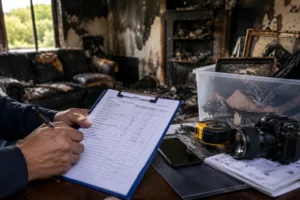
Insurance companies rely heavily on evidence. When documentation is incomplete, adjusters may have difficulty verifying damages or confirming ownership of destroyed items. Common documentation issues include:
- Missing photographs of damaged property
- Incomplete personal property inventories
- Lack of receipts or purchase records
- Missing contractor estimates
- Limited evidence of the property’s pre-fire condition
This problem becomes especially significant when personal belongings are involved. Without supporting records, proving value becomes much harder.
Policy Exclusions
Insurance policies contain exclusions that limit coverage under specific circumstances. Examples may include:
- Intentional acts
- Certain vacant property situations
- Business activities conducted from the home
- Unreported changes to property use
Unfortunately, some homeowners only discover these exclusions after filing a claim. As a result, a fire claim denied decision can come as a complete surprise.
Missed Reporting Deadlines
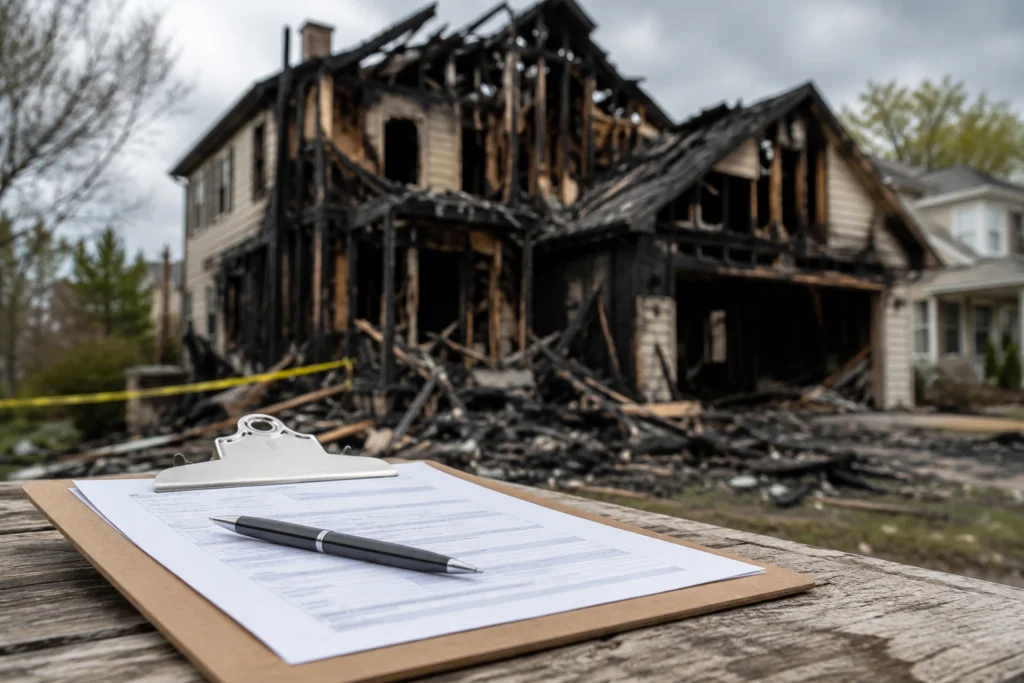
Most insurance policies require prompt reporting of losses. Delays may create complications. Examples include:
- Waiting too long to notify the insurer
- Missing proof-of-loss deadlines
- Failing to submit requested information
- Missing appeal deadlines
Therefore, acting quickly after a fire is often critical.
Questions About the Cause of the Fire
Cause-and-origin investigations frequently influence claim outcomes. Insurance companies often conduct extensive reviews to determine exactly how a fire started. Disputes may involve:
- Electrical failures
- Appliance malfunctions
- Heating systems
- Smoking materials
- Suspected arson
When investigators disagree about the source of the fire, coverage disputes can follow.
Alleged Misrepresentation
Some denials result from allegations that inaccurate information was provided during the insurance application process. Examples include:
- Occupancy disputes
- Property use discrepancies
- Prior claims history concerns
- Questions about property condition
These situations often become complex and may require a detailed review of both the policy and underwriting records.
Understanding the Denial Letter
The denial letter is one of the most important documents in your claim file. Nevertheless, many homeowners read it quickly and focus primarily on their frustration. While that reaction is understandable, carefully reviewing the denial letter can reveal valuable information.
What the Denial Letter Should Include
Most denial letters explain:
| Component | Purpose |
|---|---|
| Reason for denial | Explains why coverage was denied |
| Policy provisions | Identifies the policy language used |
| Investigation findings | Summarizes evidence considered |
| Appeal information | Explains available dispute options |
Review every section carefully. In fact, understanding policy language can sometimes resemble studying hermeneutics, the discipline focused on interpretation. Small wording differences can significantly affect claim outcomes.
Why Every Detail Matters
Some denials result from incomplete information. Others may involve investigation findings that fail to consider all available evidence. As you review the denial letter, ask:
- Are any facts incorrect?
- Was evidence overlooked?
- Were damages fully documented?
- Is the policy language being interpreted fairly?
The answers may reveal opportunities to challenge the denial.
Immediate Steps to Take After Receiving a Fire Claim Denied Decision
The weeks immediately following a denial can be extremely important. Therefore, staying organized and acting strategically can improve your chances of a favorable resolution.

Stay Organized
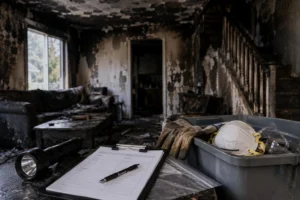
Organization matters. Create a dedicated claim file containing:
- Insurance policy documents
- Correspondence with the insurer
- Inspection reports
- Photographs and videos
- Estimates
- Receipts
- Fire department reports
Keep everything. Even documents that seem insignificant today may become valuable later.
Request Additional Clarification
If the denial letter lacks detail, ask questions. Request copies of:
- Investigation reports
- Engineering reports
- Cause-and-origin findings
- Inspection photographs
- Internal repair estimates
The more information you gather, the easier it becomes to evaluate your options.
Review Your Insurance Policy Carefully
Many homeowners do not review their policy until after a loss occurs. Now is the time. Pay close attention to:
- Covered causes of loss
- Exclusions
- Policy conditions
- Endorsements
- Duties after a loss
Understanding the policy can help identify weaknesses in the insurer’s position.
Avoid Emotional Responses
A denied claim often creates frustration. However, emotional reactions rarely improve claim outcomes. Evidence does. Documentation does. Facts do. Instead of arguing emotionally, focus on building a stronger case supported by evidence.
How to Gather Evidence to Challenge a Denied Fire Claim
Evidence often determines the success or failure of an appeal. Consequently, gathering strong supporting documentation should become a priority.
Fire Department Reports
Official fire reports often provide valuable information regarding:
- Cause of the fire
- Extent of damages
- Timeline of events
- Emergency response activities
These reports may support portions of your claim that the insurer questioned.
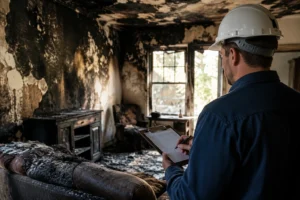
Independent Expert Inspections
Sometimes a second opinion can reveal important information. Independent professionals may include:
- Fire investigators
- Licensed contractors
- Structural engineers
- Electrical specialists
- Restoration experts
Their findings may identify damages overlooked during the original review.
Property Documentation
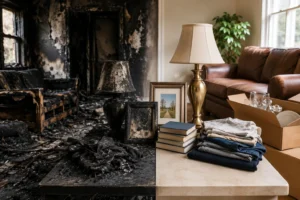
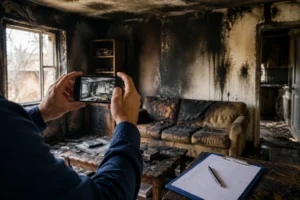
Strong documentation can strengthen nearly every aspect of a claim. Helpful evidence includes:
- Pre-loss photographs
- Post-loss photographs
- Video walkthroughs
- Contractor estimates
- Material invoices
- Temporary repair receipts
Building a persuasive claim file often resembles a process of triangulation, where multiple independent sources of evidence are used to support a single conclusion. The more evidence you collect, the stronger your position may become.
Personal Property Inventories
Contents claims frequently become one of the most difficult parts of a fire loss. A detailed inventory should include:
| Item | Brand | Age | Estimated Value |
|---|---|---|---|
| Television | Samsung | 3 Years | $800 |
| Sofa | Ashley | 5 Years | $1,200 |
| Laptop | Dell | 2 Years | $900 |
The more detailed your inventory, the easier it becomes to support ownership and value.
Common Insurance Company Mistakes That Lead to Wrongful Denials
Not every denial is justified. Insurance companies process thousands of claims each year. While many are handled appropriately, mistakes can occur. Understanding these potential errors can help homeowners determine whether a fire claim denied decision deserves further review.
Incomplete Investigations
Some investigations may rely on limited information. Examples include:
- Brief inspections
- Failure to inspect all damaged areas
- Missing witness interviews
- Overlooked evidence
As a result, incomplete investigations can lead to incomplete conclusions.
Incorrect Damage Assessments
Fire losses extend beyond visible burn damage. Smoke contamination, soot residue, water damage from firefighting efforts, and hidden structural issues can all affect claim value. When these damages are overlooked, disputes frequently arise. Furthermore, underestimating damage can contribute to claim denials or reduced settlements that fail to reflect the true scope of the loss.
Can You Appeal a Fire Claim Denial?
Many homeowners assume that once they receive a denial letter, the process is over. Fortunately, that is not always true. A fire claim denied decision can sometimes be challenged successfully when new evidence emerges, mistakes are identified, or policy language is interpreted differently.nThe key is approaching the appeal process with preparation and documentation.
Understanding the Appeals Process
Most insurance companies have an internal appeals process that allows policyholders to dispute claim decisions. The process varies by carrier, but it often involves:
- Submitting a written appeal
- Providing additional evidence
- Requesting a re-evaluation of the claim
- Responding to specific denial reasons
Because deadlines may apply, homeowners should act promptly after receiving a denial. Delays can limit available options.
Preparing a Strong Appeal Package
A successful appeal is rarely built on emotion. Instead, it is built on evidence. A strong appeal package may include:
| Supporting Evidence | Purpose |
|---|---|
| Fire department reports | Verify incident details |
| Expert evaluations | Challenge investigation findings |
| Contractor estimates | Support repair costs |
| Photographs and videos | Document damages |
| Personal property inventories | Verify ownership and value |
| Written explanations | Address disputed issues |
The goal is to create a clear narrative supported by facts. Insurance carriers are more likely to reconsider a claim when presented with organized and compelling evidence.
When Appeals May Succeed
Appeals often produce better outcomes when:
- New evidence becomes available
- Investigation errors are identified
- Damage assessments are incomplete
- Policy language is disputed
- Important information was overlooked
While not every appeal succeeds, many homeowners discover that a fire claim denied decision is not necessarily permanent.
Fire Claim Denied? How a Public Adjuster Can Help
Insurance companies have adjusters representing their interests. Homeowners can seek professional representation as well. This is where public adjusters often become valuable. A public adjuster works on behalf of the policyholder rather than the insurance company. Consequently, their focus is centered on evaluating damages, reviewing policy provisions, and supporting the homeowner’s claim.
Independent Claim Evaluation
One of the first benefits of working with a public adjuster is obtaining an independent assessment. This may involve:
- Reviewing the insurance policy
- Examining denial reasons
- Evaluating damage documentation
- Identifying overlooked coverage opportunities
Sometimes fresh eyes uncover issues that were missed during the original review.
Building a Stronger Claim File
Documentation frequently determines claim outcomes. Public adjusters often assist with:
- Detailed inventories
- Damage assessments
- Repair estimates
- Claim organization
- Evidence collection
The stronger the documentation, the stronger the negotiating position.
Negotiating With the Insurance Company
Many homeowners have never negotiated a large insurance claim before. That’s understandable. Fire losses can involve substantial property damage, extensive documentation requirements, and technical policy language. Public adjusters help by:
- Presenting evidence professionally
- Responding to insurer objections
- Addressing disputed findings
- Negotiating settlement values
As a result, homeowners can focus on recovery while claim issues are being addressed.
Managing Complex Fire Losses
Large fire claims often involve multiple categories of loss. Examples include:
- Structural damage
- Smoke damage
- Water damage
- Personal property losses
- Additional living expenses
The complexity increases when disputes arise. Therefore, professional assistance may become particularly valuable for large or complicated claims.
Preventing Future Fire Claim Problems
While no one expects to experience a fire, preparation can significantly reduce claim difficulties later. A few proactive steps today may save considerable stress in the future.
Maintain Thorough Property Records
Documentation should not begin after a fire. It should begin long before one occurs. Helpful records include:
- Home photographs
- Video walkthroughs
- Appliance records
- Furniture inventories
- Purchase receipts
- Renovation documents
Store copies digitally whenever possible. Cloud storage can provide protection even if physical records are destroyed.
Review Insurance Coverage Regularly
Insurance needs change over time. Home improvements, rising construction costs, and new personal property purchases can all affect coverage needs. Review your policy periodically and consider:
| Coverage Area | Questions to Ask |
|---|---|
| Dwelling Coverage | Is the limit sufficient to rebuild? |
| Personal Property | Are valuable items adequately covered? |
| Additional Living Expenses | Would temporary housing costs be covered? |
| Endorsements | Are special coverages needed? |
Regular reviews can help reduce unpleasant surprises later.
Understand Policy Requirements
Many claim problems stem from misunderstanding policy obligations. Therefore, homeowners should familiarize themselves with:
- Reporting requirements
- Documentation expectations
- Proof-of-loss deadlines
- Maintenance responsibilities
- Coverage limitations
Knowledge creates confidence. And confidence often leads to better claim decisions.
Why Acting Quickly Matters
Time can significantly affect claim outcomes. The longer a homeowner waits after a fire claim denied decision, the harder it may become to gather evidence, locate records, or meet appeal deadlines. Important documents may disappear. Witness memories may fade. Property conditions may change. That’s why prompt action often strengthens a homeowner’s position. If you believe a denial was improper, begin reviewing your options immediately. Even small steps can make a meaningful difference.
Signs Your Fire Claim May Deserve Further Review
Not every denial is justified. In fact, several warning signs may indicate that additional investigation is warranted. Consider seeking further review if:
- The denial explanation feels vague
- Important evidence was ignored
- The inspection seemed rushed
- Damage was only partially evaluated
- Experts disagree with the insurer’s findings
- New evidence becomes available
These situations do not automatically mean the denial was wrong. However, they may justify a closer look.
Frequently Asked Questions About Fire Claim Denied Cases
Why would an insurance company deny a fire claim?
Claims may be denied because of policy exclusions, documentation issues, missed deadlines, disputes regarding the cause of the fire, or alleged misrepresentations.
Can a denied fire claim be reversed?
Yes. Some denials are overturned when additional evidence, expert reports, or policy reviews reveal information that supports coverage.
How long do I have to appeal a denied fire claim?
The timeframe varies by insurer and policy. Therefore, homeowners should review their denial letter and policy immediately.
Should I hire a public adjuster after a denial?
For complex claims or disputed losses, a public adjuster may help evaluate the denial and organize supporting evidence.
What evidence helps challenge a denied fire claim?
Photographs, videos, fire reports, contractor estimates, expert opinions, receipts, and inventories often strengthen appeals.
Can smoke damage claims be denied separately?
Yes. Insurers may dispute smoke damage independently from structural fire damage depending on policy language and evidence.
What if the insurance company alleges arson?
Arson allegations are serious and often require extensive investigation. Professional guidance may be beneficial in these situations.
Will a second inspection help my case?
In some cases, yes. Independent inspections may identify overlooked damage or challenge disputed findings.
Can policy language be disputed?
Yes. Coverage disagreements often involve differing interpretations of policy provisions and exclusions.
What should I do immediately after receiving a denial letter?
Review the denial carefully, gather documentation, request supporting reports, and evaluate available appeal options as quickly as possible.
Conclusion
A fire claim denied decision can feel discouraging. However, it does not always represent the final outcome. By understanding the reason for the denial, gathering strong evidence, and responding strategically, homeowners may improve their chances of achieving a better resolution. Most importantly, act promptly. The sooner you review your options, the sooner you can begin protecting your rights and moving your recovery forward.
FAQs
In some cases, yes. New evidence, expert reports, or errors in the original investigation may provide grounds for reconsideration.
The timeline varies by insurance company and the complexity of the dispute. Some appeals may take weeks, while others can take several months.
Not necessarily. A denial may apply only to certain portions of the claim, or it may be challenged if additional evidence becomes available.
Keep your insurance policy, photographs, videos, receipts, repair estimates, fire department reports, and all communications with the insurer.
Yes. Depending on the policy and circumstances, smoke damage coverage may be evaluated separately from other fire-related damages.
An independent inspection can help identify overlooked damage or provide additional evidence that supports your position during an appeal.
Review your policy carefully and verify the dates involved. In some situations, exceptions or additional explanations may be considered.
Yes. A public adjuster can review the denial, assess damages, organize documentation, and negotiate with the insurance company on your behalf.
The cause of the fire can affect coverage eligibility. Insurers often conduct investigations to determine whether any exclusions may apply.
Read the denial letter carefully and gather supporting documentation as soon as possible. Acting quickly can help preserve evidence and protect appeal opportunities.